
Simplified: Why Tuanku Muhriz is legally still the Negeri Sembilan ruler, and why Undangs’ attempt to ‘sack’ him is invalid, experts say
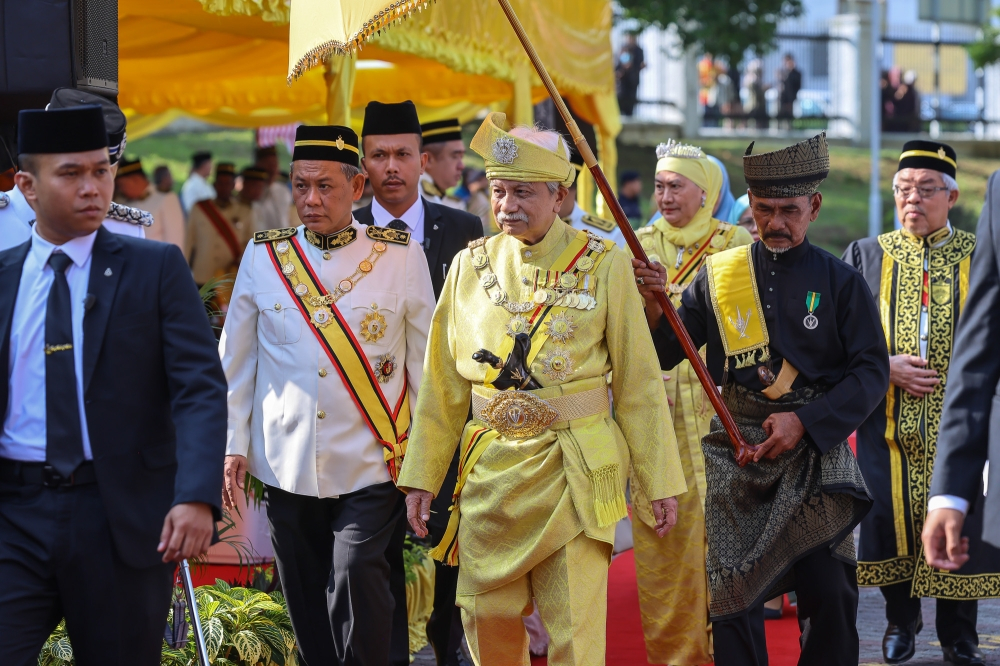
Tuanku Muhriz Tuanku Munawir should still remain the Negeri Sembilan ruler, based on the Negeri Sembilan state constitution, legal experts have said. — Picture by Yusof Isa
Tuesday, 05 May 2026 7:00 AM MYT
- The four “Undangs” or ruling chiefs of Negeri Sembilan have to follow the procedures in the state’s Constitution, legal experts said.
- Based on the Negeri Sembilan State Constitution, the Undangs’ recent attempt to “sack” Tuanku Muhriz Tuanku Munawir as Negeri Sembilan’s Yang di-Pertuan Besar is invalid.
- This is because procedures in the State Constitution were not followed, constitutional experts said.
KUALA LUMPUR, May 5 — Over the past few weeks, Negeri Sembilan was rocked by an attempt by four traditional ruling chiefs (“Undangs”) to remove the state ruler Tuanku Muhriz Tuanku Munawir.
But legal and constitutional experts have said that this attempted removal of Tuanku Muhriz is invalid, and that he is legally still the ruler of Negeri Sembilan.
Here are six things you need to know:
1. Firstly, who are the Undangs and what role do they play?
Based on the Adat Perpatih or custom practised in Negeri Sembilan, there are four Undangs or ruling chiefs for four traditional territories (Sungai Ujong, Rembau, Jelebu, Johol).
Under Negeri Sembilan’s written State Constitution, the Undangs’ roles include electing the Yang di-Pertuan Besar, and being able to call for him to temporarily withdraw or permanently give up his position.
The Yang di-Pertuan Besar is Negeri Sembilan’s ruler, and this position is equivalent to that of the Sultans of other states.
When asked by Malay Mail, both former Court of Appeal judge Datuk Seri Mohd Hishamudin Md Yunus and constitutional lawyer Datuk Malik Imtiaz Sarwar confirmed this:
But legal and constitutional experts have said that this attempted removal of Tuanku Muhriz is invalid, and that he is legally still the ruler of Negeri Sembilan.
Here are six things you need to know:
1. Firstly, who are the Undangs and what role do they play?
Based on the Adat Perpatih or custom practised in Negeri Sembilan, there are four Undangs or ruling chiefs for four traditional territories (Sungai Ujong, Rembau, Jelebu, Johol).
Under Negeri Sembilan’s written State Constitution, the Undangs’ roles include electing the Yang di-Pertuan Besar, and being able to call for him to temporarily withdraw or permanently give up his position.
The Yang di-Pertuan Besar is Negeri Sembilan’s ruler, and this position is equivalent to that of the Sultans of other states.
When asked by Malay Mail, both former Court of Appeal judge Datuk Seri Mohd Hishamudin Md Yunus and constitutional lawyer Datuk Malik Imtiaz Sarwar confirmed this:
- The Undangs have to carry out their roles and functions according to the Negeri Sembilan State Constitution.
- The Undangs have to act according to the procedures in the State Constitution.
In summarising the entire situation in Negeri Sembilan, former Court of Appeal judge Tan Sri Mohamad Ariff Md Yusof said the Negeri Sembilan state constitution must be followed, as the provisions inside are not just “formalities” but would ultimately determine what is legal and valid.
“The current controversies are not merely a matter of adat, but involves interpretations of constitutional provisions in the State Constitution, some expressly stated,” he told Malay Mail, adding that he based his views regarding this issue on accepted principles of constitutional interpretation.
“Where words in the Constitution are clear, they must be given effect to promote the intention behind these words.
“It is not a question of mere formality to be ignored, but one of legality and ultimately validity,” said Ariff, who is also a former Dewan Rakyat Speaker.
2. How did the Undangs try to ‘sack’ Tuanku Muhriz?
On April 17, the Negeri Sembilan menteri besar announced that Datuk Mubarak Dohak was no longer the Undang of Sungai Ujong, based on a meeting by the “Dewan Keadilan dan Undang” (“The Council of the Yang di-Pertuan Besar and the Ruling Chiefs”) where the Yang di-Pertuan Besar was present and led.
Just two days later, Mubarak and three Undangs declared — in a video streamed “live” on Facebook — that Tuanku Muhriz was purportedly “sacked” or deposed, and also named a new ruler.
But Hishamudin said Tuanku Muhriz remains the Negeri Sembilan ruler: “The declaration was not valid. The declaration, since it was not valid, has no effect on the position of His Highness. In other words, His Highness is still the Yang di-Pertuan Besar.”
3. What does the law say about the procedure to remove a Negeri Sembilan ruler?
Based on the State Constitution’s Article X, the Undangs can ask the Negeri Sembilan ruler to temporarily withdraw or permanently give up his position and powers — but only if one of four conditions have been met.
And how will the Undangs decide if any of these four conditions are met?
There must be a “full and complete enquiry”.
Hishamudin said the Undangs’ April 19 move to attempt to remove the Yang di-Pertuan Besar under Article X is “unprecedented” in the state’s centuries-old history.
“It has never happened before in the history of Negeri Sembilan, ever since the installation at Penajis, Rembau, in 1773 by the Undangs of the invited Minangkabau Prince, Raja Melewar, from the Pagaruyung kingdom, as the first Yang di-Pertuan Besar.”
4. What should a “full and complete enquiry” look like?
Imtiaz said that there are no court decisions on how Article X should be interpreted, including what a “full and complete enquiry” covers.
“However, it stands to reason that the enquiry must be one which is carried out in a manner which entails the Ruler being given a right to be heard and the Undangs having considered all relevant matters.”
Pointing out the seriousness of removing the Negeri Sembilan ruler as it would involve a loss of powers and affect his reputation, Imtiaz said a ruler should have a chance to answer allegations against him in a hearing before an impartial panel.
“A determination that the Ruler is to be removed on grounds of an alleged defect would self-evidently deprive the Ruler of vested powers and privileges, as well as have a bearing on his reputation, and he would thus be entitled to a determination which accords with law and the rules of natural justice i.e. a right to be heard before an impartial tribunal,” he said.
Imtiaz pointed out that the Federal Constitution’s Article 8(1), which guarantees the right to equal protection of the law and equality before the law, “applies to all persons”.
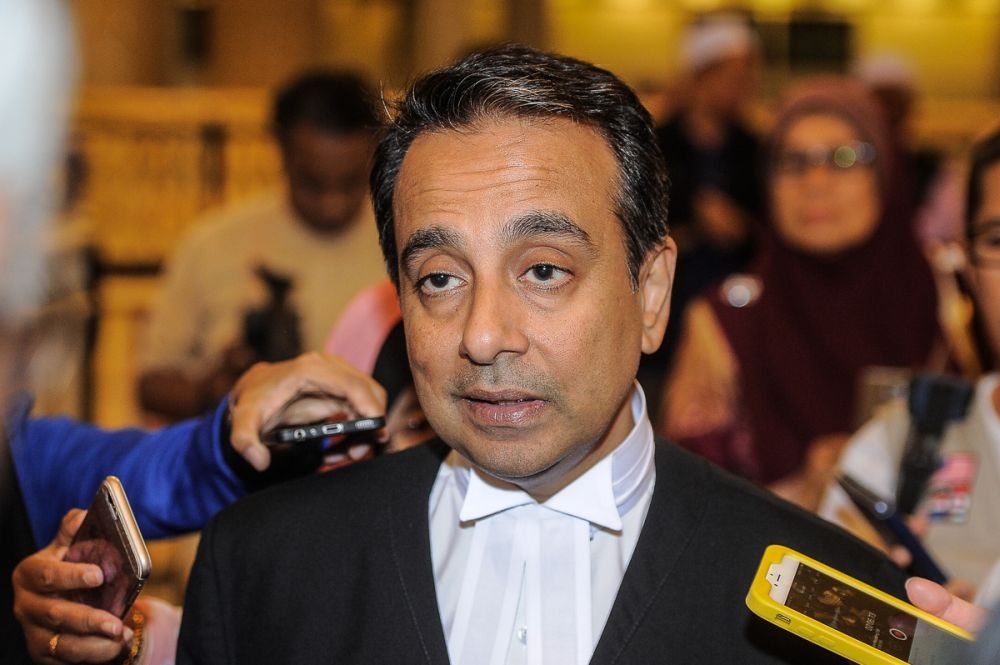
Constitutional lawyer Datuk Malik Imtiaz Sarwar said a ‘full and complete enquiry’ should mean an impartial hearing for a Negeri Sembilan ruler.—Picture by Shafwan Zaidon
Based on practices of the courts and tribunals, Hishamudin said the words “full and complete” enquiry on such a grave matter as the removal of the Yang di-Pertuan Besar can only mean this: “There must be a proper formal inquiry that complies with the necessary procedure to ensure that justice is not only done, but must be seen to be done.
“The rules of natural justice must be strictly adhered to. This means that any Undang that has an interest in the case must recuse himself,” he said.
Hishamudin said “it is obvious” that Mubarak should have recused himself from participating in the Undangs’ decision-making process to remove the Negeri Sembilan ruler.
This is because Mubarak’s May 13, 2025 removal as Undang by the Sungai Ujong adat authority had subsequently been confirmed via an April 17 advice of the Dewan Keadilan and Undang presided by the Yang di-Pertuan Besar.
“Datuk Mubarak is disputing his removal. That makes him a person having an interest in the Undangs’ decision against His Highness. It is a basic principle of law that no man shall be a judge of his own cause.
“Further, the Undangs conducting the inquiry must ensure that the complaints or allegations against His Highness are not frivolous,” he said.
Hishamudin added that the allegations or complaints to be considered by the Undangs in the enquiry must only be on the four matters specifically listed in Article X(1).
Hishamudin, however, also said there has been no news reports on what are the allegations against the Yang di-Pertuan Besar, or whether the Undangs had ever carried out any enquiry.
Based on basic principles of administrative law and similar procedures by tribunals in the process to remove persons in high places, Hishamudin also explained the process that should be present in a “full and complete enquiry” by the Undangs:
“For the purpose of the enquiry, the relevant witnesses relied upon by the Undangs must be called and carefully examined to ensure their credibility. The relevant incriminating documents (if any) must be carefully scrutinised as to their authenticity and contents.
“The rule of natural justice must be observed. This means that His Highness should be given an opportunity to appear at the inquiry; to know what are the charges against him, to cross examine the witnesses and to inspect the documents (if any). His Highness should have the right to engage a counsel and to reply to all the allegations, including the calling of witness to testify on his behalf,” he said.
Previously, Ariff said the Menteri Besar’s position of not recognising the Undangs’ “declaration” to remove Tuanku Muhriz is “constitutionally and legally correct”, as the constitutional requirements under Article X(1) — including to have a full and complete enquiry — appear to have been ignored.
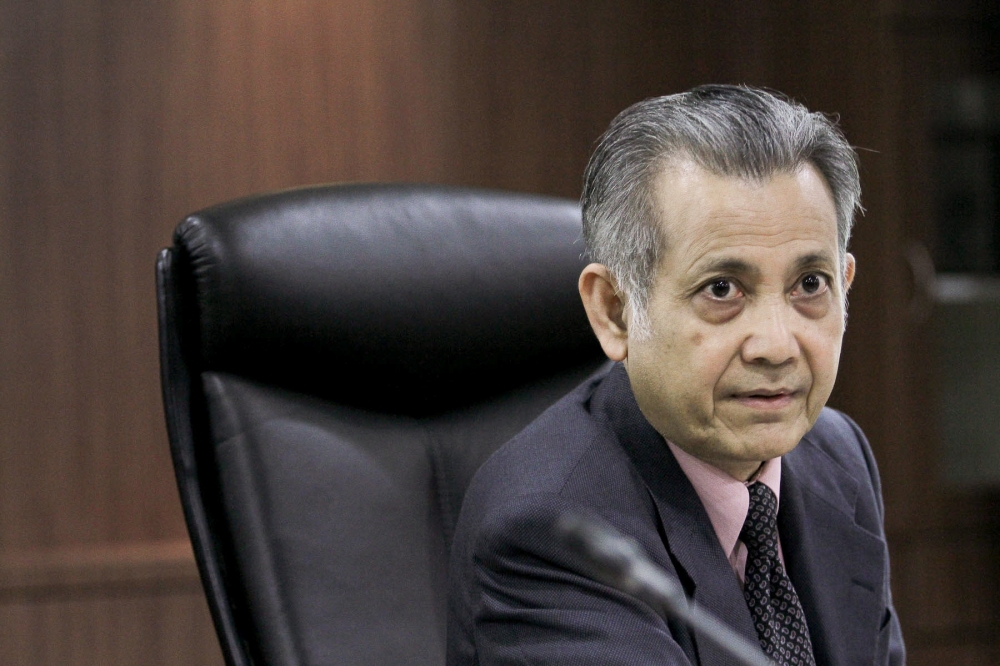
Former Court of Appeal judge Datuk Seri Mohd Hishamudin Md Yunus said the failure to have a valid written joint proclamation by the Undangs and Menteri Besar would make the removal of a ruler invalid. ‘Under the hands’ typically means a document needs to be signed. — Picture by Yusof Mat Isa
5. What is this requirement for a “proclamation” by the Undangs and MB?
Under the Negeri Sembilan State Constitution’s Article X, a “proclamation” has to be issued “under the hands of the Undangs and the Menteri Besar” on the temporary withdrawal from duties or abdication of the Yang di-Pertuan Besar.
Hishamudin said this would “obviously” need to be a written proclamation and that “it must be gazetted for public information”.
“No, it is not just a formality. The Proclamation is an important piece of instrument. Without a Proclamation signed by the Yang Teramat Mulia (YTM) Undangs and the Hon. Menteri Besar, any decision made by the YTM Undangs pursuant to Article X(1) has no force of law,” he said when explaining how this would result in any move to remove a ruler having no legal effect.
Imtiaz also said such a proclamation “must be in writing”, highlighting that this would ensure the power to remove a ruler is exercised properly as the menteri besar would not be involved in the enquiry of the ruler.
“I do not think this requirement can be dismissed as a mere formality. The requirement that it be under the hands of the Undangs and the MB (who is not part of the tribunal) points to this being a part of the checks and balances under Article X to ensure that the power is invoked properly and for proper purpose,” he said.
6. No ‘full and complete enquiry’, no valid ‘proclamation’ = Ruler’s removal is invalid
Asked whether the Undangs’ declaration to remove Tuanku Muhriz was valid, Imtiaz said this would depend on whether Mubarak was removed as an Undang, as there could not have been a valid enquiry if he was no longer an Undang.
“If Datuk Mubarak participated notwithstanding his removal (assuming this to be the case), then the enquiry and the decision reached would not have been valid as, in effect, a non-undang was involved. As I recall, his statement on 19th April implied that he had been involved,” he said.
If the process and decision to remove Tuanku Muhriz were not valid, then the remaining three Undangs can carry out a fresh enquiry, he said.
But if Mubarak had not been removed, then the validity of the bid to remove the Negeri Sembilan ruler would depend on whether Article X had been complied with, Imtiaz said.
The Undangs’ declaration to remove Tuanku Muhriz would be invalid regardless of Mubarak’s status, if there was no “full and complete enquiry” and if there was no valid “proclamation”, Hishamudin said.
“The absence of the two points alone would be enough to make the purported ‘proclamation’ by the Undangs on 19 April 2026 invalid, without the need to take into account the status of YTM Datuk Mubarak,” he said.
Assuming that Mubarak had been validly removed, “that would be an added reason as to why the Undangs’ ‘proclamation’ was invalid”, the ex-judge added.
Recommended reading:


No comments:
Post a Comment