
Malaysia's #1 Content Aggregator
Carlsberg Malaysia in the Shadow of Abdul Razak Hussein Era
3 May 2026 • 8:00 PM MYT

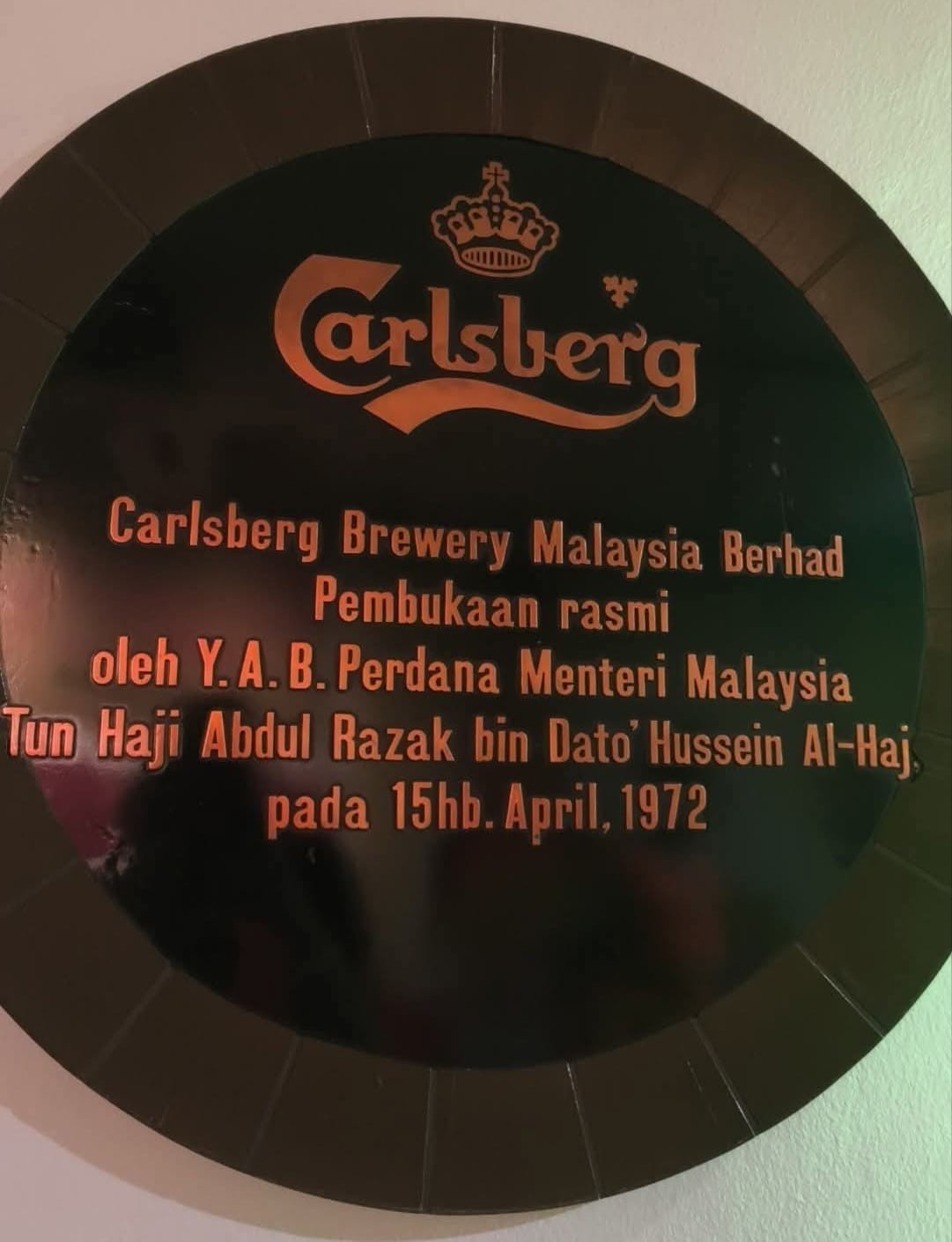
Image credit: Facebook
In the heart of Shah Alam, Selangor, sits what many Malaysians quietly call the largest kilang arak in Malaysia. It is a place more associated with export containers and industrial hum than political debate. Its name is familiar on supermarket shelves and in local kopitiams. Yet few know how this facility came to be, how it shaped the country’s industrial fabric, and why leaders like Abdul Razak and successive policymakers cheered its rise. This is the story of how a foreign beer maker became woven into Malaysia’s economic narrative.
A Danish Legacy Takes Root in Malaysia
In the late 1960s, global brewers looked beyond Europe for growth. One of them, a Danish company founded more than a century earlier, chose Malaysia as its first major Asian production base outside Copenhagen. (Carlsberg Malaysia)Carlsberg Brewery Malaysia Berhad was incorporated in December 1969. (Carlsberg Malaysia)
Construction of the Shah Alam brewery began in 1971, and by 1972 the first bottles were sold locally. (Carlsberg Group)
The plant was the company’s first overseas brewery and symbolised a shift toward global manufacturing. (Carlsberg Malaysia)
This move mattered for Malaysia. In an era when local industry needed anchors, the arrival of a globally recognised brewer offered jobs, export capacity, tax revenue, and a new industrial identity.
Economically, this was a big deal at a time when Malaysia pushed to diversify beyond rubber and tin. The brewery provided direct employment, upstream demand for logistics and packaging, and downstream distribution networks. Its success helped signal Malaysia’s readiness for more advanced manufacturing projects.
What Made Shah Alam the Right Choice
Choosing Shah Alam was strategic. The city was emerging as an industrial hub with new infrastructure and access to ports and highways. The brewery’s founders saw Malaysia as a stable, English-speaking environment with a growing consumer market.
Government leaders in the late 1960s, including then‑Deputy Prime Minister Tun Abdul Razak, championed foreign industrial investment as a path to job creation and skills development. While specific archival records of meetings are limited, policymakers at the time publicly encouraged manufacturing giants to invest in Malaysia’s industrial corridors.
For the government, foreign direct investment like this delivered tangible results: new technology, managerial know‑how, and multiple knock‑on industries in support services.
Growth, Innovation and Community Impact
Over the decades, the Shah Alam brewery did more than just make beer. It became a centre of innovation, adapting global brewing technologies to local conditions and consumer tastes.The brewery now produces multiple brands, including mainstream and premium beers, ciders and non‑alcoholic brews. (Carlsberg Malaysia)
Product innovation helped Carlsberg Malaysia maintain strong market share and regional exports. (Carlsberg Group)
Long‑term investments show confidence in Malaysia’s role. In 2024, Carlsberg Malaysia announced a RM343 million transformation of its Shah Alam brewery. (Carlsberg Malaysia)
This upgrade focused on cutting‑edge bottling, energy efficiency and sustainability. Leaders pitched it not just as a production boost but as a model for low‑impact manufacturing in Malaysia.
The brewery’s transformation highlights a key point: industrial growth can align with environmental goals. By investing in technologies to reduce water, energy and waste, the company raised standards for Malaysian manufacturing. (The Star)
Industry Influence Beyond Beer
The plant’s influence touches more than beverages. Its presence shaped related sectors:Local supply chains for packaging and logistics expanded.
Skilled workers trained in industrial processes contributed to talent pools across manufacturing.
Tax revenues supported public services and infrastructure.
In this sense, the brewery acted as a cornerstone in Malaysia’s broader industrial ecosystem.
Social Responsibility and Local Engagement
The brewery did not stay isolated from communities. It engaged in local programmes during difficult times. For instance, during the COVID‑19 pandemic, the company invested in helping coffee shop operators affected by lockdowns. (Reddit)
This kind of support lessened economic shocks and reinforced trust between business and society.
Moreover, Carlsberg Malaysia’s sustainability agenda ties into global targets on responsible drinking, environmental stewardship and workplace safety. The company adopted frameworks to reduce carbon emissions and minimize waste, aiming for industry leadership and community benefit. (Carlsberg Malaysia)
How the Narrative Changed Over Time
Today, the Shah Alam brewery is both an industrial giant and a symbol of economic cooperation between foreign investment and local development. At first, some questioned whether Malaysia needed an alcohol plant, given religious and cultural sensitivities. But industry leaders and policymakers pushed back with a pragmatic view: regulated, responsible manufacturing contributes to economic growth.
Rather than focusing only on debates about consumption, business leaders positioned the plant as part of Malaysia’s manufacturing identity. This reframing helped shift public perception from moral judgement to economic pragmatism.
What Others Say: Expert Insight
Economists note that targeted foreign investment can catalyse broader growth. For example, research from the International Monetary Fund shows that export‑oriented foreign firms often have spillover benefits for local firms and workforce development. (See IMF research on FDI and growth.)
Local industry analysts also point out that multinational companies like Carlsberg often serve as training grounds for Malaysian talent in quality control, logistics and export management. These skills transfer to other sectors and contribute to national competitiveness.
Broader Implications for Malaysia
Carlsberg’s success highlights key lessons for Malaysia’s development strategy:
In the heart of Shah Alam, Selangor, sits what many Malaysians quietly call the largest kilang arak in Malaysia. It is a place more associated with export containers and industrial hum than political debate. Its name is familiar on supermarket shelves and in local kopitiams. Yet few know how this facility came to be, how it shaped the country’s industrial fabric, and why leaders like Abdul Razak and successive policymakers cheered its rise. This is the story of how a foreign beer maker became woven into Malaysia’s economic narrative.
A Danish Legacy Takes Root in Malaysia
In the late 1960s, global brewers looked beyond Europe for growth. One of them, a Danish company founded more than a century earlier, chose Malaysia as its first major Asian production base outside Copenhagen. (Carlsberg Malaysia)Carlsberg Brewery Malaysia Berhad was incorporated in December 1969. (Carlsberg Malaysia)
Construction of the Shah Alam brewery began in 1971, and by 1972 the first bottles were sold locally. (Carlsberg Group)
The plant was the company’s first overseas brewery and symbolised a shift toward global manufacturing. (Carlsberg Malaysia)
This move mattered for Malaysia. In an era when local industry needed anchors, the arrival of a globally recognised brewer offered jobs, export capacity, tax revenue, and a new industrial identity.
Economically, this was a big deal at a time when Malaysia pushed to diversify beyond rubber and tin. The brewery provided direct employment, upstream demand for logistics and packaging, and downstream distribution networks. Its success helped signal Malaysia’s readiness for more advanced manufacturing projects.
What Made Shah Alam the Right Choice
Choosing Shah Alam was strategic. The city was emerging as an industrial hub with new infrastructure and access to ports and highways. The brewery’s founders saw Malaysia as a stable, English-speaking environment with a growing consumer market.
Government leaders in the late 1960s, including then‑Deputy Prime Minister Tun Abdul Razak, championed foreign industrial investment as a path to job creation and skills development. While specific archival records of meetings are limited, policymakers at the time publicly encouraged manufacturing giants to invest in Malaysia’s industrial corridors.
For the government, foreign direct investment like this delivered tangible results: new technology, managerial know‑how, and multiple knock‑on industries in support services.
Growth, Innovation and Community Impact
Over the decades, the Shah Alam brewery did more than just make beer. It became a centre of innovation, adapting global brewing technologies to local conditions and consumer tastes.The brewery now produces multiple brands, including mainstream and premium beers, ciders and non‑alcoholic brews. (Carlsberg Malaysia)
Product innovation helped Carlsberg Malaysia maintain strong market share and regional exports. (Carlsberg Group)
Long‑term investments show confidence in Malaysia’s role. In 2024, Carlsberg Malaysia announced a RM343 million transformation of its Shah Alam brewery. (Carlsberg Malaysia)
This upgrade focused on cutting‑edge bottling, energy efficiency and sustainability. Leaders pitched it not just as a production boost but as a model for low‑impact manufacturing in Malaysia.
The brewery’s transformation highlights a key point: industrial growth can align with environmental goals. By investing in technologies to reduce water, energy and waste, the company raised standards for Malaysian manufacturing. (The Star)
Industry Influence Beyond Beer
The plant’s influence touches more than beverages. Its presence shaped related sectors:Local supply chains for packaging and logistics expanded.
Skilled workers trained in industrial processes contributed to talent pools across manufacturing.
Tax revenues supported public services and infrastructure.
In this sense, the brewery acted as a cornerstone in Malaysia’s broader industrial ecosystem.
Social Responsibility and Local Engagement
The brewery did not stay isolated from communities. It engaged in local programmes during difficult times. For instance, during the COVID‑19 pandemic, the company invested in helping coffee shop operators affected by lockdowns. (Reddit)
This kind of support lessened economic shocks and reinforced trust between business and society.
Moreover, Carlsberg Malaysia’s sustainability agenda ties into global targets on responsible drinking, environmental stewardship and workplace safety. The company adopted frameworks to reduce carbon emissions and minimize waste, aiming for industry leadership and community benefit. (Carlsberg Malaysia)
How the Narrative Changed Over Time
Today, the Shah Alam brewery is both an industrial giant and a symbol of economic cooperation between foreign investment and local development. At first, some questioned whether Malaysia needed an alcohol plant, given religious and cultural sensitivities. But industry leaders and policymakers pushed back with a pragmatic view: regulated, responsible manufacturing contributes to economic growth.
Rather than focusing only on debates about consumption, business leaders positioned the plant as part of Malaysia’s manufacturing identity. This reframing helped shift public perception from moral judgement to economic pragmatism.
What Others Say: Expert Insight
Economists note that targeted foreign investment can catalyse broader growth. For example, research from the International Monetary Fund shows that export‑oriented foreign firms often have spillover benefits for local firms and workforce development. (See IMF research on FDI and growth.)
Local industry analysts also point out that multinational companies like Carlsberg often serve as training grounds for Malaysian talent in quality control, logistics and export management. These skills transfer to other sectors and contribute to national competitiveness.
Broader Implications for Malaysia
Carlsberg’s success highlights key lessons for Malaysia’s development strategy:
- Attracting FDI matters. Global firms bring capital, technology and market reach.
- Industrial policy pays off when paired with local skills growth. Workers trained in modern manufacturing create value beyond the original investment.
- Sustainability is now a requirement, not just a buzzword. Modern plants must adopt practices that reduce environmental impact and respect societal values.
What Do You Think? I’d Love to Hear Your Opinion in the Comments Section.
What started as a strategic bet by a Danish brewer has grown into a Malaysian industrial landmark. The Shah Alam brewery, once a foreign curiosity, is now a vital part of the nation’s manufacturing story. It created jobs, supported local supply chains, and set standards for sustainable industrial growth. Leaders like Tun Abdul Razak and his successors saw beyond cultural debate and recognised the broader economic gains.
The plant’s evolution shows that pragmatic, well‑regulated industry can coexist with cultural diversity. It also shows that Malaysia can attract and grow global investments that deliver lasting economic benefits.
***
I remember the "Long cool Dane" of Carlsberg:


No comments:
Post a Comment