


Mariam Mokhtar
Published: Apr 24, 2026 1:10 PM
Updated: 3:18 PM
COMMENT | Every ringgit given in the name of zakat is meant to be a lifeline for the poor, but when funds linked to welfare and charitable giving are alleged to have been diverted into luxury cars, property portfolios, and private accounts, a difficult question emerges: how safe are the systems that manage public trust?
The RM230 million investigation involving public donations collected for charitable purposes has drawn significant attention.
According to the authorities, the case involves an NGO and public welfare-related funds, not official zakat institutions.
Lembaga Zakat Selangor, for example, has clearly stated that it has no connection to the investigation. The institution operates under a structured legal framework, with multiple layers of internal and external auditing.
It has reiterated that zakat funds are managed in accordance with established governance systems.
That clarification is important and must be acknowledged. However, it does not fully resolve the wider concern.
The public considers funds given in good faith, for the needy, are not always experienced in technical categories. Whether labelled zakat, donation, or welfare contribution, their expectation remains the same: that the money reaches the poor.
When trust breaks, people don't lose trust in just one small part of it. They start questioning the whole system around it.
Luxury vehicles. Frozen accounts. High-value assets. These are not abstract claims, but are symbols that immediately shape public perception of welfare-linked giving, regardless of technical distinctions.
Published: Apr 24, 2026 1:10 PM
Updated: 3:18 PM
COMMENT | Every ringgit given in the name of zakat is meant to be a lifeline for the poor, but when funds linked to welfare and charitable giving are alleged to have been diverted into luxury cars, property portfolios, and private accounts, a difficult question emerges: how safe are the systems that manage public trust?
The RM230 million investigation involving public donations collected for charitable purposes has drawn significant attention.
According to the authorities, the case involves an NGO and public welfare-related funds, not official zakat institutions.
Lembaga Zakat Selangor, for example, has clearly stated that it has no connection to the investigation. The institution operates under a structured legal framework, with multiple layers of internal and external auditing.
It has reiterated that zakat funds are managed in accordance with established governance systems.
That clarification is important and must be acknowledged. However, it does not fully resolve the wider concern.
The public considers funds given in good faith, for the needy, are not always experienced in technical categories. Whether labelled zakat, donation, or welfare contribution, their expectation remains the same: that the money reaches the poor.
When trust breaks, people don't lose trust in just one small part of it. They start questioning the whole system around it.
Luxury vehicles. Frozen accounts. High-value assets. These are not abstract claims, but are symbols that immediately shape public perception of welfare-linked giving, regardless of technical distinctions.

Luxury cars seized by MACC
The damage has already been done, hasn’t it? However, the deeper issue is not this single case, nor any single institution. It is what the case reveals about the wider structure of welfare-linked fundraising and distribution.
The damage has already been done, hasn’t it? However, the deeper issue is not this single case, nor any single institution. It is what the case reveals about the wider structure of welfare-linked fundraising and distribution.
Past allegations
Over the years, there have been occasional reports and investigations involving mismanagement within parts of the welfare and zakat-related ecosystem, including cases where allocations were disbursed to ineligible recipients or where administrative weaknesses were identified.
These cases vary in scale and context, but together, they point to a recurring challenge: ensuring consistent transparency across several layers of fund management.
Crucially, this is where the distinction becomes important.
Official zakat institutions, such as state religious authorities, operate within defined legal frameworks, undergo structured audits, and are subject to regulatory oversight.
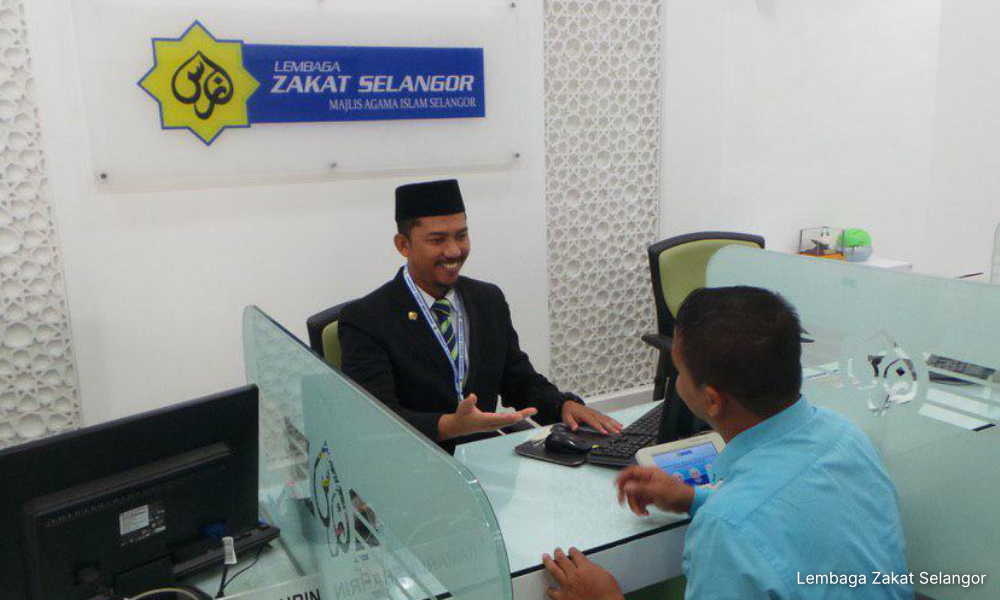
However, the wider ecosystem of welfare-related fundraising, including NGOs, charitable intermediaries, and mixed donation channels, can be far more complex and less uniformly regulated.
When funds pass through multiple organisations before reaching recipients, each layer possibly operates under different levels of oversight. Without strong and consistent monitoring, transparency may weaken.
This creates a structural reality that is often overlooked.
It is not always about one system failing, but about multiple systems interacting with different levels of transparency and control.
So, when large sums are involved, such as RM230 million, the question naturally arises. How do funds of this scale move through welfare-linked structures without earlier detection or intervention?
This is not simply about wrongdoing. It is about system design.
Not a marginal figure
RM230 million is not a marginal figure. It is an amount that, under normal financial and governance expectations, should trigger multiple safeguards, like bank-level monitoring, organisational audits, regulatory scrutiny, and internal compliance mechanisms.
If gaps exist in that chain, then the concern is not only about misconduct, but about oversight fragmentation.
Zakat itself remains one of the most important instruments of social justice within Muslim communities.
It is a structured obligation designed to redistribute wealth, reduce inequality, and support those in need. When it functions effectively, it is stable, targeted, and quietly transformative.
However, the broader welfare ecosystem in which zakat, NGOs, and public donations co-exist is more complex.
Moreover, complexity without equivalent transparency creates vulnerability, not necessarily by intent, but it does result in oversight failure.
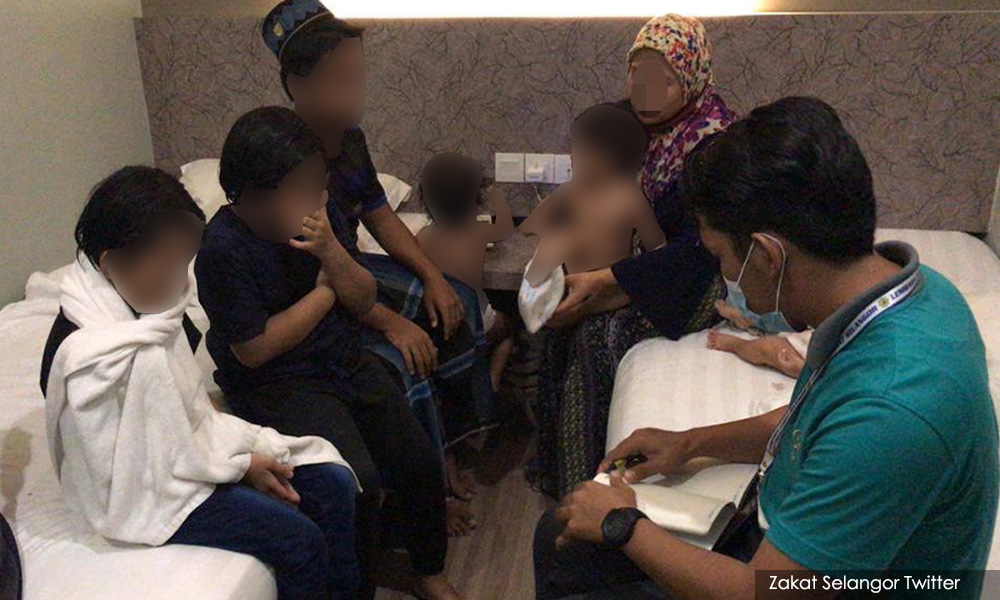
This is why the central issue is not classification. It is governance consistency.
The question is not whether zakat institutions are properly managed in isolation because they have stated frameworks and audit structures. It is about whether the entire ecosystem of welfare-linked giving is equally transparent, traceable, and resilient against misuse at every stage of fund movement.
When the system is fragmented, problems in one part can affect others through public perception and confusion. Once people begin to lose trust across different channels of giving, rebuilding that confidence becomes especially difficult.
This is why reform cannot be reactive or symbolic. It must be structural.
Firstly, transparency must be visible across the entire ecosystem, not just within individual institutions.
Second, fund flows must be traceable from collection to final distribution. Third, intermediary layers must be clearly regulated and audited.
Fourth, oversight must be independent, consistent, and publicly accountable.
Basic safeguards
These are not radical demands. They are basic safeguards for systems built on public trust and moral obligation.
Once trust begins to erode, recovery is slow and often incomplete.
In the meantime, those who are meant to benefit from these systems do not wait for clarification. They wait for assistance.
More importantly, the real question is no longer about one institution or one investigation. It is about whether welfare-linked and zakat-related systems are collectively designed to ensure that every ringgit reaches those it was meant for, without delay, diversion, or doubt.
If the answer is uncertain, then the responsibility is not only to investigate what has happened, but to strengthen the systems so that it cannot happen in fragmented form again.
Accountability is not criticism. It is protection. Thus, protecting zakat and the wider ecosystem of charitable trust is ultimately about protecting the people it exists to serve.
Second, fund flows must be traceable from collection to final distribution. Third, intermediary layers must be clearly regulated and audited.
Fourth, oversight must be independent, consistent, and publicly accountable.
Basic safeguards
These are not radical demands. They are basic safeguards for systems built on public trust and moral obligation.
Once trust begins to erode, recovery is slow and often incomplete.
In the meantime, those who are meant to benefit from these systems do not wait for clarification. They wait for assistance.
More importantly, the real question is no longer about one institution or one investigation. It is about whether welfare-linked and zakat-related systems are collectively designed to ensure that every ringgit reaches those it was meant for, without delay, diversion, or doubt.
If the answer is uncertain, then the responsibility is not only to investigate what has happened, but to strengthen the systems so that it cannot happen in fragmented form again.
Accountability is not criticism. It is protection. Thus, protecting zakat and the wider ecosystem of charitable trust is ultimately about protecting the people it exists to serve.
MARIAM MOKHTAR is a defender of the truth, the admiral-general of the Green Bean Army, and the president of the Perak Liberation Organisation (PLO). Blog, X.


No comments:
Post a Comment