
Malaysia's #1 Content Aggregator
OPINION | A Starving Lion Doesn’t Eat Grass: Why Iran Won’t Bow to Donald Trump
8 Apr 2026 • 12:00 PM MYT

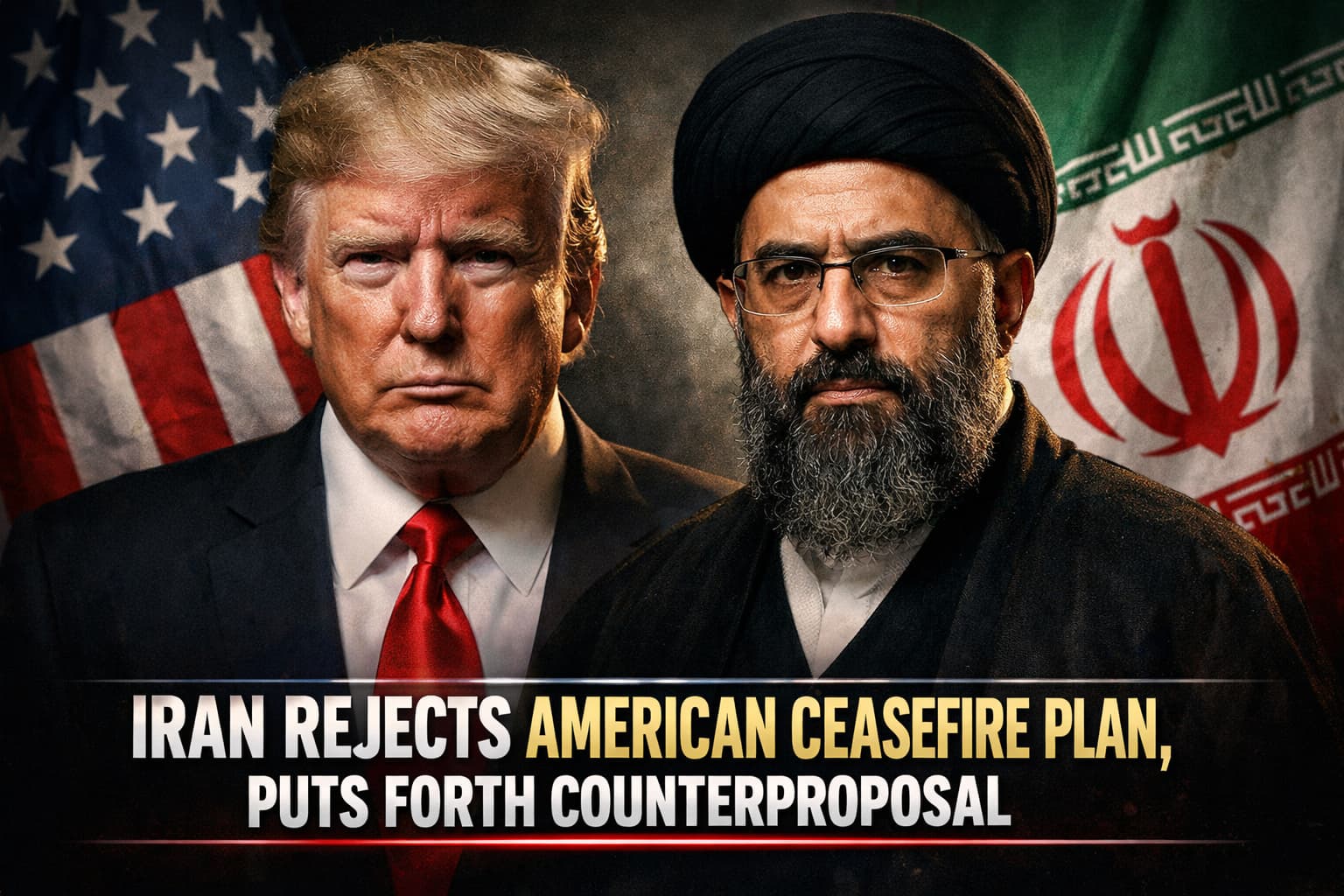
Image generated by ChatGPT
It was never realistic to expect Iran to accept a ceasefire on American terms—and its latest response only confirms that.
According to state media, Tehran has rejected the proposal outright, offering instead its own : an end to wider regional conflicts, reconstruction commitments, sanctions relief, and formal guarantees for safe passage through the Strait of Hormuz. That is not the language of a country looking for an exit. It is the language of a country asserting standing.
To understand why, you have to look beyond missiles and sanctions, and into something less tangible but far more powerful: identity.
Iran does not see itself as just another state in the international system. It sees itself as a civilizational power—an heir to empires, a custodian of history, a nation that has been shaping its region long before the modern West existed. Whether that self-image aligns with present realities is beside the point. What matters is that it believes it.
There is a Tamil proverb that captures this perfectly: a starving lion does not eat grass.
A nation that has defined itself, for centuries, as a dominant force—not just a participant but a central player—does not easily accept being reduced to compliance. And when that identity comes under pressure, it does not soften. It hardens.
That is why Iran’s posture today feels less like desperation and more like defiance. Even under economic strain, even under military threat, it refuses to negotiate from a position that looks like submission. Because to do so would be to concede something deeper than territory or policy—it would be to concede identity.
Which brings us to Donald Trump.
It is tempting to interpret Trump’s rhetoric—his threats, his harsh language, his willingness to publicly humiliate adversaries—as impulsive or even reckless. But that reading misses something important. Trump understands power in psychological terms as much as strategic ones. He knows how pride works. He knows how ego reacts.
And that raises a more uncomfortable possibility: what if the humiliation is the point?
Ask yourself this, if Trump was truly interested in a ceasefire with Iran, would he have posted on his Truth Social website: “Tuesday will be Power Plant Day, and Bridge Day, all wrapped up in one, in Iran. There will be nothing like it!!! Open the Fuckin’ Strait, you crazy bastards, or you’ll be living in Hell – JUST WATCH! Praise be to Allah. President DONALD J. TRUMP.”
Of course not.
Because if your goal were genuinely to secure a ceasefire with a country like Iran, you would not frame your offer in a way that guarantees rejection. You would leave room for face-saving. You would construct an off-ramp.
Trump has done the opposite. By tying peace to demands that strike at Iran’s sovereignty—especially over something as strategically vital as the Strait of Hormuz—he has made acceptance politically and psychologically impossible for Tehran.
That does not look like diplomacy aimed at de-escalation.
It looks like positioning for escalation.
Why?
There are a few plausible answers.
One is because it is only if he destroys Iran, Trump will look like the boss of all bosses.
Two because Israel might want him to - Israel is only going to feel safe if Iran is decapitated.
Three is because Trump, as the president of america and the leader of the western civilisation, might want to boost the waning fortune of the western civilisation, by expanding its influence to the middle east, and Iran is the chief nation in the middle east that stands in his way.
But whatever the mix of motives, the pattern is clear: a ceasefire is being discussed in form, but undermined in substance.
And Iran, for its part, is not exactly searching for peace either.
A state that sees itself as historically destined to lead does not easily accept a subordinate role in a system defined by others. Even when circumstances change, self-perception lags behind reality. Sometimes, it resists reality altogether.
So what you have is not one side pushing for peace and the other resisting. You have two sides, each operating from a position of asserted authority, each unwilling to concede the symbolic ground that compromise requires.
That is not a recipe for resolution.
It is a recipe for prolongation.
The current war—now stretching well beyond a month, fueled by strikes, counterstrikes, and regional spillover—is not an anomaly. It is the result of decades of unresolved tension. These kinds of conflicts do not end with a single agreement or a sudden breakthrough. They persist, evolve, and, more often than not, intensify.
So expecting a near-term peace between Iran and the United States may not just be optimistic.
It may be fundamentally misguided.
Because when both sides see themselves as the lion, neither is willing to eat grass.
And when neither yields, the conflict does not fade.
It stretches—year after year—until it becomes not just a war, but an era.
It was never realistic to expect Iran to accept a ceasefire on American terms—and its latest response only confirms that.
According to state media, Tehran has rejected the proposal outright, offering instead its own : an end to wider regional conflicts, reconstruction commitments, sanctions relief, and formal guarantees for safe passage through the Strait of Hormuz. That is not the language of a country looking for an exit. It is the language of a country asserting standing.
To understand why, you have to look beyond missiles and sanctions, and into something less tangible but far more powerful: identity.
Iran does not see itself as just another state in the international system. It sees itself as a civilizational power—an heir to empires, a custodian of history, a nation that has been shaping its region long before the modern West existed. Whether that self-image aligns with present realities is beside the point. What matters is that it believes it.
There is a Tamil proverb that captures this perfectly: a starving lion does not eat grass.
A nation that has defined itself, for centuries, as a dominant force—not just a participant but a central player—does not easily accept being reduced to compliance. And when that identity comes under pressure, it does not soften. It hardens.
That is why Iran’s posture today feels less like desperation and more like defiance. Even under economic strain, even under military threat, it refuses to negotiate from a position that looks like submission. Because to do so would be to concede something deeper than territory or policy—it would be to concede identity.
Which brings us to Donald Trump.
It is tempting to interpret Trump’s rhetoric—his threats, his harsh language, his willingness to publicly humiliate adversaries—as impulsive or even reckless. But that reading misses something important. Trump understands power in psychological terms as much as strategic ones. He knows how pride works. He knows how ego reacts.
And that raises a more uncomfortable possibility: what if the humiliation is the point?
Ask yourself this, if Trump was truly interested in a ceasefire with Iran, would he have posted on his Truth Social website: “Tuesday will be Power Plant Day, and Bridge Day, all wrapped up in one, in Iran. There will be nothing like it!!! Open the Fuckin’ Strait, you crazy bastards, or you’ll be living in Hell – JUST WATCH! Praise be to Allah. President DONALD J. TRUMP.”
Of course not.
Because if your goal were genuinely to secure a ceasefire with a country like Iran, you would not frame your offer in a way that guarantees rejection. You would leave room for face-saving. You would construct an off-ramp.
Trump has done the opposite. By tying peace to demands that strike at Iran’s sovereignty—especially over something as strategically vital as the Strait of Hormuz—he has made acceptance politically and psychologically impossible for Tehran.
That does not look like diplomacy aimed at de-escalation.
It looks like positioning for escalation.
Why?
There are a few plausible answers.
One is because it is only if he destroys Iran, Trump will look like the boss of all bosses.
Two because Israel might want him to - Israel is only going to feel safe if Iran is decapitated.
Three is because Trump, as the president of america and the leader of the western civilisation, might want to boost the waning fortune of the western civilisation, by expanding its influence to the middle east, and Iran is the chief nation in the middle east that stands in his way.
But whatever the mix of motives, the pattern is clear: a ceasefire is being discussed in form, but undermined in substance.
And Iran, for its part, is not exactly searching for peace either.
A state that sees itself as historically destined to lead does not easily accept a subordinate role in a system defined by others. Even when circumstances change, self-perception lags behind reality. Sometimes, it resists reality altogether.
So what you have is not one side pushing for peace and the other resisting. You have two sides, each operating from a position of asserted authority, each unwilling to concede the symbolic ground that compromise requires.
That is not a recipe for resolution.
It is a recipe for prolongation.
The current war—now stretching well beyond a month, fueled by strikes, counterstrikes, and regional spillover—is not an anomaly. It is the result of decades of unresolved tension. These kinds of conflicts do not end with a single agreement or a sudden breakthrough. They persist, evolve, and, more often than not, intensify.
So expecting a near-term peace between Iran and the United States may not just be optimistic.
It may be fundamentally misguided.
Because when both sides see themselves as the lion, neither is willing to eat grass.
And when neither yields, the conflict does not fade.
It stretches—year after year—until it becomes not just a war, but an era.


No comments:
Post a Comment