
OPINION | Anthony Loke’s Public Rebuke of Steven Sim Reveals More Than Meets the Eye
18 Mar 2026 • 9:00 AM MYT

TheRealNehruism
An award-winning Newswav creator, Bebas News columnist & ex-FMT columnist
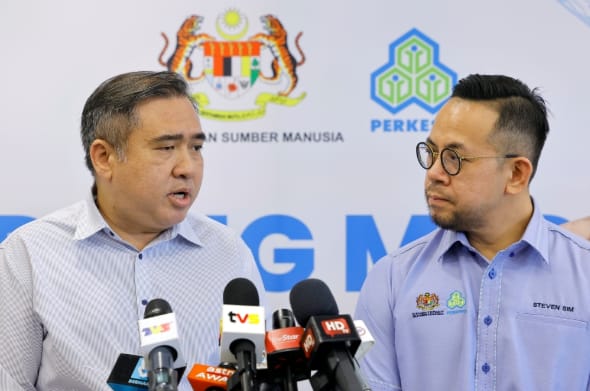
Image credit: MICSea
Recently, Anthony Loke publicly singled out and rebuked Steven Sim over speculation surrounding the next Chief Minister of Penang.
At first glance, the matter may appear administrative. But in politics, public rebukes are rarely insignificant.
Speaking on the Oriental Daily podcast Critical Landing, the secretary-general of the Democratic Action Party said Sim should stop mentioning possible successors to the current Chief Minister, Chow Kon Yeow. According to Loke, the decision on the next Chief Minister must be made by the party’s Central Executive Committee (CEC), not discussed publicly by individual leaders.
“I want to say publicly that Sim should no longer mention any names, should not discuss them, and should not speculate,” Loke said. “It is not his place to speculate either.”
Sim had reportedly cited two potential successors to Chow, who is serving his final term. The names mentioned were Deputy Women, Family and Community Development Minister Lim Hui Ying and Tourism Malaysia Board deputy chairperson Yeoh Soon Hin.
Lim Hui Ying is the daughter of DAP founding figure Lim Kit Siang and sister to party adviser Lim Guan Eng. Yeoh Soon Hin, meanwhile, is a senior party figure and currently chairs the Penang Port Commission.
Loke stressed that although the party leadership has indeed discussed succession internally, the time to announce a decision has not yet come. The party, he said, must continue to support Chow fully while he remains in office.
“There is still a Chief Minister in office, and we will definitely support Chow. Everyone must respect that Chow is still the Chief Minister,” Loke said.
He also made it clear that the party will only announce a successor after the Penang state legislative assembly is dissolved ahead of the next election.
Yet what stands out in this episode is not merely the reminder of party discipline, but the fact that Loke chose to publicly single out Steven Sim. Anthony, after all, had the option of either rebuking Steven personally or rebuking his statement generally, without singling him out. That Anthony chose neither is a decision, not an accident.
In politics, such incidents matter. Politics is fundamentally a field of ambition and ego expansion. Leaders strive to rise precisely because they seek to shape their organisation — be it their party or the country — according to their own vision. Publicly puncturing the ego of a rising figure is therefore rarely a trivial act. If a leader succeeds in puncturing the ego of another in a public manner, it will be taken as a sign that the leader with the punctured ego will not be able to shape the organisation in their image. That is equivalent to saying that everyone in the organisation should stop seeing the leader with the punctured ego as a leader. To prevent such a signal from being established, the leader with the punctured ego will have to prevent their ego from being so punctured.
Steven Sim is widely regarded as one of the rising leaders within the DAP. Since entering government in 2018 as Deputy Youth and Sports Minister, he has served in several portfolios, including Finance and Human Resources, before becoming the first non-Malay to head the Ministry of Entrepreneur and Cooperative Development. He is also the Penang DAP chairman, placing him at the centre of the state’s political future.
But Sim’s political rise has been marked by a particular style: he has consistently chosen conciliation over confrontation.
A telling example occurred in 2025 when a fellow DAP member would publicly berate Steven by calling him a “traitor” during a dinner event celebrating Lim Kit Siang’s 84th birthday at Han Chiang College in Penang. The individual who confronted Sim was reportedly an aide to Lim Guan Eng.
Instead of responding aggressively, Sim downplayed the incident, describing it as a “storm in a teacup”. He called for the party to move forward together rather than escalate the dispute.
“Let us move on and go forward, together and stronger,” Sim said at the time.
Rather than make a fuss about the incident, Steven would choose instead to publicly bestow lavish praises on Lim Kit Siang, who also happesn to be Lim Guan Eng's father, just a few days later.
The episode demonstrated Sim’s instinctive preference for maintaining harmony within the party rather than engaging in open factional conflict.
This penchant for a concilitiory approach has helped Steven maintain relationships not only across different factions within the DAP, but also different parties and races. But politics is also an inherently competitive arena. Those who ultimately shape the direction of their people - be it party, race or nation - are often those willing to assert themselves forcefully when the moment demands it.
In that sense, Anthony Loke’s public rebuke places Steven Sim at a significant political crossroads.
If Sim responds by apologising or acknowledging that he spoke out of turn, it would signal that he is comfortable maintaining his current position within the party hierarchy and does not intend to push beyond it.
If he does not, however, it will signal that Steven still has much more ambition to fulfil, and that we can expect him to evolve from a conciliatory figure into a more assertive one in the days to come.
A sheep can be the vizier to the lion. But to become the king of the jungle, the sheep must itself become a lion.
The question, however, is whether Steven Sim is capable of making such a transition.
This is not an easy question to answer.
On one hand, we must acknowledge that nature plays a powerful role in shaping our temperament. Some individuals are naturally combative; others are inclined towards conciliation and harmony. These instincts often guide how politicians navigate conflict and ambition.
On the other hand, we must also recognise that power is the ultimate temptress. When a person comes close enough to power to feel its allure, it is not uncommon for them to go against their own nature in order to obtain it.
In that sense, the recent episode between Steven Sim and Anthony Loke may end up revealing far more than it initially appears to.
It may tell us how Steven Sim intends to conduct himself from this point forward — whether he will remain the conciliatory figure he has always been, or whether he will begin to reveal the sharper political instincts required to climb higher in the ruthless world of politics.
At first glance, the matter may appear administrative. But in politics, public rebukes are rarely insignificant.
Speaking on the Oriental Daily podcast Critical Landing, the secretary-general of the Democratic Action Party said Sim should stop mentioning possible successors to the current Chief Minister, Chow Kon Yeow. According to Loke, the decision on the next Chief Minister must be made by the party’s Central Executive Committee (CEC), not discussed publicly by individual leaders.
“I want to say publicly that Sim should no longer mention any names, should not discuss them, and should not speculate,” Loke said. “It is not his place to speculate either.”
Sim had reportedly cited two potential successors to Chow, who is serving his final term. The names mentioned were Deputy Women, Family and Community Development Minister Lim Hui Ying and Tourism Malaysia Board deputy chairperson Yeoh Soon Hin.
Lim Hui Ying is the daughter of DAP founding figure Lim Kit Siang and sister to party adviser Lim Guan Eng. Yeoh Soon Hin, meanwhile, is a senior party figure and currently chairs the Penang Port Commission.
Loke stressed that although the party leadership has indeed discussed succession internally, the time to announce a decision has not yet come. The party, he said, must continue to support Chow fully while he remains in office.
“There is still a Chief Minister in office, and we will definitely support Chow. Everyone must respect that Chow is still the Chief Minister,” Loke said.
He also made it clear that the party will only announce a successor after the Penang state legislative assembly is dissolved ahead of the next election.
Yet what stands out in this episode is not merely the reminder of party discipline, but the fact that Loke chose to publicly single out Steven Sim. Anthony, after all, had the option of either rebuking Steven personally or rebuking his statement generally, without singling him out. That Anthony chose neither is a decision, not an accident.
In politics, such incidents matter. Politics is fundamentally a field of ambition and ego expansion. Leaders strive to rise precisely because they seek to shape their organisation — be it their party or the country — according to their own vision. Publicly puncturing the ego of a rising figure is therefore rarely a trivial act. If a leader succeeds in puncturing the ego of another in a public manner, it will be taken as a sign that the leader with the punctured ego will not be able to shape the organisation in their image. That is equivalent to saying that everyone in the organisation should stop seeing the leader with the punctured ego as a leader. To prevent such a signal from being established, the leader with the punctured ego will have to prevent their ego from being so punctured.
Steven Sim is widely regarded as one of the rising leaders within the DAP. Since entering government in 2018 as Deputy Youth and Sports Minister, he has served in several portfolios, including Finance and Human Resources, before becoming the first non-Malay to head the Ministry of Entrepreneur and Cooperative Development. He is also the Penang DAP chairman, placing him at the centre of the state’s political future.
But Sim’s political rise has been marked by a particular style: he has consistently chosen conciliation over confrontation.
A telling example occurred in 2025 when a fellow DAP member would publicly berate Steven by calling him a “traitor” during a dinner event celebrating Lim Kit Siang’s 84th birthday at Han Chiang College in Penang. The individual who confronted Sim was reportedly an aide to Lim Guan Eng.
Instead of responding aggressively, Sim downplayed the incident, describing it as a “storm in a teacup”. He called for the party to move forward together rather than escalate the dispute.
“Let us move on and go forward, together and stronger,” Sim said at the time.
Rather than make a fuss about the incident, Steven would choose instead to publicly bestow lavish praises on Lim Kit Siang, who also happesn to be Lim Guan Eng's father, just a few days later.
The episode demonstrated Sim’s instinctive preference for maintaining harmony within the party rather than engaging in open factional conflict.
This penchant for a concilitiory approach has helped Steven maintain relationships not only across different factions within the DAP, but also different parties and races. But politics is also an inherently competitive arena. Those who ultimately shape the direction of their people - be it party, race or nation - are often those willing to assert themselves forcefully when the moment demands it.
In that sense, Anthony Loke’s public rebuke places Steven Sim at a significant political crossroads.
If Sim responds by apologising or acknowledging that he spoke out of turn, it would signal that he is comfortable maintaining his current position within the party hierarchy and does not intend to push beyond it.
If he does not, however, it will signal that Steven still has much more ambition to fulfil, and that we can expect him to evolve from a conciliatory figure into a more assertive one in the days to come.
A sheep can be the vizier to the lion. But to become the king of the jungle, the sheep must itself become a lion.
The question, however, is whether Steven Sim is capable of making such a transition.
This is not an easy question to answer.
On one hand, we must acknowledge that nature plays a powerful role in shaping our temperament. Some individuals are naturally combative; others are inclined towards conciliation and harmony. These instincts often guide how politicians navigate conflict and ambition.
On the other hand, we must also recognise that power is the ultimate temptress. When a person comes close enough to power to feel its allure, it is not uncommon for them to go against their own nature in order to obtain it.
In that sense, the recent episode between Steven Sim and Anthony Loke may end up revealing far more than it initially appears to.
It may tell us how Steven Sim intends to conduct himself from this point forward — whether he will remain the conciliatory figure he has always been, or whether he will begin to reveal the sharper political instincts required to climb higher in the ruthless world of politics.
***
OK, Loke could have advised or even reprimanded Sim in private instead of doing that in public - just like Guanee berating Chow, wakakaka. Nonetheless I wonder what in the world made Sim recommend Lim Hui Ying as the next CM of Penang.
I have no intention of insulting her but I just have to say this - Everyone can see (has seen) she is definitely NOT CM-material. If she is eventually promoted as Penang's new CM I dare say she'll be nothing more than a puppet of her brother.
So what the frig was Steven Sim up to when he has been already anointed as Penang's next CM?


No comments:
Post a Comment