
So can we have a Malaysian Chinese as PM for more than seven months?
By CS Ming
4 hours ago
JUST WHEN we are about to rejoice on the fact that Malaysia finally has a three-star Chinese general, he retires in seven months. What did he ever do wrong?
Regardless, it was still a small victory for diversity in Malaysia where an imposing racial glass ceiling looms overhead.
To recap, Lieutenant-General Datuk Johnny Lim Eng Seng was given a retirement parade on Wednesday (Jan 14) at the First Royal Rangers Regiment parade ground in Wardieburn Camp, Kuala Lumpur, with his official retirement taking effect two days later.
But what is the position of a general compared to the most coveted job post in Malaysia, the Prime Minister. Or more importantly, is a Chinese ever able to break the glass ceiling and occupy this very illustrious post?
It isn’t a difficult question when we realise that Mahathir who sat on it for over 24 years has a strong Indian ancestry, hidden behind all that Malay-first marketing pitch.
But if we are to turn back the pages of history, Malaysians will be surprised to find that a Chinese once sat on the post, although not for an extended period of time.
That Chinese was no other than Ling Liong Sik, and the reason behind his appointment was a story as interesting as it was dramatic. Back in 1987, UMNO was heading into one of the most dramatic internal elections in its history.
For the first time during his presidency, (Team A) Dr Mahathir Mohamad faced a serious challenge for the party’s top job. His opponent was no lightweight — it was (Team B) Tengku Razaleigh Hamzah, or Ku Li, the former finance minister with strong backing and deep roots in the party.
When the votes were counted, Mahathir narrowly retained the presidency, defeating Ku Li 761 votes to 718. Team A also secured many of the other key party positions. But the result did not settle matters.
Unhappy with how the election had been conducted, several Team B leaders took the dispute to court. They argued that the outcome should be invalidated due to irregularities involving unregistered or improperly approved UMNO branches that had participated in the voting.
After months of legal wrangling, the case took an extraordinary turn. On Feb 4, 1988, Justice Harun Hashim ruled that UMNO itself was unlawful, effectively deregistering the party.
With UMNO suddenly out of the picture, an unusual constitutional situation emerged. Within BN, the ruling coalition, MCA now held the largest number of parliamentary seats among the remaining component parties — 17 in total. Its president, Ling Liong Sik, therefore became the acting chairman of BN.
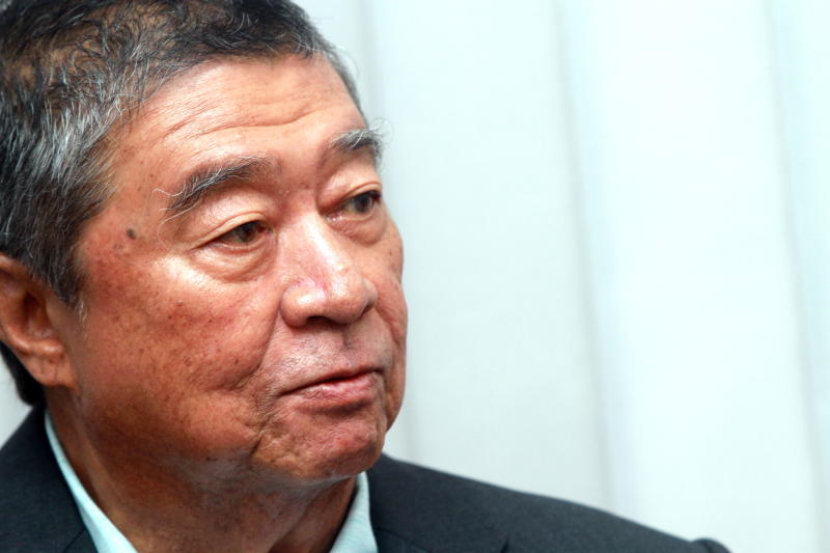
By extension, Ling briefly found himself in the position of acting prime minister in practical terms, and even chaired a Cabinet meeting. It must have been a surreal moment: no UMNO ministers were present, and Mahathir himself was absent.
However, Ling was never formally appointed prime minister by the Yang di-Pertuan Agong, which is why no official records list him as having held the office.
His time at the top of BN was also extremely short-lived. According to accounts from that period, at his first BN Supreme Council meeting as acting chairman, Ling approved the entry of Mahathir’s newly formed party, UMNO Baru, into the coalition.
With UMNO Baru in, the balance of power immediately shifted back, effectively ending Ling’s fleeting stint as acting BN chairman and de facto head of government.
Despite all the talk about glass ceiling and racial barriers, there is nothing in Malaysia’s laws that bars a non-Malay from becoming prime minister. In fact, Mahathir himself once said he believed a non-Malay could one day lead the country. —Feb 2, 2025
***
AAB had some Chinese blood on his maternal side.


We had a Yindian PM for 22 years and 22 months.
ReplyDeleteno need a Chinese M'sian PM.
ReplyDeleteAll we truly required is an accommodative, far-sighted & nationhood driven leader.