al Jazeera:
Trump’s abduction of Maduro escalates concerns over potential war with Iran
Experts say US military action in Caracas ‘gives momentum’ for conflict with Tehran and deals another blow to diplomacy

Iranian Supreme Leader Ayatollah Ali Khamenei says Iran 'will not give in to the enemy' [File: West Asia News Agency/Handout via Reuters]

By Ali Harb
Published On 5 Jan 2026
Washington, DC – Hours after the United States announced the abduction of Venezuelan President Nicolas Maduro, Israeli politician Yair Lapid issued a warning to Tehran: “The regime in Iran should pay close attention to what is happening in Venezuela.”
The forcible removal of Maduro from power came less than a week after US President Donald Trump met with Israeli Prime Minister Benjamin Netanyahu and threatened to launch new strikes against Iran.
Although Washington’s tensions with Caracas and Tehran have different roots and dynamics, analysts say Trump’s move against Maduro raises the prospects of war with Iran.
“A new lawlessness makes everything less stable and war more likely,” said Jamal Abdi, president of the National Iranian American Council (NIAC).
“Whether Trump becomes enamoured with ‘surgical’ regime change, or gives Netanyahu a US imprimatur for similar actions, it’s hard not to see how this gives momentum for the many actors pushing for renewed war with Iran.”
He added that Maduro’s abduction could prompt Iran “to do something that triggers military action”, including developing its own military deterrence or preempting US or Israeli strikes.
Negar Mortazavi, a senior fellow at the Center for International Policy, also said the US actions in Venezuela show Trump’s maximalist aims, further dimming the chances of diplomacy.
“What I see and hear from Tehran is that they are not interested in negotiating with the Trump administration the way this administration signals that they want total surrender,” Mortazavi told Al Jazeera.
“So, not much chance for diplomacy at the moment, which then opens the path to the opposite road, that is conflict. Right now, Israel, Iran and the US are on a path to potential conflict.”
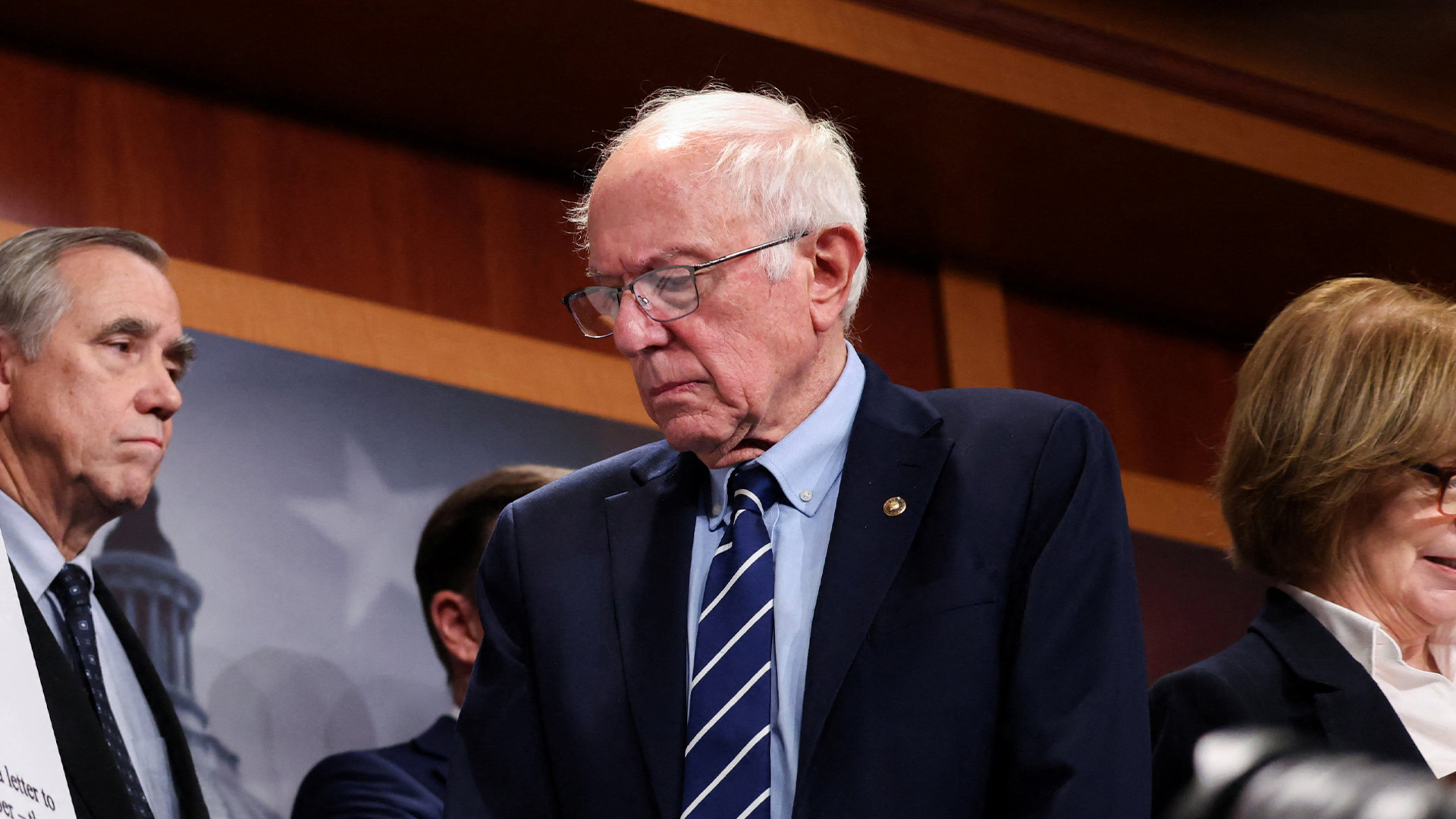
Bernie Sanders condemns Trump’s attack on Venezuela
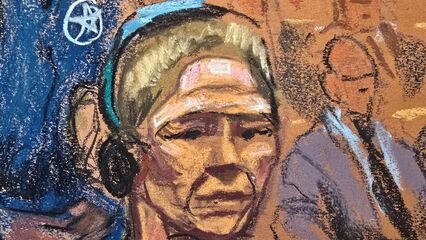
Maduro’s wife suffered ‘significant injuries during abduction’: Lawyer
Abdi echoed that assessment. “This action reinforces every doubt and suspicion about US intentions, and gives more credence to those in Iran who say engaging the US is useless and [that] developing a nuclear deterrent is vital,” he told Al Jazeera.
Iran-Venezuela alliance
The US raid that abducted Maduro and brought him to the US came after months of intensifying rhetoric from Trump against the Venezuelan government.
US officials have accused Maduro of leading a drug organisation, and Trump and his aides have been increasingly arguing that Washington is entitled to Venezuela’s vast oil reserves.
Secretary of State Marco Rubio has also been emphasising Maduro’s ties to Iran, accusing Caracas, without evidence, of providing the Lebanese armed group Hezbollah a foothold in the Western Hemisphere.
Maduro is a close ally of Iran, and the two heavily sanctioned countries have been pushing to deepen their trade ties, which are estimated to be in the billions of dollars.
So, with Maduro gone, Iran’s small network of allies may shrink further, after the fall of leader Bashar al-Assad in Syria and the weakening of Hezbollah in Lebanon.
The Iranian government was quick to condemn the US attack on Venezuela, calling on the United Nations to intervene and halt the “unlawful aggression”.
“The US military aggression against an independent state that is a member of the UN represents a grave breach of regional and international peace and security,” the Iranian Ministry of Foreign Affairs said in a statement.
“Its consequences affect the entire international system and will further expose the UN Charter-based order to erosion and destruction.”
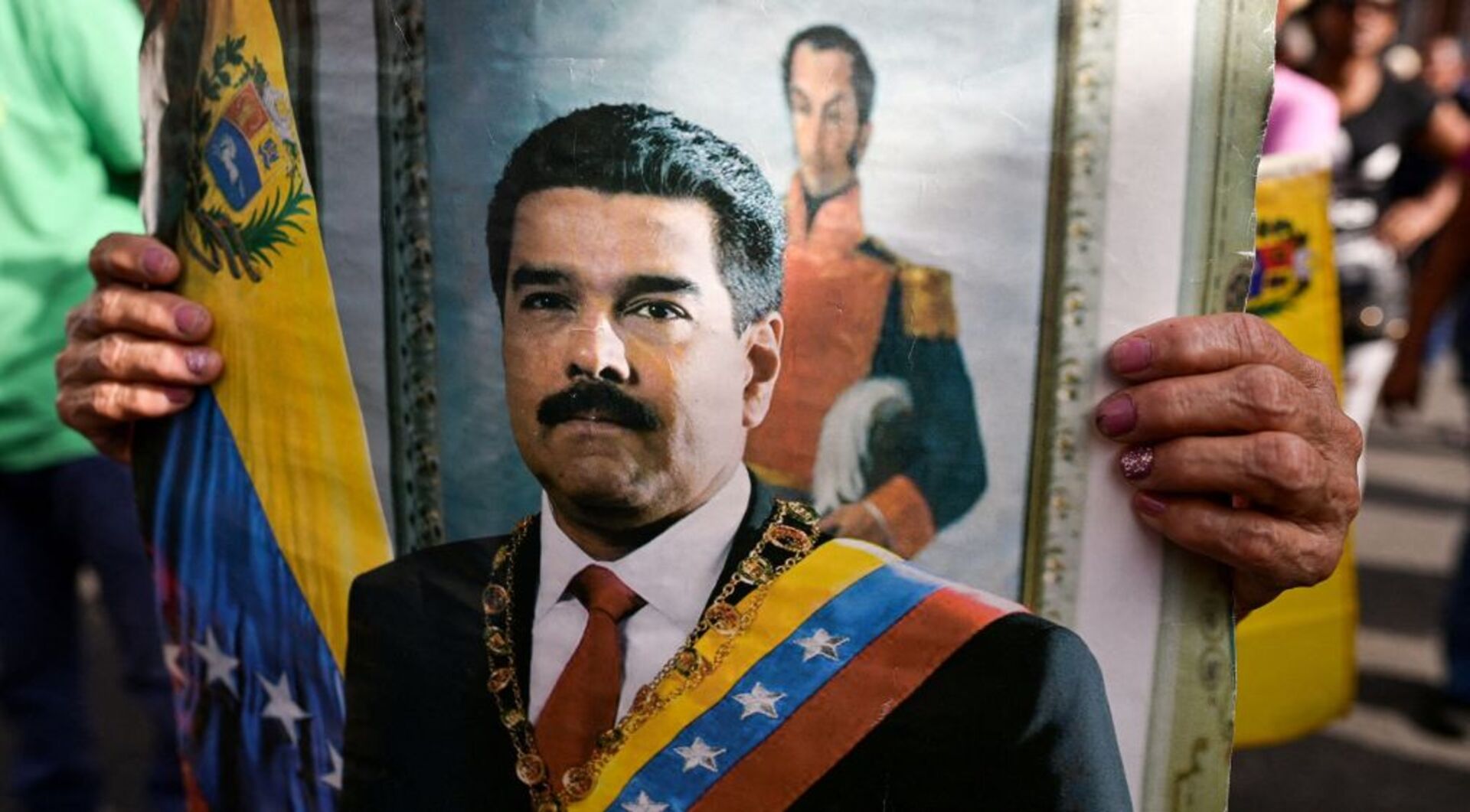
What might the US do next after Venezuela?
On Saturday, Rubio suggested that Maduro’s abduction carried a message to all of Washington’s rivals in the Trump era.
“When he tells you that he’s going to do something, when he tells you he’s going to address a problem, he means it,” the top US diplomat told reporters.
But Iranian Supreme Leader Ali Khamenei doubled down on his defiant rhetoric after the US raid in Caracas.
“We will not give in to the enemy,” Khamenei wrote in a social media post. “We will bring the enemy to its knees.”
Trump’s threats
Last week, Trump hosted Netanyahu in Florida and threatened to bomb Iran again if the country rebuilds its missile or nuclear programmes.
“Now I hear that Iran is trying to build up again, and if they are, we’re going to have to knock them down,” Trump said. “We’ll knock them down. We’ll knock the hell out of them.”
Israel launched a war against Iran in June, killing the country’s top military commanders, several nuclear scientists and hundreds of civilians.
The US joined in the attack, bombing Iran’s three main nuclear sites.
While Trump has often reiterated that the US strikes “obliterated” Iran’s nuclear programme and celebrated the war as a success, the Iranian governing system survived the assault.
Tehran responded with barrages of hundreds of rockets against Israel, dozens of which penetrated the country’s multi-layered air defences, and Iranian forces were able to keep firing until the final moments of the war, before the ceasefire came into effect.
Some critics argue that regime change was and remains Israel’s goal in Iran, and Trump appears to be increasingly buying into that objective.
On Friday, Trump warned that the US is “locked and loaded” and ready to attack Iran if the Iranian government kills protesters amid the ongoing but sporadic antigovernment demonstrations across the country.
He renewed the same threat late on Sunday. “If they start killing people like they have in the past, I think they’re going to get hit very hard by the United States,” the US president said.
So, could the US carry out a Venezuela-style government decapitation in Iran?
NIAC’s Abdi noted that Israel has already tried to kill the country’s top leaders, including President Masoud Pezeshkian, in June.
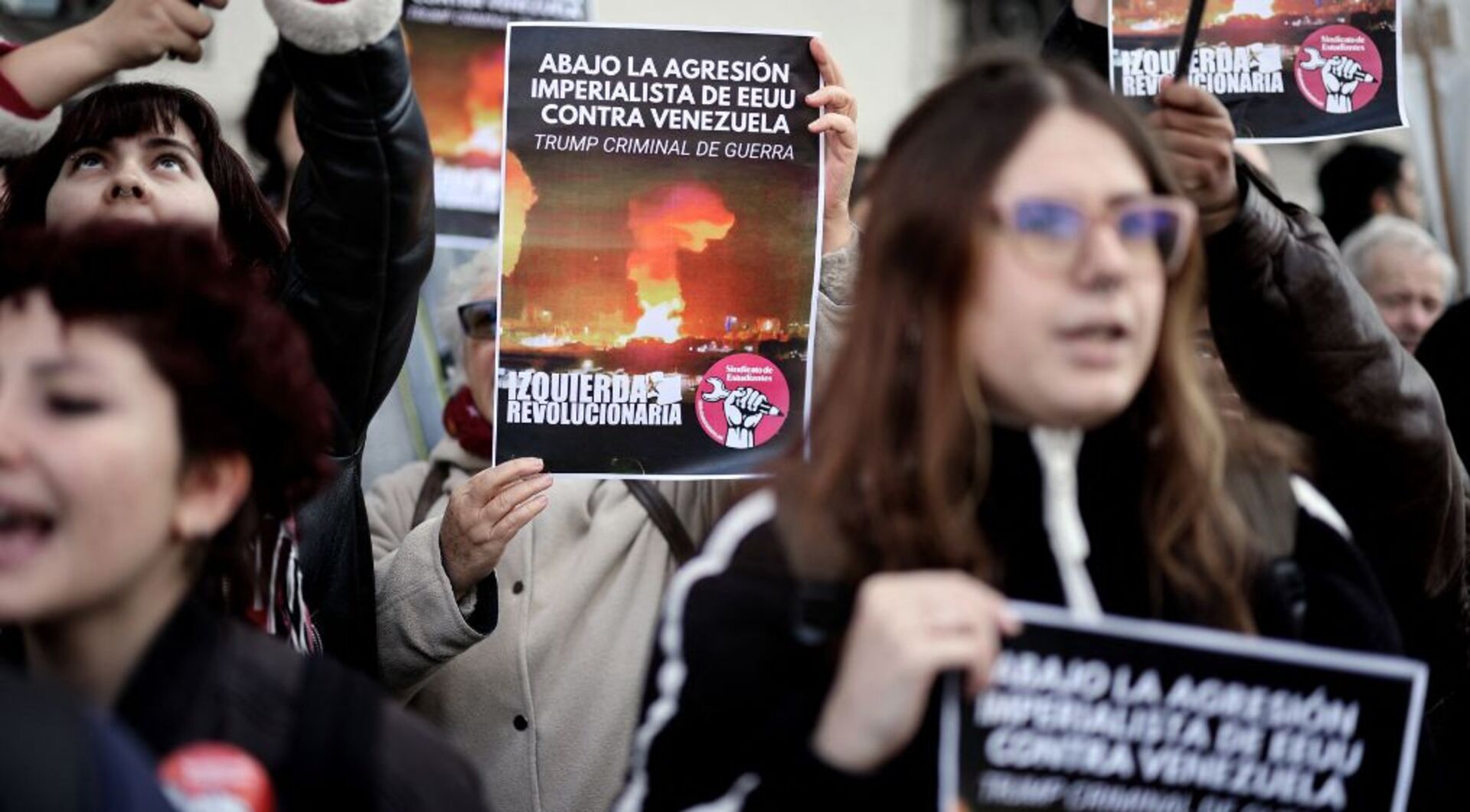
Spanish protesters rally near US embassy in Madrid over Venezuela attack
Trump also repeatedly threatened Khamenei with assassination, and Israeli officials confirmed that they sought to “eliminate” the supreme leader during the war.
“Iranian officials have said they accordingly have plans in place so that killing or removing senior leaders does not paralyse or topple the regime,” Abdi said.
“It would be far messier to run a ‘snatch and grab’ operation on Iran, given their ability to retaliate against US interests and personnel.”
Venezuela without Maduro
Even in Venezuela, removing Maduro has not translated into a regime collapse, at least for now.
On Sunday, Vice President Delcy Rodriguez, now Venezuela’s acting president, stressed that Maduro remains the country’s only leader and condemned the US attack.
She also suggested that Israel was involved in the abduction of Maduro, a vocal critic of the US ally.
“Governments around the world are shocked that the Bolivarian Republic of Venezuela has become the victim and target of an attack of this nature, which undoubtedly has Zionist undertones,” Rodriguez said.
Trump responded by threatening the acting Venezuelan president, telling The Atlantic magazine that she would pay a “very big price, probably bigger than Maduro” if she did not acquiesce to US demands.
So, the US president’s plans for “running” Venezuela and taking its oil are not complete yet, and will likely require more military action.
“I doubt Venezuela can be a ‘one and done’ or a quick ‘in and out’ situation, which is Trump’s favourite model. His brand is that he engages in quick shows of force, not forever wars,” Mortazavi said.
She cited swift operations that Trump has ordered, including the killing of ISIL (ISIS) leader Abu Bakr al-Baghdadi in 2019, the assassination of top Iranian General Qassem Soleimani in 2020, and the attack on Iran’s nuclear sites in June.
“Most Americans are tired of forever wars, especially in the Middle East, so the Trump administration knows they can’t sell more forever wars to Americans,” Mortazavi said.
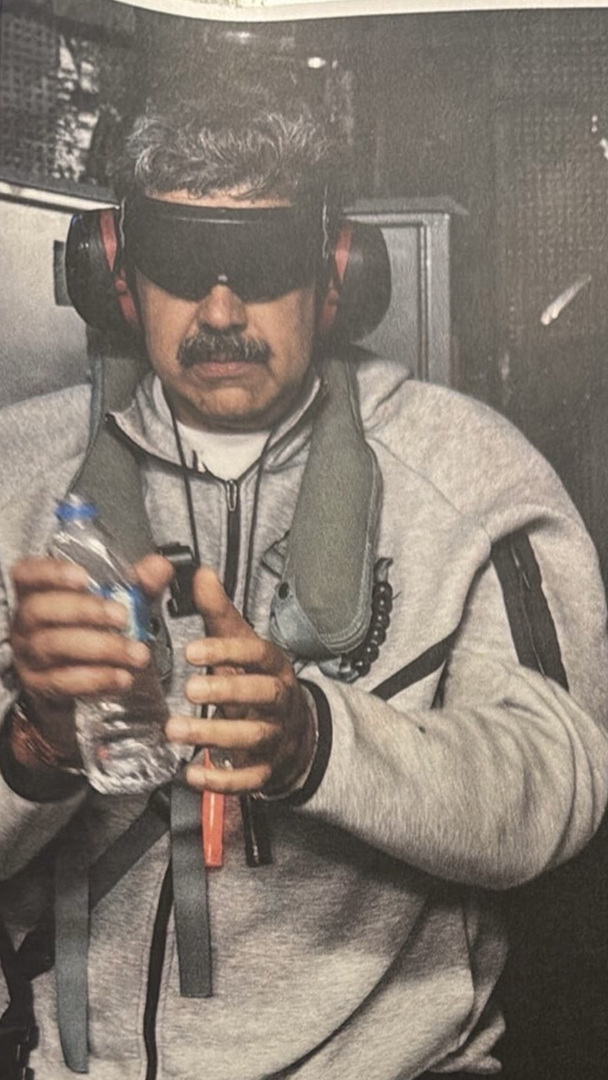
Photo of Maduro bound and blindfolded posted by Trump sparks condemnation
But Trump has already floated the prospect of a ground invasion of Venezuela.
“We’re not afraid of boots on the ground,” he said. “We don’t mind saying it, but we’re going to make sure that that country is run properly. We’re not doing this in vain.”
Abdi said that a long-term US involvement in Venezuela could indirectly stave off war with Iran.
“There is also the possibility that the US gets bogged down in ‘running’ Venezuela and doesn’t have the bandwidth to wage, or to support Israel launching, the next Iran war,” he told Al Jazeera.
“Iran was next on the menu after the US invaded Iraq in 2003, and we know what happened there, and Trump may not want to pronounce ‘mission accomplished’ just yet.”
“We’re not afraid of boots on the ground,” he said. “We don’t mind saying it, but we’re going to make sure that that country is run properly. We’re not doing this in vain.”
Abdi said that a long-term US involvement in Venezuela could indirectly stave off war with Iran.
“There is also the possibility that the US gets bogged down in ‘running’ Venezuela and doesn’t have the bandwidth to wage, or to support Israel launching, the next Iran war,” he told Al Jazeera.
“Iran was next on the menu after the US invaded Iraq in 2003, and we know what happened there, and Trump may not want to pronounce ‘mission accomplished’ just yet.”
The oil question
Still, some critics – including Republican US Congresswoman Marjorie Taylor Greene – have argued that if the US succeeds in controlling Venezuela’s oil resources, it will be able to offset energy market disruptions from a possible war with Iran.
“The next obvious observation is that, by removing Maduro, this is a clear move for control over Venezuelan oil supplies that will ensure stability for the next obvious regime change war in Iran,” Greene wrote on X on Saturday.
About 20 percent of the world’s oil flows through the Strait of Hormuz, which Iran may push to shut down in the case of an all-out war.
Abdi said that Venezuelan oil “could theoretically provide some cushion” to the loss of exports from the Gulf region.
“But this would mean a lot of things going right for the US in Venezuela, and it is probably far too soon to make that judgement,” he said.
***
At the bottom of it all, is OIL OIL OIL and Wankee avarice


The evidence for the drug charges will be produced in court. Sabar lah.
ReplyDeleteMeanwhile...
While the world watches Venezuela, the real story might be next door in Guyana, where the world's most important new oil frontier was under direct threat.
Maduro's claim to two-thirds of Guyana's territory (Esequibo region) aimed to seize over 11 billion barrels of onshore and offshore oil, creating a massive geopolitical risk.
The most immediate outcome in capture of Maduro is to neutralize this threat and secure the operating companies stakes in Guyana, as well as Western Hemisphere's energy security.
By stabilizing Guyana's production, which is set to hit 1.7 million barrels per day, the intervention guarantees way more oil flow in near term than reviving Venezuela's aged infrastructure and heavy sour oil.
This move protects billions in U.S. investment and positions Guyana producers as the ultimate winners.
https://x.com/jackprandelli/status/2008298246675021881?s=20
wakakakaka… sabar lah when a tube of white powder is AGAIN magically appeared & presented as the drug evidence!
Delete1st, Guyana's potential oil fields r under disputed territory.
2nd, due to close proximity, it's likely that the extracted crude would be heavy, sane as the Venezuela type.
3rd, due to years of industrial decoupling, the yank is no longer able to support the extraction of heavy cruel - both in supplying the additives like surfactants, polymers, solvents, and biodiesel used to reduce its high viscosity, break oil-water emulsions, disperse solids, and improve flowability for easier pumping and separation during the extract & transport heavy crude oil.
Guess who can supplies them!
Moreover, the equipments needed AGAIN must be supplied by u-know-who.
Neither Guyana & the Yank would gain much!
https://www.facebook.com/share/p/17x5vETfto/
ReplyDeleteThe Betrayal in Venezuela: Proven?
It’s over... Treason in Venezuela has been proven. They betrayed their president, "Maduro," through the mediation and bribery of an Arab country. Can you guess which one?! 👀
Almost everyone speculated that what happened to Venezuelan President Maduro was an internal betrayal. No matter how powerful the U.S. military is, it would be impossible for them to enter the palace, take the president, and leave without a single American soldier being scratched—unless there was help from the inside.
It is also impossible that American fighter jets could hover in Venezuelan airspace for an hour at very low altitudes without a single anti-aircraft round being fired at them.
Today, this is no longer just speculation; it is all backed by evidence. The involvement of an Arab country in a bribery scheme to complete the operation in coordination with the U.S. has been uncovered.
The famous British newspaper, The Telegraph, released a leaked report with names and evidence showing that everything that occurred was by agreement with Delcy Rodríguez, the Vice President of Venezuela and current acting President.
Let’s start from the beginning...
The Telegraph stated that Delcy contacted a member of the ruling family in Doha, Qatar, and told them: "I know America wants to remove Maduro from power. Can you connect me with Trump and tell him I am ready to execute whatever he wants in exchange for taking over the presidency after Maduro, and ensuring no harm comes to the people—especially after the U.S. fleet surrounded Venezuela?"
Why Qatar specifically? Why did Maduro’s deputy choose Qatar as a mediator over any other country?
There are several reasons, my friend:
Assets and Real Estate: According to reports by The Telegraph and the Miami Herald, Delcy owns significant assets and real estate in Qatar. This, combined with her position, allowed her to get close to members of the royal family. She is also a very skilled lawyer.
Ties with Trump: Qatar maintains excellent relations and open channels with Trump due to the massive investments Qatar pumps into the United States.
Sanctioned Nations: Qatar is known for being open to dealing with internationally sanctioned countries, whether the sanctions are economic or strategic.
The Global Mediator: Qatar is famous for its role as a global mediator (e.g., between the Taliban and the U.S., Hamas and Israel, Iran and the West, and now Venezuela and the U.S.).
The Secret Meeting in Doha
Qatar conveyed Delcy’s message to Trump. Indeed, Trump agreed and scheduled a meeting between U.S. Secretary of State Rubio and Delcy in Doha, mediated by Qatar.
The meeting took place in October in Doha, attended by Rubio, Vice President Delcy Rodríguez, and her brother Jorge Rodríguez (President of the Venezuelan Parliament).
The Agreement: They agreed to hand over President Maduro to the U.S. without any resistance and to surrender the security detail during a shift change. In exchange, Delcy would become the transitional president instead of María Corina Machado (the opposition leader whom Trump originally intended to install).
According to the Miami Herald, Delcy wasn't the only option. Qatar presented two choices to the U.S.:
Option 1: Delcy Rodríguez (as mentioned).
Option 2: Miguel Rodríguez Torres, a retired general currently living in exile.
Ultimately, they settled on Delcy. In exchange for this peaceful transition of power, the U.S. would get what it wants from Venezuelan oil. American companies would take over oil management, and the oil would not be sold to U.S. enemies—with the exception of China.
Bribery and "Saving Face"
The Telegraph reported that it didn't stop at mediation; Qatar allegedly paid bribes to Vice President Delcy to ensure total compliance with Trump’s demands. This explains why Trump issues daily statements asserting that Delcy will do exactly what America wants.
good one MF - will publish
Delete