
Baltic Sea cable sabotage timeline: From Nord Stream to 2026 – who’s behind the attacks?
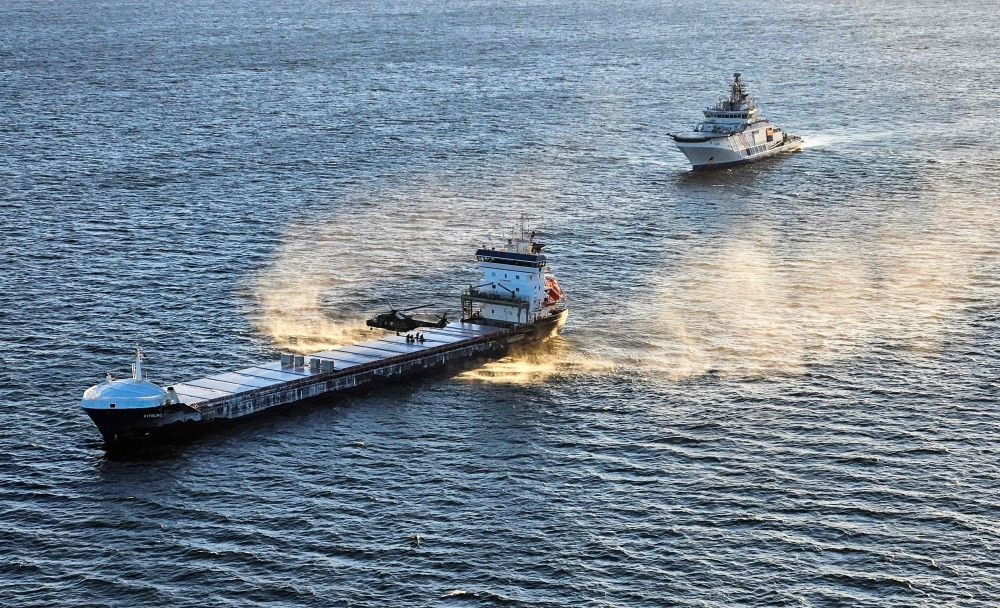
A Border Guard helicopter and the Coast Guard patrol ship “Turva” seize the “Fitburg” vessel in the Gulf of Finland on December 31, 2025. — Finnish Police/AFP pic
Tuesday, 06 Jan 2026 9:00 PM MYT
STOCKHOLM, Jan 6 — The Baltic Sea region is on high alert after a string of power cable, telecoms link and gas pipeline outages since Russia invaded Ukraine in 2022, and NATO has boosted its military presence with frigates, aircraft and naval drones.
Police in the region have found that some incidents were caused by sabotage, while others were accidental or remain subject to ongoing proceedings.
January 2026: Lithuania-Latvia telecom cable
An undersea telecoms cable linking Sventoji in Lithuania to Liepaja in Latvia, two coastal towns some 65km apart, was damaged on January 2.
Latvian police later boarded a ship docked at Liepaja and initiated criminal proceedings.
The police said on January 5 they found no evidence linking the ship to the damage to the cable, which belongs to Sweden's Arelion, and that they were investigating the incident further.
December 2025: Finland-Estonia telecom cables, Sweden-Estonia cable
Finnish police on December 31 seized a cargo vessel en route from Russia to Israel on suspicion of sabotaging an undersea telecoms cable belonging to Elisa running from Helsinki across the Gulf of Finland to Estonia.
The vessel, Fitburg, was caught with its anchor in the water, and investigators found tracks suggesting it had been dragged along the seabed for “several tens of kilometres”, police said.
Investigators said the ship's 14 crew members were from Russia, Georgia, Kazakhstan and Azerbaijan, and that one of them was held in police custody while three others were banned from travel while an investigation was ongoing.
Sweden's Arelion said that one of its cables running from Finland to Estonia was also damaged on December 31, and that a cable from Estonia to Sweden stopped working on December 30.
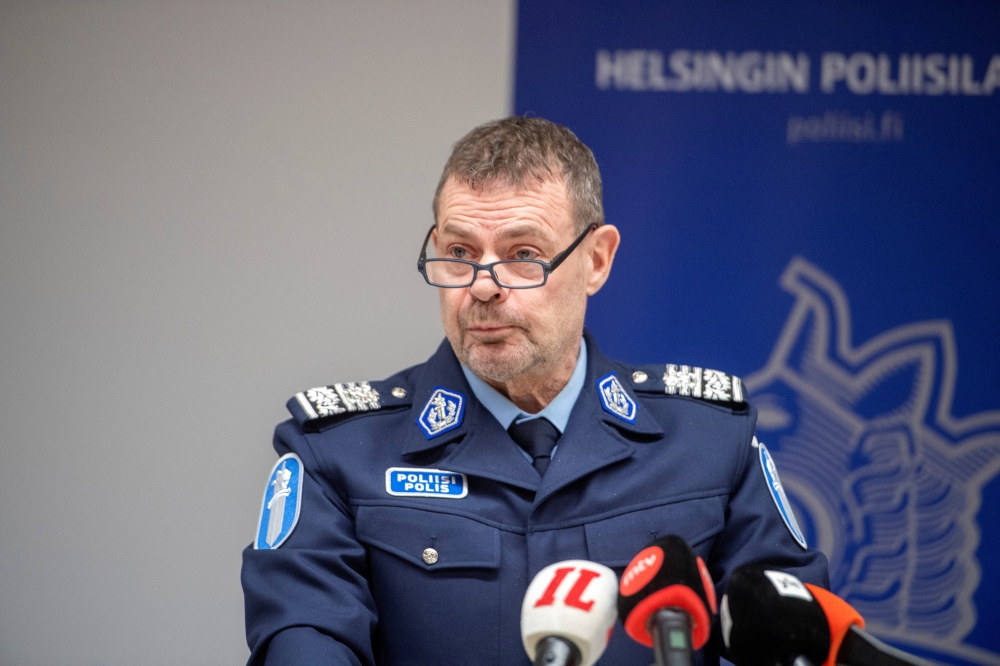
National Bureau of Investigation director Robin Lardot attends a press conference in Helsinki, Finland on December 31, 2025. — Lehtikuva/Reuters pic
January-February 2025: Sweden-Latvia and Finland-Germany telecom cables
An undersea fibre-optic cable connecting Latvia and Sweden's Gotland island malfunctioned on January 26, prompting a Nato and police investigation.
Sweden later seized and boarded the Maltese-flagged bulk vessel Vezhen on suspicion that it had caused the damage in an act of gross sabotage.
Bulgarian shipping company Navigation Maritime Bulgare said Vezhen's anchor had dropped in high winds and may have struck the cable, but denied sabotage.
A Swedish prosecutor later ruled the breach accidental and released the vessel.
December 2024: Power and internet cables
The Estlink 2 undersea power cable connecting Finland and Estonia was cut on December 25 along with four telecoms lines.
Finland seized the Cook Islands-registered Eagle S tanker on suspicion it caused the damage by dragging its anchor, adding that the ship was part of a “shadow fleet” circumventing Russian oil sanctions.
The Kremlin dismissed concerns about the seizure.
In October 2025, a Finnish court dismissed a case against the Eagle S captain and crew for lack of evidence.
November 2024: Baltic telecom cables
Two undersea fibre-optic communications cables located more than 100 nautical miles (about 200km) apart in the Baltic were severed on November 17 and 18, raising suspicions of sabotage.
Investigators zeroed in on Chinese bulk carrier Yi Peng 3, and a Reuters analysis of MarineTraffic data showed that the ship's coordinates corresponded to the time and place of the breaches.
China allowed representatives from Germany, Sweden, Finland and Denmark on December 21 to board the Yi Peng 3 along with Chinese investigators.
A Swedish inquiry found no conclusive evidence to suggest wrongdoing.

The seized vessel Fitburg is moored at the harbour in Kirkkonummi, Finland, on January 1, 2026. — Lehtikuva/AFP pic
October 2023: Balticconnector gas pipe and cables
A subsea gas pipeline, the Balticconnector, which links Finland and Estonia, was severed by what Finnish investigators determined was the Chinese container vessel NewNew Polar Bear dragging its anchor on October 8, 2023.
Estonian police suspected the ship of also damaging telecoms cables connecting Estonia to Finland and Sweden on October 7-8, before hitting the gas pipeline on its way to a port near St Petersburg in Russia.
The ship's captain appeared in court in Hong Kong in 2025 accused of causing “criminal damage” to the pipeline and cables.
September 2022: Nord Stream blasts
Nord Stream 1 and Nord Stream 2, built across the Baltic Sea by Russia's state-controlled Gazprom to pump natural gas to Germany, were damaged in explosions in September 2022.
Some Western officials suggested Russia blew up its own pipelines, an interpretation dismissed by Moscow, which has blamed the United States, Britain and Ukraine for the blasts, which largely cut Russian gas off from the European market.
Those countries denied involvement. — Reuters
***
From Google:
In August 2024 media reported that in June German authorities issued a European arrest warrant for a Ukrainian national Volodymyr Z. living near Warsaw suspected of having used the yacht Andromeda together with two others to sabotage the Nord Stream pipeline.


One occurrence is accidental, two occurrences is bad luck, three or more occurrences is vanishingly likely to be an accident or bad luck.
ReplyDeletewakakakaka… mfer still trying hard to salvage yr tainted fart of know-nothingness in this issue!
DeleteTutup Sajalah Baltic Sea for Russian ships.
ReplyDeleteDenmark cannot legally "close" the Baltic Sea, as international law, particularly the 1857 Copenhagen Convention and UNCLOS, guarantees free transit through the strategic Danish Straits, but Denmark can control passage and enforce rules, especially against sanctioned "shadow fleet" tankers, by implementing stricter checks on technical compliance and safety, potentially denying access if standards aren't met, though a full closure is legally complex and could be seen as an act of war.
Denmark's Control
Strategic Chokepoint: Denmark controls access to the Baltic Sea, making its straits vital for shipping, including Russia's oil exports.
"Shadow Fleet" Crackdown: Denmark is exploring ways to limit "shadow fleet" tankers (carrying Russian oil) by enforcing technical and safety standards, denying access to non-compliant vessels, which is a legally sounder approach than a full ban.
Current Actions
Denmark is increasing controls at the Skagen anchorage to intercept problematic tankers. It seeks consensus within the EU for a systemic solution to target the shadow fleet.
Denmark should increase control over Russian ships, focusing on compliance to navigate these channels.
Wakakaka… w/o yankee naval supports, how could Danish enforces the maritime control with its current maritime fleet?
DeleteTruly inconsequential fart