
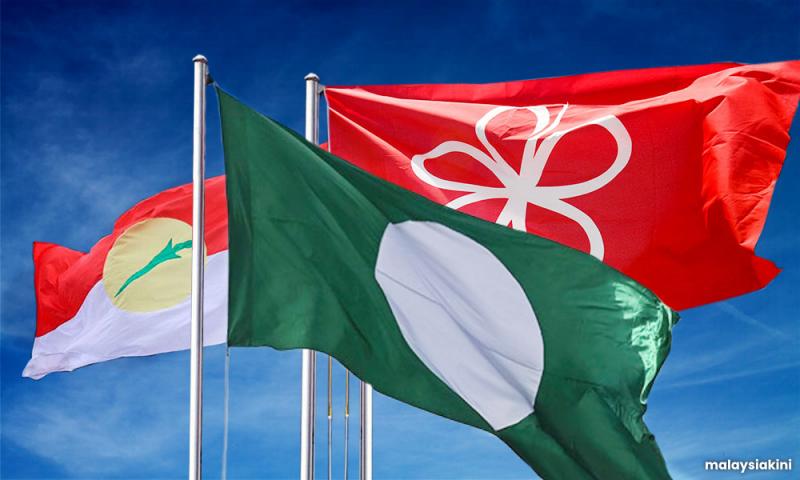

A look back at recent times Umno, PAS, Bersatu 'betrayed' Malay allies
Qistina Nadia Dzulqarnain
Published: Jan 5, 2026 8:00 AM
Updated: 2:00 PM
Since the 2018 general election, Malay-based parties have been locked in a cycle of uneasy partnerships affecting state and federal politics.
At the heart of such shifts is the tumultuous relationship between Umno, PAS, and Bersatu, parties which often demonstrate how quickly cooperation can fracture when leadership and control are at stake.
Malaysiakini takes a look at how rivalry, mistrust, and shifting loyalties among the parties have driven various political upheavals.
Sheraton Move
In February 2020, the nation’s political scene was gripped by the Sheraton Move, with the political manoeuvre ultimately leading to the fall of the first Pakatan Harapan government led by second-time prime minister Dr Mahathir Mohamad.
The collapse of the Harapan administration was also fuelled by Bersatu president Muhyiddin Yassin’s move to exit Harapan, as well as the defection of 11 PKR MPs, led by Azmin Ali, to Bersatu, which caused Harapan to lose its parliamentary majority.
Backed by BN component parties, PAS, and several other quarters, Muhyiddin was sworn in as prime minister on March 1, 2020, with the former Umno man going on to lead a government under the Perikatan Nasional banner.
Published: Jan 5, 2026 8:00 AM
Updated: 2:00 PM
Since the 2018 general election, Malay-based parties have been locked in a cycle of uneasy partnerships affecting state and federal politics.
At the heart of such shifts is the tumultuous relationship between Umno, PAS, and Bersatu, parties which often demonstrate how quickly cooperation can fracture when leadership and control are at stake.
Malaysiakini takes a look at how rivalry, mistrust, and shifting loyalties among the parties have driven various political upheavals.
Sheraton Move
In February 2020, the nation’s political scene was gripped by the Sheraton Move, with the political manoeuvre ultimately leading to the fall of the first Pakatan Harapan government led by second-time prime minister Dr Mahathir Mohamad.
The collapse of the Harapan administration was also fuelled by Bersatu president Muhyiddin Yassin’s move to exit Harapan, as well as the defection of 11 PKR MPs, led by Azmin Ali, to Bersatu, which caused Harapan to lose its parliamentary majority.
Backed by BN component parties, PAS, and several other quarters, Muhyiddin was sworn in as prime minister on March 1, 2020, with the former Umno man going on to lead a government under the Perikatan Nasional banner.

Former PN chairperson Muhyiddin Yassin
While the perceived betrayal spearheaded by Bersatu against Mahathir - arguably one of the country’s staunchest Malay rights advocates - was seen by many quarters as a “backdoor” takeover which disregarded electoral mandates, some, including Umno and PAS, argued that the shift was a necessary realignment to protect Malay-Muslim interests.
The episode, however, would soon sow distrust and resentment as the relatively younger and smaller Bersatu now held the premiership while Umno, the most established Malay nationalist party, was relegated to a supporting role.
In the aftermath of the Sheraton Move, Umno and PAS also agreed to accept Bersatu as a member in Muafakat Nasional (MN), with then-BN secretary-general Annuar Musa explaining that the injection of Bersatu was part of efforts to strengthen the pact.
While Bersatu later claimed that there was no follow-up from MN regarding the party’s participation, Umno’s willingness to cooperate with Bersatu then is understood to be rooted in necessity, not conviction.
MN breaks up
Launched in September 2019 following the results of the 2018 general election, the Umno-PAS pact began to fracture once Umno found itself sharing power not just with PAS, but also with Bersatu - a party targeting the same voter base.
PAS’ backing of Muhyiddin’s administration led to Umno leaders openly questioning Bersatu’s legitimacy, while PAS defended the arrangement as a pragmatic necessity, seemingly prioritising its relationship with Bersatu over the spirit of the MN pact.
In September 2020, just one month after Annuar affirmed Bersatu’s inclusion in MN, Umno’s frustrations with PAS began surfacing more openly, with then-Umno Youth chief Asyraf Wajdi Dusuki publicly questioning PAS’ decision to formally join PN as a component member.
Asyraf’s remarks came after PAS sought answers from Umno regarding allegations that some of the latter party’s lawmakers were backing Anwar Ibrahim to be prime minister - a situation which PAS secretary-general Takiyuddin Hassan said, if true, would mean Umno had disobeyed the MN charter.
While the perceived betrayal spearheaded by Bersatu against Mahathir - arguably one of the country’s staunchest Malay rights advocates - was seen by many quarters as a “backdoor” takeover which disregarded electoral mandates, some, including Umno and PAS, argued that the shift was a necessary realignment to protect Malay-Muslim interests.
The episode, however, would soon sow distrust and resentment as the relatively younger and smaller Bersatu now held the premiership while Umno, the most established Malay nationalist party, was relegated to a supporting role.
In the aftermath of the Sheraton Move, Umno and PAS also agreed to accept Bersatu as a member in Muafakat Nasional (MN), with then-BN secretary-general Annuar Musa explaining that the injection of Bersatu was part of efforts to strengthen the pact.
While Bersatu later claimed that there was no follow-up from MN regarding the party’s participation, Umno’s willingness to cooperate with Bersatu then is understood to be rooted in necessity, not conviction.
MN breaks up
Launched in September 2019 following the results of the 2018 general election, the Umno-PAS pact began to fracture once Umno found itself sharing power not just with PAS, but also with Bersatu - a party targeting the same voter base.
PAS’ backing of Muhyiddin’s administration led to Umno leaders openly questioning Bersatu’s legitimacy, while PAS defended the arrangement as a pragmatic necessity, seemingly prioritising its relationship with Bersatu over the spirit of the MN pact.
In September 2020, just one month after Annuar affirmed Bersatu’s inclusion in MN, Umno’s frustrations with PAS began surfacing more openly, with then-Umno Youth chief Asyraf Wajdi Dusuki publicly questioning PAS’ decision to formally join PN as a component member.
Asyraf’s remarks came after PAS sought answers from Umno regarding allegations that some of the latter party’s lawmakers were backing Anwar Ibrahim to be prime minister - a situation which PAS secretary-general Takiyuddin Hassan said, if true, would mean Umno had disobeyed the MN charter.
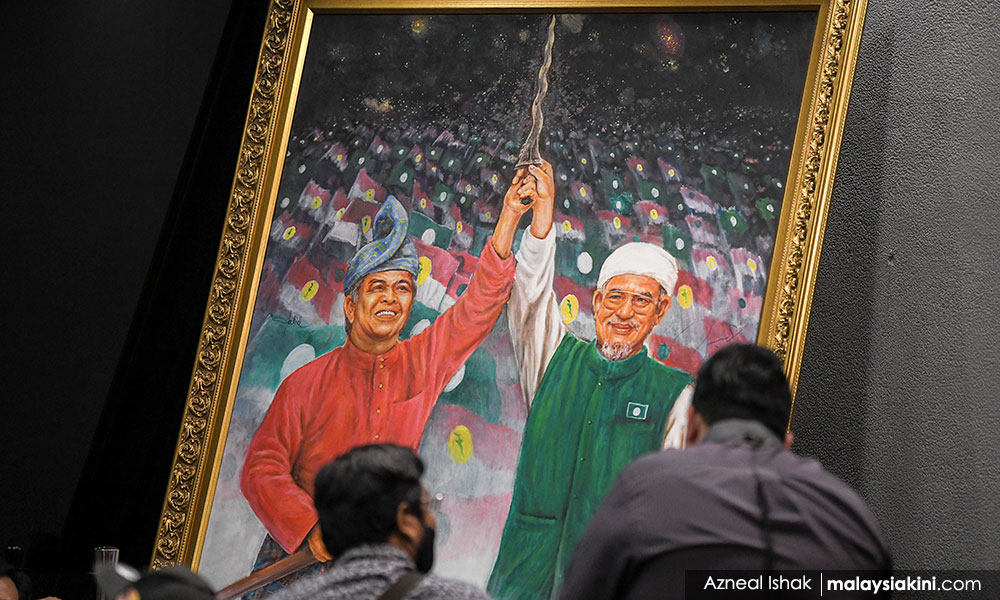
A portrait of Umno chief Ahmad Zahid Hamidi (left) and PAS president Abdul Hadi Awang depicting their cooperation in Muafakat Nasional
However, even as MN slipped into effective irrelevance by 2021, leaders from Umno and PAS have in recent months floated the idea of rekindling the cooperation, with certain figures pointing to a shared political opponent in Harapan.
However, even as MN slipped into effective irrelevance by 2021, leaders from Umno and PAS have in recent months floated the idea of rekindling the cooperation, with certain figures pointing to a shared political opponent in Harapan.
BN ousts Peja in Perak
Bersatu witnessed an early warning of fragile alliances in December 2020 when its Perak menteri besar, Ahmad Faizal Azumu, was toppled after Umno moved a motion of confidence in the state legislature, only to vote against it together with the opposition.
Perak Umno had reportedly been unhappy with the then-Bersatu deputy president, especially over a unilateral appointment of an Umno assemblyperson as his political secretary.
Bersatu had expressed dismay over the Umno move, with PAS announcing that all three of its assemblypersons, who had supported Faizal, would not join efforts to form a new state government.
BN chairperson Ahmad Zahid Hamidi, however, later apologised on behalf of Perak BN, resulting in BN, PAS, and Bersatu agreeing to back Perak Umno chief Saarani Mohamad as the state’s new menteri besar.
At the time, Umno required backing from other parties to form the state government as it only had 25 state seats in Perak, just shy of five assemblypersons to form a state administration. Bersatu held six seats while Harapan parties controlled a total of 24 state constituencies.
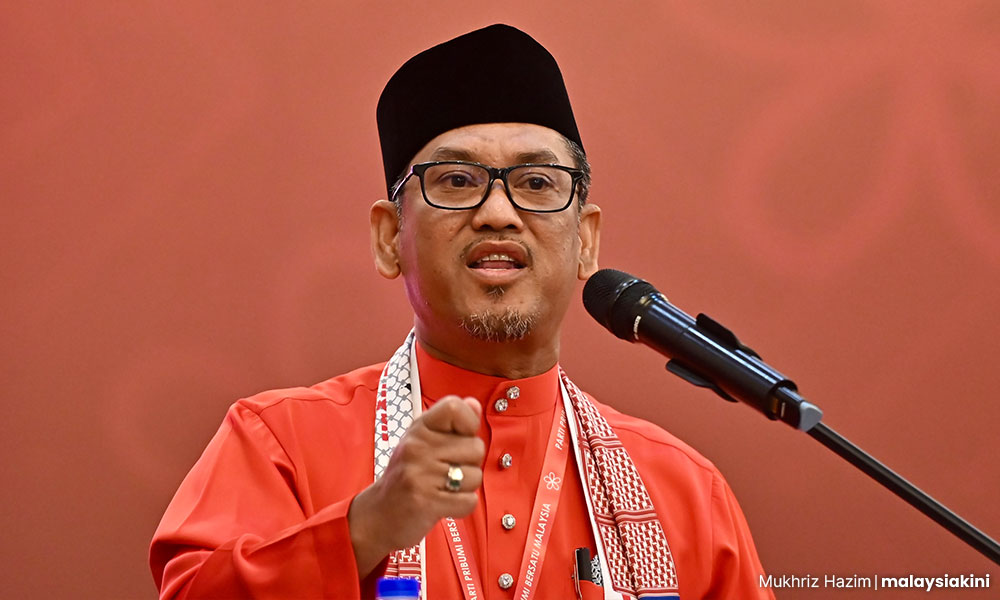
Former Perak MB Ahmad Faizal Azumu
From state turmoil to federal shake-up
The events in Perak foreshadowed broader instability in Malay coalition politics.
In July 2021, as the nation battled the Covid-19 pandemic, Zahid announced Umno’s withdrawal of support for Muhyiddin as prime minister, with the move coming less than 12 hours after Ismail Sabri Yaakob, who was then an Umno vice-president, was appointed as deputy prime minister.
In the face of failed attempts to shore up support from the opposition bench by offering reforms, Muhyiddin conceded he had lost his majority in Parliament and resigned as prime minister on Aug 16, paving the way for Ismail Sabri to take over as premier and ending Bersatu’s brief stint at the helm.
Despite his resignation, Muhyiddin was later appointed as the National Recovery Council chairperson with the status of minister. He had earlier introduced the National Recovery Plan to tackle the Covid-19 health crisis, with the plan courting backlash over alleged inconsistency in the application of its criteria.
Ismail Sabri also retained many Bersatu ministers who were in Muhyiddin’s cabinet.
Malacca crisis shines light on political fragility
The 2021 Malacca political crisis began with the collapse of the state government after four assemblypersons, including two from Umno and one from Bersatu, withdrew their support for chief minister Sulaiman Adli, also from Umno.
Umno’s then-secretary-general later confirmed that official termination letters were delivered to the party’s two assemblypersons, Idris Haron and Nor Azman Hassan, for their role in the political ploy. The duo would go on to contest at the state polls as PKR and Amanah candidates, respectively.
From state turmoil to federal shake-up
The events in Perak foreshadowed broader instability in Malay coalition politics.
In July 2021, as the nation battled the Covid-19 pandemic, Zahid announced Umno’s withdrawal of support for Muhyiddin as prime minister, with the move coming less than 12 hours after Ismail Sabri Yaakob, who was then an Umno vice-president, was appointed as deputy prime minister.
In the face of failed attempts to shore up support from the opposition bench by offering reforms, Muhyiddin conceded he had lost his majority in Parliament and resigned as prime minister on Aug 16, paving the way for Ismail Sabri to take over as premier and ending Bersatu’s brief stint at the helm.
Despite his resignation, Muhyiddin was later appointed as the National Recovery Council chairperson with the status of minister. He had earlier introduced the National Recovery Plan to tackle the Covid-19 health crisis, with the plan courting backlash over alleged inconsistency in the application of its criteria.
Ismail Sabri also retained many Bersatu ministers who were in Muhyiddin’s cabinet.
Malacca crisis shines light on political fragility
The 2021 Malacca political crisis began with the collapse of the state government after four assemblypersons, including two from Umno and one from Bersatu, withdrew their support for chief minister Sulaiman Adli, also from Umno.
Umno’s then-secretary-general later confirmed that official termination letters were delivered to the party’s two assemblypersons, Idris Haron and Nor Azman Hassan, for their role in the political ploy. The duo would go on to contest at the state polls as PKR and Amanah candidates, respectively.
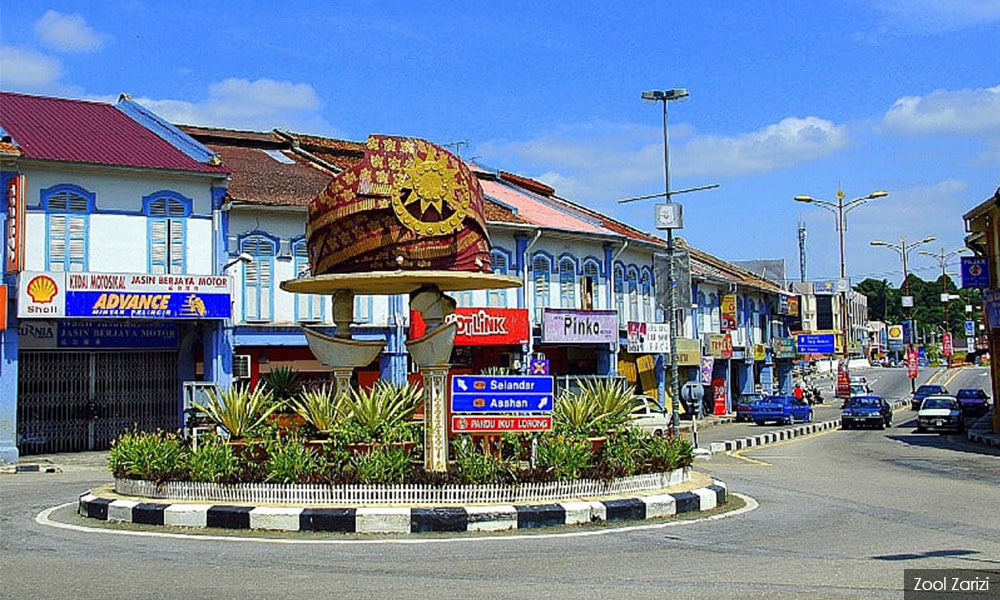
Jasin, Malacca
While the withdrawal of confidence left Sulaiman without a majority, he blocked attempts to form a new government with the opposition by seeking a dissolution of the 28-seat state assembly on Oct 4, paving the way for fresh polls.
The snap state election in November that year delivered a decisive outcome: BN secured 21 seats, giving the coalition a comfortable majority and allowing it to form the state government without relying on support from PN or Harapan, which each secured two and five seats, respectively.
While Sulaiman remained as chief minister under a strengthened Umno majority, he would go on to resign from the post in March 2023, midway through his term.
Infighting within Umno was blamed, although Zahid attributed Sulaiman’s resignation to health reasons.
Malacca BN chief Ab Rauf Yusoh, who previously denied allegations of undermining Sulaiman, was then sworn in as the new Malacca chief minister.
Perlis coup strains ties between PAS and Bersatu
Last month, Perlis, the nation’s smallest state, was rocked when eight assemblypersons - five from Bersatu and three from PAS - withdrew confidence for PAS’ Shukri Ramli as menteri besar.
While the withdrawal of confidence left Sulaiman without a majority, he blocked attempts to form a new government with the opposition by seeking a dissolution of the 28-seat state assembly on Oct 4, paving the way for fresh polls.
The snap state election in November that year delivered a decisive outcome: BN secured 21 seats, giving the coalition a comfortable majority and allowing it to form the state government without relying on support from PN or Harapan, which each secured two and five seats, respectively.
While Sulaiman remained as chief minister under a strengthened Umno majority, he would go on to resign from the post in March 2023, midway through his term.
Infighting within Umno was blamed, although Zahid attributed Sulaiman’s resignation to health reasons.
Malacca BN chief Ab Rauf Yusoh, who previously denied allegations of undermining Sulaiman, was then sworn in as the new Malacca chief minister.
Perlis coup strains ties between PAS and Bersatu
Last month, Perlis, the nation’s smallest state, was rocked when eight assemblypersons - five from Bersatu and three from PAS - withdrew confidence for PAS’ Shukri Ramli as menteri besar.
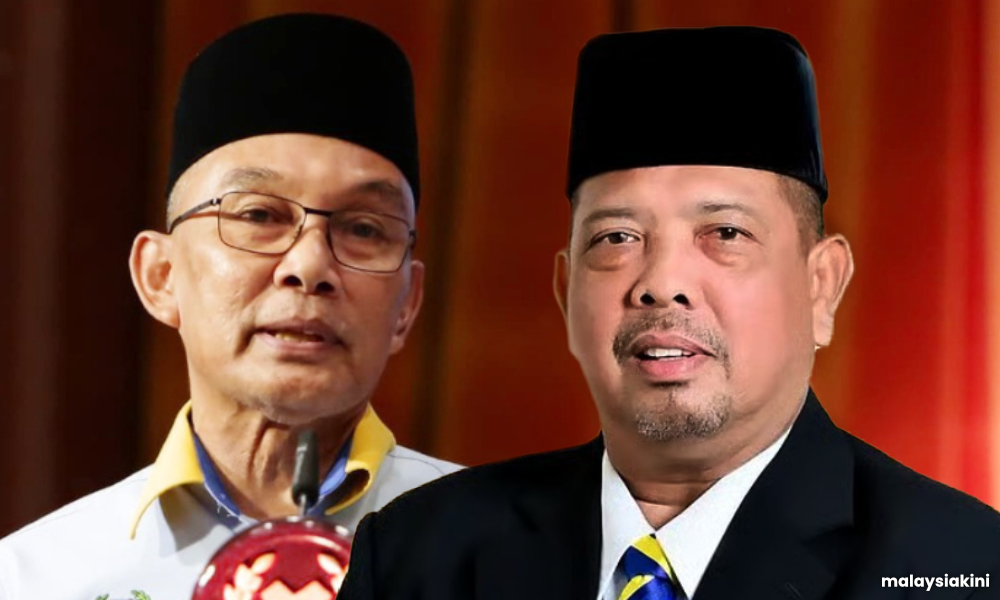
Former Perlis MB Shukri Ramli (left) and his successor Abu Bakar Hamzah
The move, which effectively handed control of the state to Bersatu via the appointment of Perlis Bersatu chief Abu Bakar Hamzah as menteri besar, resulted in PAS expelling its three assemblypersons involved in the coup, citing breaches of party discipline.
On Dec 31, Perlis legislature speaker Rus’sele Eizan retracted a notice to the Election Commission stating a need for by-elections in the three seats vacated by the terminated PAS representatives.
Rus’sele said that there was no need for by-elections in the three seats as PAS had pledged to support the new Perlis government led by Bersatu, with Takiyuddin affirming that its elected assemblypersons will reject positions in Abu Bakar’s state executive council.
Muhyiddin’s resignation as PN chairperson, however, appeared to ease the standoff between the PN component parties, with PAS leaders adopting a softer tone in apologies to the Pagoh MP after a period of tension over the situation in Perlis.
PAS president Abdul Hadi Awang has since indicated that his party is poised to assume leadership of PN, with several names being considered to replace Muhyiddin, who vacated the post on Jan 1.
The move, which effectively handed control of the state to Bersatu via the appointment of Perlis Bersatu chief Abu Bakar Hamzah as menteri besar, resulted in PAS expelling its three assemblypersons involved in the coup, citing breaches of party discipline.
On Dec 31, Perlis legislature speaker Rus’sele Eizan retracted a notice to the Election Commission stating a need for by-elections in the three seats vacated by the terminated PAS representatives.
Rus’sele said that there was no need for by-elections in the three seats as PAS had pledged to support the new Perlis government led by Bersatu, with Takiyuddin affirming that its elected assemblypersons will reject positions in Abu Bakar’s state executive council.
Muhyiddin’s resignation as PN chairperson, however, appeared to ease the standoff between the PN component parties, with PAS leaders adopting a softer tone in apologies to the Pagoh MP after a period of tension over the situation in Perlis.
PAS president Abdul Hadi Awang has since indicated that his party is poised to assume leadership of PN, with several names being considered to replace Muhyiddin, who vacated the post on Jan 1.


No comments:
Post a Comment