
China Mastering Arctic Shortcut – Why Trump Wants Greenland
December 31st, 2025 by financetwitter
At a time when the U.S. declares trade war with China and the rest of the world, while trying to also strike a peace deal with Russia and Ukraine, few notice tensions are growing at the top of the world – the Arctic. U.S. President Donald Trump wants Greenland, Russia is modernising its Arctic military bases, and Chinese icebreakers are opening new routes. An escalating arms race is shaping here.
During the Cold War, the Arctic marked a front line dividing NATO members and the Soviet Union. Its waters offered Moscow gateways to the Atlantic and Pacific Oceans, which the U.S. and its allies closely patrolled until the early 1990s – and are now policing again after the Ukraine War. The fastest route for nuclear weapons to reach their targets was over the North Pole.
Russia is the only state with nuclear weapons based in the Arctic. These military facilities (conventional and nuclear) have been in the Arctic for over 70 years. Tucked deep in Russia’s Arctic frontier, Kola Bay has become the epicenter of Moscow’s nuclear military strategy and Arctic ambitions – housing its icebreaker fleet and a major naval base with nuclear submarines.
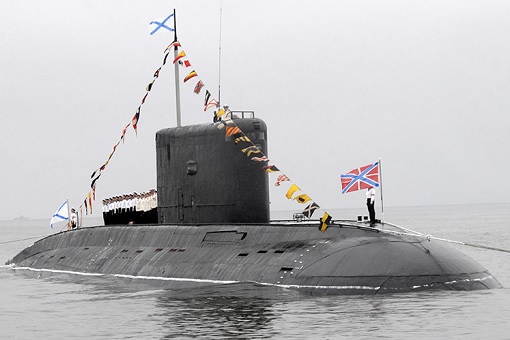
At the dawn of the Cold War, the U.S. established a vital base in the remote North of Greenland at a place called Thule – recently renamed Pituffik Space Base. At the base, a huge radar stands like a giant sentry, scanning the skies and space for anything coming over the top of the world. The radar allowed the U.S. to see objects as small as a tennis ball as they moved through space.
The Cold War may be over but the site’s importance has not diminished. It still forms a crucial part of BMEWS – America’s Ballistic Missile Early Warning System. After floating the idea about annexing Canada as the 51st state of the U.S., Trump said he wanted to annex Greenland as well. But he claimed the United States needs Greenland for national security, not for its minerals.
Greenland’s strategic location and resources could benefit the U.S. It lies along the shortest route from Europe to North America, vital for the U.S. ballistic missile warning system. Early warning sites would be vital for such a system, with Greenland offering significant potential as a forward operating base for both defence and offense. Greenland is physical insurance for the American homeland.

The U.S. has expressed interest in expanding its existing military presence on the Arctic island, including placing radars there to watch waters between the island, Iceland and Britain used by Russian navy vessels and nuclear submarines. Russian submarines depart bases in the Kola Peninsula to lurk beneath the Arctic ice ready for an order to launch a strike on their enemies and Moscow sees it as vital for its deterrent and ability to project force.
Besides Russia, there’s another reason why Trump wanted to control Greenland – China. The U.S. president said – “If you take a look at Greenland, you look up and down the coast, you have Russian and Chinese ships all over the place.” Shipping data shows most Chinese shipping in Arctic waters is in the Pacific Arctic and Northern Sea Route near Russia.
However, most Russian shipping in the Arctic is around Russia’s own coast, though analysts say Russian submarines do often travel the waters between Greenland, Iceland and the UK. Greenland, whose capital Nuuk is closer to New York than the Danish capital Copenhagen, boasts mineral, oil and natural gas wealth, but development has been slow and mining has seen very limited U.S. investment.
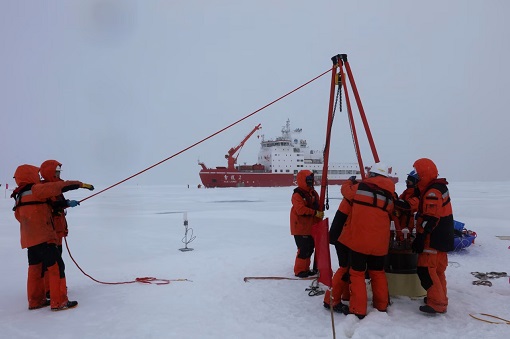
For China, understanding and mastery of Arctic travel could yield valuable data about the natural resources awaiting below melting ice caps, significantly reduce travel time for commercial shipping and position nuclear-armed submarines closer to potential targets, including the U.S., say Western marine strategists and military officials.
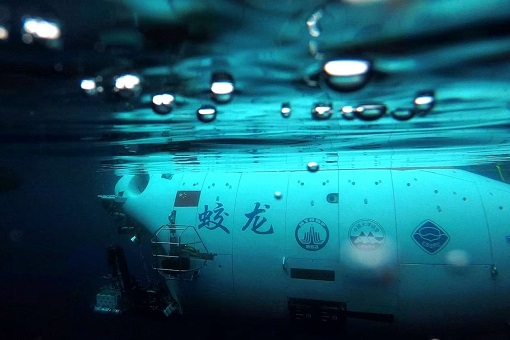
Chinese research submarines for the first time traveled thousands of feet beneath the Arctic ice this summer, a technical feat with chilling military and commercial implications for America and its allies. U.S. national-security officials immediately warn that the Chinese undersea expeditions offer fresh evidence of a growing threat from China in the Arctic region, known as the High North.
This year alone, Chinese military and research vessels have operated around Alaska’s Arctic waters in unprecedented numbers. China has declared itself a “near-Arctic power,” its first step to become a great polar power alongside the U.S. and Russia. Beijing says its activities in the Arctic are reasonable and lawful, “contributing to the maintenance and promotion of peace, stability, and sustainable development in the region.”
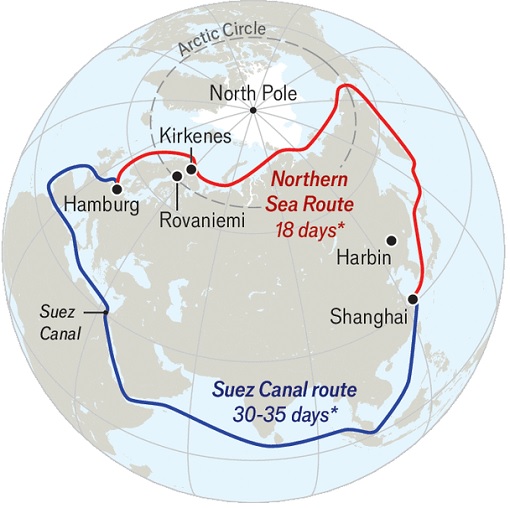
Beijing views future sea routes through the High North as a shortcut for global commerce, a so-called Polar Silk Road. This summer, China sent a cargo ship to the Polish port of Gdansk by skirting the North Pole, a route twice as fast as travel times using the Suez Canal. Chinese officials have said they plan to expand trans-Arctic cargo traffic with Russia, particularly imports of liquefied natural gas (LNG).
But U.S. Air Force Gen. Alexus Grynkewich, the top military leader of North Atlantic Treaty Organization (NATO), complained that “The Chinese are being more and more aggressive” across the High North. Chinese vessels on research missions often give cover to military purposes, he said. Arctic waters provide a military advantage because of the North Pole’s proximity to other nations.
Tensions over the High North, renewed by Russia’s invasion of Ukraine, are being amplified by China’s reach. Now, the U.S. is facing two enemies there. The U.S. and its allies believe Beijing will be able to send armed submarines to the North Pole within a few years, if the Chinese have not already done so. China already has military-grade surface vessels in the Arctic region while expanding its fleet of ice-breaking ships.
The U.S. and allies are training more Arctic troops in response to new dangers. They have beefed up sub-hunting patrols out of Iceland and other locations. President Trump struck a shipbuilding deal with Finland to expand the U.S. icebreaker fleet and has pressured Denmark into expanding defenses on and around Greenland.
Some Western powers have mocked and ridiculed China for calling itself a “near-Arctic” power because Beijing is almost 3,000km (1,800 miles) from the Arctic Circle. Using the same logic, the U.S. has even more reason not to be in the South China Sea, which is four times the distance – roughly 11,000km to 13,000km away from American homeland.
Compared to Russia, China’s new adventure to the North Pole has more to do with commerce than military. A new “Polar Silk Road” offers a new shipping route which is not only faster and more secure than using the Suez Canal, but also to counter the strategic vulnerability – the critical chokepoint – of the Strait of Malacca, as well as pirate-infested waters, such as the Red Sea and Indian Ocean.
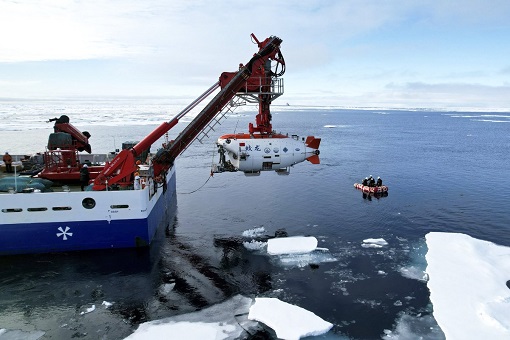
Beijing has rapidly expanded its already large fleet of icebreakers and China and Russia have staged a joint patrol over the Bering Sea near the coast of Alaska. Chinese and Russian military planes last year flew patrols near Alaska for the first time, with Chinese long-range bombers operating from a Russian air base. And Washington was not impressed.
Such cooperation not only gives China new abilities to strike North America but raises the prospect of a joint attack by America’s most powerful adversaries. In fact, the Arctic was so important that China in 2015 updated its national-security law to include defending national interests in polar regions, seeking unfettered access to new sea lanes and resources.
Beijing says its commercial and research vessels in Arctic waters are peaceful. That was accurate until recently, according to Rob Bauer, a retired Dutch admiral who served as one of NATO’s top military officials until this year. Beijing, in addition to staging joint air patrols with Russia, is now sailing coast guard vessels that resemble frigates near the Alaska coast, he said.

“They’re basically warships, but they’re painted white,” – Bauer said. Joint patrols with Russian navy ships indicate China’s aim is gaining military advantage, he said, not coastal security. When more ice melts along international waterways in the High North, the same shortcuts used by commercial vessels could speed China’s navy into the Atlantic, he said.
Arctic travel by Chinese commercial and scientific vessels benefits China’s navy by gaining experience and data about a region relatively new to its military leaders. Washington fears Beijing’s polar exploration echoes its military expansion in the South China Sea. After almost 20 years since China first launched research expeditions in the region, Beijing used what it learned to begin building artificial islands in 2013.
While China is not going to build artificial islands in the Arctic, the U.S. and NATO worry about subsea warfare. Submarine navigation relies on detailed knowledge of ocean-floor topography and undersea conditions. China is cataloging the world’s oceans to build computer models to guide submarines and help them evade detection.

“China doesn’t field the world’s largest fleet of oceanographic survey ships because they want to save the whales,” – said Hunter Stires, a naval strategist who until this year advised the Secretary of the Navy. “China aims to take the lead in marine and climate science because understanding the ocean and the climate is a critical enabler to success in naval operations, particularly in anti-submarine warfare.”
Crucially, data China gathered from its Arctic dives north of Alaska and Greenland isn’t just about studying climate change, but also to educate the Chinese navy, which operates relatively noisy submarines that are easily tracked by U.S. forces. Information gathered on Chinese Arctic voyages enables its scientists to build computer models of undersea conditions, which its navy can later use to plot routes allowing them to operate more freely in the open sea.
More importantly, the U.S. worries Russia is providing submarine technology to China that could end “American undersea dominance”. Despite denials, Beijing sells Russia electronics and components for military equipment Moscow needs to wage its war in Ukraine, and ships civilian products restricted by international sanctions over the war. And there’s nothing the U.S. can do about it.
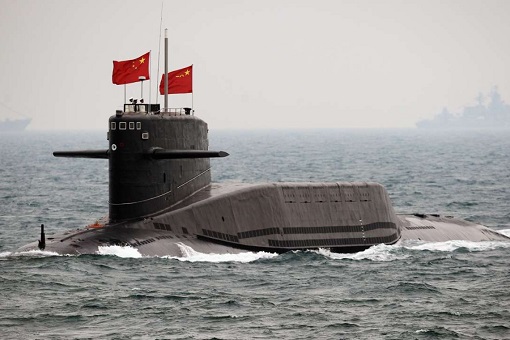
Western military officials believe Russia is repaying China’s help, in part, by sharing advanced technologies in space, stealth aircraft and undersea warfare. Russia’s nuclear-powered, nuclear-armed submarines, and its agility in deploying them, have kept the country a superpower, despite its economic decline since the breakup of the Soviet Union.
China is already the largest navy in the world by number of ships, possessing over 370 surface ships and submarines, significantly more than the U.S. Navy’s 292. Worse, the Middle Kingdom has also mastered other complex naval domains. It now deploys three aircraft carriers, among the most demanding surface warships to build, manage and deploy effectively. The U.S. has 11 nuclear-powered aircraft carriers.
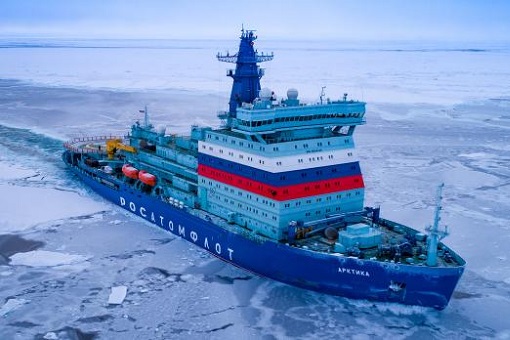
But in the North Pole, it’s a different ball-game. Both Beijing and the U.S. are short of vessels capable of navigating thick Arctic ice compared with Russia, which has more than 40. The U.S. has only two such vessels in operation. China last year commissioned its fifth icebreaker – designed and built domestically for the first time in just 10 months.


$1 Trillion ought to do it.
ReplyDeleteprinted fiat greenback ain't legal tender in this transaction, mfer
Delete