
OPINION | The Laughable Attempt to Turn Muhyiddin into a ‘Hidden Dragon’
5 Jan 2026 • 9:30 AM MYT

TheRealNehruism
An award-winning Newswav creator, Bebas News columnist & ex-FMT columnist
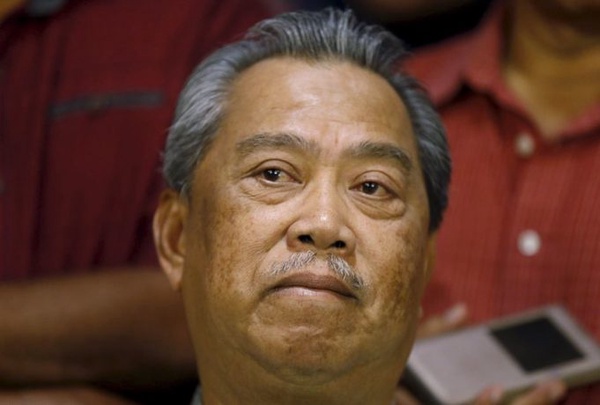
Image credit: Malaysian Gazette
Eric Hoffer once observed that “It is a talent of the weak to persuade themselves that they suffer for something when they suffer from something; that they are showing the way when they are running away; that they see the light when they feel the heat; that they are chosen when they are shunned.”
That observation immediately came to mind when Bersatu founding member Redzuan Yusof described Muhyiddin Yassin’s decision to step down as Perikatan Nasional (PN) chairman as a “masterstroke”.
According to Redzuan, Muhyiddin’s retreat is not a defeat at all, but a breathtaking act of political genius—so subtle and so sophisticated that only future generations may fully appreciate it. In a statement to FMT, Redzuan argued that Muhyiddin’s resignation was a carefully calculated move: one that neutralised an internal mutiny within Bersatu, prevented the Perlis Menteri Besar crisis from escalating into a national issue, shifted the leadership burden of PN onto PAS, and ultimately positioned Muhyiddin to strengthen his grip on Bersatu—or even to return triumphantly to lead PN once PAS realises it cannot survive without him.
It is a remarkable narrative. It is also almost entirely fictional.
Redzuan would have us believe that Muhyiddin’s defeat is a rare species of victory, that his loss of control is actually a display of supreme control, and that his political retreat is merely a strategic feint—a crouching tiger, hidden dragon moment in Malaysian politics. For this interpretation to hold, however, the rest of us would have to suspend not only disbelief, but also reason.
Muhyiddin’s resignation is not a masterstroke. It is not genius. It is simply a garden-variety defeat.
For years, Muhyiddin clung to the top of PN despite his manifest inability to provide leadership. Under his watch, PN declined unnecessarily, fractured internally, and failed to capitalise on opportunities that should have been politically decisive. Pressure for him to step aside did not emerge overnight; it had been building steadily as dissatisfaction with his leadership grew within Bersatu and among PN’s allies.
Yet Muhyiddin refused to vacate his position—not because he had a plan, not because he inspired confidence, and not because he struck fear into his opponents—but simply because he wanted to remain at the top.
He could not rally his followers. He did not intimidate his rivals. Nobody believed he could win. The prevailing view within PN was brutally simple: with Muhyiddin at the helm, the coalition could only lose. Still, he persisted.
The Perlis Menteri Besar crisis was likely the final straw. It may have been the last nail in the coffin, but it was certainly not the only one. By the time it erupted, Muhyiddin’s authority had already been hollowed out. His resignation did not avert a crisis; it merely acknowledged one that had long been unfolding.
This is especially striking when one recalls how strong PN once was. In the aftermath of the 2022 general election, PN stood toe-to-toe with Pakatan Harapan. In fact, PN was the first coalition to assemble the numbers required to form government and failed to take Putrajaya only due to technical and procedural constraints.
That strength has since dissipated, and much of the blame must rest squarely on Muhyiddin’s shoulders.
Had PN possessed effective leadership, it would almost certainly be in a far stronger position today. Instead, it squandered momentum, alienated potential supporters, and allowed internal contradictions to fester.
The contrast with Anwar Ibrahim is instructive. Pakatan Harapan barely won in 2022 and spent its early years in government under constant speculation of collapse. Today, such talk of collapse has all but vanished. PH has gone from precarious to stable, not because circumstances magically improved, but because Anwar proved himself a far more capable leader than Muhyiddin ever was.
Leadership matters. And where Anwar consolidated power, Muhyiddin dissipated it.
Seen in this light, Muhyiddin’s resignation is not a clever act of feigned weakness designed to engineer a dramatic return. It is a necessary correction—one that PN had to make if it wishes to arrest its decline. Removing Muhyiddin from the chairmanship does not guarantee renewal, but it does close the chapter on stagnation. After his departure, the worst is likely over for the opposition. Even if things do not immediately improve, it is hard to imagine them getting worse.
For Muhyiddin himself, however, this looks very much like the end.
Contrary to Redzuan’s claims, it is difficult to see how Muhyiddin can now strengthen Bersatu after relinquishing the PN chairmanship. On the contrary, the logic of coalition politics suggests that pressure will soon mount for him to step down as Bersatu president as well, so that the party can put forward a new name to lead PN with credibility.
And once that happens, Muhyiddin’s political fate may resemble that of Abdullah Ahmad Badawi rather than Najib Razak or Mahathir Mohamad. Like Pak Lah, Muhyiddin is unlikely to loom large in post-exit politics. When he is out of sight, I am quite sure he is going to be out of mind.
Muhyiddin's time is over.
There will be no dramatic comeback. No grateful coalition begging for his return. No rediscovery of misunderstood genius.
Sometimes, defeat is just defeat. And no amount of rhetorical alchemy can turn it into gold.


No comments:
Post a Comment