

Rights groups condemn Saifuddin's justification for journo's arrest
Dania Kamal Aryf
Published: Jan 19, 2026 7:00 AM
Updated: 1:11 PM
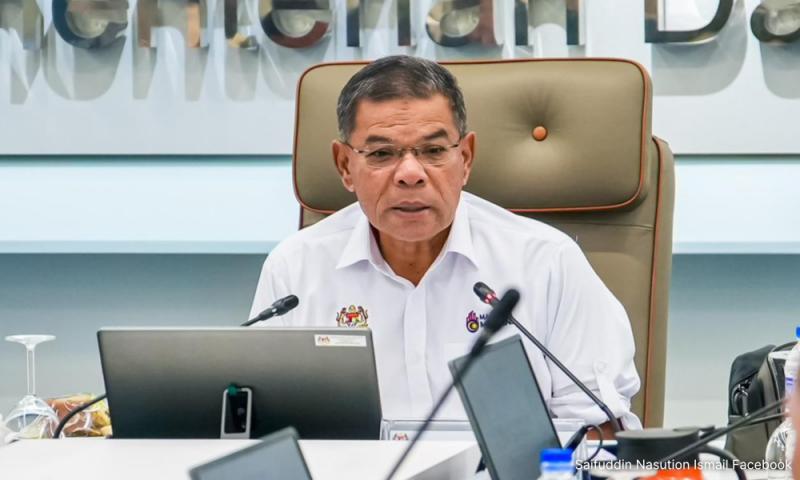
Human rights and media advocacy groups have condemned Home Minister Saifuddin Nasution Ismail’s justification for journalist Rex Tan’s arrest, which they described as “intimidation tactics” by the authorities, and a "disingenuous framing of state power”.
Speaking to Malaysiakini, the groups expressed serious concern over Saifuddin’s explanation that the police actions in Tan’s arrest were not an act of suppression, but merely “due process” to ensure compliance with the law.
“Summoning a cooperative individual for questioning past midnight and then ‘ambush’ arresting him is nothing short of a calculated tactic designed to intimidate, aimed particularly at activists and critics of the government.
“We saw this same weaponisation of odd hours last year with the arrests of activists Aidil Qayyum and Kamil Puteh, who were taken from their homes at 1am and 3am respectively, under the Sedition Act,” said Suaram executive director Azura Nasron.
She highlighted that similar “ambush” tactics were also used against student activists in Sabah in November last year, who had initially presented themselves at the police station to record statements, but were unexpectedly arrested instead.

Suaram executive director Azura Nasron
On Jan 17, Bernama quoted Saifuddin as commenting on Tan’s arrest, saying that although he respected freedom of speech, such freedom should also come with responsibility.
He explained that police were required to take action when receiving complaints, and acknowledged how Tan and his former employer, Free Malaysia Today, had also publicly apologised for the journalist’s “racially insensitive remarks”.
Tan was arrested and detained past midnight on Friday, under Section 4(1) of the Sedition Act, 1948 and Section 505 (c) of the Penal Code, which is related to making statements with the intent to cause alarm or fear.
He is also being investigated under the Communications and Multimedia Act (CMA), following his questions posed to British politician George Galloway at a public lecture on Palestine in Kuala Lumpur.
His remarks, which attempted to draw parallels between Palestinians and the Chinese Malaysian community, have been criticised as deeply insensitive and racially charged.
Tan’s lawyer, Rajsurian Pillai, later confirmed that he had been released after a one-day remand after being detained overnight at the Dang Wangi district police station lock-up.
On Jan 17, Bernama quoted Saifuddin as commenting on Tan’s arrest, saying that although he respected freedom of speech, such freedom should also come with responsibility.
He explained that police were required to take action when receiving complaints, and acknowledged how Tan and his former employer, Free Malaysia Today, had also publicly apologised for the journalist’s “racially insensitive remarks”.
Tan was arrested and detained past midnight on Friday, under Section 4(1) of the Sedition Act, 1948 and Section 505 (c) of the Penal Code, which is related to making statements with the intent to cause alarm or fear.
He is also being investigated under the Communications and Multimedia Act (CMA), following his questions posed to British politician George Galloway at a public lecture on Palestine in Kuala Lumpur.
His remarks, which attempted to draw parallels between Palestinians and the Chinese Malaysian community, have been criticised as deeply insensitive and racially charged.
Tan’s lawyer, Rajsurian Pillai, later confirmed that he had been released after a one-day remand after being detained overnight at the Dang Wangi district police station lock-up.
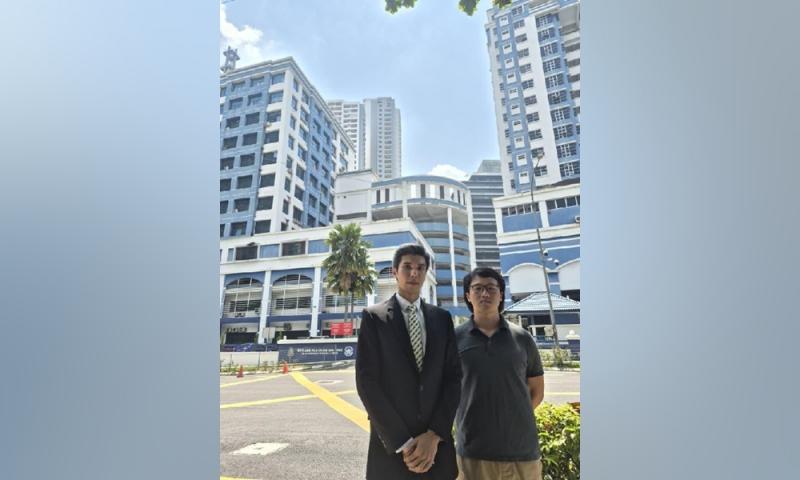
Rex Tan (right) and his lawyer Rajsurian Pillai
Rajsurian had also questioned the police’s initial demands for a four-day remand and the CMA probe, as Tan did not post his allegedly seditious remarks online; instead, other individuals had done so based on video recordings from the forum.
Rajsurian had also questioned the police’s initial demands for a four-day remand and the CMA probe, as Tan did not post his allegedly seditious remarks online; instead, other individuals had done so based on video recordings from the forum.

Calls to repeal Sedition Act
Centre for Investigative Journalism (CIJ) executive director Wathshlah Naidu described the police’s initial request for a four-day remand as “extremely excessive”, and “punitive in nature”.
“This really calls into question the government and police’s actual motives, because it's extremely excessive and also seems rather punitive in nature – not only by arresting him, but by also requesting a four-day remand order,” she told Malaysiakini.
She also questioned the use of three separate legislations to justify the arrest.
“All these sets of laws have been extremely criticised before. CIJ has called for the repeal of these laws, especially the Sedition Act and Section 233 of the CMA, which have often been disproportionately used.
“We can see how it is again being misused in this instance,” she stressed.
Suaram’s Azura also echoed repeated calls to repeal the Sedition Act, describing it as a draconian legislation with “no place in a democratic society”.
“Instead of hiding behind the narrative of a ‘police duty’ to act on complaints, the home minister should be explaining why his government has allowed the Sedition Act to persist despite the clear basis to repeal it.
“By continuing to use the Sedition Act, the government reveals a profound political insecurity. It chooses suppression of discourse over the democratic resilience required to protect the very freedom it demands citizens exercise 'responsibly',” she said.
‘Mob culture’
Wathshlah further described the intimidation tactics involved in Tan’s arrest as legitimising an increasingly prevalent form of “mob culture”.

CIJ executive director, Wathshlah Naidu
She highlighted how Tan, prior to his arrest, had already been widely harassed, abused, and intimidated by the public - including being doxxed and receiving death threats.
“The numerous instances where his personal information was revealed online even before the police investigation show a mob culture that's very, very prevalent. For the police to act on this mob culture is rather worrying,” she said.
Further, she highlighted the need for these tactics to be challenged, pointing out how Malaysia otherwise risked growing into a society fearful of expressing critical thoughts and opinions.
She also acknowledged how Tan had already issued a public apology and taken the necessary actions to hold himself accountable, including offering full cooperation with the authorities.
She said the authorities could have still chosen to abide by fairer procedures by calling him in for questioning the following day, instead of arresting him past midnight and detaining him overnight.
Malaysia Media Council general secretary Teh Athira Yusof shared similar sentiments.
Teh stressed that media workers have always been cooperative and respectful of the authorities’ due process.
“The question here is not the police work itself, but how the reporter was treated.
“Perhaps, we want to know the urgency in arresting him at such hours, when Tan had already offered cooperation with the authorities from the start.
“However, the act of arresting Tan in the middle of the night and detaining him overnight despite his full cooperation is indeed alarming,” she added.
Journalistic censorship
Wathshlah questioned the need for state intervention in journalistic censorship, especially after the establishment of the media council last year.
She highlighted how Tan, prior to his arrest, had already been widely harassed, abused, and intimidated by the public - including being doxxed and receiving death threats.
“The numerous instances where his personal information was revealed online even before the police investigation show a mob culture that's very, very prevalent. For the police to act on this mob culture is rather worrying,” she said.
Further, she highlighted the need for these tactics to be challenged, pointing out how Malaysia otherwise risked growing into a society fearful of expressing critical thoughts and opinions.
She also acknowledged how Tan had already issued a public apology and taken the necessary actions to hold himself accountable, including offering full cooperation with the authorities.
She said the authorities could have still chosen to abide by fairer procedures by calling him in for questioning the following day, instead of arresting him past midnight and detaining him overnight.
Malaysia Media Council general secretary Teh Athira Yusof shared similar sentiments.
Teh stressed that media workers have always been cooperative and respectful of the authorities’ due process.
“The question here is not the police work itself, but how the reporter was treated.
“Perhaps, we want to know the urgency in arresting him at such hours, when Tan had already offered cooperation with the authorities from the start.
“However, the act of arresting Tan in the middle of the night and detaining him overnight despite his full cooperation is indeed alarming,” she added.
Journalistic censorship
Wathshlah questioned the need for state intervention in journalistic censorship, especially after the establishment of the media council last year.
She reminded that the council, which was designed to provide a mandate for the industry to self-regulate and for journalists to hold each other accountable.
“Critical questions to be raised about how the government views the media council, and I think we really need to ensure that the media council is given the right support and the right environment to be able to function effectively,” she highlighted.
“These police actions should be condemned, because they are completely unwarranted to target a young journalist who made a mistake and has already publicly apologised.
“The fear of censorship cannot keep going, and this culture needs to change.
“But it can only change if the government takes initiative to create a safe and enabling environment where people can be critical thinkers, voice out their opinions, and challenge the status quo, without a sense of continued fear.
“Such an environment is especially critical for media workers and human rights defenders to ensure that the authorities are held to the highest standard of accountability,” she stressed.
*** Madani my foot - and Saifuddin has been a disgrace


No comments:
Post a Comment