
OPINION | No Matter What He Does, the Malays Still Won’t Accept Nga Kor Ming — Why?
18 Jan 2026 • 12:00 PM MYT

TheRealNehruism
An award-winning Newswav creator, Bebas News columnist & ex-FMT columnist
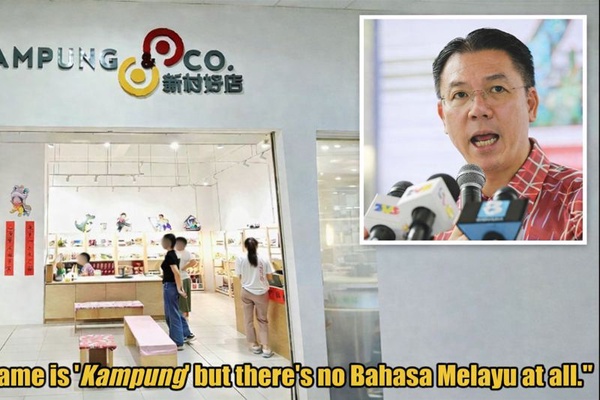
Image credit: Malay Mail / World of Buzz
Poor Nga Kor Ming.
No matter what he does to win over the Malays, nothing ever seems to work. The Malay community remains cold to every attempt he makes to warm relations with them. To the point that no matter what initiative he launches, the first instinct is not to acknowledge the effort, but to scrutinise it for faults.
And they will always find one.
In the latest iteration of this tragic and familiar interaction, Nga Kor Ming—Minister of Housing and Local Government—proudly showcased a newly opened store in a Kuala Lumpur shopping centre that highlights and sells products from local Malaysian communities.
Taking to his X page, Nga introduced Kampung & Co 新村好店, a store aligned with the government’s Satu Kampung Satu Produk (1K1P) initiative. He lauded the fact that Kampung Baru products had successfully made their way into Bukit Bintang, one of Kuala Lumpur’s most commercial and tourist-heavy districts.
“In line with the principle of 1K1P,” Nga wrote, “we are happy to witness the opening of the first Kampung & Co store that sells quality goods produced by the people of Kampung Baru.”
On the surface, this was a textbook example of a minister attempting to bridge cultural and economic divides: rural products entering an urban, globalised space; kampung goods showcased alongside cosmopolitan consumption.
But predictably, that was not how the gesture was received.
Almost immediately, Malaysians—particularly Malays—zeroed in on what they perceived to be the store’s fatal flaw: the absence of Bahasa Melayu signage. The signboard, they noted, was written only in English and Mandarin.
“Why is there no Bahasa Melayu, the national language that must be prioritised?” one commenter asked.
“This is Malaysia—where is the Bahasa Melayu?” another demanded.
“The name is ‘Kampung’, but there’s no Bahasa Melayu at all. Instead, there’s Mandarin,” came yet another critique.
And just like that, the initiative itself faded into the background. The intent was ignored. The symbolism was dismissed. The entire effort was reduced to a single alleged transgression.
Now, as Asians—and more specifically, as Malaysians—we understand exactly what is happening here.
Seen from an Asian point of view, the treatment that Nga Kor Ming is receiving here is called a case “thumbing someone down to put them in their place.”
When Asians decide to “thumb someone down,” they exaggerate that person’s flaws while completely ignoring their virtues. The purpose is not correction or dialogue, but humiliation. It is meant to break the person’s confidence—to remind them that they are not as good, not as noble, and certainly not as welcome as they might imagine themselves to be.
As a rule, I would argue that there is no one from DAP that is received warmly by the Malay community. But even within DAP, some figures face far more resistance than others.
Nga Kor Ming, in my view, falls squarely into the second category—he faces so much resistence from the Malay community, that I daresay that they reject his overtures with a great amount of relish. They Malays, it appears to me, not only shut down cold any of Nga Kor Ming's attempts to reach out to them, they shut it down with a great amount of delight.
I daresay that tomorrow, even if Nga Kor Ming were to don a full Baju Melayu , the response would either be studied indifference—or mockery. His songkok is senget, or his samping londeh, I imagine it would be said, to dismiss his attempts as insincere or performative.
Why does this happen?
One reason, I suspect, lies in a deep-seated Malaysian tendency: the preference for being the “giving hand” rather than the “receiving hand.”
Malaysians, as rule, like to be in the position of uplifting others, with the expectations that those they uplift remain perpetually grateful to them. When someone rises on their own, without your help, and then turns around to be generous or accommodating toward you, it creates discomfort.
Because suddenly, you are the receiving hand.
And being on the receiving end—especially from someone you once looked down on, or competed against—can feel humiliating.
This “anti–receiving hand syndrome” affects minority politicians far more severely than it does those from the majority race.
In Malaysia, almost every politician—whether from the majority or a minority—rises by championing one group or another. Even if a politician champions a non-racial cause like anti-corruption or reformasi, somehow or other the cause will be interpreted in a racial frame of reference, and and translated euphemistically as a case of being for one community and against another.
But once power is attained, politicians inevitably attempt to soften their racial rhetoric and rebrand themselves as national leaders who represent all Malaysians.
Here is where the asymmetry appears.
Majority politicians transition from racial champions to national leaders with relative ease. Najib, Anwar, and Mahathir were once fiercely vocal in championing Malay interests. Yet once they assumed national leadership, their overtures to minorities were eventually accepted, even welcomed.
Minority politicians, however, are rarely afforded the same grace.
Figures like Nga Kor Ming likely had to be far more aggressive in championing their own communities during their climb up the political ladder. But once they reach power and attempt to extend olive branches to other races, those gestures are viewed with suspicion.
Some DAP leaders manage this transition better than others. Steven Sim and Anthony Loke, for instance, appear to encounter less resistance as they transition. Perhaps it is their disposition, or perhaps they were never perceived as having played the racial card too fiercely, or perhaps they entered DAP at a time when DAP was already close to power or in power, so they did not have to play the racial card as intensely as the veterans before them, but whatever be the reason, somehow, some DAP politiicans like Anthony and Steven, seem to be able to bridge the racial gap with less of an issue than most.
Others, however, like Nga Kor Ming and Lim Guan Eng, face endless resistance that seems almost insurmountable.
During his 22 months as Finance Minister, Lim Guan Eng never truly managed to be accepted as a national minister by the Malays. Nearly three years into the Madani government, Nga Kor Ming also seems to be quite far from that same acceptance.
Yet to his credit, I must say that I feel that at least Nga Kor Ming has not stopped trying. Hopefully, someday, maybe he will find his “never say never" attitude rewarded.
As the saying goes, a river cuts through rock not because of its power, but because of its persistence.
Who knows, perhaps 2026 will be the year that Nga Kor Ming will finally have a breakthrough.
Perhaps.
No matter what he does to win over the Malays, nothing ever seems to work. The Malay community remains cold to every attempt he makes to warm relations with them. To the point that no matter what initiative he launches, the first instinct is not to acknowledge the effort, but to scrutinise it for faults.
And they will always find one.
In the latest iteration of this tragic and familiar interaction, Nga Kor Ming—Minister of Housing and Local Government—proudly showcased a newly opened store in a Kuala Lumpur shopping centre that highlights and sells products from local Malaysian communities.
Taking to his X page, Nga introduced Kampung & Co 新村好店, a store aligned with the government’s Satu Kampung Satu Produk (1K1P) initiative. He lauded the fact that Kampung Baru products had successfully made their way into Bukit Bintang, one of Kuala Lumpur’s most commercial and tourist-heavy districts.
“In line with the principle of 1K1P,” Nga wrote, “we are happy to witness the opening of the first Kampung & Co store that sells quality goods produced by the people of Kampung Baru.”
On the surface, this was a textbook example of a minister attempting to bridge cultural and economic divides: rural products entering an urban, globalised space; kampung goods showcased alongside cosmopolitan consumption.
But predictably, that was not how the gesture was received.
Almost immediately, Malaysians—particularly Malays—zeroed in on what they perceived to be the store’s fatal flaw: the absence of Bahasa Melayu signage. The signboard, they noted, was written only in English and Mandarin.
“Why is there no Bahasa Melayu, the national language that must be prioritised?” one commenter asked.
“This is Malaysia—where is the Bahasa Melayu?” another demanded.
“The name is ‘Kampung’, but there’s no Bahasa Melayu at all. Instead, there’s Mandarin,” came yet another critique.
And just like that, the initiative itself faded into the background. The intent was ignored. The symbolism was dismissed. The entire effort was reduced to a single alleged transgression.
Now, as Asians—and more specifically, as Malaysians—we understand exactly what is happening here.
Seen from an Asian point of view, the treatment that Nga Kor Ming is receiving here is called a case “thumbing someone down to put them in their place.”
When Asians decide to “thumb someone down,” they exaggerate that person’s flaws while completely ignoring their virtues. The purpose is not correction or dialogue, but humiliation. It is meant to break the person’s confidence—to remind them that they are not as good, not as noble, and certainly not as welcome as they might imagine themselves to be.
As a rule, I would argue that there is no one from DAP that is received warmly by the Malay community. But even within DAP, some figures face far more resistance than others.
Nga Kor Ming, in my view, falls squarely into the second category—he faces so much resistence from the Malay community, that I daresay that they reject his overtures with a great amount of relish. They Malays, it appears to me, not only shut down cold any of Nga Kor Ming's attempts to reach out to them, they shut it down with a great amount of delight.
I daresay that tomorrow, even if Nga Kor Ming were to don a full Baju Melayu , the response would either be studied indifference—or mockery. His songkok is senget, or his samping londeh, I imagine it would be said, to dismiss his attempts as insincere or performative.
Why does this happen?
One reason, I suspect, lies in a deep-seated Malaysian tendency: the preference for being the “giving hand” rather than the “receiving hand.”
Malaysians, as rule, like to be in the position of uplifting others, with the expectations that those they uplift remain perpetually grateful to them. When someone rises on their own, without your help, and then turns around to be generous or accommodating toward you, it creates discomfort.
Because suddenly, you are the receiving hand.
And being on the receiving end—especially from someone you once looked down on, or competed against—can feel humiliating.
This “anti–receiving hand syndrome” affects minority politicians far more severely than it does those from the majority race.
In Malaysia, almost every politician—whether from the majority or a minority—rises by championing one group or another. Even if a politician champions a non-racial cause like anti-corruption or reformasi, somehow or other the cause will be interpreted in a racial frame of reference, and and translated euphemistically as a case of being for one community and against another.
But once power is attained, politicians inevitably attempt to soften their racial rhetoric and rebrand themselves as national leaders who represent all Malaysians.
Here is where the asymmetry appears.
Majority politicians transition from racial champions to national leaders with relative ease. Najib, Anwar, and Mahathir were once fiercely vocal in championing Malay interests. Yet once they assumed national leadership, their overtures to minorities were eventually accepted, even welcomed.
Minority politicians, however, are rarely afforded the same grace.
Figures like Nga Kor Ming likely had to be far more aggressive in championing their own communities during their climb up the political ladder. But once they reach power and attempt to extend olive branches to other races, those gestures are viewed with suspicion.
Some DAP leaders manage this transition better than others. Steven Sim and Anthony Loke, for instance, appear to encounter less resistance as they transition. Perhaps it is their disposition, or perhaps they were never perceived as having played the racial card too fiercely, or perhaps they entered DAP at a time when DAP was already close to power or in power, so they did not have to play the racial card as intensely as the veterans before them, but whatever be the reason, somehow, some DAP politiicans like Anthony and Steven, seem to be able to bridge the racial gap with less of an issue than most.
Others, however, like Nga Kor Ming and Lim Guan Eng, face endless resistance that seems almost insurmountable.
During his 22 months as Finance Minister, Lim Guan Eng never truly managed to be accepted as a national minister by the Malays. Nearly three years into the Madani government, Nga Kor Ming also seems to be quite far from that same acceptance.
Yet to his credit, I must say that I feel that at least Nga Kor Ming has not stopped trying. Hopefully, someday, maybe he will find his “never say never" attitude rewarded.
As the saying goes, a river cuts through rock not because of its power, but because of its persistence.
Who knows, perhaps 2026 will be the year that Nga Kor Ming will finally have a breakthrough.
Perhaps.


Nga is considered the "Extremist" side of DAP by most Malays
ReplyDeleteHeavily indoctrinated ketuanan chauvinism
ReplyDelete