Sunday, October 02, 2022

PM doesn’t need other political parties’ approval to call election: Shafie


theVibes.com:

PM doesn’t need other political parties’ approval to call election: Shafie


Warisan president recalls his own cabinet experience, saying such system didn’t exist
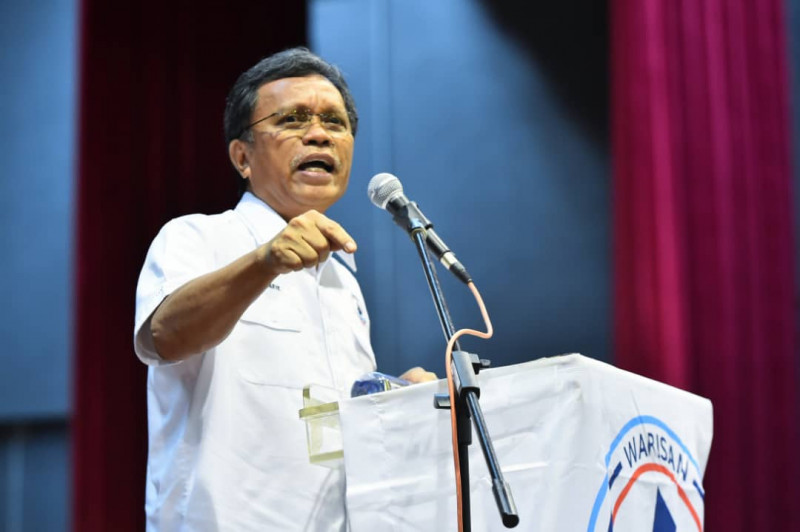


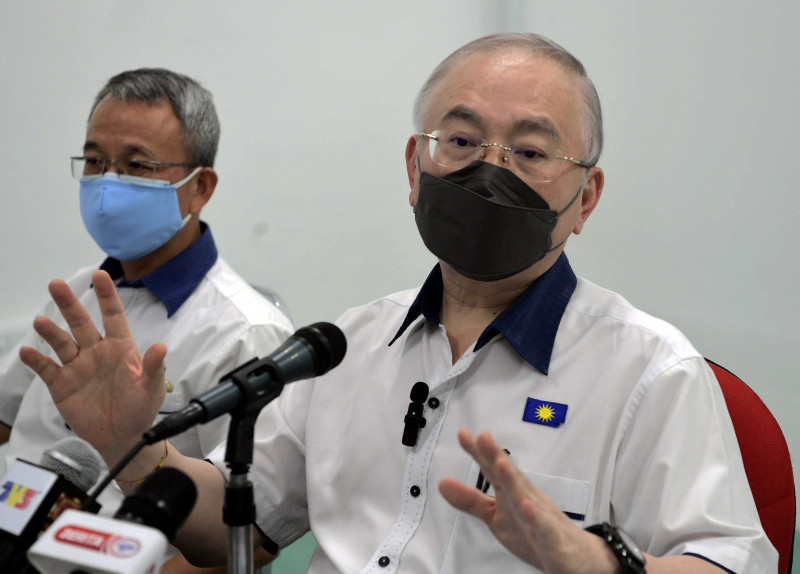
Warisan president Datuk Seri Mohd Shafie Apdal has said the public should be empowered to vote but this cannot happen during the monsoon season. – Pic courtesy of Warisan, October 1, 2022


SANDAKAN – The power to seek the Yang di-Pertuan Agong’s consent to dissolve Parliament lies with the prime minister, and it is unnecessary for Datuk Seri Ismail Sabri Yaakob to get approval from other political parties, said Warisan.

Warisan president Datuk Seri Mohd Shafie Apdal said in his previous experience as a cabinet member for several years, there was never a system where a prime minister would get approval from others before calling an election.

“All this while, a prime minister could just hold a cabinet meeting, not mentioning the election, but announce the dissolution of Parliament two to three days later.”

He added that Warisan has no say in determining the date of the general election but can only provide an opinion.

On Umno pushing for a national polls this year, Shafie said the public should be empowered to vote but this cannot happen during the monsoon season.

“How are people going to vote during the floods? By boat? Maybe there isn’t even a polling centre (because of the flood).”

He said this at a press conference today after attending Warisan’s Zone 5 Mooncake Festival celebration in Tiong Hua hall, here today.

On the upcoming Budget 2023, Shafie said he hopes the government will highlight ways to address leakages and be prudent in its fiscal management.

He said in light of the global economic crisis, presenting details pertaining to financial management, leakages, and transparency are more important than presenting how much allocation each ministry will be getting.

“I hope the government and the leaders will take measures in managing allocation for each ministry. How can the government manage the economy well when there is no mention on how to address leakages?”

Yesterday, Umno secretary-general Datuk Seri Ahmad Maslan said Ismail Sabri will present a suitable date to the Agong to dissolve Parliament and pave the way for a general election to be held this year.

Reading out a statement to the press following the conclusion of the Umno Supreme Council meeting last night, Ahmad said this is in line with the party’s decision to return the mandate back to the people.

“The dissolution of Parliament must be held soon, to allow the 15th general election to be held within this year. Based on this decision, the prime minister will present a date for dissolution to the king in line with Article 40 of the federal constitution,” he said. – The Vibes, October 1, 2022


More On Europe. Must Watch. Must Listen.


OutSyed The Box

Saturday, October 1, 2022


More On Europe. Must Watch. Must Listen.


Hi again folks. I know I am focussing a lot on the problems and troubles in Europe. May I request that you do not get bored because really strange things are going on in Europe. And it is going to affect all of us.

I am posting FOUR videos here with some of my comments. I hope you will follow my comments.


Before that, the Europeans (and therefore us too) are living through some really precarious times. There is a huge ill wind blowing across the face of the entire earth and once more it is coming from the West - from Europe.

In 1914 the First World War began in Europe and they killed 20 million people. Just 25 years later in 1939 the Second World War broke out in Europe and this time they did better - they killed 50 million people or more.

There seems to be quite an insane bloodlust to shed human blood.

This so reminds me of the verse in the Quran :

Surah [2:30] Recall that your Lord said to the malaikah, "I am placing a representative on Earth." They said, "Will You place therein one who will spread evil and shed blood, while we sing Your praises, glorify You, and uphold Your absolute authority?" He said, "I know what you do not know."

Five days ago on 26th September 2022 BOTH the Nordstream 1 and 2 undersea gas pipelines running from Russia to Germany (under the Baltic Sea) were blown up with explosives. They were obviously sabotaged.

Although a joint venture with western oil companies (Shell, ENGIE, OMV, Uniper etc) both pipelines are majority (Nord 1) and 50% (Nord 2) owned by Russia's national oil company Gazprom. Nordstream 2 cost US$11 Billion to build.

The Nordstream 2 gas pipeline is NOT OPERATIONAL. There is no gas inside that pipeline because the US/UK refused to allow the Germans to turn it on (early this year).


Why would the Russians blow up a US$11 Billion investment?
Why would the Russians blow up a non operational, empty gas pipeline?
Why would the Russians blow up a gas pipeline when they can simply shut off the gas supply?

Ok here are the FOUR videos.

No. 1 The first video (less than two minutes) features Colonel Douglas Macgregor. He explains who would NOT have blown up the gas pipelines and who are the likely culprits.


No. 2 The second video here by Amit Sengupta is much more detailed about the pipeline sabotage and not too long either (just over 10 minutes). Do watch this video.


No. 3 The third video is by Ron Paul. It is about 30 minutes but you only need to watch the first 10 minutes. If you have time watch the full video. It is jam packed with facts, videos and pictures.


It shows massive public protests in Germany, the Czech Republic and other European countries which go unreported by the Western media. The protests are against NATO interference, against the European Union and against sanctions against Russia. The first protest in Prague (Czech Republic) gathered 70,000 protesters. Not the 10,000 reported earlier. The most recent second protest in Prague also drew thousands of Czechs.

There are also massive public protests going on in Germany against NATO, the European Union and against the government of Olaf Schulz with Germans chanting (you will not believe this) "Russia, Russia, Russia". Russia is the country that almost completely levelled Germany during the Second World War. The Russians bombed Berlin back to the Stone Age. Yet Germans today are chanting "Russia, Russia, Russia".


No. 4 Finally here is Sean Foo again with a sharp analysis of the financial bungle being implemented in the UK by their new prime minister Liz Truss. You have to listen to the whole video. It is quite a technical analysis but Sean Foo explains the situation in plain and easy to understand English. Liz Truss is pushing the UK into an abyss but I dont think she is stupid. She knows exactly what will happen. She is listening to others.


The bottom line that I gather from this video is that (Bank Negara Malaysia tolong dengar baik-baik ok) please do not go into any expansionary monetary policies like printing currency notes, government issuing bonds (and most likely subscribed by the pension funds using public money) increasing the supply of loans and credit which will make inflation worse. Nobody likes higher interest rates (except the bankers) but at the same time there is no need to be too charitable, especially with public funds. The Budget 2023 is coming up so please plan things carefully.


And please stop listening to foreign "con-sultans" who do not seem to know anything other than for the government to borrow more and more money.

And totally avoid "advisors" who are nothing more than currency speculators who are still walking around - looking for the next killing.


Situation On The Ground In Europe Getting More Difficult


OutSyed The Box

Saturday, October 1, 2022


Situation On The Ground In Europe Getting More Difficult


This is Lilly from the YouTube Channel 'Survival Lilly'. Lilly is an Austrian outdoors person. Most of her videos are about camping in the woods, fishing and hunting for survival. Some of her fans have termed her as a "prepper" - the class of people who prepare for survival in a post-apocalyptic world (nuclear war, asteroid or giant meteor strike, natural disasters, wars etc).

Lately (post Ukraine War) she has turned to talking about the difficult living conditions in Austria and Europe, especially the high price inflation and the super high energy bills. This time around the Europeans seem to be going through tough times. These wounds are self inflicted and they can be overcome quite easily.


Saturday, October 01, 2022

Warisan ups the ante against DAP, PKR, with Shafie alleges unkept promises


The Star:

Warisan ups the ante against DAP, PKR, with Shafie alleges unkept promises


KOTA KINABALU: Datuk Seri Mohd Shafie Apdal went on the offensive against Pakatan Harapan as talk of the 15th General Election (GE15) gains momentum, claiming DAP and PKR had failed to protect the rights of Sabahans when they were in power.

The Parti Warisan president said when he served as the chief minister, his state Cabinet, which comprised members from the Pakatan component parties, had decided that they should work together to demand for certain rights from the then Pakatan federal government to be returned to the state.


He said he asked then Sabah PKR chief Datuk Christina Liew, who was the former deputy chief minister, as well as DAP leaders such as Phoong Jin Zhe, the former state youth and sports minister, and Kota Kinabalu MP Chan Foong Hin to bring up the matter with their respective national leaders

“I asked them to voice out for Sabah because this is in the interest of Sabahans,” he said, during a meet-the-people event in the east coast Sandakan district on Saturday (Oct 1).

However, Shafie said he was disappointed with the response he received from the state leaders on their return from Kuala Lumpur.

He said the demands they discussed earlier could not be met, adding that they told him PKR president Datuk Seri Anwar Ibrahim and then DAP secretary-general Lim Guan Eng had decided on the matter.

“They (Sabah leaders) said ‘we had to follow the parties’ decisions’.

“Who do they think voted for the DAP elected representatives in Sandakan like (Sabah DAP chief and Tanjung Papat assemblyman) Datuk Frankie Poon and Sandakan MP Vivian Wong? Did the DAP people in KL vote for them or Sandakan residents?

“The ballots were given by Sabahans so why don’t you protect their rights? Why protect the rights of DAP or PKR? The party is not important but people’s rights are,” Shafie said, to rousing applause from the crowd.

Continuing his onslaught on DAP, Shafie also claimed that the party refused to make way for Warisan in any of the Chinese-majority seats in Sabah during the previous snap state election in 2020.

“There were some six or seven Chinese-majority seats and I tried to negotiate with (DAP veteran) Lim Kit Siang and Guan Eng, asking for only one seat for (Warisan vice-president) Datuk Junz Wong to contest but they refused,” he said.

Despite that, the Semporna MP said he and Warisan still continued to help Pakatan as they did previously such as during GE14 when they campaigned for them in the Sandakan, Kota Kinabalu and Tawau seats.

“Guan Eng also promised before GE14 that if we went on to become the government, he said the 40% tax revenue owed to Sabah will be returned to the state.

“He also assured the 20% oil royalty payment will be given to Sabah ... these were all just promises,” Shafie said.

He said this, however, did not mean Warisan held any animosity towards people in Peninsular Malaysia.

“We are not fighting against all the people in the peninsula, we love them. But we don’t want the people of Sabah and Sarawak to be fooled by empty promises,” he said.


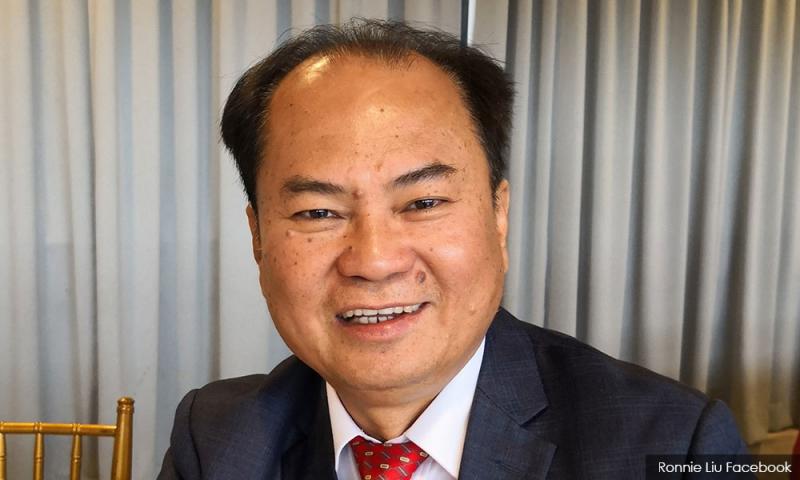
Ronnie Liu Was One Of Bersih’s Founders And A Mastermind Of Hindraf


Ronnie Liu Was One Of Bersih’s Founders And A Mastermind Of Hindraf


by Raja Petra Kamarudin


This is the second time DAP is trying to get rid of Ronnie Liu Tian Khiew (READ MORE HERE). The first time was more than ten years ago and for a while Ronnie was placed in ‘cold storage’.

Ronnie once admitted to me that in his younger days he was a communist, but as he ‘matured’ he changed his views on communism and now believes in capitalism — isn’t that true for China as well? And weren’t we all communists in our younger days? In fact, I was more than just a communist, I was an anarchist (if you don’t know what that means go look it up).


Ronnie and my wife, Marina, during a candlelight vigil in front of the Sungai Buloh Prison


Ronnie was my closest DAP comrade back in the Reformasi days. He also believed in cooperation with other non-Pakatan parties such as Umno. When Umno Youth did a blood donation drive at the Kampong Baru mosque (I think it was around 2006 or so), Ronnie brought a bunch of DAP people to attend the event and donate blood.

The DAP people knew it was an Umno Youth event. In fact, the reason they went to donate blood is because it was an Umno Youth event.


Ronnie was one of the founders of Bersih


In 2007, a few of us got together to plan the Bersih march to Istana Negara (which was held on 5th November 2007) and Ronnie was one of the key people and mastermind. Ruhanie Ahmad (Ron), one-time BN MP for Parit Sulong and President of Kelab Penyokong Kerajaan (BNBBC), was also involved and I was amazed that Ronnie and Ron got along very well — in spite of one being DAP and the other Umno. That made me believe that not everyone in Umno and DAP are ‘Taliban-minded’.

When Ronnie became a wakil rakyat of Selangor, he got along very well with some members of the Istana Selangor. Ronnie gave the impression he was not a republican or anti-monarchy and accepted and respected Malaysia’s constitutional monarchy. Ronnie also met certain members of the Istana Selangor for dinner a number of times — probably one of the few DAP leaders to socialise with members of the royal family.


Ronnie told Hindraf to move to Batu Caves instead of calling off the rally


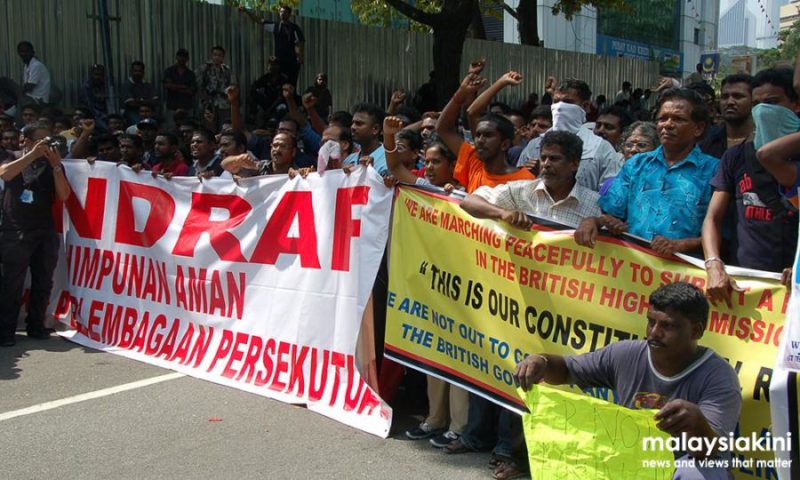
Something only a handful of Malaysians might know is that Ronnie ensured that the Hindraf rally of 25th November 2007 succeeded. On the night of 24th November (Ronnie and I were at Waikiki in Petaling Jaya), one of the Hindraf organisers phoned to say the police had set up roadblocks at all roads leading to Kuala Lumpur and no one could reach Jalan Ampang (or the British High Commission). So they were calling off the rally.

Ronnie told them to not call it off and instead change the venue to Batu Caves. He asked them to instruct everyone to go to Batu Caves instead and before dawn Batu Caves was flooded with Indians from all over Malaysia. When the police rushed to Batu Caves, another group went to KLCC and created chaos there.

The 25th November 2007 Hindraf rally was a huge success — and that had an effect on the 8th March 2008 general election — just like the 5th November 2007 Bersih rally did. And Ronnie was very much instrumental in the Bersih and Hindraf successes, and by extension Pakatan’s success in the 2008 general election.


Edmund Santhara, Xavier join PBM


Edmund Santhara, Xavier join PBM


PBM president designate Zuraida Kamaruddin said the two joining the party were Segamat MP Edmund Santhara Kumar and Kuala Langat MP Xavier Jayakumar.


PETALING JAYA: Two former PKR MPs are among the elected representatives joining Parti Bangsa Malaysia (PBM).

The party’s president designate Zuraida Kamaruddin announced this at a press conference after PBM’s first annual general meeting here today.


She identified them as Kuala Langat MP Xavier Jayakumar and Segamat MP Edmund Santhara Kumar.

With this, she said the party has six MPs, all of whom had won their seats at the last general election under PKR, Bersatu and DAP.


MORE TO COME

DAP sec-gen says Umno insistence on polls this year akin to ‘derhaka’ against Agong


DAP sec-gen says Umno insistence on polls this year akin to ‘derhaka’ against Agong


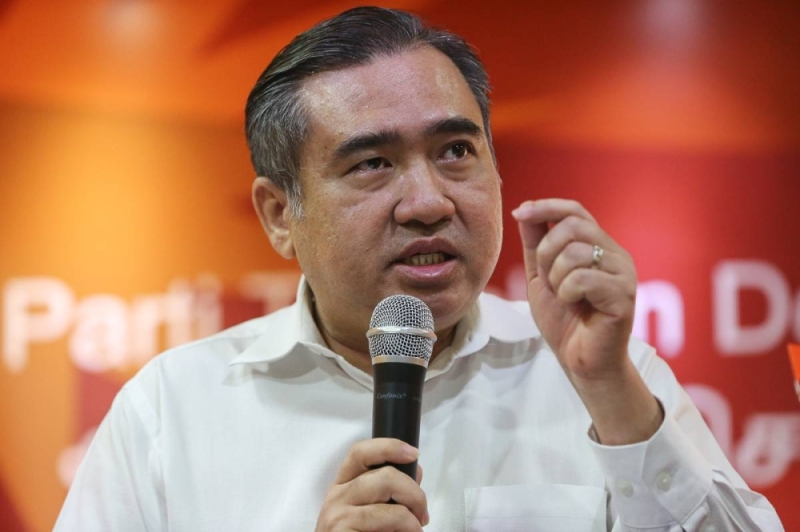
To Loke, the Umno supreme council was setting a condition for the King and ignored the monarch’s constitutional discretionary powers. — Picture by Yusof Mat Isa

Saturday, 01 Oct 2022 1:02 PM MYT


KUALA LUMPUR, Oct 1 — Umno’s demand to hold an early general election while Malaysia braces for monsoonal floods even as it struggles with post-Covid economic recovery smacks of arrogance and disrespect, DAP secretary-general Anthony Loke said today.

He also said the Malay nationalist party’s refusal to budge from holding polls this year showed that it was deliberately ignoring the Federal Constitution which provides the Yang Di-Pertuan Agong with discretionary powers with regards to elections.


“Isn't this derhaka against the institution of the Yang di-Pertuan Agong?” the Seremban MP asked in a statement, using the Malay word for rebellion.

Citing Article 40(2)(b) of the Federal Constitution, Loke said the clause clearly provides the Yang di-Pertuan Agong the power to disallow a request to dissolve Parliament.


Loke was responding to news reports that Umno supreme council has set a date for GE15 and that its vice-president and Prime Minister Datuk Seri Ismail Sabri Yaakob will seek an audience with the Yang Di-Pertuan Agong to seek a dissolution of Parliament soon.


To Loke, the Umno supreme council was setting a condition for the King and ignored the monarch’s constitutional discretionary powers.

He pointed out that it had never happened in the history of the country that an open statement regarding the dissolution of Parliament was issued before the prime minister received the approval of the Yang di-Pertuan Agong.

Loke added that such action can be considered going against the institution of the Yang di-Pertuan Agong.

He also said that Umno needs to be reminded that the Malay nationalist party only has 38 representatives out of 222 parliamentarians in the Dewan Rakyat or only 17 per cent that made up the entire Parliament.

“Umno cannot be allowed to act arbitrarily as if they are still the largest party being represented in Parliament today,” he said.

Loke said DAP will uphold and fully respect the decision of the Yang di-Pertuan Agong in the matter of dissolving Parliament in accordance with the principles and provisions under the Federal Constitution.

“DAP has faith that the Yang di-Pertuan Agong will use his discretion and wisdom to make the best decisions for the benefit of the people and the country,” he said.

In separate statements, two other DAP lawmakers criticised the Umno supreme council for bulldozing its way to hold elections this year. Klang MP Charles Santiago said holding a general election this year signals that Umno is desperate to save its “court cluster” leaders from their numerous criminal charges.

“We need to end politicking and focus solely on mitigating the monsoon floods.

“Fixing a date for the 15th general election for next year will also mitigate the almost free fall of the ringgit and sliding economy,” he said, adding that the government does not have to hold polls this year to prove anything.


***

kt comments: We all know the King has a constitutional role in dissolving Parliament, but ONLY on the advice of the PM - this has been the case throughout our parliamentary history and those of other Commonwealth nations which share our Westminster parliamentary democracy.

So what bullshit is Loke peddling and moaning about 'derhaka' and like-rubbish. Loke is going too far in dragging the Agong into his political preference for GE15 - in fact, Loke is the one being derhaka!


Umno calls divisional leaders to Oct 4 meeting, possible announcement on GE15 matters


Umno calls divisional leaders to Oct 4 meeting, possible announcement on GE15 matters


Umno division chiefs and wing leaders have been invited to a special meeting with the prime minister and its party president at the World Trade Centre believed related to the coming 15th general election. — Picture by Hari Anggara.

Saturday, 01 Oct 2022 4:22 PM MYT


KUALA LUMPUR, Oct 1 — Umno is scheduled to hold a special meeting with the prime minister and its party president at the World Trade Centre this coming Tuesday, believed related to the coming 15th general election.

Those invited are all Umno division chiefs and wing leaders, according to the letter signed by party secretary-general Datuk Seri Ahmad Maslan dated yesterday that Malay Mail sighted today.


In the letter, Ahmad said the special meeting will be attended by party president Datuk Seri Ahmad Zahid Hamidi and Prime Minister Datuk Seri Ismail Sabri Yaakob, who is also party vice-president.

“The special meeting will take place at Dewan Tun Hussein Onn on Level 2 of the World Trade Centre Kuala Lumpur at 2pm on Tuesday.


“Based on this, all division chiefs, Wanita, Youth and Puteri divisional leaders are invited to attend the above event," said Ahmad.


The letter followed Ahmad’s statement last night after the Umno supreme council.

The country’s biggest political party has insisted on Parliament’s dissolution before its term expires next July to pave for a general election this year.

Ahmad also reiterated in the letter that Ismail Sabri will seek an audience with the Yang di-Pertuan Agong, without mentioning when.

Critics from both sides of the political divide have hit out at the Malay nationalist party for refusing to budge from holding national elections this year despite the current economic state and predictions of floods triggered by the seasonal year-end monsoon.

Ismail Sabri has maintained tightlipped on when he will seek an audience with the Yang di-Pertuan Agong to request Parliament’s dissolution, as well as proposed dates for GE15.

The prime minister told reporters asking about the general election earlier today that they will have to wait for the official announcement.

He also denied that his party had set any condition for the election as some critics have suggested, clarifying that all decisions made by the Umno supreme council – of which he is a member – are based on consensus.

As Ringgit Free Fall To RM4.56, India’s Latest Rice Export Ban Is Set To Hit The Country Even More


As Ringgit Free Fall To RM4.56, India’s Latest Rice Export Ban Is Set To Hit The Country Even More


India is the world’s top rice exporter, accounting for 41% of the global rice trade. Its total rice exports in the world last year (2021) reached 21.5 million tonnes – more than the total shipment from the next four biggest exporters – Thailand, Vietnam, Pakistan and the United States – combined. Rice is the staple food for over half of the population of the world, and Asia accounts for over 90%.


Beginning Sept 9, in a bid to control domestic prices and demands, the Indian government banned exports of broken rice. Additionally, it slapped an export duty of 20% on several varieties of rice, including rice in husk (paddy or rough), husked (brown rice) and semi-milled or wholly-milled rice. White and brown rice constitutes about 60% of India’s total global sales.


However, the measures do not affect exports of basmati or parboiled rice, the more aromatic and pricier type of rice. The broken rice refers to cheaper grade of rice. While broken rice is the major staple food in some African countries, it is used to make noodles and wine in China. But more than 150 countries that import Indian rice will be affected by the rice ban, one way or another.


It was already bad that India banned all exports of wheat grain and sugar as early as May due to scorching heatwaves and Ukraine War. The ban has triggered a scramble for the commodity, leading to a 20% price spike. The country’s flour exports jumped 200% during April-July 2022 period. In August, the country imposed a restriction on “wheat flour” exports to calm domestic prices.


The overall food security will now get worse with the latest ban on rice exports, which India has blamed on insufficient and unpredictable monsoon rainfall. Major rice-producing states such as West Bengal, Bihar and Uttar Pradesh are receiving 30% to 40% less rainfall. This translates to rice production drop by 10 to 12 million tonnes – a plunge of 7.7%.


According to Nomura research, the high cost of rice in retail markets hit 9.3% year-on-year in July. Consumer price inflation (CPI) for rice also spiked 3.6% year-on-year in the same month. In the region, the Philippines and Indonesia will be most vulnerable to India’s ban on rice exports. The Philippines, for example, imports more than 20% of its rice consumption needs.


While the Indonesia Ministry of Agriculture has been quite successful in increasing the national rice production in efforts to achieve food sufficiency and sovereignty, its production could not meet the local demands. Its reliance on imports for 2.1% of its rice consumption needs might not sound a lot. But with its 275 million population, rice makes up about 15% of its food CPI basket.


Singapore, despite importing 100% of its rice consumption (28% import from India), the share of rice in its CPI basket is very small. That’s because the island has the advantage as a high-income country, where its strong currency provides high purchasing power. A Singapore dollar is trading at 10,653 Indonesian Rupiah, 40.85 Philippine Pesos, 26.25 Thai Bhat and 3.23 Malaysian Ringgit.


Another country to be affected by India’s ban on rice exports is Malaysia, which imports more than a quarter (30%) of its rice requirement, sourced mainly from Thailand, Vietnam, India and Pakistan. The annual requirement of rice for Malaysians is 2.5 million metric tonnes. However, the country’s rice production is about 70%, making it a net importer of rice.


Because Malaysia’s 33 million populations are less than 3.5 times the Philippines’ 115 million populations, the rice export ban is less severe than the Filipino. In actuality, before the Ukraine War, Malaysia already faced the “Food Price Crisis” during the U.S. subprime mortgage crisis, which subsequently triggered the Great Recession (December 2007 – June 2009).


The 2007-08 Financial Crisis saw many Southeast Asian countries shifting their rice policies towards production. The Malaysia government too has introduced its own programme – National Food Security Policy – which was supposed to boost domestic rice production with a short-term target of achieving a self-sufficiency level of 86% by 2010. But it was more rhetoric than substance.


In comparison to Indonesia’s rice production and import figures, obviously the government of Malaysia has failed to achieve national food security despite having abundant agriculture land. Worse, while neighbouring Singapore has a stockpile for 3 months, Malaysia’s rice stockpile is only sufficient to meet a month (200,000 metric tonnes) of the national requirement.


What’s wrong with Malaysia? Since independence in 1957 (with a brief interruption between May 2018 and March 2020 under opposition rule), the governing party – United Malays National Organization (UMNO) – has operated a single-party dominant regime. This has led to authoritarian system where corruption, cronyism, nepotism and racism dominated the political landscape.


Razaleigh Hamzah, a veteran UMNO lawmaker admitted that “haywire” implementation of the New Economic Policy (NEP) – a racist and discrimination policy – was the cause of rampant cronyism and rent-seeking. And the entrenchment of rent-seeking and patronage system into the fabric life of the country have come back to haunt the country and its people, including the majority ethnic Malays.


The NEP, derived from “Ketuanan Melayu”, the ideology of Malay supremacy espoused by UMNO, saw politicians lining their own pockets and colluding with businessmen unable to compete without preferential treatment. Instead of meritocracy, political connections paved the way for instant and easy profits through corruption, poor regulation and even blatant transfer of public assets through privatization at fire-sales.


Treating national oil company Petronas as its personal “piggy bank”, the UMNO government has “plundered” at least RM529 billion in dividends, taxes, export duties and petroleum revenue over more than three decades. Yet, they still can’t fix the issue of rice sufficiency, let alone national food security for a nation with just 33 million people.


For example, last year (some 15 years since the 2008 Financial Crisis), then-PM Muhyiddin Yassin was still talking about “The National Food Security Action Plan 2021-2025” – an initiative towards a sustainable food system. This year, the newly installed Prime Minister Ismail Sabri has again talked about effort to strengthen the nation’s food security, amid food crisis triggered by the Ukraine War.


As usual, food security committees were formed once again to study about land allocation for agriculture, infrastructure fees, development of food industries and whatnot. But when the clueless government was running around like a headless chicken during the shortage of chicken and eggs crisis recently, how do you expect decades-old problem like rice production to be solved?


The solution to supply shortage and high prices of rice is as simple as increasing the sources of supply. When supply is more than demand, naturally the price will fall. So, why isn’t rice production increased or rice supply sufficiently stockpiled? The simple answer – monopoly on rice import by BERNAS, a company controlled by Syed Mokhtar Albukhary, an UMNO proxy.


Not only billionaire Albukhary controls the sugar business, he also monopolizes the rice in the country when his company Tradewinds acquired Padiberas Nasional Bhd (BERNAS), the country’s sole rice importer. It was revealed that Bernas’ gross profit per month is about RM8.7 million, translating to RM104.4 million annually for doing nothing except arranging the import of rice.


Worse, the UMNO proxy got greedy when Bernas increased imports of cheap low-grade rice, causing small-scale rice millers to shut down. By systematically killing millers and paddy farmers (who happen to be ethnic Malay) instead of assisting them, the tycoon managed to maximize his profits. Do you know that about 90% of paddy farmers in Kedah, the nation’s rice bowl state, are in debt?


In 2018, it was revealed that 300,000 farmers in Kedah were drowning in debt due to shrinking incomes and increasing operating costs thanks to rice monopoly. The net income for an average farmer was only RM600 per month, forcing them to borrow to stay in business. To add salt to injury, some have to pay rent on the land because not all farmers own them.


BERNAS was actually a corporatized entity of “Lembaga Padi dan Beras Negara” (National Paddy and Rice Board, which was formed in 1966) under the management of the Ministry of Agriculture in 1994. Among the responsibilities of Bernas was to ensure fair and stable rice prices, to provide sufficient supply of rice and to assure quality and standard of rice to consumers.


It was then privatized in 1996 and publicly-listed in 1997, before sold to Albukhary. Bernas was granted the exclusive right to import rice for 15 years, up to 2010 with another optional 5-year extension. However, thanks to Albukhary’s political connections, Bernas becomes a forever cash cow as it has remained as the single rice importer ever since, with its monopoly license automatically renewed.


During the chicken crisis in May, PM Ismail Sabri proudly announced that AP (“approved permit”) required to import foodstuffs into the country will be scrapped. He said – “This will enable all parties to import any food items into the country”. The turtle-egg man lied – the Agriculture and Food Industry Ministry says importers must still have an IP (import permit).


In truth, “only four” specific types of agro-food commodities were no longer subject to AP. Other food items such as rice still require AP. Meaning billionaire Albukhary still controls the rice business till today and other rice traders cannot import rice and source their own supply from different countries freely. Instead of increasing local production, Bernas kills local farmers because it was more profitable to import rice.


Thailand and Vietnam, the world’s second and third-largest exporters of rice respectively, will most likely to profit from India’s ban, which will boost the rice prices. According to Statista, the import value of rice to Malaysia was valued at US$620 million (RM2.48 billion) in 2020 based on currency exchange of RM4 to a dollar. Between 2020 and now, rice prices have jumped more than 40%.


Adding fuel to the fire, Malaysia Ringgit continues its free fall to as low as RM4.558 to a dollar today (Sept 20). Therefore, the same amount of rice import in 2020 would cost a whopping RM3.95 billion today – RM1.5 billion more. The country is losing billions of dollars because Bernas has no intention to help promote the local rice production. It is a profit oriented private company with a monopoly in rice import.


DAP’s obligation for principled dissent


by Ronnie Liu


COMMENT | There is a need to distinguish between constructive principled dissent and destructive criticism. It is out of my love for the party and the causes of our struggle that I felt the obligation to state my constructive principled dissent to the amendments to DAP’s constitution than to be part of destructive consent.

I must make it clear that my statement was not intended to challenge the validity of the decision. I will follow and abide by the amendment. However, it is my hope that my solitary reminder may assist the party to reflect and make the necessary adjustments when the next opportunity arises.

Organisations, be it in business, politics or society have realised the dangers of destructive consent and have encouraged and made it an obligation to consider constructive dissent. This was my sincere intention in making the statement.

Collective ministerial responsibility is a constitutional convention that existed since the 18th century. It is derived from the Westminster parliamentary feature that the prime minister is appointed based on his enjoyment of the confidence of the majority of the members of parliament and that it is the prime minister who appoints his cabinet ministers. Therefore, the cabinet is collectively responsible for its decisions. If a vote of no confidence is passed against the prime minister the entire cabinet resigns.

Collective ministerial responsibility has two main components.

First, ministers should be able to have a free and frank discussion and these discussions should be kept confidential. Second, that once a position has been agreed upon in the cabinet, all ministers are expected to abide by that position and vote with the government or else resign from the cabinet.

The importance of these two features is to ensure that the public is not aware of the different opinions of the ministers, which at times can vary, and prevent the cabinet from appearing united and strong.

Thus, one of the features of collective ministerial responsibility is to ensure personal loyalty to the prime minister. It is in a cabinet minister’s best interest to support and align with the prime minister’s policies because the minister serves at the pleasure of the prime minister, who can at any time dismiss the minister and appoint others to his position.

CEC member not cabinet minister

It is to be noted that collective ministerial responsibility is a flexible convention and there are exceptions to its application. During Theresa May’s prime ministership in UK, Boris Johnson wrote articles and gave newspaper interviews in which he set out positions that were not cabinet policies. David Cameron allowed ministers to publicly disagree with the cabinet’s position in the Brexit referendum.

A member of the DAP’s Central Executive Committee (CEC), unlike a cabinet minister appointed by the prime minister, is elected by the delegates at the general assembly. The CEC member’s responsibility is therefore owed primarily to the members of the party.

I sincerely believe that the circumstances relating to the anti-hopping amendments and their effect on the democratic processes in the party are of such importance that it warrants my dissent to be voiced. It is to maintain the necessary check and balance within the party.

While defections should incur disqualification, there should also be safeguards to ensure healthy debate within the party to curtail autocratic tendencies of party bosses or provide timely reminders that the leadership may be deviating from the principles of the party struggle.


RONNIE LIU is a member of the DAP Central Executive Committee (CEC and Sungai Pelek state representative in Selangor).


Bad for democracy if DAP’s gag is emulated, says analyst


Bad for democracy if DAP’s gag is emulated, says analyst


A recent amendment to the DAP constitution allows for the expulsion of elected representatives who do not toe the party line.


PETALING JAYA: Malaysia’s democracy is in danger if other parties follow DAP to expel elected representatives for not toeing the party line on fundamental issues, says a political scientist.

Wong Chin Huat of Sunway University said that the recently passed anti-hopping law had the aim of preventing party leaders from wielding too much power. However, DAP’s move to amend its constitution gave it a useful tool to stifle internal dissent or competition.


“If an anti-hopping law included the sacking (of MPs for not toeing the party line), then Muhyiddin Yassin and Mukhriz Mahathir would have been sacked as MPs for speaking out over the 1MDB scandal (when they were in Umno).

“In fact, they would not have had the chance to contest in a by-election since the sacking would have come when there was less than two years left in the parliamentary term.

“An anti-hopping law (like that) could protect the power of party leaders, especially leaders in the government who might be involved in abuse of power or scandals,” he told FMT.

At a special congress on Sept 25, DAP approved a motion to amend its constitution to safeguard the party from what it called a loophole in the anti-hopping law, in which MPs sacked by their party did not have to vacate their seats.

A week before that, Amanah made similar amendments to its constitution.

DAP central executive committee member Ronnie Liu has criticised the move, warning that it could curtail democracy in the party. He also said he would not have been a party member any longer if the amendment had been in force earlier, citing his outspokenness over various issues previously.


Wong said the amendment could see elected representatives losing their membership quickly with no opportunity to challenge their termination, while the definition of “toeing the party line” was very broad.

He also believed the effects of these amendments would be felt even in Parliament.

“If parties in a government with a simple majority take this step, then the government will be able to guarantee the passing of any motion or bill (in the Dewan Rakyat).

“Parliament would just be a ‘yes man’ to the executive. This will spoil our democracy.”

Another analyst, Oh Ei Sun of the Singapore Institute of International Affairs, said DAP’s move was an act of compromise to ensure political stability after the Pakatan Harapan government was toppled by elected representatives switching allegiances.

“There’s a need to stop such undemocratic acts,” he said, referring to party-hopping. “Our partisan democracy is in a tough spot. In a mature democracy, elected representatives should have more freedom to vote (for or against motions) according to their ideology and conscience.”

He hoped that Malaysia’s democracy would grow to such maturity.


I was sidelined by PKR, says ex-Rantau candidate Streram


I was sidelined by PKR, says ex-Rantau candidate Streram


Dr S Streram says he was invited by Parti Bangsa Malaysia president designate Zuraida Kamaruddin to join the party.


PETALING JAYA: Dr S Streram, the Pakatan Harapan (PH) candidate who lost in the 2019 Rantau by-election, said he decided to join Parti Bangsa Malaysia (PBM) because he was sidelined by his party, PKR.

He also said his loyalty to the party, which he joined in 2008, was never appreciated by Negeri Sembilan PKR chief Aminuddin Harun, who is also the menteri besar.


“I am just disappointed with PKR. The more dedicated I was towards the party, the more I was sidelined.

“The Negeri Sembilan menteri besar said there was no need for me to serve the people, so I said it’s alright, I’ll join another party who wants me,” he told FMT.

Streram also claimed that many more PKR branch and divisional leaders in the state had been sidelined by Aminuddin, creating animosity among many members towards the party.

It had been rumoured that the former deputy Rembau PKR chief was attempting to resurrect his political career through PBM after a picture surfaced of him attending a Negeri Sembilan chapter meeting of the new party earlier this month.

Streram, who is currently the Seremban PBM chief and the party’s state treasurer, said he was invited by president designate Zuraida Kamaruddin to join the party.

“I just want to serve the people and I need a political platform to do that.

“And I am okay with PBM’s ideology.”


Charge him in court, MP demands over ‘lewd’ lecturer case


Charge him in court, MP demands over ‘lewd’ lecturer case


Act swiftly when a student alleges sexual harassment, says MP Kasthuri Patto.


PETALING JAYA: An MP says a lecturer sacked by Universiti Teknologi Mara for alleged sexual harassment of a former student should be hauled to court.

She also rebuked the higher education and home ministries for their inaction.

Kasthuri Patto, MP for Batu Kawan, asked why the two ministries have been mum on the incident involving Farah Azuin Abdul Razak, 23, who accused a lecturer of sexually harassing her over a year ago.

“(We) have yet to hear from the minister of higher education nor the home minister. There is also a lack of action by both ministries,” she told FMT.

Following FMT’s report yesterday UiTM said it had immediately sacked the lecturer after an internal investigation and a disciplinary committee finding.

Farah had lodged a police report against the lecturer in Tangkak, Johor, on June 2, 2021 claiming he had called her at 12.30am that day to do a survey about sex and had asked her to join him in self pleasure.

Kasthuri said sacking the lecturer was merely the tip of the iceberg. She called for him to be charged in court and for the Malaysian Anti-Corruption Commission to probe him for attempting to bribe Farah with RM20,000 to close the case.

The lecturer has filed a suit against Farah for allegedly exposing his private life and identifying the institution. She denied the lecturer’s allegations, saying his identity had been exposed by netizens.


She claimed the suit was aimed at intimidating her after she turned down the RM20,000 offer.

Meanwhile, All Women’s Action Society (Awam) said it is important to ensure such cases are handled in a sensitive manner, including updating victims on the progress and outcomes of investigations.

Prior to UiTM’s announcement of the sacking, Farah had expressed disappointment the institution had not taken any action against the lecturer and did not give her any updates on the university’s internal investigation.

Awam information and communications officer Jernell Tan urged the university to uphold its mandate in prioritising and protecting the wellbeing of students.

She added the university could have suspended the lecturer upon receiving a report of the incident pending the internal investigation.

The university should also consider having a standard timeline not just for the investigation but also for when a decision is made and communicated this to the victim, she said.

“Azam Baki must be hallucinating to snub call to park MACC under Parliament”


“Azam Baki must be hallucinating to snub call to park MACC under Parliament”


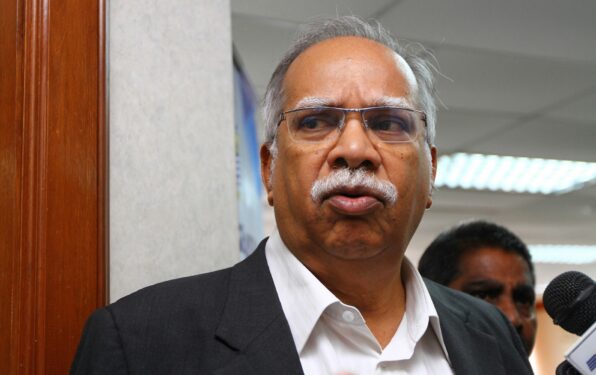
CHIEF graft buster Tan Sri Azam Baki must be “hallucinating” if he thinks that the Malaysian Anti-Corruption Commission (MACC) should not be placed under Parliament, says Prof P. Ramasamy.

The vocal DAP lawmaker was responding to Azam’s remarks to the media on Thursday (Sept 29), where the latter said the anti-corruption enforcement agency was already an independent institution and need not be placed under Parliament for transparency.

Azam added that doing so would likely lead the agency to be forced to follow policies set by politicians – a hypocritical call to make when the agency is being urged to be free from political pressure at the same time.

In a statement last night (Sept 30), Ramasamy noted that politicians in Parliament are not just politicians but the people’s representatives of their respective constituencies.

“If anybody has the right to check the MACC, then politicians functioning as representatives of the people have the right,” the Perai assemblyman said, adding that this is why Parliament is the “most suitable place” to park the MACC under.


Prof P. Ramasamy (Photo credit: The Star)


Ramasamy also poured cold water on Azam’s argument that the MACC would lose its independence if it came under Parliament, saying this was “nothing but pure nonsense”.

“If the MACC had been placed under Parliament, Azam might not have escaped the dragnet for dabbling in the share market,” he noted, referring to the shareholding controversy that Azam was embroiled in earlier this year.

But because the MACC was “beholden” to the executive, Ramasamy continued, Azam was “spared the scrutiny” and “perhaps even his post” as MACC chief commissioner.

“In other countries, Azam might have been forced to resign because the shares he held did not commensurate with his income as a civil servant,” Ramasamy added.

“At the moment, because the MACC is only responsible to the executive, it has been spared the scrutiny of the legislative purview.”

Openly admitted

After an investigative journalist ran an expose on the matter, Azam in January openly admitted that his brother had used his share trading account – with his permission – to purchase shares in two public-listed companies in 2015.

Even though the Securities Commission (SC) eventually said they were not able to establish that there was a breach of regulation over the case, this did nothing to quell intense public anger over the case and a protest in the city centre which called for Azam’s head.

Azam has also refused to appear before the Parliamentary Special Select Committee (PSSC) on Agencies Under the Prime Minister’s Department to answer for the scandal – more than eight months on.

Meanwhile, Ramasamy, who is also Penang deputy chief minister II, further criticised Azam over his “mischief” in singling out Penang for corruption among civil servants.


(Photo credit: Bernama)


Azam said, also on Thursday, that the anti-graft agency has received almost 1,000 complaints since 2019 on civil servants in Penang allegedly accepting bribes, abusing their power and making false claims.

Ramasamy asked why Azam did not draw any comparison with other states, where (according to Ramasamy) corruption was “endemic due to Barisan Nasional (BN) and UMNO”.

It is not that there is no corruption at all in Penang, Ramasamy clarified, but Azam’s statement implies that every other state and federal territory is corruption-free.

He added that talking about corruption in Penang but not in the other states was a “cheap ploy” by Azam to “smear the excellent governance” of the state under Pakatan Harapan.

“Maybe by engaging in this selective endeavour, he thinks that he is assisting UMNO in laying the groundwork for the coming 15th General Elections (GE15),” Ramasamy speculated. “Whoever said that Azam was apolitical?”

Penang Chief Minister Chow Kon Yeow has since welcomed the MACC’s probe into the matter and pledged cooperation with the authority. – Oct 1, 2022


US FAA restores Malaysia’s air safety ranking to Category 1


theVibes.com:

US FAA restores Malaysia’s air safety ranking to Category 1

This, after 33 issues resolved, country’s Civil Aviation Authority fulfils standards


Transport Minister Datuk Seri Wee Ka Siong says the achievement allows Malaysia’s carriers the ability to have flights on additional air routes. – Bernama pic, October 1, 2022


KUALA LUMPUR – The US Federal Aviation Administration (FAA) has restored Malaysia’s air safety ranking to Category 1 after 33 issues were resolved.


This comes after the Civil Aviation Authority of Malaysia (CAAM) has fulfilled standards set by the FAA’s International Aviation Safety Assessment.

Transport Minister Datuk Seri Wee Ka Siong said in an online press conference today the achievement allows Malaysia’s carriers the ability to have flights on additional air routes.

Also present is CAAM CEO Datuk Captain Chaster Voo.

With Malaysia regaining Category 1, Wee said the country will be able to chart more flights or open new flight routes to the United States, boosting economic and tourism opportunities for Malaysia.

“With an IASA Category 1 rating, a country’s air carriers can establish service to the US and carry the code of US carriers. To maintain that rating, a country must adhere to the ICAO (International Civil Aviation Organisation) safety standards.

“Meanwhile, a Category 2 rating means the country either lacks laws or regulations necessary to oversee air carriers in accordance with minimum international standards, or its civil aviation authority is deficient in one or more aspects, such as technical expertise, trained personnel, record-keeping or inspection procedures.”

Wee said the issues brought up in 2019 by the FAA did not reoccur and 29 issues were resolved by the CAAM during the assessment last December.

“By mid-July this year, the FAA returned for a reassessment and CAAM had completed all responses for the 29 findings and all corrective action plans were closed.”

Wee is currently on an official visit to the ICAO headquarters in Montreal, Canada, where he met with his counterparts from other countries to discuss technical cooperation.

In November 2019, Malaysia was assigned Category 2 in its air safety rating under the IASA programme by the FAA due to non-compliance with the ICAO safety standards.

The assessment found that CAAM had 58 findings in total, 25 of which were able to be resolved while 33 remained open, which led to the air safety ranking downgrade during that year. – The Vibes, October 1, 2022


Ukraine war: Russia completes land-grab as Kyiv's territory annexed

BBC:


Ukraine war: Russia completes land-grab as Kyiv's territory annexed


Watch: 'Russia! Russia!' - chants end Putin's speech


Russia has formally annexed four occupied regions of Ukraine, in a move sparking international condemnation.


President Vladimir Putin signed "accession treaties" with the regions' Moscow-installed leaders at a ceremony in the Kremlin's opulent St George's Hall on Friday.


Watched by members of the political elite, he declared the regions would "forever" be part of Russia.


Kyiv reacted by launching a new, fast-track bid to join the Nato alliance.


Flanked by his prime minister and the speaker of parliament, Ukrainian President Volodymyr Zelensky said Ukraine had long been a "de-facto" member of the security bloc, and accused Moscow of redrawing borders "using murder, blackmail, mistreatment and lies".


"We are taking our decisive step by signing Ukraine's application for accelerated accession to Nato," Mr Zelensky said, speaking from the centre of Kyiv.


Nato Secretary-General Jens Stoltenberg was reluctant to be drawn on the bid, saying the decision rested with the bloc's 30 members. But he condemned Moscow's annexation of Ukrainian territory, calling the move "the most serious escalation since the start of the war".


US President Joe Biden also accused Mr Putin of a "fraudulent attempt" to claim Ukrainian territory, and said the move was "trampling on the United Nations Charter, and showing its contempt for peaceful nations everywhere".


"The illegal annexation proclaimed by Putin won't change anything," EU Commission President Ursula von der Leyen said. "All territories illegally occupied by Russian invaders are Ukrainian land and will always be part of this sovereign nation."


And French President Emmanuel Macron pledged to "stand by Ukraine in order to deal with Russian aggression and to enable Ukraine to recover its full sovereignty across its entire territory".


IMAGE SOURCE,GETTY IMAGESImage caption,
Vladimir Putin speaks to crowds in Moscow, with the words "Together forever" at the top of the screen.


But Mr Putin has long been unmoved by Western criticism of his war in Ukraine, and during a rambling 37-minute long speech he promised to "protect" the newly annexed regions "with all the forces and means at our disposal".


He claimed citizens in Kherson, Zaporizhzhia, Luhansk and Donetsk had voted to be "with their people, their motherland".


"The people have made their choice," Mr Putin said. "This is the will of millions of people."


He was referring to self-styled referendums held in the regions in recent days, but Ukraine and Western governments have condemned the votes as a sham.


In his pledge, the Russian leader seemingly returned to his vague threats to use nuclear weapons, accusing the US of creating a "precedent" when it bombed the Japanese cities of Nagasaki and Hiroshima at the end of World War Two in 1945.


The ceremony concluded with the leaders of the four annexed regions joining Mr Putin to sign "decrees", before they joined hands and led the assembled crowd in chants of "Russia, Russia".


Russian media had billed the event as historic, but Mr Putin's speech gave little new detail on the extent of the territory Russia is claiming.


Ukraine has retained control of large chunks of Zaporizhzhia and Donetsk regions throughout the war, and retaken significant amounts of territory in recent weeks.


Instead, the 69-year-old Russian president largely focused on a list of perceived injustices in which he accused the West of "colonialism", before pivoting to a homophobic attack on "satanic" leaders.


As Mr Putin spoke in Moscow, 750km (466 miles) to the south his forces were being surrounded by Ukrainian troops in Lyman, a strategically important town in the eastern province of Donetsk - one of four regions annexed by Russia.


The town has served as a supply and logistics hub for Russian forces in the region, and it is believed that between 3,000 - 5,000 troops are trapped in the near encirclement.


Anton Herashchenko, an adviser to Ukraine's interior ministry, wrote that "Ukrainian forces are attacking the occupiers from three directions and their situation is 'incredibly complicated'".


Denis Pushilin, the leader of the newly annexed Donetsk People's Republic, admitted that Lyman was "partially surrounded" and that two nearby villages were "not fully under our control".


Ukraine's military has been keen to conceal the pace of its troops' advance in the area, but one video on social media appeared to show Kyiv's forces in the centre of Yampil, just 16km (9 miles) south-east of Lyman.


And late on Friday night, Kyiv's defence ministry said it had taken the village of Drobysheve, 8 km (4 miles) north-west of Lyman.


Elsewhere, in Zaporizhzhia some 30 Ukrainians were killed in a Russian rocket strike on a civilian convoy.


Western nations were quick to react to Friday's annexation, with a host of new sanctions announced on Friday afternoon.


The US targeted Russia's Central Bank Governor Elvira Nabiullina, with Treasury Department officials accusing her of being pivotal to moves to protect Russia's economy. More than 1,000 other companies, politicians and businesspeople were also targeted.


The UK banned the export to Russia of almost 700 goods that are critical to manufacturing production.


And the EU Commission unveiled proposals to impose a cap on the price of Russian seaborne oil, while also imposing a ban on EU citizens serving on the boards of Russian companies.


Back in Moscow, Mr Putin and his separatist allies attended an evening pop concert in the city's Red Square.


The Russian president led cheers for the four annexed regions and joined the crowd in a rendition of the national anthem. "Victory will be ours," he said.


Thousands of people packed into the event, with many clutching Russian flags, though the BBC's Will Vernon in Moscow says many of those in attendance said they had been brought on buses as organised groups.


And late on Friday night, Russia vetoed a UN security council resolution which would have condemned its annexation of the four occupied regions. Moscow's Ambassador Vasily Nebenzia complained that it was unprecedented to seek the condemnation of a permanent member of the body.


While the Kremlin's blocking of the motion was anticipated, both India and China abstained.


US Navy Choppers Flew Over Nordstream Gas Pipeline Before Blasts


OutSyed The Box

Friday, September 30, 2022


US Navy Choppers Flew Over Nordstream Gas Pipeline Before Blasts


Umno finally acts on hardline dissidents


Umno finally acts on hardline dissidents


Tajuddin's membership has been suspended for six years.


KUALA LUMPUR — Oct. 1, 2022: Datuk Zaharin Mohd. Yasin, a former secretary of the Bandar Tun Razak division has been sacked from the party while two others have had their membership suspended.

Party secretary-general Datuk Seri Ahmad Maslan did not give any details for the decision on Zaharin but it is believed that it’s due to his frequent verbal attacks on party president Datuk Seri Zahid Hamidi.

Suspended as a party member for six years is the former nominee for ambassador to Indonesia Datuk Seri Tajuddin Abdul Rahman.

He was sacked by the party in 1995 for a money politics case but was then re-admitted. Last July he was dropped as a supreme council member.

The other suspension involve Alor Setar division head Datuk Yusof Ismail.

PAS lists 10 reasons why DAP is anti-Malay, anti-Muslim


PAS lists 10 reasons why DAP is anti-Malay, anti-Muslim


PAS information chief Khairil Nizam Khirudin says voters must reject DAP at the next general election.


PETALING JAYA: The Islamic party PAS has cited DAP’s constitution as among 10 reasons to show that the party is anti-Muslim and anti-Malay.

PAS information chief Khairil Nizam Khirudin said Article 2 of DAP’s constitution said it sought to “reaffirm and restore the Malaysian Constitution to its original ‘secular’ framework”.


“This is proof that DAP is anti-Muslim and anti-Malay,” he said in a statement today in response to criticism of PAS as having adopted a racist and extremist approach.

Khairil said that DAP was blatantly against the move to provide shariah courts with power to impose more severe criminal penalties, even though such punishments could only be meted out against Muslims for shariah-related offences.

He said DAP had also pushed for the ratification of the International Convention on the Elimination of All Forms of Racial Discrimination which was opposed by PAS as a “Freemason agenda to destroy religion, race and country”.

Khairil also highlighted criticisms by several DAP personalities.

He said DAP stalwart Lim Kit Siang had alleged that Friday sermons, which are prepared by the Islamic development department (Jakim), were used to spread hate, while a DAP Wanita chief had criticised another sermon on the need for women to dress modestly, and P Ramasamy had once labelled televangelist Zakir Naik as “satan”.

Other reasons cited by Khairil were:
  • Questioning the need for loudspeakers to be used for the azan (call to prayer) and recital of Quranic verses;
  • Angering the sultan of Selangor, Sultan Sharafuddin Idris Shah, by refusing to nominate more than two candidates for the position of menteri besar in 2014;
  • Its record in offending the Malay rulers;
  • Snarky remarks by DAP leaders on ‘purdah’ worn by Muslim women.
  • Calling for Muslims to be given the freedom to leave Islam.
  • The Setapak declaration which called for the opposition to segregating citizens into “bumiputeras” and “non-bumiputeras”.

Khairil said these examples were among the many that showed the racism within DAP.

Yesterday, DAP chairman Lim Guan Eng had said PAS should not adopt racist and extremist approaches by treating non-Muslims as its opponents.


Umno confirms GE15 must be held this year


Umno confirms GE15 must be held this year


Umno leaders meeting this evening have agreed that the next general election should be held this year.


KUALA LUMPUR: Umno leaders have confirmed that the general election should be held this year, with Prime Minister Ismail Sabri Yaakob given discretion on proposing a date to the Yang di-Pertuan Agong for the dissolution of Parliament.

Umno secretary-general Ahmad Maslan said the party’s Supreme Council, which met this evening, had agreed that Parliament should be dissolved “soon”, for elections this year.


Under the Federal Constitution, a general election must be held within 60 days of Parliament being dissolved.

He said the consensus for elections this year was in line with the party’s long held stance, which was “to return the mandate to the people after the delay due to the Covid-19 pandemic, following the fall of the Pakatan Harapan government”.


Ahmad said it was the people’s right to elect a competent government able to resolve the nation’s economic problems.

He added that all party machinery has been instructed to finalise preparations for the elections.

The current Parliament’s term runs until July 2023 and a general election must be held by mid-September at the latest. However, some Umno leaders have pressed Ismail, who is a party vice-president, to call for early elections.

After the Supreme Council meeting, party vice-president Khaled Nordin told reporters that Umno accepts that the decision on a date for GE15 is at the discretion of the prime minister.


Umno would leave it to Ismail to advise the Yang di-Pertuan Agong on when to dissolve Parliament and pave the way for the general election.

The party has made its stance on the elections known to Ismail, he said. However “we (Umno) respect the constitution and accept that seeking to dissolve Parliament is at the discretion of the prime minister. We leave it to the prime minister,” he told reporters.

Khaled added that Umno is prepared for the elections, regardless of when it is held.


Supreme Council member Zahidi Zainul Abidin said the party had proposed that Parliament be dissolved this year. He called on all party members to present a united front.

After Umno supreme council meeting, Bung says still no decision on GE15 date


After Umno supreme council meeting, Bung says still no decision on GE15 date


Sabah Umno chief Datuk Seri Bung Moktar Radin speaks to the media after the Umno supreme council meeting at Menara Onn, Kuala Lumpur, September 30, 2022. — Picture by Shafwan Zaidon

Friday, 30 Sep 2022 10:36 PM MYT


KUALA LUMPUR, Sept 30 — Sabah Umno chief Datuk Seri Bung Moktar Radin said the date for the 15th general election remain undecided and will be left to Prime Minister Datuk Seri Ismail Sabri Yaakob.

Leaving the party’s supreme council meeting tonight, the Kinabatangan lawmaker further said the Malay nationalist party would retain the Muafakat Nasional pact with PAS.


“The date is still undecided,” he told reporters.

“Good. We are still working together with PAS,” he added when asked about MN.


Also commenting on possible revival of MN, Umno supreme council member Datuk Seri Zahidi Zainul Abidin said the alliance was needed for the “ummah unification” agenda.


“The relationship with PAS, all members of the supreme council feel that we need to cooperate with PAS for the benefit of the ummah.

“The negotiations between the president and the committee we have formed were so that we can see the outcome in terms of discussions with PAS,” he said, referring to Umno president Datuk Seri Ahmad Zahid Hamidi.

In a press conference after tonight’s meeting, Umno secretary-general Datuk Seri Ahmad Maslan also confirmed Ahmad Zahid and PAS president Datuk Seri Abdul Hadi Awang have met.

The Malay nationalist party’s headquarters was flooded with media personnel earlier tonight after it was claimed that the Umno supreme council would decide on when to hold GE15 and which parties Barisan Nasional would partner for the poll.