UN report denounces Israel’s ‘unlawful occupation,’ demands prosecution of officials
Commission says ‘permanent’ Israeli control of ‘occupied territories’ illegal under international law; document fails to mention words ‘Hamas,’ ‘rockets’ or ‘terrorism’
Navi Pillay (center), chair of the United Nations Independent International Commission of Inquiry on the Occupied Palestinian Territory, including East Jerusalem, and Israel, briefs reporters on the first report of the Commission, June 14, 2022. On the right is Miloon Kothari, and at left is Chris Sidoti. (UN Photo/Jean Marc Ferré)
Yet Another Isaac Wins Nobel Prize, this time for Chemistry.
0.2% of World population but they win 20% of all Nobel Prizes.
But the people with 20% of world population win less than 2%.
Very Aneh.
(Kagan was born on 15 December 1930 in Boulogne-Billancourt, France, to a Jewish family who survived World War II by hiding in a village in the south of France under assumed names.)
Henri Kagan and Kenso Soai awarded the Nobel Prize in chemistry for unraveling mystery of mirror molecules By Issy Ronald, Katie Hunt UPDATED OCT 7, 2026
Henri B. Kagan and Kenso Soai have won the 2026 Nobel Prize in chemistry for designing revolutionary experiments that replicated chemical asymmetry, a feat only previously seen in nature.
Their work has solved one of the field’s enduring mysteries and advanced pharmaceutical manufacturing, the award committee said during a news conference on Wednesday at the Royal Swedish Academy of Sciences in Stockholm.
The pair’s work hinges on the concept of chirality: that the structure of molecules fundamental to life includes mirror image forms, a little like our hands. However, only one of those variants is actually found in the cells of living things. This phenomenon, known as homochirality, has long puzzled scientists because for years they weren’t able to replicate it in a lab, where chemical reactions usually created a 50-50 mix of both left- and right-handed molecules.
“Henri Kagan and Kenso Soai have provided a solution to a chemical mystery that is over a century old: how homochirality can emerge spontaneously. The chemical reactions they have developed are spectacular,” said Heiner Linke, chair of the Nobel Committee for Chemistry, in a statement.
In the early 1980s, French chemist Kagan found ways to control chemical reactions with different types of catalysts, allowing scientists to produce a greater excess of one of the mirror image molecules. Soai, a Japanese scientist based at Tokyo University of Science, then built on this work by designing a chemical reaction in which only one of two possible images was formed.
“Other than life itself, no one had previously achieved this feat,” the Nobel committee noted.
Receiving the Nobel Prize marked “one of the most exciting days” in his life, Soai said in a telephone interview during the award presentation. He revealed he had been “out shopping” when he received the call telling him he had won.


 Add ToI as a Preferred Source on Google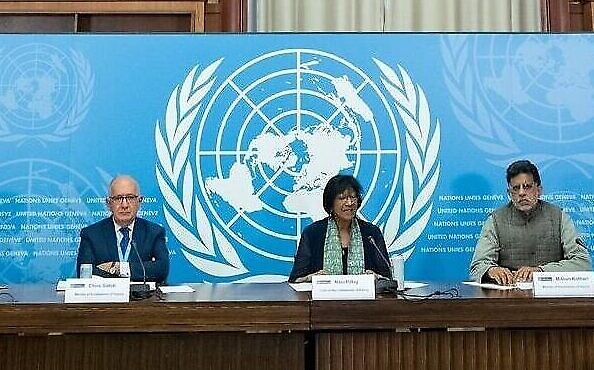
Yet Another Isaac Wins Nobel Prize, this time for Chemistry.
ReplyDelete0.2% of World population but they win 20% of all Nobel Prizes.
But the people with 20% of world population win less than 2%.
Very Aneh.
(Kagan was born on 15 December 1930 in Boulogne-Billancourt, France, to a Jewish family who survived World War II by hiding in a village in the south of France under assumed names.)
Henri Kagan and Kenso Soai awarded the Nobel Prize in chemistry for unraveling mystery of mirror molecules
By
Issy Ronald, Katie Hunt
UPDATED OCT 7, 2026
Henri B. Kagan and Kenso Soai have won the 2026 Nobel Prize in chemistry for designing revolutionary experiments that replicated chemical asymmetry, a feat only previously seen in nature.
Their work has solved one of the field’s enduring mysteries and advanced pharmaceutical manufacturing, the award committee said during a news conference on Wednesday at the Royal Swedish Academy of Sciences in Stockholm.
The pair’s work hinges on the concept of chirality: that the structure of molecules fundamental to life includes mirror image forms, a little like our hands. However, only one of those variants is actually found in the cells of living things. This phenomenon, known as homochirality, has long puzzled scientists because for years they weren’t able to replicate it in a lab, where chemical reactions usually created a 50-50 mix of both left- and right-handed molecules.
“Henri Kagan and Kenso Soai have provided a solution to a chemical mystery that is over a century old: how homochirality can emerge spontaneously. The chemical reactions they have developed are spectacular,” said Heiner Linke, chair of the Nobel Committee for Chemistry, in a statement.
In the early 1980s, French chemist Kagan found ways to control chemical reactions with different types of catalysts, allowing scientists to produce a greater excess of one of the mirror image molecules. Soai, a Japanese scientist based at Tokyo University of Science, then built on this work by designing a chemical reaction in which only one of two possible images was formed.
“Other than life itself, no one had previously achieved this feat,” the Nobel committee noted.
Receiving the Nobel Prize marked “one of the most exciting days” in his life, Soai said in a telephone interview during the award presentation. He revealed he had been “out shopping” when he received the call telling him he had won.
https://edition.cnn.com/2026/10/07/science/nobel-prize-chemistry-2026-henri-kagan-kenso-soai-winner-intl