
Malaysia's #1 Content Aggregator
12 Oct 2026 • 2:30 PM MYT

Credit Image: Sinar Harian
Don't all religions of the world teach humanity to live peacefully, to show mercy, and not to sow hatred and division in the community?
Popular Chinese-Muslim convert preacher Firdaus Wong is back in the news again—this time in a controversy involving India. Yes, you read that right!
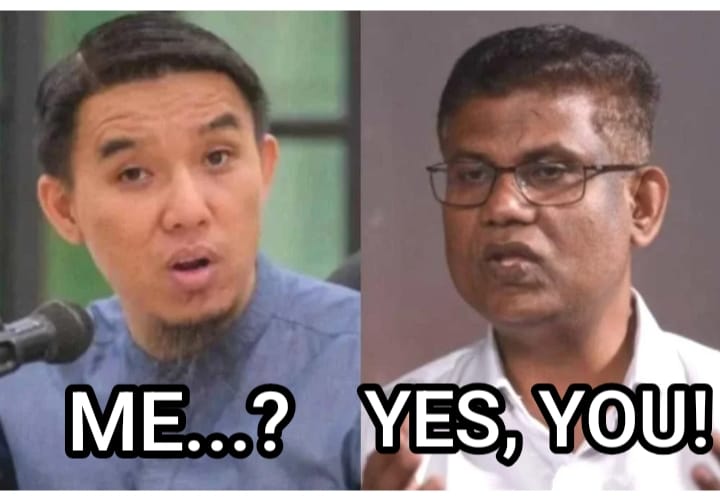
Recently, it was reported that Klang Member of Parliament (MP) V. Ganabatirau has filed a defamation suit against the renowned preacher over alleged social media posts concerning the latter's remarks on the Overseas Citizen of India (OCI) programme.
According to the DAP lawmaker, Firdaus had allegedly questioned his loyalty to the nation in a “sarcastic” manner just because he had reportedly requested Indian Prime Minister Narendra Modi to ease bureaucratic hurdles for eligible Malaysians applying for OCI status.
Naturally, what many would have been prompted to ask is this: Why do popular freelance preachers with hundreds of thousands of social media followers want to meddle in affairs that have no clear connection to their own religious beliefs?
Incidentally, Firdaus is well known for his association with controversial preacher Zakir Naik—another highly popular figure but disliked by the local Hindu community and viewed by many as a threat to Malaysia’s delicate multicultural harmony.
He is also seen as a close comrade of another equally controversial and fiery freelance preacher, Zamri Vinoth.
Popular Chinese-Muslim convert preacher Firdaus Wong is back in the news again—this time in a controversy involving India. Yes, you read that right!
Recently, it was reported that Klang Member of Parliament (MP) V. Ganabatirau has filed a defamation suit against the renowned preacher over alleged social media posts concerning the latter's remarks on the Overseas Citizen of India (OCI) programme.
According to the DAP lawmaker, Firdaus had allegedly questioned his loyalty to the nation in a “sarcastic” manner just because he had reportedly requested Indian Prime Minister Narendra Modi to ease bureaucratic hurdles for eligible Malaysians applying for OCI status.
Naturally, what many would have been prompted to ask is this: Why do popular freelance preachers with hundreds of thousands of social media followers want to meddle in affairs that have no clear connection to their own religious beliefs?
Incidentally, Firdaus is well known for his association with controversial preacher Zakir Naik—another highly popular figure but disliked by the local Hindu community and viewed by many as a threat to Malaysia’s delicate multicultural harmony.
He is also seen as a close comrade of another equally controversial and fiery freelance preacher, Zamri Vinoth.

Firdaus (centre) flanked by Zamri and activist Tamrin, standing in solidarity with Gerakan Anti Rumah Anutan Haram (GARAH). (Image Credit: Sinar Harian)
Unsurprisingly, Firdaus is a strong supporter of the “anti-illegal houses of worship” movement, which has been framed as a campaign to uphold the law against illegal land encroachment in the country. This has thrust various long-standing Hindu temples and shrines around the country into public scrutiny.
Understandably though, what some well-meaning people may ask is this: Why must preachers, in general, be actively involved in highly sensitive issues involving the houses of worship of other religions?
Shouldn't preachers stick to matters relating to their own religion?
Anyway, even if a structure is illegal in the eyes of the law, is it not the responsibility of local councils and relevant government agencies to take appropriate action?
Sadly, these land encroachment disputes have morphed into explosive communal flashpoints that have further polarised the society here.
Firdaus had also previously sparked a legal storm over the conversion of minors to Islam, where he was taken to court by distraught non-Muslim parents following allegations regarding videos on covert conversions.
The Kuala Lumpur High Court subsequently declared the videos on the secret religious conversion of underage children as unlawful and unconstitutional.

Infringement on parental rights? Source: Malaysiakini
Still, perhaps Firdaus’ biggest claim to fame remains his pivotal part in the infamous KK Mart "Allah" socks expose. This controversy created such a furore that it threatened to disrupt public harmony across the country.
In fact, it deeply divided the nation after firebrand UMNO Youth chief Akmal Saleh led the call to boycott the convenience store chain's outlets nationwide—all despite the owners having already publicly apologized for their negligence.
The thing is, such controversies are bound to compel some to ask: in a general sense, shouldn't influential religious preachers be promoting peaceful coexistence, tolerance, and mutual respect among the diverse communities in the land?
Furthermore, with their massive social media followings, shouldn't they be leveraging their influence for nation-building and forging unity?
Religious leaders are supposed to spread positivity, not enmity
In fact, many may wonder: what sort of signal would it send to the rakyat if prominent public figures who represent divine values frequently find themselves embroiled in legal wrangles outside their spiritual domain?
Coming back to Ganabatirau’s lawsuit, the popular preacher has been dragged to court—not for the first time—over alleged insinuations that questioned the DAP MP’s allegiance to this nation.
Here, it must be stressed that only the court can decide whether the accused has committed an offence or not. Until proven guilty, the person is presumed innocent.
Ultimately though, just as politics is about perception—is it not the same with religion, where preachers are judged by the perceptions they themselves create?
Main information source: NST.
(Legal disclaimer: All statements regarding the said lawsuit are based on court filings and media reports. As such, all parties are presumed innocent until proven otherwise in a court of law.)
Still, perhaps Firdaus’ biggest claim to fame remains his pivotal part in the infamous KK Mart "Allah" socks expose. This controversy created such a furore that it threatened to disrupt public harmony across the country.
In fact, it deeply divided the nation after firebrand UMNO Youth chief Akmal Saleh led the call to boycott the convenience store chain's outlets nationwide—all despite the owners having already publicly apologized for their negligence.
The thing is, such controversies are bound to compel some to ask: in a general sense, shouldn't influential religious preachers be promoting peaceful coexistence, tolerance, and mutual respect among the diverse communities in the land?
Furthermore, with their massive social media followings, shouldn't they be leveraging their influence for nation-building and forging unity?
Religious leaders are supposed to spread positivity, not enmity
In fact, many may wonder: what sort of signal would it send to the rakyat if prominent public figures who represent divine values frequently find themselves embroiled in legal wrangles outside their spiritual domain?
Coming back to Ganabatirau’s lawsuit, the popular preacher has been dragged to court—not for the first time—over alleged insinuations that questioned the DAP MP’s allegiance to this nation.
Here, it must be stressed that only the court can decide whether the accused has committed an offence or not. Until proven guilty, the person is presumed innocent.
Ultimately though, just as politics is about perception—is it not the same with religion, where preachers are judged by the perceptions they themselves create?
Main information source: NST.
(Legal disclaimer: All statements regarding the said lawsuit are based on court filings and media reports. As such, all parties are presumed innocent until proven otherwise in a court of law.)


No comments:
Post a Comment