Murray Hunter
What's Happening in the West Bank: A Forgotten Front
Murray Hunter
Jul 28, 2026
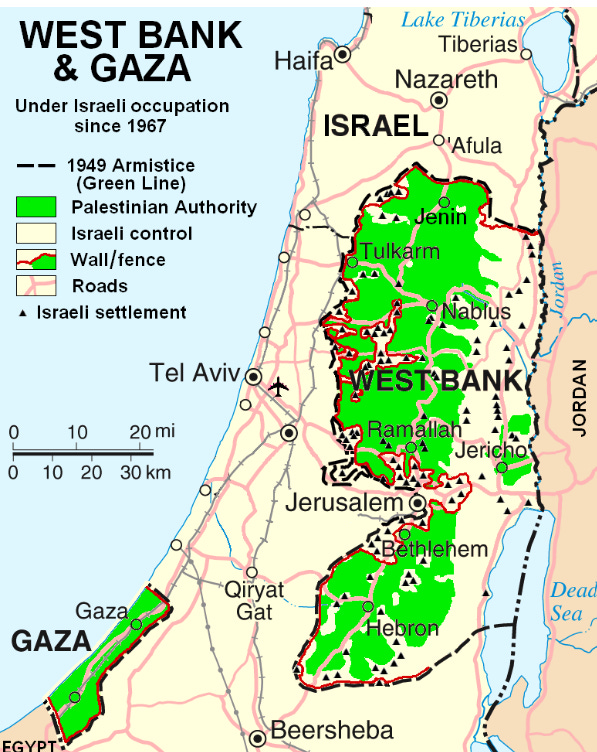
As conflicts rage across the Middle East with ongoing tensions involving Iran, active fronts in Lebanon, Houthi-Saudi engagements, and even a Ukrainian strike on an Iranian vessel in the Caspian Sea that risks linking distant wars, the West Bank has slipped from Western headlines.
Yet Israeli forces and settlers have intensified operations there, amid a broader regional backdrop that provides operational breathing room. Many Israelis view the territory (referred to as Judea and Samaria) as integral to their historic and security interests, particularly areas closest to Israeli population centers.
Recent Escalation Trigger
A deadly incident on July 24, 2026, near the Palestinian village of Tell (close to Nablus) ignited the latest surge. Settlers entered an area restricted to Israelis under Oslo Accords arrangements. A confrontation erupted, during which a Palestinian seized a weapon and opened fire, killing two Israelis, IDF Maj. Yuval Ezra and security coordinator Benayahu Mellet. Four Palestinians were also killed in the ensuing violence, with circumstances still under investigation.
Israeli Prime Minister Benjamin Netanyahu and Defense Minister Israel Katz responded forcefully. They ordered home demolitions for attackers, expanded counterterrorism raids in “terror hotbeds,” additional checkpoints, revocation of work permits, and accelerated legalization of settlement outposts, plus the establishment of new ones. The IDF postponed soldiers’ leave and reinforced deployments.
Current Military and Security Picture
The IDF has increased its West Bank deployment to 26 battalions (roughly division-level strength), adding two more amid the violence spike. Forces conduct widespread raids across areas like Jenin, Nablus, Tulkarem, and surrounding villages (e.g., Zababdeh, Yabad, Burqin). Operations involve arrests, weapons searches, and curfews. In the immediate aftermath, over 70-80 Palestinians were detained in one wave, with raids continuing into hospitals and homes.
Palestinian sources report aggressive tactics: storming towns, detaining hundreds, and clashes. Israeli officials frame these as necessary responses to terrorism and incitement. Settler “regional defense battalions” blur lines between civilians and military, complicating accountability.
Casualty trends underscore the intensity. Since October 2023, over 1,185 Palestinians have been killed in the West Bank (including 250+ children), with thousands wounded and detained. In 2026 alone, dozens more have died amid rising settler attacks, which now account for a significant portion of Palestinian injuries (over three per day on average). UN data highlights hundreds of settler incidents in 2026, including arson on mosques, property damage, and assaults.
The displacement continues, with thousands of Palestinians, especially in Area C (under full Israeli control), face demolitions for lacking (often unobtainable) permits, settler violence, and access restrictions. Herding communities and Bedouin groups are particularly vulnerable, with reports of forced transfers.
Strategic Context and “Forgotten” Dynamics
While global attention fixates on Iran-related escalations and Gaza/Lebanon operations, the West Bank serves as a quieter but persistent theater. Israeli strategy combines counterterrorism with long-term territorial consolidation. Far-right coalition members advocate deeper integration and settlement expansion, viewing the area as strategically vital for security buffers near population centers.
Critics, including human rights groups, argue that settler violence enjoys high impunity, with state policies (outpost legalization, land declarations) enabling de facto annexation. Palestinian communities report daily pressures: movement restrictions, economic strangulation, and fear of escalation. The Palestinian Authority’s limited control in Areas A/B further complicates governance.
This front remains “forgotten” in legacy media partly due to the scale of other conflicts, yet local dynamics risk broader spillover. Heightened IDF presence deters major uprisings but fuels resentment. Operations aim to dismantle armed networks (linked to groups like Hamas or local militants) while advancing settlement goals.
Outlook
The situation remains volatile as something described by some Israeli officials as a “snowball rolling downhill.” Broader regional distractions may allow Israel to press advantages in the West Bank without intense international scrutiny. However, sustained pressure, displacement, and cycles of violence could destabilize the territory further, undermining long-term security for all sides.
The West Bank is not a sideshow. It is a core arena where immediate security needs, historical claims, and demographic realities collide. As other fronts evolve, developments here such as the raids, settlements, and daily frictions, deserve closer attention. They shape the ground reality that any future political resolution must address.
It is notable how dramatically international attention and public support have shifted. Last year, during the height of fighting in Gaza under Hamas, there was widespread global sympathy and mobilization for Palestinians there. That support has largely fallen away for Palestinians in the West Bank under the Fatah-led Palestinian Authority. The relative quiet (or lower-intensity nature) of the West Bank, combined with the PA’s more moderate international image and internal governance challenges, has left its residents’ far less visible on the world stage.


No comments:
Post a Comment