
Real clips, fake voices: How scammers used real footage of PM Wong and other political figure to build a S$4.9m scam
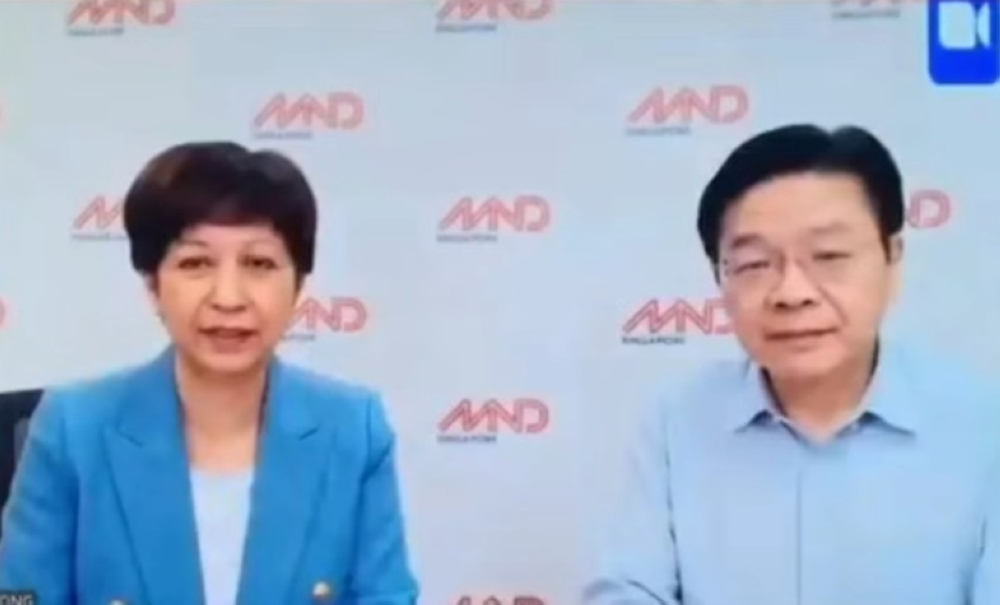
A screengrab from the fake Zoom meeting purportedly shows Singapore’s Minister in the Prime Minister’s Office Indranee Rajah (left) and Prime Minister Lawrence Wong. — Screengrab via Youtube/Twenty Two Thirty
Summary
- In August, CNA reported on a sophisticated scam in Singapore where fraudsters used genuine online video footage of Singaporean and international leaders to create a fake Zoom meeting, convincing a victim to transfer S$4.9 million.
- The scammers relied on unnoticed segments of real footage, manipulating audio and disguising media watermarks, with some clips appearing AI-generated.
- The analysis highlighted the importance of recognizing telltale signs such as unsynchronized lip movements.
- Authorities stressed that Singapore government officials will never solicit money transfers through digital communication channels.
By Malay Mail
First Published: Sunday, 23 Aug 2026 5:01 PM MYT
Last Modified: Sunday, 23 Aug 2026 5:05 PM MYT
SINGAPORE, Aug 23 — Scammers behind a fake Zoom meeting that led a victim to transfer at least S$4.9 million (RM19.79 million) relied largely on genuine online footage of Singapore and international leaders rather than creating every participant from scratch, an analysis by CNA found.
CNA reported that its analysis of the full recording, which was provided exclusively by the Singapore Police Force, traced at least seven visual segments in the call to genuine videos still publicly accessible on YouTube.
The footage included Prime Minister Lawrence Wong announcing the easing of Covid-19 measures in April 2022, Minister in the Prime Minister’s Office Indranee Rajah in a March 2023 Money FM 89.3 interview, and President Tharman Shanmugaratnam taking part in a virtual panel in November 2020.
Some of the source material had attracted only a few hundred views, with an Nanyang Technological University expert telling CNA that using little-seen footage could make it less likely that victims would recognise its origins.
According to CNA, the scammers generally retained the genuine video while replacing the original audio with manipulated speech, while media watermarks on some clips were concealed by a “Live Zoom Recording” graphic.
One notable exception involved Canada’s Foreign Affairs Minister Anita Anand, whose genuine remarks from a March 25 virtual press conference on safe passage through the Strait of Hormuz were apparently used without altering the audio because they fitted the premise of the scam.
NUS behavioural and data scientist Associate Professor Reuben Ng told CNA that placing the authentic segment near the start of the call could help build trust and make later inconsistencies appear to be ordinary connection or compression problems.
CNA also reported that a separate 15-second sequence showing Wong and Indranee together could not be traced to an existing source video, with researchers from the National University of Singapore saying it may have involved AI-generated or AI-stitched footage.
Singapore police disclosed in May that the victim had been invited to what appeared to be a meeting involving Wong and other local and foreign officials over purported urgent funding linked to the situation in the Strait of Hormuz.
The victim subsequently transferred at least S$4.9 million through a series of transactions before realising that the meeting was fraudulent.
Police had earlier identified warning signs in the recording including speech that did not synchronise with participants’ lip movements, and have stressed that Singapore government officials will never ask members of the public to transfer money over email, phone or video calls.


No comments:
Post a Comment