
After Destroying U.S. Bases Across the Middle East, Iran Plans Expanded Strikes to Target Bases in Europe
Military Watch Magazine Editorial Staff
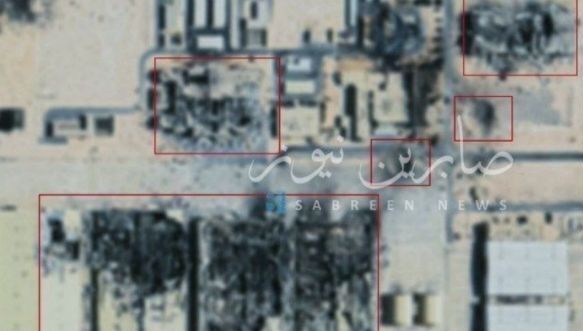
Images Allegedly Showing Iranian Fattah 2 Ballistic Missile Impacting Hardened Target in Israel
The Iranian Islamic Revolutionary Guard Corps considering attacks on U.S. military facilities in Europe if the ongoing war effort further escalations, according to a report by the Financial Times. Two unidentified Iranian sources reportedly told the paper that U.S. bases in countries including Bulgaria have been assessed as potential targets as part of contingency plans for expanding the conflict. The development would represent a major geographical expansion of the conflict and could put U.S. forces across Europe on a higher state of alert.
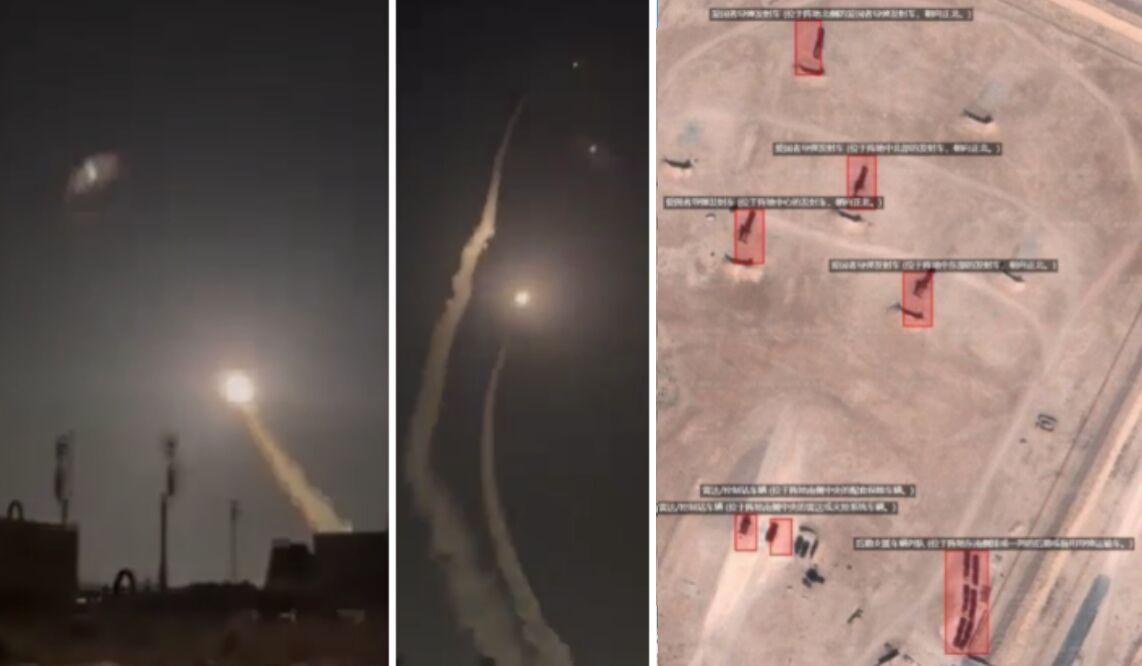
Attacks on European bases would be particularly significant due to the extreme depletion of air defences across the continent, primarily due to donations to support the Ukrainian war effort, and the prioritisation of U.S. air defence stockpiles to protect facilities in the Middle East. Iranian drone and missile strikes have left U.S. bases across the Middle East unusable, including the United States’ largest overseas military facility Al Udeid Air Base in Qatar. This has forced the U.S. to heavily concentrate its operations in Israel, where remaining air defences are particularly densely concentrated, and in Eastern Europe and Turkey which Iran for political reasons has not yet targeted.
The United States relies on a vast network of military installations across allied European states, which support operations throughout the continent, the Middle East and Africa, providing airfields, logistics hubs, intelligence capabilities and aerial-refuelling infrastructure. Any Iranian attempt to strike them would therefore have implications far beyond the immediate military damage caused. This could include overlap with the Russian-Ukrainian war, where supplies and personnel moving into Ukraine rely on networks of bases across Europe. While Russia has reportedly already provided targeting support and intelligence to support Iranian strikes on American positions in the Middle East, attacks on targets in Europe that could benefit its position more directly could result in an expansion of this support.

Iran has already demonstrated an ability and willingness to attempt attacks at considerable distances. In March, Tehran fired two intermediate-range ballistic missiles towards Diego Garcia, the remote Indian Ocean base jointly used by the United States and United Kingdom, over 3,500 kilometres from Iran in an apparent show of force. Diego Garcia is considerably farther from Iran than most American installations in Europe, meaning that European bases would be substantially more accessible and could be targeted with much lower value missiles and drones.
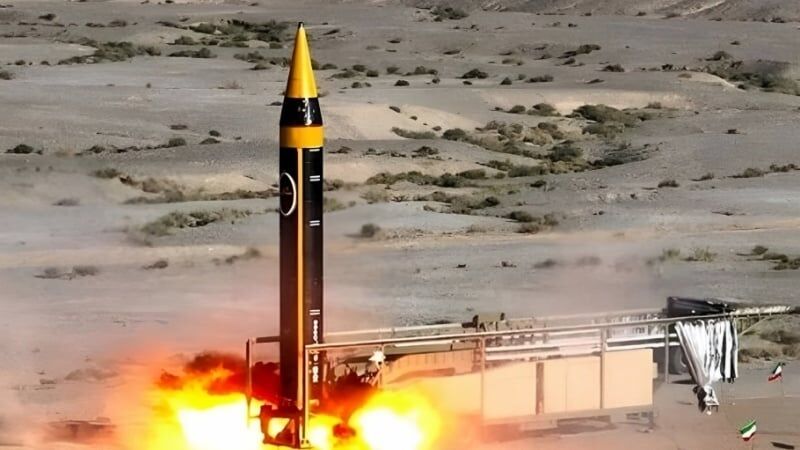
The Islamic Revolutionary Guard Corps has progressively refined its missile and drone operations to better exploit weaknesses in American air defences, while simultaneously forcing Washington to more rapidly expend increasingly scarce and costly interceptor missiles. Sources cited by The New York Times reported that this involved using increasingly sophisticated combinations of missiles and drones to complicate the U.S. defensive response. Iran has made use of a wide range of missile and drone types to engage targets, with the highest priority targets struck with more complex and costly missile types, such as the Fattah 2, which integrates a hypersonic glide vehicle that is nearly impossible to intercept. The Israeli paper Haaretz in late March confirmed that 80 percent of Iranian missiles launched against Israeli targets were impacting successfully, indicating that the much less well defended U.S. bases in Europe could be highly vulnerable.


No comments:
Post a Comment