
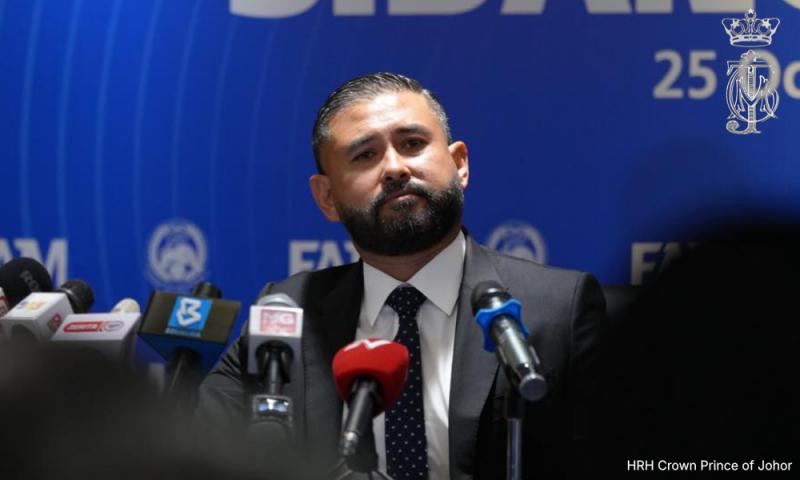

TMJ goading detractors: Lawyers say 'unclear' line between criticism and sedition
Qistina Nadia Dzulqarnain
Published: Mar 17, 2026 7:00 AM
Updated: 10:46 AM
Legal experts have cautioned that while criticism of royalty can potentially attract legal retribution, the boundary between legitimate critique and seditious remarks is unclear and highly dependent on how such comments are framed.
The lawyers’ insights follow recent remarks issued by Johor Regent Tunku Ismail Sultan Ibrahim, who claimed to have been victimised in the “heritage” players’ scandal plaguing the Football Association of Malaysia (FAM).
Earlier this month, the Court of Arbitration for Sport upheld the International Federation of Association Football’s (Fifa) findings that seven Harimau Malaya players were allowed to play for the national team via forged citizenship documents.
Following the CAS ruling, the crown prince had called for internal accountability within the FAM, urging the local body to identify the individuals responsible for the document submissions while suggesting that the public sue him en masse over his alleged personal involvement.
Besides pinning the blame for the issue on “FAM insiders,” the crown prince also challenged detractors to end his “influence and credibility” in the football scene, after certain quarters accused the Johor Darul Ta’zim (JDT) FC owner of playing a role in the controversy.
The comments by Tunku Ismail, also known as TMJ, have since ignited fierce debate online, especially since the state regent was key in identifying the implicated players and had publicly urged the government to grant them citizenship.
‘Respectful political discourse’
When contacted, lawyer Arjun Mohanakrishnan highlighted that freedom of speech is a right protected by the Federal Constitution, with certain legislatures, such as the Sedition Act 1948, also providing leeway for “respectful political discourse” on - or against - institutions of the state.
Citing Section 3(2) of the Sedition Act, Arjun pointed out that an act or statement intended to correct “errors or defects” in any government, or show where a ruler has been “misled or mistaken,” are legally protected “exceptions” as they are not deemed seditious.

While such exemptions are recognised, Advance Tertiary College academic director and senior lecturer Daniel Abishegam cautioned that the broader definition of what constitutes sedition remains vague as well as “open to interpretation and manipulation.”
As such, room is left for the Sedition Act - alongside laws under the Penal Code and the Communications and Multimedia Act 1998 - to be applied in different ways depending on how the remarks are perceived.
“Section 3(1)(a) of the Sedition Act states it is an offence to ‘bring into hatred or contempt’ or to excite dissatisfaction against any ruler or any government - the problem is, what does that mean? It is very vague and ill-defined.
“Further case law has confirmed that intent does not matter in these cases. If the words are deemed seditious, (then) it is an offence,” he told Malaysiakini.
No objective line to be drawn
Similarly, former deputy public prosecutor Farhan Read argued that the ambiguity extends beyond the interpretation of such laws and into enforcement action itself.
“When the police or the MCMC come knocking and the public prosecutor charges you in court, I don’t think there is an objective line to be drawn between legitimate criticism and seditious remarks, because that call is made on executive instruction,” Farhan said.
The practising criminal defence lawyer added that while the courts may “draw a line” in executing the judiciary’s task of defining the limit of protected speech, such a boundary would be “blurry at best”.
“Basically, if you say anything which hurts the feelings of the monarchy, then you’re going to end up in court - whether it is legitimate criticism or otherwise, that is for you to prove in court,” he added.

Commenting on Tunku Ismail’s series of posts against those perceived as his opponents, Daniel opined that as long as those responding to the royalty’s online remarks keep their comments “factual and based on solid evidence,” the potential of legal repercussions could be avoided.
“(However), the danger of (such comments) being interpreted otherwise is always there.
“The problem is when the Johor crown prince is openly asking for people to ‘finish him off’,” I would hope that people are aware of the laws and be restrained in their comments,” he added.
He noted that while the existence of many laws aimed at protecting the sanctity of the royal institution is “understandable,” rulers should also remain “above the fray” and avoid engaging in open disputes to preserve the royal establishment’s dignity.
“This may seem unfair to the rulers, but it is for the greater good,” he asserted.
***
Don't do it - it's not worth the effort. In Malaysia,
one always loses to the 3 R's.


THAT is exactly why Royalty should not get involved directly in Sports bodies. They can act as Patrons, fine, but no direct involvement.
ReplyDeleteOtherwise the sports bodies end up out of bounds for comments an old criticisms, as it becomes tantamount to Seditious criticism of Royalty.