Sunday, November 15, 2026

Loke, DAP can hold head up high in house arrest saga


Loke, DAP can hold head up high in house arrest saga

Loke, DAP can hold head up high in house arrest saga

Umno may celebrate its victory in helping Najib Razak secure his house arrest, but the party is left with a house of cards.

tajuddin

An order reissued by the Kuala Lumpur High Court led to two men packing their belongings and moving out — one out of prison, the other out of office.

The two are none other than former prime minister Najib Razak and now former transport minister Loke Siew Fook.

Now, Umno and maybe some PAS supporters are likely celebrating their “victory” — a conditional pardon for the former Umno president that sees him serving the remainder of his sentence under house arrest.

But can Umno really claim a “win” in this case?

If any party can hold its head up high in this affair, it certainly has to be Loke and DAP.

Loke stayed true to his principles, even if it cost him his ministerial post.

He vowed to resign if Najib set foot in the house and did not u-turn.

It is an admirable attribute, regardless of whatever side of the divide you are on.

Of all the adjectives available to describe Loke, Ahmad Zahid Hamidi chose “man of principle”, which must account for something, even if we were to doubt the deputy prime minister’s sincerity.

Loke’s resignation will help DAP recover its reputation as a principled party, especially among voters who have been disillusioned with them due to its partnership with Umno in the unity government and the administration’s delayed reforms.

Yes, being in bed with its most fiery rivals meant compromises had to be made for stability post-GE15, but the public doesn’t see it that way.

DAP, through Loke’s actions, may have also won over fence-sitters who are still angry with Najib and the 1MDB controversy.

Apart from these “wins”, unemployment may also work in Loke’s favour.

He now has the freedom to go to the ground to re-connect with the grassroots and members and he will be returning as a martyr of sorts.

Loke can now help revive the party in time for the 16th general election.

But what about Najib and Umno?

At the end of the day, Najib remains incarcerated — he only trades a jail cell for a comfortable home in Langgak Duta.

However, his movements, communication and personal contact remain restricted. To paraphrase a popular idiom: a cage by any other name reeks of imprisonment.

Secondly, Umno only managed to secure a conditional pardon and not a full one and helping Najib obtain a house arrest isn’t something one should boast about.

On top of that they had to help crowdfund RM50 million. Money that could have helped them win elections has been channeled to secure Najib’s house arrest.

Here’s the kicker. When the house arrest ends, he could head back to prison to serve his time for his 1MDB sentence, if he fails in his appeal. RM50 million would therefore end up being a hefty fee for a relatively short-term staycation.

Thirdly, Umno is now tasked with defending the indefensible and will have to do so with no moral ground to stand on, especially if they intend to play the religious card.

Umno, in this case, would have to answer for soliciting donations from people to help a convict who has yet to repent for his actions, which is religiously questionable and would likely haunt Umno in every election.

Umno’s friends and enemies will no doubt exploit this entire episode when jostling for seats during elections.

So. from where I stand, Loke and the DAP are the real winners here.

And all Umno has left is a house of cards.

BN-PN sweep Melaka in 24-seat landslide, Pakatan reduced to just four urban seats


BN-PN sweep Melaka in 24-seat landslide, Pakatan reduced to just four urban seats


Barisan Nasional (BN) chairman Datuk Seri Ahmad Zahid Hamidi (fifth left) and caretaker Chief Minister Datuk Seri Dr Ab Rauf Yusoh (fourth left) celebrate their victory in the 16th Melaka state election at the Melaka International Trade Centre (MITC) in Ayer Keroh, Melaka on November 14, 2026. — Bernama pic


Summary

  • In the Melaka state election, Barisan Nasional (BN) and Perikatan Nasional (PN) achieved a commanding two-thirds supermajority, securing a combined 24 out of 28 state assembly seats.
  • BN dominated with 21 seats, maintaining its prior strength, while PN won three seats.
  • This outcome reduced Pakatan Harapan (PH) to four urban strongholds as their political influence dwindled across the state.
  • BN's victories included significant majorities in key rural and semi-urban areas, and incumbent Chief Minister Datuk Seri Ab Rauf Yusoh solidified his position with a substantial electoral mandate.


First Published: Saturday, 14 Nov 2026 10:13 PM MYT


MELAKA, Nov 14 — Barisan Nasional (BN) and Perikatan Nasional (PN) have stormed to an emphatic two-thirds supermajority in the Melaka state election, capturing a combined 24 of the 28 state assembly seats, according to unofficial results tonight.

In a sweeping victory that consolidated the ruling coalition's regional dominance, BN triumphed in 21 constituencies on its own, matching its 2021 seat benchmark, while PN captured three seats.

The joint tally of 24 seats represents one more than the two coalitions achieved when contesting separately five years ago, decimating Pakatan Harapan (PH) to just four urban enclaves.

BN chairman Datuk Seri Ahmad Zahid Hamidi thanked voters across the state for delivering a resounding mandate, while Amanah leader Adly Zahari conceded defeat on behalf of PH, stating that the coalition would focus on rebuilding its grassroots strength.


Incumbent Chief Minister Datuk Seri Ab Rauf Yusoh secured an unassailable mandate to remain at the helm of the state administration, retaining his Tanjung Bidara seat with an unofficial majority of 8,650 votes, an exponential increase from the razor-thin 364-vote margin he secured in 2021.

BN also registered runaway majorities across rural and semi-urban bastions, led by a 12,036-vote cushion in Sungai Udang, which it successfully wrested back from PN, and 11,742 votes in Serkam.

BN's closest battle unfolded in Machap Jaya, where it held off a determined charge from PH's Ginie Lim by 1,925 votes after trailing in early ballot boxes.

PH suffered major political casualties across the state, losing former chief minister Adly in his Bukit Katil backyard to PN's Ridzuan Sarif.


The federal ruling pact took another severe hit in Paya Rumput, where Azman Abidin, political secretary to Prime Minister Datuk Seri Anwar Ibrahim, was ousted by PN.

PH was ultimately reduced to its four traditional urban Chinese-majority strongholds of Kesidang, Ayer Keroh, Kota Laksamana, and Bandar Hilir, each retained by DAP with comfortable margins surpassing 5,000 votes as MCA failed to reclaim lost ground.


PN's three victories were swept entirely by PAS-affiliated candidates, who retained Bemban while capturing Bukit Katil and Paya Rumput out of the five seats allocated to the coalition.

Conversely, Bersatu suffered a humiliating statewide wipeout after fielding candidates in seven seats under its own logo following an acrimonious split with PAS. The party was dismantled in Sungai Udang, where its candidate polled just 1,522 votes against the winner's 13,558, with its best showing in Pantai Kundor still leaving Dr Asmah Samat trailing BN's Tuminah Kadi by 2,177 votes.

Newcomer Parti Bersama Malaysia again failed to win any of the seats it contested, while independent contenders were similarly shut out.

Saturday, November 14, 2026

Iranian Strike Destroys U.S. Early Warning Radar in Bahrain


Iranian Strike Destroys U.S. Early Warning Radar in Bahrain

Military Watch Magazine Editorial Staff


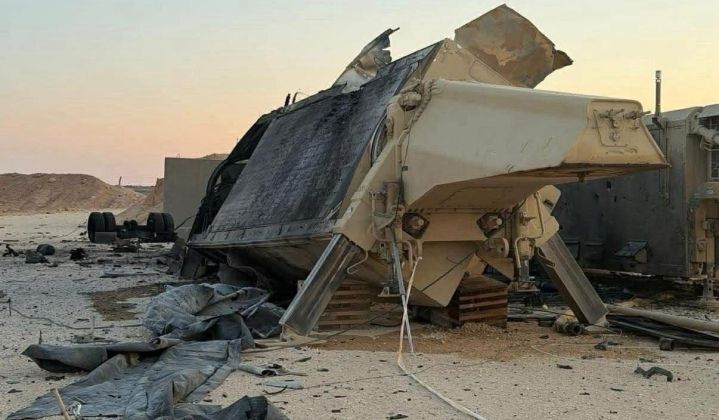
The Iranian Islamic Revolutionary Guard Corps has reported a successful strike on a U.S. early-warning radar installation in Bahrain, marking a renewed escalation in attacks on American military assets in the Persian Gulf. In a statement carried by Iranian state media on November 13, the Corps said its Aerospace Force had targeted the installation in retaliation for a U.S. airstrike on a telecommunications tower in Sirik, in Iran’s southern Hormozgan Province, on November 12. The Guards described the operation as a serious warning against further attacks on Iranian territory. 

U.S. Army AN/TPY-2 Radar From THAAD System in Jordan Destroyed in Engagements with Iranian Forces


Following the United States’ invitation of a large scale assault against Iran on February 28, Iranian retaliatory drone and missile strikes have taken a major toll on the American radar network across the Middle East. The Revolutionary Guard quickly achieved the destruction of $2.7 billion worth of high value radar systems, including the sole AN/FPS-132 radar based outside the U.S., which was located in Qatar, and two AN/TPY-2 radars in Jordan and the United Arab Emirates. Multiple lower value radars have also been destroyed at facilities across the region, such as AN/FPS-117 radars in Saudi Arabia. 

E-3 Sentry Airborne Early Warning and Control Aircraft Destroyed at Prince Sultan Air Base
E-3 Sentry Airborne Early Warning and Control Aircraft Destroyed at Prince Sultan Air Base - CBS News

The destruction of radar systems has complemented successful strikes that have seriously hindered the U.S. Armed Forces’ ability to conduct air operations against Iran, with the targeting of major air bases, including the largest U.S. overseas airbase in Qatar, and the destruction of high value aircraft, shaping the course of the war. In March the Israeli paper Haaretz confirmed that 8 out of 10 Iranian missiles launched against Israeli targets are reaching their targets, following mounting reports and growing quantities of footage pointing to the failures of Israeli and U.S. ballistic missile defences. The destruction of key radar installations has served as a force multiplier by limiting the effectiveness of U.S. and Israeli missile defences, forcing both to rely on ship-based radars and on the AN/TPY-2 radar station in Turkey. 

Explosions from Iranian Missile Strike on Muwaffaq al-Salti Air Base in Jordan

In September newly released photographs leaked by U.S. Armed Forces personnel at facilities in the Middle East showed the extent of damage inflicted on these facilities by Iranian missile and drone strikes. The photographs, obtained exclusively by CBS News from serving U.S. military personnel who requested anonymity, show heavily damaged buildings, vehicles and aircraft at American positions in Saudi Arabia and Kuwait. Personnel likened the war effort to "standing there with our eyes closed getting punched in the face,” with one serviceman lamenting: "We're not defending these bases. We're just watching them get destroyed." Iran’s ability to inflict massive damage on U.S. bases and other key assets has been a primary factor deterring the U.S. from maintaining a high intensity of strikes on the country.