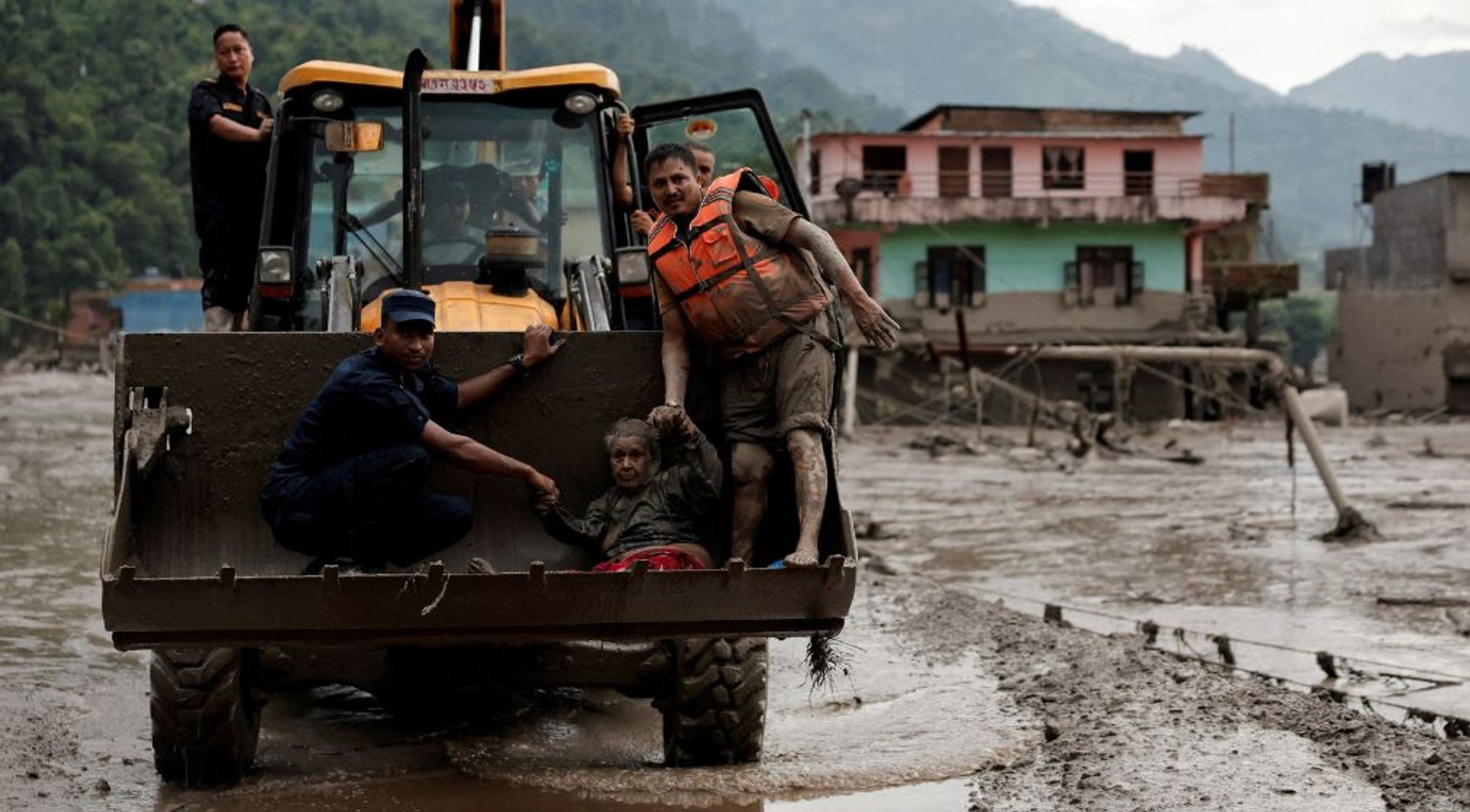
Nepal police say 270 bodies have been found after glacial floods hit the Himalayan nation and the bordering autonomous region of Tibet.
Rescue teams are searching for survivors along the Nepal-China border after the catastrophic torrent of floods and mud swept through several communities on Wednesday.
Chinese Prime Minister Li Qiang is visiting the affected areas in Tibet, state media said. More than 500 people are missing in Tibet, including hundreds of foreigners.
Countries and organisations around the world are sending cash, relief supplies and other assistance to Nepal as it responds to the aftermath of the floods.
8m ago
(09:02 GMT)
Death toll climbs to 270: Nepali police
270 bodies have now been found in flood-affected areas, say Nepali police.
11m ago
(09:00 GMT)
NGO to address specific needs of women, girls in disaster response
CARE Nepal, an international aid organisation, is mobilising emergency relief, including shelter, hygiene, and dignity kits for affected families, its director said in a statement.
“The flooding has left affected families without homes, possessions, and livelihoods, and has raised concerns about the spread of waterborne diseases due to damaged water and sanitation infrastructure,” said Mona Sherpa, CARE Nepal’s country director.
Sherpa added that a gender analysis will be conducted to ensure the organisation’s response is “informed by the specific needs and risks facing women and girls”.
“Relief efforts will prioritise those most in need, particularly women, girls, older people, and people with disabilities, who are often hit hardest in the aftermath of a disaster like this,” she said.
Dozens were killed after a Himalayan glacier collapse triggered catastrophic floods along the Nepal-Tibet border [Courtesy of CARE Nepal]
It was a normal school day on Wednesday at Trishuli Secondary School in Nepal’s Nuwakot district when Gyan Deep Sapkota, a grade 11 student, suddenly heard his teachers yelling.
Bidur, the city where the school is based, lies on the banks of the Trishuli River. A flash flood was barrelling down from upstream, where the river is known as the Bhotekoshi.
“Our teachers were shouting for us to leave,” he recalled, speaking to Al Jazeera on the phone. “Some of us took a small old bridge and crossed to a safer area, while most of the students took up to the hills. Some of the students also had panic attacks and fainted.
People walk past damage in the aftermath of flash floods in Devighat in the Nuwakot district of Nepal [Niranjan
27m ago
(08:43 GMT)
Chinese premier arrives at Tibet mudslide area
Chinese Prime Minister Li Qiang has arrived at the Tibet mudslide area, state media report.
“With the support of General Secretary Xi Jinping… Premier Li Qiang, leading comrades from relevant departments, arrived at the disaster-stricken area of Gyirong Town, Gyirong County, Tibet to guide emergency rescue and relief work, and to visit rescue workers and affected people,” state news agency Xinhua reports.
41m ago
(08:30 GMT)
What is the Kailash Mansarovar Yatra?
More than 100 of nearly 1,400 people missing after the floods were on a pilgrimage to Mount Kailash, a sacred site in the Himalayas.
Mount Kailash is in southwestern Tibet, near China’s borders with Nepal and India. It rises more than 6,400 metres (21,000 feet) above sea level and lies close to Lake Manasarovar. Both have long been part of Sanskrit religious and literary traditions.
Mount Kailash holds sacred significance for Hinduism, Buddhism, Jainism and the Tibetan Bon tradition. Each associates the mountain with different beliefs and sacred histories.
According to the International Centre for Integrated Mountain Development, the mountain is considered the home of Shiva, the Hindu god of destruction, and Parvati, a Hindu goddess associated with marriage, fertility and motherhood.
Followers of the Tibetan Bon tradition regard it as a seat of spiritual power and associate the region with Tonpa Shenrab, the tradition’s founder.
Pilgrims hike around the snow-capped Kangrinboqe Mountain, known as Mount Kailash, in Purang county of the Tibet Autonomous Region [File: China Photos/Getty Images]
51m ago
(08:20 GMT)
Desperate families search for missing at Kathmandu hospital
Anxious relatives have crowded the corridors of Bir Hospital in Kathmandu to search for missing family members.
“My elder brother Ram Sharan Rasaili is among those missing in Rasuwa. That’s why we are out searching for him,” Subash Khatani told AFP news agency.
Chitra Bahadur Nepali is looking for his nephew Yubraj Sewak, a driver who had been travelling towards the worst-affected Rasuwa district before contact was lost.
“My nephew was on his way to Rasuwa and was in contact with my sister until about 8am yesterday,” he said while showing his nephew’s photo on his phone.
“We have not heard from him since the flood. His name is not on any of the lists we have seen, and another member of our family is also missing.”
1h ago
(08:10 GMT)
China says almost 100 of its citizens missing in Nepal
Nearly 100 Chinese nationals are missing in Nepal after huge flooding in the border region, Beijing’s Foreign Ministry says.
“In the disaster-stricken area on the Nepalese side, the number of Chinese citizens missing is nearly 100,” ministry spokesman Lin Jian told reporters, adding that China’s embassy in Nepal was “seeking further verification” from Nepalese authorities.
1:56
At least 160 killed, hundreds missing, as flash flood hits Nepal and Tibet
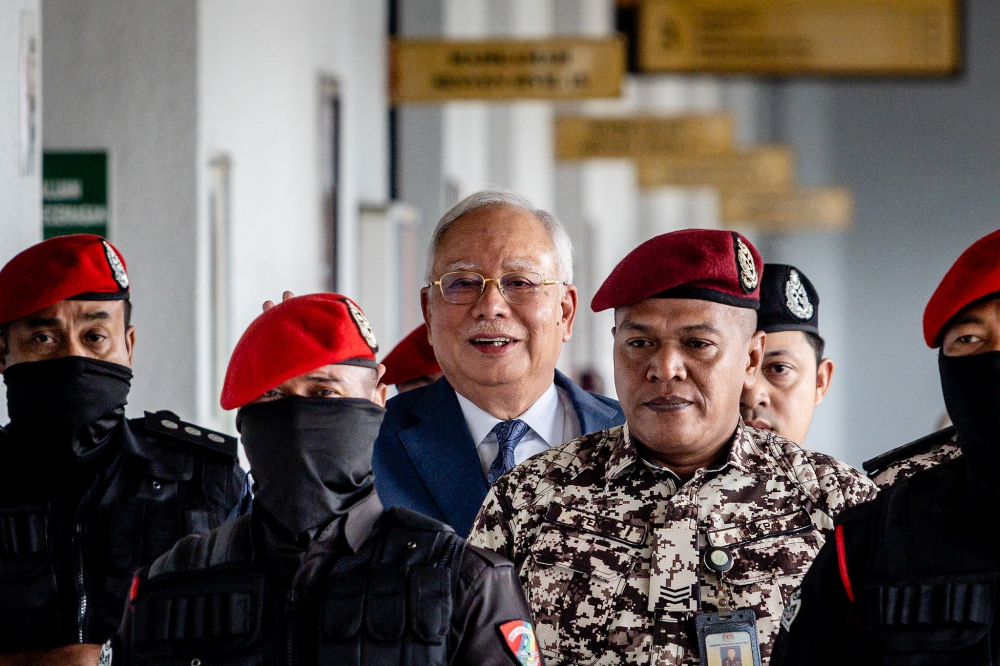
Former Prime Minister Datuk Seri Najib Razak pictured at the Kuala Lumpur High Court Complex this morning. — Picture by Firdaus Latif
Summary
On August 27, the Kuala Lumpur Court Complex witnessed the simultaneous presence of three former Malaysian prime ministers—Datuk Seri Najib Razak, Tan Sri Muhyiddin Yassin, and Datuk Seri Ismail Sabri Yaakob—each attending separate legal proceedings.
Najib resumed proceedings in a US$5.64 billion civil suit filed by 1MDB for alleged misuse of funds.
Muhyiddin continued his corruption trial related to the Jana Wibawa programme, facing charges of power abuse and money laundering.
Ismail Sabri was in court for allegedly failing to declare substantial assets to the Malaysian Anti-Corruption Commission, to which he pleaded not guilty.
By Kenneth Tee First Published: Thursday, 27 Aug 2026 12:21 PM MYT
KUALA LUMPUR, Aug 27 — The Kuala Lumpur Court Complex today saw the rare simultaneous appearance of three former prime ministers, each attending separate court hearings.
The unusual convergence brought together Datuk Seri Najib Razak, Tan Sri Muhyiddin Yassin and Datuk Seri Ismail Sabri Yaakob at the same court complex, although their respective cases were unrelated.
Najib is expected to resume proceedings in the ongoing US$5.64 billion civil suit filed against him by 1Malaysia Development Berhad (1MDB) at the High Court.
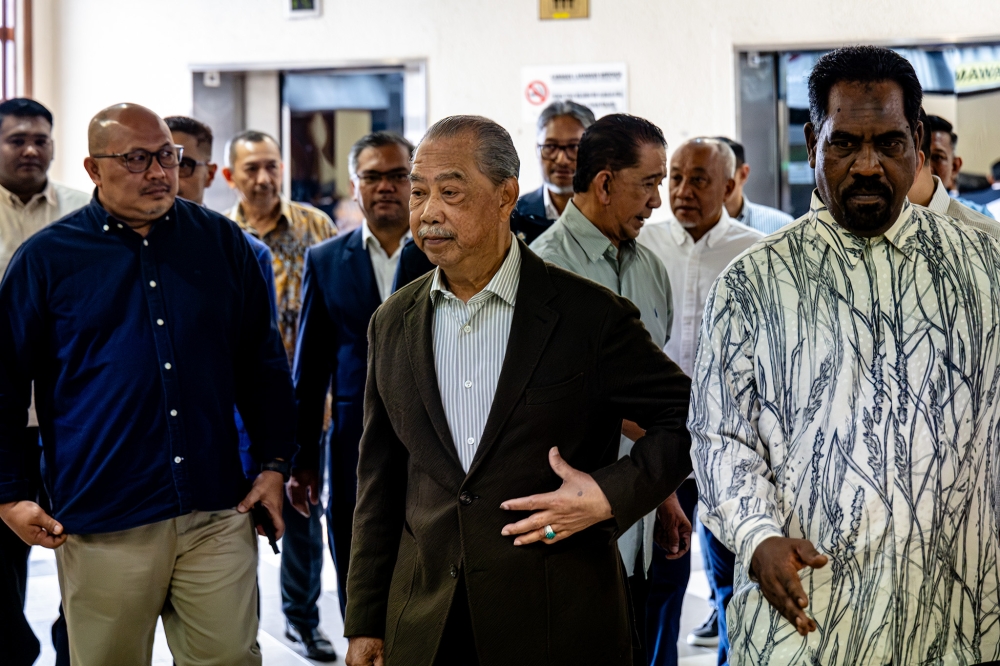
Former Prime Minister, Tan Sri Muhyiddin Yassin after arriving at the Kuala Lumpur High Court Complex. — Picture by Firdaus Latif
In the suit, 1MDB and its subsidiaries accused Najib of breach of trust, breach of statutory duty, abuse of power and conspiracy to misappropriate 1MDB funds.
Separately, Muhyiddin is also attending his ongoing corruption trial linked to the Jana Wibawa programme, which is being heard at the High Court.
In the trial, Muhyiddin is facing seven charges, namely four counts of alleged power abuse to obtain RM225.3 million in bribes for his party, Bersatu, from Nepturis Sdn Bhd, Azman Yusoff, KCJ Engineering Sdn Bhd, Bukhary Equity Sdn Bhd and Mamfor Sdn Bhd, and three counts of alleged money laundering involving money that Bersatu received from Bukhary Equity.
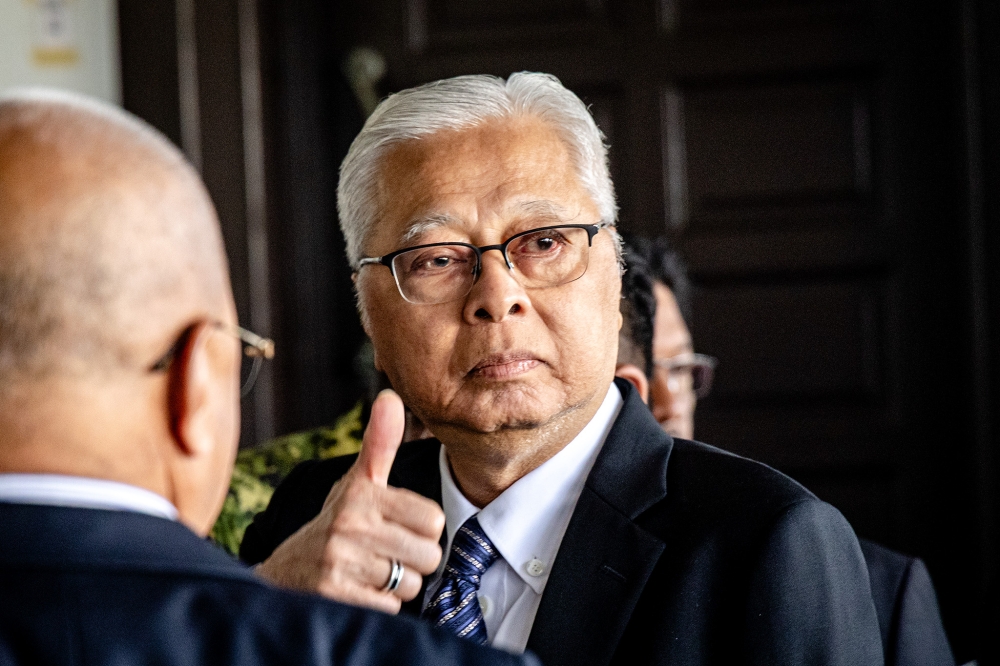
Former prime minister Datuk Seri Ismail Sabri Yaakob Ismail Sabri was in court to face a charge over his alleged failure to declare his assets as required by the Malaysian Anti-Corruption Commission (MACC). — Picture by Firdaus Latif
Ismail Sabri was also in court to face a charge over his alleged failure to declare his assets as required by the Malaysian Anti-Corruption Commission (MACC).
According to the charge, Ismail Sabri is accused of failing to declare local and nine foreign currencies, as well as five gold bars (Suisse Fine Gold).
Among the currencies allegedly not declared were RM14.7 million, S$6 million, US$1.46 million, three million Swiss francs, €12.2 million, ¥363 million, £50,250, NZ$44,600, 34.8 million dirhams and A$352,850.
He later pleaded not guilty and claimed trial.
***
If found guilty they must have Chinese DNA; if not then they are true sons of Adam & Hawa
Nilai assemblyman J Arul Kumar says the quarterly allocations have already been used for community needs, with some assemblymen spending their funds in full.
Nilai assemblyman J Arul Kumar said he would meet menteri besar Ismail Lasim to seek clarification after receiving the state government’s official letter on returning the allocations.
PETALING JAYA: Pakatan Harapan (PH) assemblymen in Negeri Sembilan have urged the state government to reconsider its directive for them to return allocations received for July to September following the dissolution of the state assembly.
Nilai assemblyman J Arul Kumar said the assemblymen had already used the allocations for public welfare, with some spending their funds in full, Sinar Harian reported.
“When we received the allocations, we naturally channelled them to individuals and organisations such as schools, associations, Rukun Tetangga groups and village development and security committees.
“We did not use the funds for ourselves or for political purposes. Everything was used for community activities,” he was quoted as saying at a press conference at the Seremban MP’s office today.
Menteri besar Ismail Lasim said that 10 PH assemblymen and two constituency coordinators had been ordered to return allocations for July to September which were paid out a day before the state assembly was dissolved on June 5.
The 10 PH assemblymen and the coordinators for Labu and Paroi must return RM174,000 and RM150,000 respectively, while seven former PH executive councillors must return RM150,000 each.
Arul said it would be difficult to return the allocations, particularly given the large amounts involved.
The Nilai assemblyman also said that the allocations were disbursed quarterly rather than monthly.
“According to the menteri besar’s press conference yesterday, he asked us to return the allocations based on the months. But the allocations were disbursed quarterly.
“It was never stated that we had to use a specific amount each month. It was up to the individual assemblymen to manage the funds, as emergencies could arise that required more of the allocation to be used,” he said.
Advertisement
Advertisement
Arul said the PH assemblymen and the two coordinators had submitted financial reports to the menteri besar’s office up to June 30 as instructed, while any remaining allocations were returned before July 10.
He said this meant that the assemblymen were allowed to use the allocations from June 4 until June 30 based on the letter issued to them.
“So how are we supposed to return the money now? How can we return money that we have already spent on the people?
“Some recipients have even contacted us to ask whether they need to return the contributions they received,” he said.
Arul said he would meet Ismail for further clarification after receiving an official letter from the state government.
He also expressed hope that the state government would review the financial reports and documentation showing how the allocations were distributed.
“Most importantly, we used the money for the people, not for political purposes, and all the records have already been submitted to the menteri besar’s office,” he said.


![Dozens were killed after a Himalayan glacier collapse triggered catastrophic floods along the Nepal-Tibet border [Courtesy of CARE Nepal]](https://www.aljazeera.com/wp-content/uploads/2026/08/RS131083_shared-image-11-1787820566.jpg?w=770&resize=770%2C578&quality=80)