
Malaysia's #1 Content Aggregator
Chinese arms and Malaysia’s strategic autonomy in an uncertain geopolitical environment
19 Oct 2026 • 7:22 AM MYT

Twentytwo13
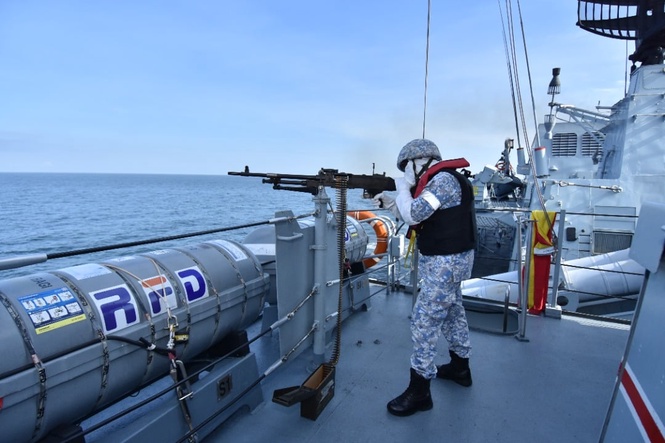
Intensifying US-China rivalry, rising tensions in the South China Sea and escalating military costs have forced Southeast Asian countries to reassess their defence procurement strategies.
China has emerged as an alternative, offering comparatively affordable weapons, faster delivery, flexible financing and fewer political conditions. For Malaysia, Chinese military equipment presents opportunities to accelerate modernisation and diversify suppliers, but also carries risks of technological incompatibility and strategic dependence.
Selective procurement could strengthen maritime surveillance, reduce costs and improve Malaysia’s bargaining power. However, these benefits must be weighed against the risks of relying on a country whose maritime activities challenge Malaysia’s interests.
Affordability and faster military modernisation
Cost is a major consideration for Malaysia, which faces financial constraints in modernising its armed forces. Its 2026 defence budget reportedly stands at RM20.1 billion, or about 1.1 per cent of gross domestic product. Given its extensive maritime responsibilities, Malaysia must maximise its defence capabilities while keeping expenditure sustainable.
The acquisition of four Chinese-built Keris-class Littoral Mission Ships illustrates the potential cost advantage. Ordered in 2017 and delivered between 2019 and 2021, the vessels reportedly cost about US$68 million each, expanding Malaysia’s capacity for maritime patrols and surveillance.
By contrast, Malaysia’s Littoral Combat Ship programme has suffered substantial delays and cost increases. The comparison underscores the importance of delivery schedules, affordability and operational availability alongside technological sophistication.
Chinese equipment could help bridge immediate capability gaps while preserving resources for other priorities. However, the Keris-class ships have considerably less combat capability than advanced corvettes. Their value lies in performing lower-intensity missions, not replacing more capable warships.
Strengthening maritime presence
Malaysia must protect its extensive coastline, commercial shipping and exclusive economic zone, particularly around Sabah and Sarawak. These responsibilities are complicated by China’s expansive South China Sea claims, which overlap with Malaysia’s maritime interests.
Keris-class vessels can support routine patrols, anti-piracy operations, surveillance and humanitarian assistance. By deploying less expensive platforms for these tasks, the Royal Malaysian Navy can maintain a wider maritime presence without tying up advanced combatants.
Effective maritime security requires both sophisticated warships and sufficient vessels for routine operations. Using high-end platforms for everyday patrols can be inefficient when less expensive alternatives are adequate.
However, the Keris-class ships lack anti-ship and anti-air missiles. They cannot independently deter a technologically advanced adversary and must complement, not replace, more capable naval platforms.
Strategic autonomy and supplier diversification
Chinese weapons could reduce Malaysia’s dependence on traditional Western suppliers, whose defence transactions may involve export licensing, end-use monitoring and other regulatory or political conditions.
Malaysia has experienced difficulties following Norway’s reported revocation of an export licence associated with the Naval Strike Missile programme.
Such developments illustrate how foreign decisions can disrupt defence modernisation despite substantial financial commitments. Chinese suppliers could offer alternatives when Western procurement encounters restrictions, delays or unfavourable terms.
A wider supplier base could also strengthen Malaysia’s negotiating position. Competition among suppliers from China, Europe, Turkey, South Korea and elsewhere could help secure better prices, faster delivery and greater local industrial participation.
Buying Chinese weapons need not undermine existing defence partnerships. Instead, selective procurement could diversify supply, preserve diplomatic flexibility and limit dependence on any single country.
Risks and strategic limitations
The principal risk is strategic dependence. China is both an arms supplier and a source of maritime tensions for Malaysia. Reliance on Chinese spare parts, software updates, ammunition and technical support could become a liability during a diplomatic or military crisis.
Restrictions on maintenance or resupply could compromise operational readiness when Malaysia needs it most. Dependence on China could therefore undermine the very deterrence Malaysia seeks to maintain.
Interoperability presents another challenge. Malaysia operates military equipment from several countries, including China, France and Turkey. Differences in combat management systems, communications technology and weapons interfaces can complicate integration, increase maintenance costs and restrict information sharing during joint operations.
Nor does a low purchase price guarantee value. Keris-class ships can conduct routine patrols but cannot replace missile-equipped warships in high-intensity conflict. Procurement decisions must account for lifetime ownership costs and operational effectiveness, not merely initial prices.
Chinese weapons offer Malaysia potential savings, faster capability acquisition and greater negotiating leverage. These advantages, however, must be balanced against integration difficulties, maintenance dependence and strategic vulnerability.
Malaysia should neither reject Chinese equipment outright nor build its deterrence strategy around it. The prudent course is selective procurement: use affordable Chinese platforms for suitable missions while maintaining access to advanced capabilities from multiple suppliers.
The ultimate test is whether each acquisition strengthens Malaysia’s defence without compromising its strategic autonomy or national interests.
The views expressed here are the personal opinion of the writer and do not represent those of Twentytwo13.


No comments:
Post a Comment