Murray Hunter
Jun 02, 2026
Malaysia
While many point to internal factors such as patronage politics, feudal cabals, and deep-state machinations within Malaysia itself, we must also examine the role of external actors
My latest column in The Vibes
WITH the recent political destabilisation that has led to war within the Gulf states and Iran, it’s time to examine the possibilities of external influence upon the Malaysian political scene.
Malaysia’s political landscape has been a theatre of perpetual drama for decades.
From the Sheraton Putsch that toppled a democratically elected government in 2020, to endless party-hopping, coalition fractures, ethnic and religious polarisation, and the revolving door of prime ministers, instability seems baked into the system.
While many point to internal factors such as patronage politics, feudal cabals, and deep-state machinations within Malaysia itself, we must also examine the role of external actors.
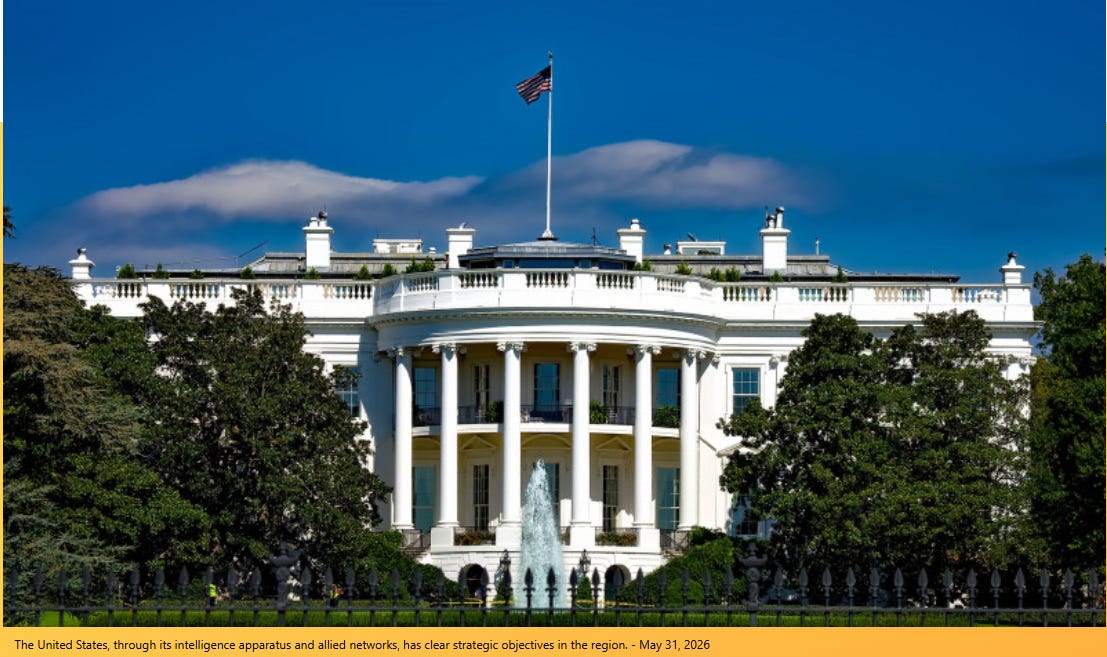
Great power competition in Southeast Asia is intensifying, and the United States, through its intelligence apparatus and allied networks, has clear strategic objectives in the region that can sometimes exacerbate or exploit domestic fault lines.
Strategic Importance of Malaysia to Washington
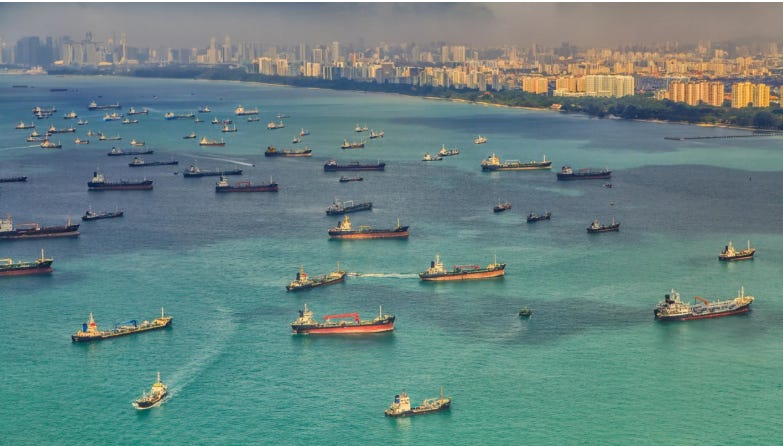
Malaysia sits astride the Strait of Malacca, one of the world’s most critical chokepoints for global trade and energy flows.
It is also a key player in semiconductor supply chains and a moderate Muslim-majority democracy that Washington has long viewed as a potential bulwark against Chinese influence.
In the context of the former US President Obama’s “pivot to Asia” back in 2009. Malaysia is not just a partner for the United States, but it is a geopolitical chess piece in the paradigm we are observing geopolitics today.
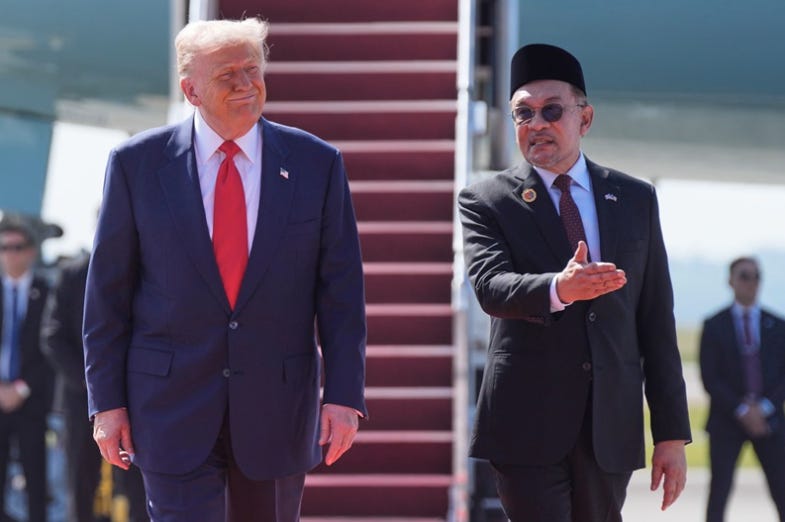
US intelligence objectives here are multifaceted: monitoring Chinese activities in the South China Sea, securing defence cooperation, promoting a pro-US alignment in foreign policy, and ensuring that no government becomes too cosy with Beijing. US President Trump’s visit to Malaysia last year for the ASEAN Summit manifested this.
Publicly, this evolves through defence agreements, joint exercises, and diplomatic engagement.
Behind the scenes, intelligence gathering, funding of NGOs and political parties in civil society, and subtle political signalling play supporting roles.
Historical Precedents and Patterns of Influence
The United States has a long track record of engagement in Malaysian affairs.
During the Cold War, it supported anti-communist elements.
In more recent times, declassified information and public statements reveal sustained interest.
The US embassy in Kuala Lumpur houses significant intelligence capabilities, with additional networks across the country.
The National Endowment for Democracy (NED) and its affiliates, along with USAID, have channelled substantial funding into Malaysian NGOs, media outlets, academics, journalists, and election-related analytics firms.
Critics argue this is not neutral “democracy promotion” but a tool for regime change or influence operations.
For instance, funding flowed to pro-reform and opposition-linked groups in the lead-up to the 2018 election that ended BN’s long dominance.
IRI officials have even publicly claimed credit for aspects of that shift.
Such activities create narratives, amplify voices, and build capacities that can destabilise incumbents perceived as insufficiently aligned with US interests. When combined with diplomatic pressure. This can be seen through human rights, governance, and 1MDB-related cases pursued by the US DOJ.
It can be argued that these activities contribute to a climate of uncertainty.
Current Dynamics: Anwar, Hedging, and Hybrid Influence
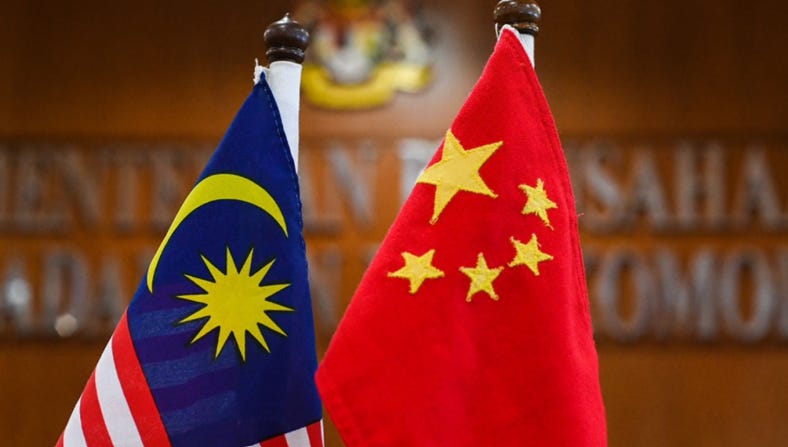
Under the current Unity Government led by Datuk Seri Anwar Ibrahim, Malaysia continues its classic hedging strategy, balancing relations with the US and China. Washington pushes for stronger alignment through defence pacts and trade deals, while Beijing offers economic carrots.
US intelligence would naturally seek to tilt this balance.
Allegations persist in Malaysian circles about US support for certain reformist or liberal elements, think tanks, and media that challenge the status quo.
Operations like joint intelligence activities in the South China Sea, such as references to Ops Hadir.
These activities show close cooperation with Malaysian agencies.
Destabilisation doesn’t require orchestrating coups.
It can be achieved through amplifying ethnic and religious divisions via funded narratives, supporting opposition or reform movements at opportune moments, leaking or highlighting corruption scandals selectively, and building long-term influence networks within academia, civil society, and younger politicians.
Foreign funding is channelled to multiple and divergent activities.
This hybrid approach using soft power coupled with intelligence keeps the political scene fluid, preventing any single force from consolidating power in ways that might threaten US strategic goals.
This, from this point of view, a fragmented political system as we are seeing today, benefits outside sources.
Counterarguments and the Primacy of Internal Factors
To be fair, Malaysia’s volatility is overwhelmingly homegrown.
The systems of elite patronage networks, “deep state” elements within the bureaucracy and security apparatus, money politics, and identity-based mobilisation explain most crises.
This doesn’t mean that foreign actors won’t attempt to leverage these aspects of Malaysia today.
China’s United Front activities, Saudi religious influence, and even other players engage in their own games. Attributing everything to the CIA is a classic over-simplification that absolves Malaysian leaders of responsibility.
Why This Matters: A Clear and Present Danger
Foreign intelligence objectives that prioritise external agendas over Malaysian stability undermine sovereignty.
They erode public trust, fuel conspiracy narratives, and distract from necessary domestic reforms.
Whether through NED grants, embassy networks, or covert signalling, external meddling adds fuel to an already flammable political scene.
Malaysia must enhance transparency around foreign funding, strengthen institutions against party-hopping and corruption, and pursue a genuinely independent foreign policy.
Vigilance against all external interference, whether from the US, China, Saudi Arabia, or other sources, is essential.
Accepting foreign funding has been one of Malaysia’s greatest weaknesses.
The question isn’t whether US intelligence has objectives in Malaysia.
It does. The real question is how much these objectives contribute to the destabilisation that we observe, and what Malaysians are prepared to do about reclaiming agency over their own destiny. This subject today is often ignored. – May 31, 2026


No comments:
Post a Comment