
Malaysia's #1 Content Aggregator
OPINION | The DAP Dilemma: Is a ‘Malaysian Malaysia’ Tearing the National Fabric Apart?
18 May 2026 • 8:00 PM MYT

malaymail
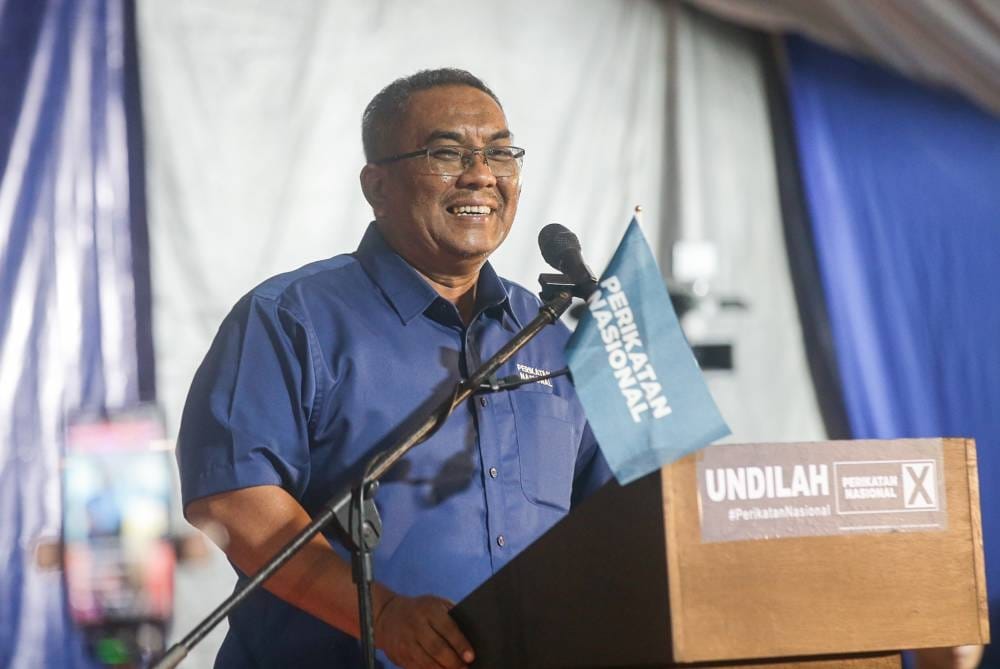
The air in Malaysia has grown heavy with a familiar, yet increasingly sharp, scent of polarized dissent. In the quiet corridors of power and the bustling stalls of local kopitiams, the conversation has shifted from economic recovery to the very soul of the nation’s social contract. Recent months have seen a resurgence of heated rhetoric that pierces through the thin veneer of political stability. When Kedah Menteri Besar Muhammad Sanusi Md Nor provocatively claimed that "Malaysia would be peaceful if the DAP did not exist," he didn’t just spark a news cycle; he lanced a boil that has been festering in the Malaysian psyche for decades. This isn’t merely a spat between political rivals; it is a manifestation of a deep-seated anxiety regarding the role of the Democratic Action Party (DAP) in a nation traditionally anchored by Malay-Muslim hegemony. As the "Madani" government attempts to balance its multicultural aspirations with the reality of conservative pushback, the question remains: Is the DAP truly the "wedge" driving a crack through national unity, or is it simply the convenient scapegoat for a country struggling to redefine itself?
The Anatomy of a Political Villain: Why DAP is the Perpetual Target
To understand why the DAP is frequently framed as the architect of national disharmony, one must look at the structural barriers of the Malaysian electoral system. Historically, the DAP has occupied a de facto "non-Malay" niche, often seen as the primary voice for the Chinese community since the decline of the Malaysian Chinese Association (MCA). This branding, while electorally successful in urban areas, has created a "structural constraint" that prevents the party from penetrating the Malay heartland. Research indicates that DAP’s marginal representation in Malay-majority constituencies is not necessarily a failure of policy, but a result of "ethnic party sorting" where voters interpret a vote for a Chinese-led party as an inherent opposition to Malay-led institutions. This perception is weaponized by the opposition, particularly Perikatan Nasional (PN), which frames the DAP’s "Malaysian Malaysia" ideology as a direct threat to the special position of Malays and the sanctity of Islam.
The ‘Crack’ in the Coalition: Internal Friction and External Pressure
The current political landscape is a fragile mosaic. The "Unity Government" led by Prime Minister Anwar Ibrahim is a marriage of convenience that has faced significant challenges in policy coordination. Within this alliance, the friction between DAP and UMNO two former arch-enemies is palpable. Observers have noted that the relationship between UMNO Youth Chief Dr. Akmal Saleh and DAP leaders like Nga Kor Ming is “ibarat retak menanti belah” (like a crack waiting to split), particularly over sensitive issues such as the "halal logo" controversy at educational institutions. When leaders within the same government exchange barbs, comparing one another to "lions and flies," the message sent to the public is one of instability. This internal discord feeds the narrative that the DAP’s presence in the federal government is a destabilizing force that compels UMNO to either compromise its core principles or engage in performative radicalism to retain its Malay base.
Cultural Hegemony vs. Social Democracy: The Battle for Identity
At the heart of the "DAP issue" is a profound cultural and institutional clash. The DAP’s social democratic roots often prioritize secularism and meritocracy, concepts that sit uneasily with the traditional Malaysian model of communal politics. For critics like Sanusi, the DAP’s push for a "Malaysian Malaysia" is viewed as an attempt to normalize religious pluralism and demand that Muslims recognize all religions as equal a stance that many conservative Malaysians find incompatible with their Islamic faith. This ideological divide is not just academic; it translates into real-world tensions over temple demolitions, language use, and the allocation of state funds. While DAP calls for unity to face global challenges like the Middle East conflicts, their domestic detractors argue that they are the very source of the fire they claim to be putting out.
Success Begets Problems: The Burden of Governance
Ironically, the DAP’s success as the second-largest party in Parliament has made it more vulnerable to criticism. Holding 40 seats makes its support critical for Anwar Ibrahim’s survival, yet this very influence is used by the opposition to claim that the Prime Minister is a "puppet" of a Chinese-dominated party. This "success" has necessitated compromises that have alienated the DAP's own base, leading to infighting and identity crises within the party. As the party navigates its 2025 and 2026 internal polls, it faces a existential question: can it truly become a multiracial party, or will it remain trapped in the "chauvinist" label that its rivals use so effectively to keep the nation on edge?
Beyond Politics: The Human Cost of Polarization
While politicians play their high-stakes games of chess, the average Malaysian is left to navigate an increasingly tribal social landscape. The rise of "xenophobic rhetoric" and "anti-migrant policies" in 2025 and 2026, as noted by Human Rights Watch, often coincides with periods of high political instability. When the national discourse is dominated by "us vs. them" narratives regarding political parties, that sentiment inevitably bleeds into how we treat our neighbors, our colleagues, and the most vulnerable in our society. The "crack" in national harmony isn't just about DAP or UMNO; it's about the erosion of empathy in a society where political affiliation has become a surrogate for moral standing.
What do you think? I’d love to hear your opinion in the comments section.
As we look toward the horizon of Malaysia’s future, the rhetoric surrounding the DAP serves as a sobering reminder of how easily the threads of our multicultural tapestry can be pulled. It is easy to point fingers at a single political entity and declare them the "punca" or root cause of all our societal ills. It provides a simple answer to complex problems like income inequality, the middle-income trap, and the search for a cohesive national identity. However, scapegoating rarely leads to solutions. If we believe that the removal of one party would magically bring "peace," we are ignoring the structural issues that have defined our nation since its inception.
The "crack" in our harmony is not a single fracture caused by one group; it is a network of fissures resulting from decades of communal politics, educational segregation, and a refusal to have the difficult conversations required for true integration. We are at a crossroads where we must decide if we want to continue the cycle of blame or begin the arduous work of building a Malaysia where every citizen feels they have a stake in the nation’s success, regardless of their ethnicity or political leanings. The noise of the political arena will always be loud, but it is the quiet interactions between us the shared meals, the mutual respect, and the common dreams that will ultimately determine if our house stands or falls. We owe it to the next generation to leave behind a country that is more than just a collection of warring factions. We need a nation that is truly "sejahtera," not just in slogans, but in spirit.
The air in Malaysia has grown heavy with a familiar, yet increasingly sharp, scent of polarized dissent. In the quiet corridors of power and the bustling stalls of local kopitiams, the conversation has shifted from economic recovery to the very soul of the nation’s social contract. Recent months have seen a resurgence of heated rhetoric that pierces through the thin veneer of political stability. When Kedah Menteri Besar Muhammad Sanusi Md Nor provocatively claimed that "Malaysia would be peaceful if the DAP did not exist," he didn’t just spark a news cycle; he lanced a boil that has been festering in the Malaysian psyche for decades. This isn’t merely a spat between political rivals; it is a manifestation of a deep-seated anxiety regarding the role of the Democratic Action Party (DAP) in a nation traditionally anchored by Malay-Muslim hegemony. As the "Madani" government attempts to balance its multicultural aspirations with the reality of conservative pushback, the question remains: Is the DAP truly the "wedge" driving a crack through national unity, or is it simply the convenient scapegoat for a country struggling to redefine itself?
The Anatomy of a Political Villain: Why DAP is the Perpetual Target
To understand why the DAP is frequently framed as the architect of national disharmony, one must look at the structural barriers of the Malaysian electoral system. Historically, the DAP has occupied a de facto "non-Malay" niche, often seen as the primary voice for the Chinese community since the decline of the Malaysian Chinese Association (MCA). This branding, while electorally successful in urban areas, has created a "structural constraint" that prevents the party from penetrating the Malay heartland. Research indicates that DAP’s marginal representation in Malay-majority constituencies is not necessarily a failure of policy, but a result of "ethnic party sorting" where voters interpret a vote for a Chinese-led party as an inherent opposition to Malay-led institutions. This perception is weaponized by the opposition, particularly Perikatan Nasional (PN), which frames the DAP’s "Malaysian Malaysia" ideology as a direct threat to the special position of Malays and the sanctity of Islam.
The ‘Crack’ in the Coalition: Internal Friction and External Pressure
The current political landscape is a fragile mosaic. The "Unity Government" led by Prime Minister Anwar Ibrahim is a marriage of convenience that has faced significant challenges in policy coordination. Within this alliance, the friction between DAP and UMNO two former arch-enemies is palpable. Observers have noted that the relationship between UMNO Youth Chief Dr. Akmal Saleh and DAP leaders like Nga Kor Ming is “ibarat retak menanti belah” (like a crack waiting to split), particularly over sensitive issues such as the "halal logo" controversy at educational institutions. When leaders within the same government exchange barbs, comparing one another to "lions and flies," the message sent to the public is one of instability. This internal discord feeds the narrative that the DAP’s presence in the federal government is a destabilizing force that compels UMNO to either compromise its core principles or engage in performative radicalism to retain its Malay base.
Cultural Hegemony vs. Social Democracy: The Battle for Identity
At the heart of the "DAP issue" is a profound cultural and institutional clash. The DAP’s social democratic roots often prioritize secularism and meritocracy, concepts that sit uneasily with the traditional Malaysian model of communal politics. For critics like Sanusi, the DAP’s push for a "Malaysian Malaysia" is viewed as an attempt to normalize religious pluralism and demand that Muslims recognize all religions as equal a stance that many conservative Malaysians find incompatible with their Islamic faith. This ideological divide is not just academic; it translates into real-world tensions over temple demolitions, language use, and the allocation of state funds. While DAP calls for unity to face global challenges like the Middle East conflicts, their domestic detractors argue that they are the very source of the fire they claim to be putting out.
Success Begets Problems: The Burden of Governance
Ironically, the DAP’s success as the second-largest party in Parliament has made it more vulnerable to criticism. Holding 40 seats makes its support critical for Anwar Ibrahim’s survival, yet this very influence is used by the opposition to claim that the Prime Minister is a "puppet" of a Chinese-dominated party. This "success" has necessitated compromises that have alienated the DAP's own base, leading to infighting and identity crises within the party. As the party navigates its 2025 and 2026 internal polls, it faces a existential question: can it truly become a multiracial party, or will it remain trapped in the "chauvinist" label that its rivals use so effectively to keep the nation on edge?
Beyond Politics: The Human Cost of Polarization
While politicians play their high-stakes games of chess, the average Malaysian is left to navigate an increasingly tribal social landscape. The rise of "xenophobic rhetoric" and "anti-migrant policies" in 2025 and 2026, as noted by Human Rights Watch, often coincides with periods of high political instability. When the national discourse is dominated by "us vs. them" narratives regarding political parties, that sentiment inevitably bleeds into how we treat our neighbors, our colleagues, and the most vulnerable in our society. The "crack" in national harmony isn't just about DAP or UMNO; it's about the erosion of empathy in a society where political affiliation has become a surrogate for moral standing.
What do you think? I’d love to hear your opinion in the comments section.
As we look toward the horizon of Malaysia’s future, the rhetoric surrounding the DAP serves as a sobering reminder of how easily the threads of our multicultural tapestry can be pulled. It is easy to point fingers at a single political entity and declare them the "punca" or root cause of all our societal ills. It provides a simple answer to complex problems like income inequality, the middle-income trap, and the search for a cohesive national identity. However, scapegoating rarely leads to solutions. If we believe that the removal of one party would magically bring "peace," we are ignoring the structural issues that have defined our nation since its inception.
The "crack" in our harmony is not a single fracture caused by one group; it is a network of fissures resulting from decades of communal politics, educational segregation, and a refusal to have the difficult conversations required for true integration. We are at a crossroads where we must decide if we want to continue the cycle of blame or begin the arduous work of building a Malaysia where every citizen feels they have a stake in the nation’s success, regardless of their ethnicity or political leanings. The noise of the political arena will always be loud, but it is the quiet interactions between us the shared meals, the mutual respect, and the common dreams that will ultimately determine if our house stands or falls. We owe it to the next generation to leave behind a country that is more than just a collection of warring factions. We need a nation that is truly "sejahtera," not just in slogans, but in spirit.


No comments:
Post a Comment