
Teh Kew San and the brotherhood that carried Malaysia
3 hours ago
Frankie D'Cruz
The badminton great belonged to a vanished sporting age — one where men played for country before money, carried office bags to work by day and became giants by night
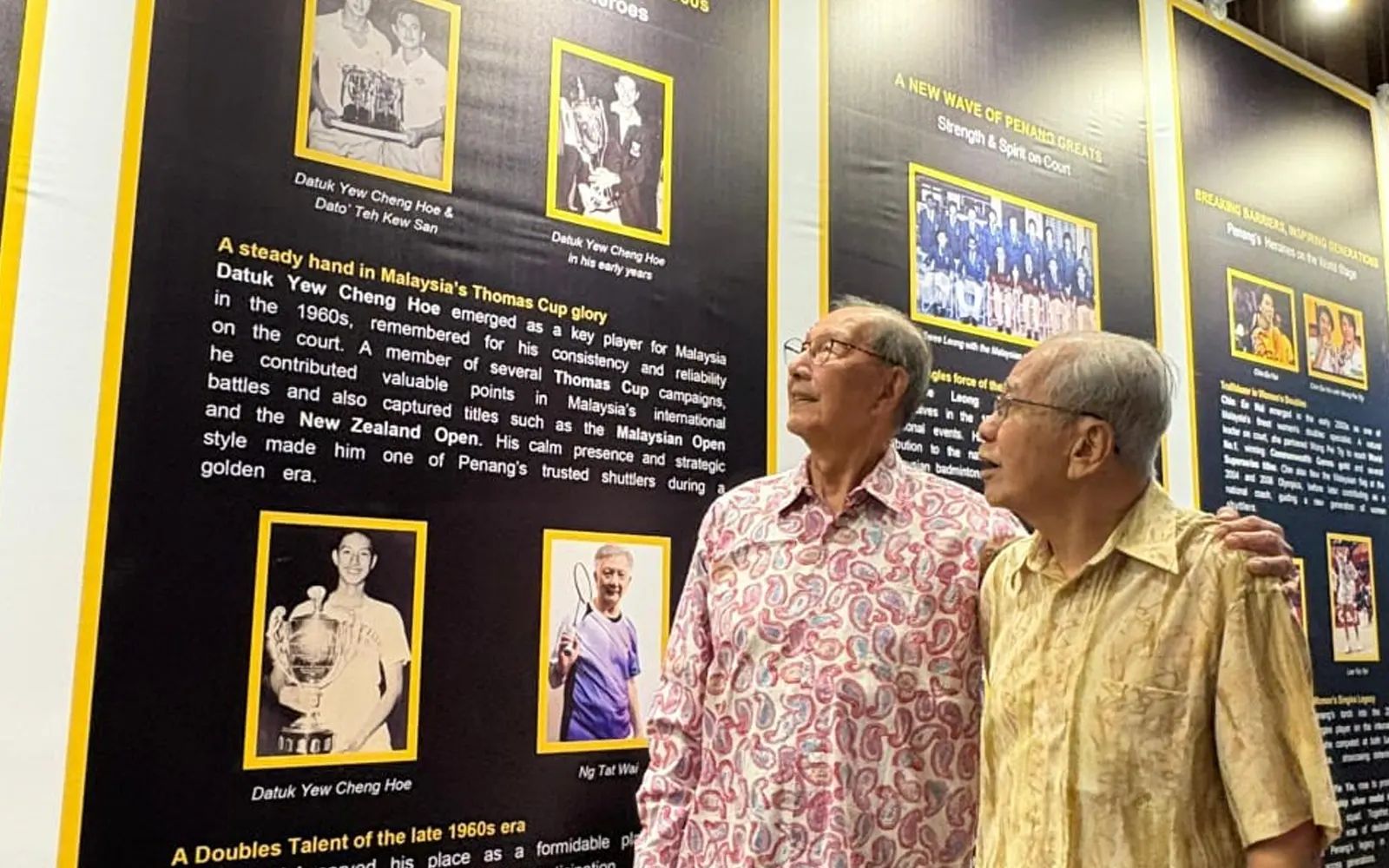
Old friends and former Thomas Cup teammates Teh Kew San (right) and Yew Cheng Hoe at the 100th anniversary celebration of the Penang Badminton Association in November last year, taking a walk through memory lane at a gallery showcasing photographs during their era. (Yew Cheng Hoe pic)
PETALING JAYA: A day before Teh Kew San died, he raised his fingers slowly and formed the numbers “513”.
Across the video call, his old Thomas Cup teammate Yew Cheng Hoe understood immediately.
May 13.
Kew San, hard of hearing but smiling, looked at his friend and softly uttered just one name.
“Cheng Hoe.”
On Wednesday, the former Malaysian Thomas Cup captain died at the age of 91, closing another chapter of a golden sporting generation that helped build the soul of Malaysian badminton.
Cheng Hoe said he was grateful for that final conversation.
The two men had last met during the 100th anniversary celebrations of the Penang Badminton Association in November last year, walking slowly through a gallery lined with photographs and memories from another era.
Across the video call, his old Thomas Cup teammate Yew Cheng Hoe understood immediately.
May 13.
Kew San, hard of hearing but smiling, looked at his friend and softly uttered just one name.
“Cheng Hoe.”
On Wednesday, the former Malaysian Thomas Cup captain died at the age of 91, closing another chapter of a golden sporting generation that helped build the soul of Malaysian badminton.
Cheng Hoe said he was grateful for that final conversation.
The two men had last met during the 100th anniversary celebrations of the Penang Badminton Association in November last year, walking slowly through a gallery lined with photographs and memories from another era.
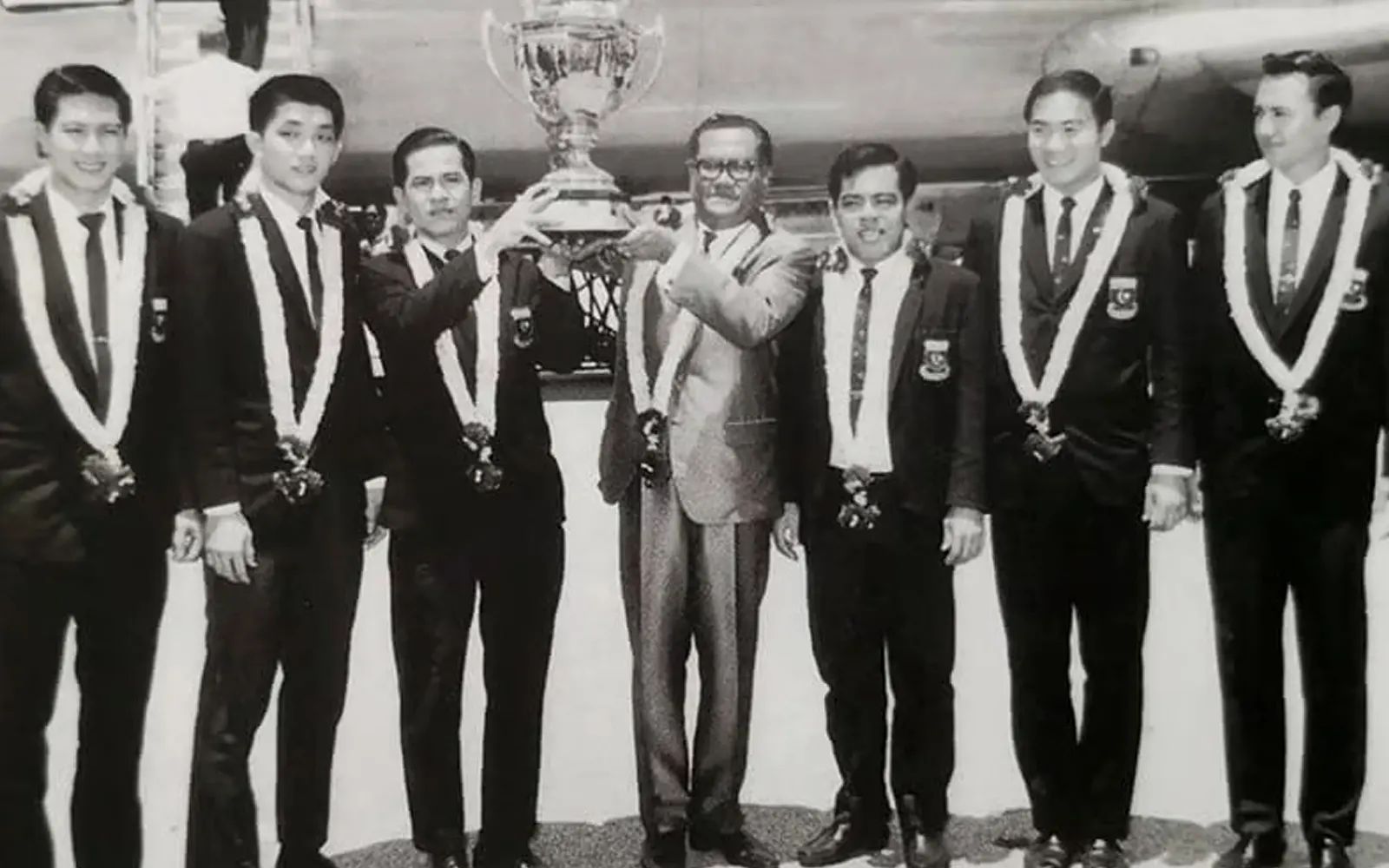
Malaysia’s triumphant 1967 Thomas Cup squad pictured after one of the most dramatic victories in badminton history. From left: Yew Cheng Hoe, Tan Aik Huang, Teh Kew San, BAM president Mohd Khir Johari, Ng Boon Bee, Tan Yee Khan and Billy Ng. (BAM pic)
Kew San becomes the third member of Malaysia’s victorious 1967 Thomas Cup team to pass away after Ng Boon Bee and Tan Yee Khan.
For many who knew him, it feels like the fading of a brotherhood.
The quiet man who turned ruthless on court
Soft-spoken away from badminton, Kew San was known affectionately as “Ah Pek”, a warm and familiar term many younger players and friends used for the Penang-born legend.
But on court, he could be merciless.
Kew San becomes the third member of Malaysia’s victorious 1967 Thomas Cup team to pass away after Ng Boon Bee and Tan Yee Khan.
For many who knew him, it feels like the fading of a brotherhood.
The quiet man who turned ruthless on court
Soft-spoken away from badminton, Kew San was known affectionately as “Ah Pek”, a warm and familiar term many younger players and friends used for the Penang-born legend.
But on court, he could be merciless.
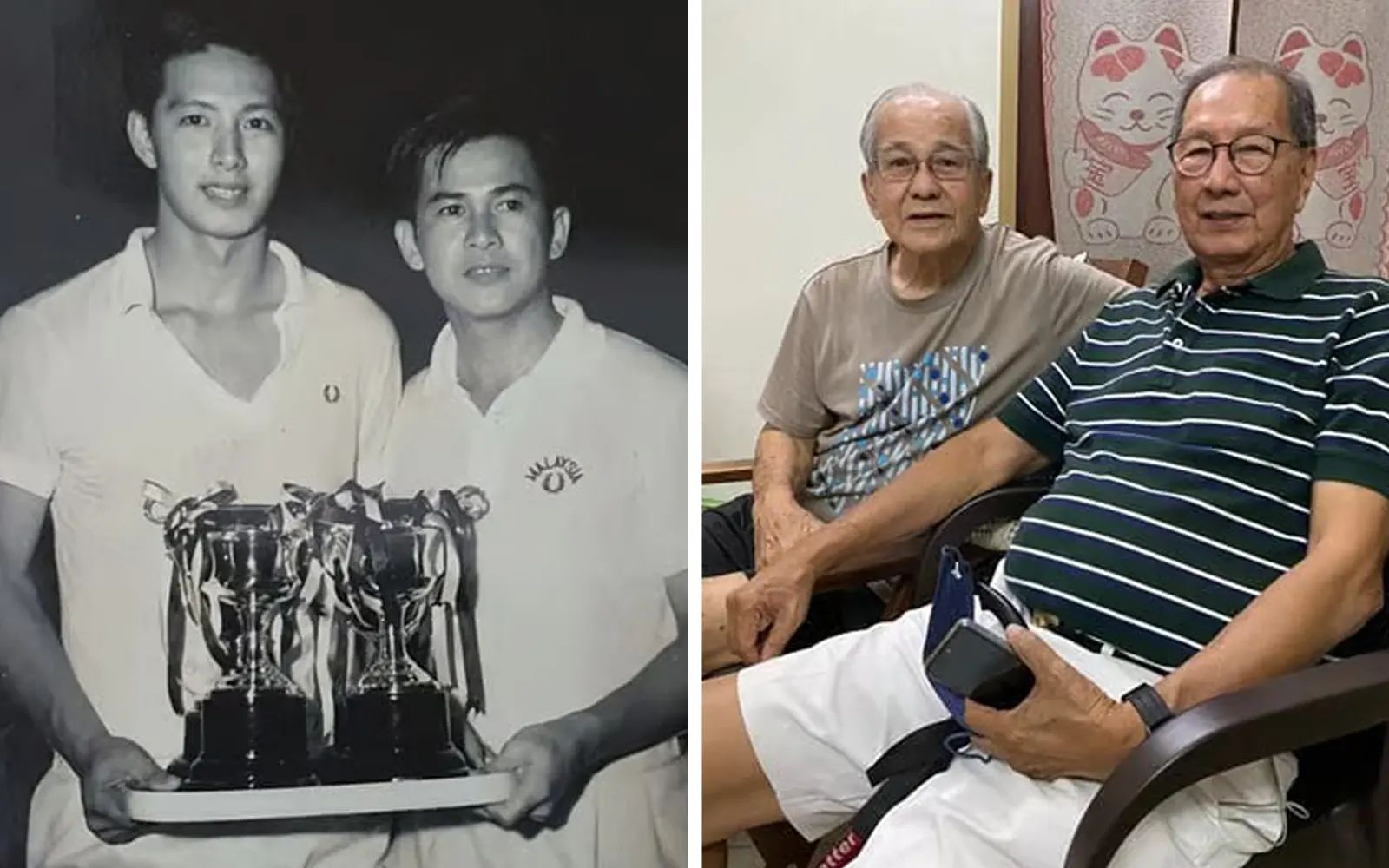
Yew Cheng Hoe (left) and Teh Kew San pose with their trophies after thrashing Indonesian stars Rudy Hartono and Muljadi 15-0, 15-0 in the 1966 Penang Open, and (right) reuniting 56 years later, one week before Kew San’s birthday in January. (Teh Kew San pics)
One afternoon in 1966, Kew San and Cheng Hoe produced a performance that still sounds impossible today.
In the final of the Penang Open men’s doubles, they crushed Indonesian idols Rudy Hartono and Muljadi 15-0, 15-0.
Even now, older badminton men still speak of that scoreline with disbelief.
It was a breathtaking display from two players who seemed to know each other’s movements by instinct.
Former national player James Selvaraj said all badminton players, especially those from Penang, saw him as a father figure with exemplary leadership qualities.
“He was quiet, humble and always willing to help. I watched him train for the 1967 Thomas Cup at the SBA Hall in Kuala Lumpur — he was a pure stroke player.”
Another former national star Phua Ah Hua said: “Kew San earned respect not just for his achievements, but as a mentor and role model.
“I was fortunate as a junior Thomas Cup trainee in the 1970s to learn from someone so generous with his knowledge and skill. A true national hero who never sought recognition, only the love of the game.”
That calmness hid a fierce competitor.
Kew San excelled in singles, doubles and mixed doubles during an era when versatility mattered as much as power.
He won the Mexico City International in 1960 and the Asian Badminton Championships in 1962 in singles. In doubles, he and Lim Say Hup swept six international titles in 1959, including the All-England, Canada Open and US Open.
In mixed doubles, he partnered the woman who would later become his wife, Ng Mei Ling, to win the 1962 Malayan Open and the 1965 Malaysian Championship.
Away from badminton, he also played cricket, basketball, football and hockey, making him one of the great all-round sportsmen of his generation.
Jakarta, flashlights and history
Yet Kew San will forever be remembered for Jakarta in 1967.
Malaysia’s Thomas Cup final victory over Indonesia remains one of the fiercest and most controversial nights in badminton history.
The match came only two years after the Indonesia-Malaysia Confrontation ended, turning the tie into something far bigger than sport.
The Malaysian team — led by Kew San alongside Tan Aik Huang, Cheng Hoe, Boon Bee, Yee Khan and Billy Ng— entered hostile territory carrying the weight of a young nation.
These were not full-time athletes.
They had day jobs.
Some used annual leave to represent the country. Others took unpaid leave after running out of holidays. They trained together for only a few weeks before major tournaments.
Yet they played with a sense of duty difficult to imagine in modern sport.
“There was no superstar in that team,” Kew San said in a 2022 interview. “That was our strength.”
Malaysia led Indonesia 4-3 in the best-of-nine final when crowd trouble erupted.
Flashlights were shone into the eyes of the Malaysian players. Abuse rained down from the stands. Tournament referee Herbert Scheele abandoned the tie after chaos broke out inside the arena.
At 3am, the Malaysian players were escorted from their hotel under tight security and rushed to the airport.
A year later, Malaysia officially received the Thomas Cup after Indonesia refused to resume the final in New Zealand.
That triumph became Kew San’s fourth and final Thomas Cup after earlier campaigns with the Malayan teams of 1958 and 1961 and the Malaysian side of 1964.
The victory also shaped his personal life in an unforgettable way.
That same year, he named his son Thomas.
Icon from a vanished sporting age
Long after the cheers faded, Kew San never drifted far from badminton.
He worked as a chief clerk with the Penang Island City Council while continuing to guide younger players, many of whom later represented Malaysia.
One afternoon in 1966, Kew San and Cheng Hoe produced a performance that still sounds impossible today.
In the final of the Penang Open men’s doubles, they crushed Indonesian idols Rudy Hartono and Muljadi 15-0, 15-0.
Even now, older badminton men still speak of that scoreline with disbelief.
It was a breathtaking display from two players who seemed to know each other’s movements by instinct.
Former national player James Selvaraj said all badminton players, especially those from Penang, saw him as a father figure with exemplary leadership qualities.
“He was quiet, humble and always willing to help. I watched him train for the 1967 Thomas Cup at the SBA Hall in Kuala Lumpur — he was a pure stroke player.”
Another former national star Phua Ah Hua said: “Kew San earned respect not just for his achievements, but as a mentor and role model.
“I was fortunate as a junior Thomas Cup trainee in the 1970s to learn from someone so generous with his knowledge and skill. A true national hero who never sought recognition, only the love of the game.”
That calmness hid a fierce competitor.
Kew San excelled in singles, doubles and mixed doubles during an era when versatility mattered as much as power.
He won the Mexico City International in 1960 and the Asian Badminton Championships in 1962 in singles. In doubles, he and Lim Say Hup swept six international titles in 1959, including the All-England, Canada Open and US Open.
In mixed doubles, he partnered the woman who would later become his wife, Ng Mei Ling, to win the 1962 Malayan Open and the 1965 Malaysian Championship.
Away from badminton, he also played cricket, basketball, football and hockey, making him one of the great all-round sportsmen of his generation.
Jakarta, flashlights and history
Yet Kew San will forever be remembered for Jakarta in 1967.
Malaysia’s Thomas Cup final victory over Indonesia remains one of the fiercest and most controversial nights in badminton history.
The match came only two years after the Indonesia-Malaysia Confrontation ended, turning the tie into something far bigger than sport.
The Malaysian team — led by Kew San alongside Tan Aik Huang, Cheng Hoe, Boon Bee, Yee Khan and Billy Ng— entered hostile territory carrying the weight of a young nation.
These were not full-time athletes.
They had day jobs.
Some used annual leave to represent the country. Others took unpaid leave after running out of holidays. They trained together for only a few weeks before major tournaments.
Yet they played with a sense of duty difficult to imagine in modern sport.
“There was no superstar in that team,” Kew San said in a 2022 interview. “That was our strength.”
Malaysia led Indonesia 4-3 in the best-of-nine final when crowd trouble erupted.
Flashlights were shone into the eyes of the Malaysian players. Abuse rained down from the stands. Tournament referee Herbert Scheele abandoned the tie after chaos broke out inside the arena.
At 3am, the Malaysian players were escorted from their hotel under tight security and rushed to the airport.
A year later, Malaysia officially received the Thomas Cup after Indonesia refused to resume the final in New Zealand.
That triumph became Kew San’s fourth and final Thomas Cup after earlier campaigns with the Malayan teams of 1958 and 1961 and the Malaysian side of 1964.
The victory also shaped his personal life in an unforgettable way.
That same year, he named his son Thomas.
Icon from a vanished sporting age
Long after the cheers faded, Kew San never drifted far from badminton.
He worked as a chief clerk with the Penang Island City Council while continuing to guide younger players, many of whom later represented Malaysia.
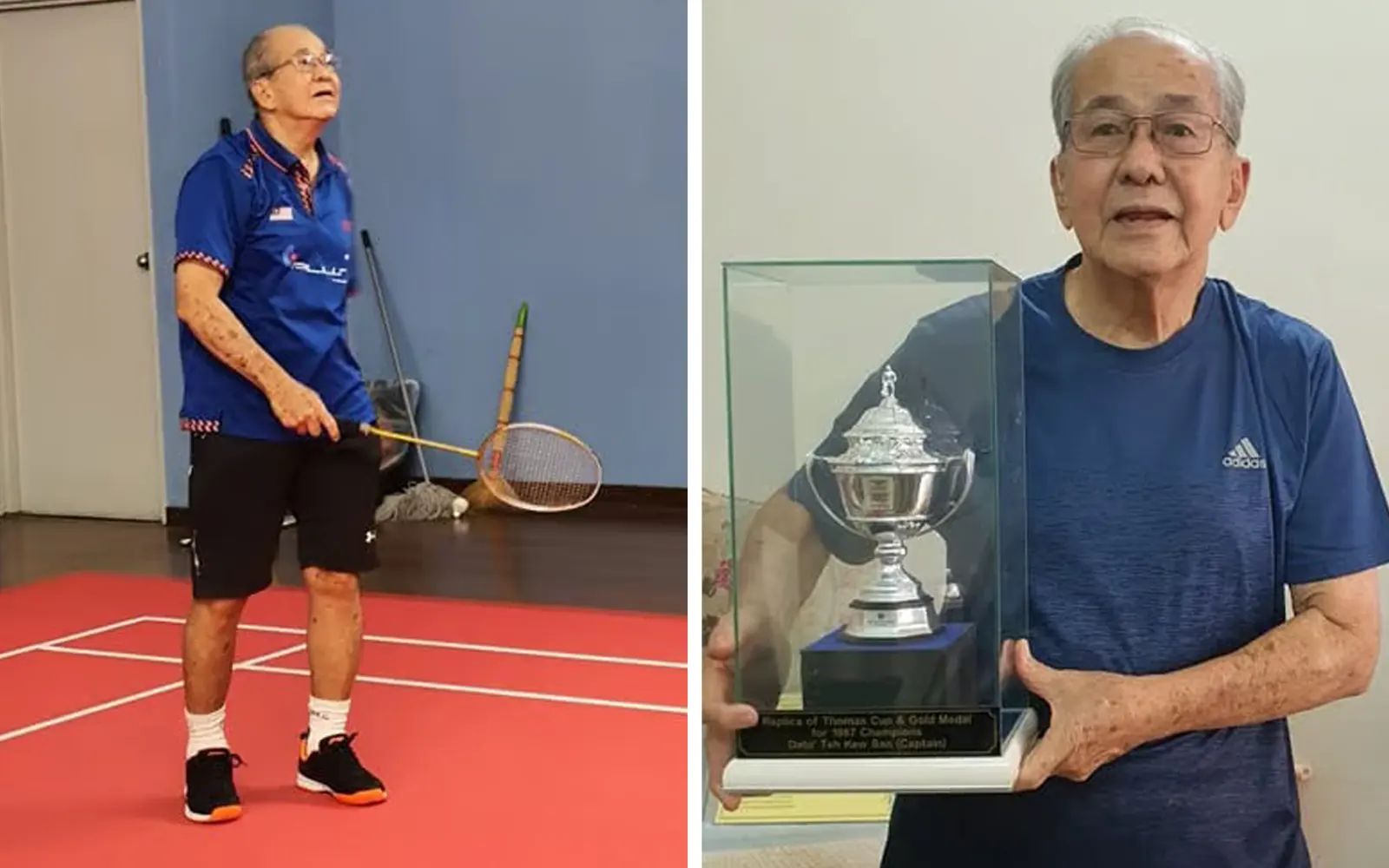
“Ah Pek” Teh Kew San enjoying his weekly stroke play session at the Penang YMCA badminton hall, and (right) posing with a replica of the Thomas Cup. Even into his 80s, the former Malaysian captain never stopped playing the sport he loved. (Buletin Mutiara pics)
Former national player Khaw Cheow Kheng said Kew San taught him one of the most important lessons in coaching: knowing how hard to push athletes without breaking them.
“He was humble despite his greatness,” said Cheow Kheng. “Even in his later years, he would spar with us.”
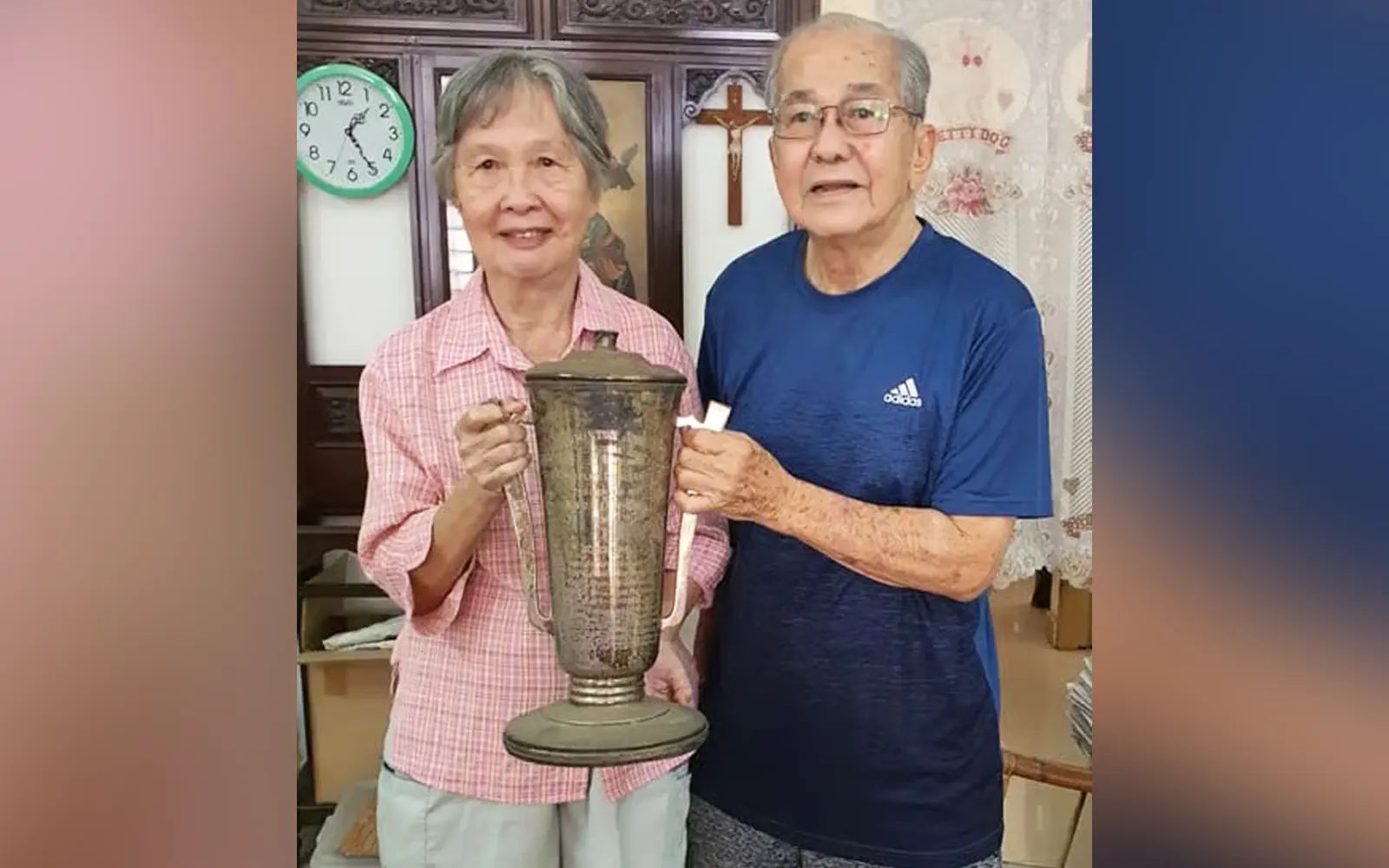
Teh Kew San and wife Ng Mei Ling holding the Perak championship mixed doubles trophy, which they won outright after claiming the title three consecutive times. (Buletin Mutiara pic)
Kew San himself kept playing well into his 80s, enjoying weekly stroke play sessions with Mei Ling and daughter Karen.
“I can’t stop playing badminton,” he once said. “It pushes me to stay healthy.”
For all his achievements, parts of his later life carried traces of disappointment.
Players from his era received meagre allowances and often lost income while representing the nation.
When Kew San received the Datuk title in 2007, 40 years after the Thomas Cup triumph, he reportedly had to borrow a coat from former state coach Khoo Kay Choo for the ceremony.
What hurt him even more was how some former players were treated during the 1992 Thomas Cup finals in Kuala Lumpur.
Several old stars had to apply for passes to watch the tournament, only to discover there were no seats reserved for them.
The sportswriter Lazarus Rokk responded with a line that still stings today — that “amnesia set in faster than rigor mortis”.
Malaysia is losing the men who built its sporting soul.
And somewhere in badminton folklore, the scoreboard still reads 15-0, 15-0.
Kew San is survived by Mei Ling, whom he had been married to for nearly 60 years, their children Thomas and Karen, and two grandchildren.
The wake today is from 10am-10pm at the Church of Immaculate Conception, Penang, followed by the funeral mass on Saturday at 10am and cremation at Mt Erskine crematorium.
Kew San himself kept playing well into his 80s, enjoying weekly stroke play sessions with Mei Ling and daughter Karen.
“I can’t stop playing badminton,” he once said. “It pushes me to stay healthy.”
For all his achievements, parts of his later life carried traces of disappointment.
Players from his era received meagre allowances and often lost income while representing the nation.
When Kew San received the Datuk title in 2007, 40 years after the Thomas Cup triumph, he reportedly had to borrow a coat from former state coach Khoo Kay Choo for the ceremony.
What hurt him even more was how some former players were treated during the 1992 Thomas Cup finals in Kuala Lumpur.
Several old stars had to apply for passes to watch the tournament, only to discover there were no seats reserved for them.
The sportswriter Lazarus Rokk responded with a line that still stings today — that “amnesia set in faster than rigor mortis”.
Malaysia is losing the men who built its sporting soul.
And somewhere in badminton folklore, the scoreboard still reads 15-0, 15-0.
Kew San is survived by Mei Ling, whom he had been married to for nearly 60 years, their children Thomas and Karen, and two grandchildren.
The wake today is from 10am-10pm at the Church of Immaculate Conception, Penang, followed by the funeral mass on Saturday at 10am and cremation at Mt Erskine crematorium.
***
Teh Kew San has always been my hero. But aside, many don't realise that badminton's Malaysian double Ng Boon Bee and Tan Yee Khan were, for aeons, probably one of the world greatest double, if not the GREATEST - and Ng Boon Bee was just a water-meter reader just as Kew San was a City Council clerk - none of the kerbau you associate with today's Malaysian players.


No comments:
Post a Comment