Murray Hunter
Apr 16, 2026
Why universities must massively downsize to meet the needs of society today
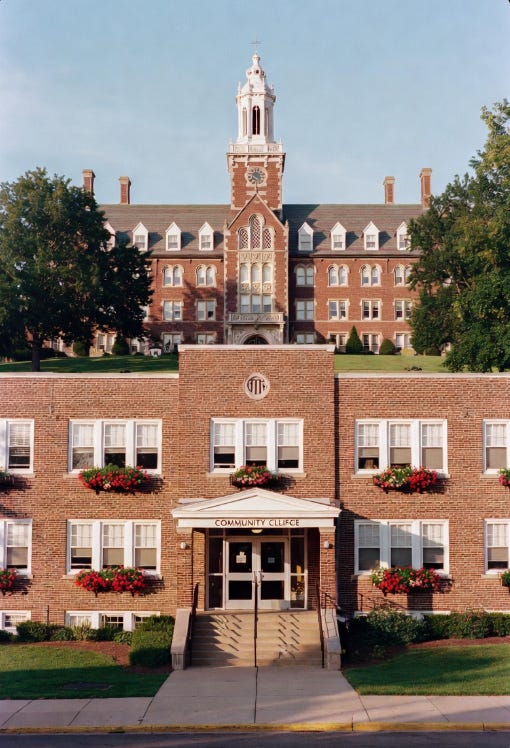
Universities and other institutions of higher learning are facing major challenges. Apart from a small number of legacy-branded institutions, many are facing existential liquidity problems. In the US alone, around 30 universities are closing each year. Universities have become bureaucratically bloated and rigid with administrative systems that have done nothing to improve the learning experiences of students. The focus is now on issuing “qualifications” which are seen as “products” rather than recognition that someone has reached a certain level of knowledge and understanding.
In addition, universities face several other problems today. Declining birth rates mean fewer enrollments. As developing countries advance, more universities in these countries are created making the number of international students dwindle.
Tertiary education has become so expensive, many younger people are questioning the wisdom of taking up post-secondary education, especially when starting salaries are no different from those without qualifications. Most graduates who take up post-secondary education are burdened with debt for years. Those who did not go to university working in similar jobs are financially better off because they are not burdened with debt. Student debt is now a major issue in education detracting from its appeal today. University education no longer guarantees a career it once did.
The content of many degrees, particularly in the business and economics domain have been “dumbed down” to the lowest common denominator. Lecturers are no longer renowned industry experts they once were and teaching manuals have been modularized for simplistic understanding. Most university lecturers today have little or no industry experience.
Many degree courses like entrepreneurship are better taught through the vocational system, as the art of entrepreneurship is best learnt rather than taught. Successful programs rely upon mentorship and project-based learning, rather than curriculum based subject material.
In many industries today, there are just not the jobs available to absorb graduates. Most jobs, except for family business fail to provide any upward career mobility in the jobs they offer. This approach is practiced through most industries today. With more comprehensive applications of artificial intelligence (AI) being developed, numerous jobs through both the public and private sector are very quickly disappearing. This includes clerks, accountants, administrative, legal assistant jobs, and other entry level management jobs, just to mention a few. Graduates are now forced to compete with mature workers who have retrained for what available jobs are left, mostly in retailing. This issue becomes worse during economic downturns.
People just do not need degrees unless they want to enter specialized and skilled areas of work. Consequently, there is a need for universities to pivot away from ‘traditional’ curricula and focus on ‘micro-courses’. There is a drastic need for consolidation of all programs, especially hybrid courses that were aimed as revenue raisers. The nature of universities must change.
Rethinking the university
The management of most universities do see what is coming, but are entrapped within massive bureaucracies that cannot easily be reduced on an incremental basis. Insolvency faces those institutions that fail to change, unless they are propped up by government subsidies and other hand-outs. Many are brand gouging with long earned reputations that have been developed over decades in attempts to remain financially buoyant.
However, universities outside the Ivy League cannot afford to do this as a survival strategy. They must use more radical strategies to downsize. These institutions must transform whole business and management faculties into micro-course providers that offer relevant materials to people wishing to enter the workforce. Business schools must reinvent themselves and become life-long educators focusing on micro-courses. Business and economics degrees just do not have the value they once did and this market segment be left for large elite institutions, while practical business courses offered as short and part time micro courses to fill real social needs today.
All the bricks and mortar and bureaucratic infrastructure can be shed for efficient clusters of class rooms placed in shopping malls or community centres. Some of these education needs can go back to community and vocational colleges that once existed in the past. Education must be delivered to those who want and need it at affordable rates. Some institutions are developing hybrid ‘free’ courses that focus on outcomes rather than awards.
Entrepreneurship education will have an exciting new future in vocational centres where teaching is aimed at nurturing entrepreneurs, not awarding certificates. Entrepreneurs do not need degrees; they need nurturing and mentorship. An entrepreneur’s ambition is success in their business endeavors, not a degree.
Within the engineering sphere, the current state of most ‘western economies’ has changed the need for types of courses needed. Engineering education should be directly related to the geo-social regions it serves. Mechanical, construction, electric, electronic, biological, and computer engineering courses have different demand in different areas depending upon the structure of the economy. These schools can go back to the institutes of higher learning they historically came from. Technology institutes once served communities very well and should be given the opportunity to do so once again.
Arts, humanities, and teacher education can return to community colleges. The vocational system can expand where the old ‘blue collar/white collar’ separation of career paths can be merged into the same educational institutions. Many successful businesses are started by entrepreneurs with ‘blue collar’ backgrounds in strong service-based economies. This is where entrepreneurial education will thrive with a mixed technology/business education nexus community colleges can provide.
Such an approach will eliminate the needless monstrosities that traditional universities create. There is no need for these bureaucracies to support today’s education needs. For example, virtual libraries can now replace the need for large library buildings at major universities. IT can replace buildings that housed administrative staff. The costs of national education will come down immensely and student debt can be drastically lowered.
This is not to say all universities should be downsized. There is still a place for elite education. With fewer universities, the relative rarity of degrees and other post graduate qualifications will increase their social value.
Not everyone needs a degree today, unlike the past where a degree was once a prerequisite for employment. Elite universities will have a mission of returning business and economics education to the high standards of last century, rather than of the ‘fast food’ variety of today. Medicine, nursing, physics and chemistry, new fields of engineering and science have their places in universities. Research should be directly supported by industry, and where fundamental research is involved supported by government grants.
The effect of the above will be to bring value back to education and a debt free education. Much smaller and compact education units are more efficient and will bring down the cost of education and prevent the collapse of many universities in the near future.
It will require enlightened university management to make this move, otherwise creative destruction will eventually overtake them. There must be more public discussion about what education should look like in the coming decades. We had the answers a couple of decades ago, but many institutes of higher learning wanted to become universities and saw growth as a key objective. This made them vulnerable to the conditions of today. It is time for many to go back to institutes of higher education once were with more efficient cost base without lowering the quality of education anymore.


No comments:
Post a Comment