Friday, November 13, 2026

Why Nvidia’s Nightmare May Be Just Beginning


QTR’s Fringe Finance

(via ZeroHedge)


I Still Think There's More Bad News Coming

The Nvidia scandal keeps getting uglier, the questions keep getting bigger, and I think investors expecting a quick return to normal are making a serious mistake.

Quoth the Raven
23 hours ago


I’m not trying to be a “permabear” or a “hater”, only trying to objectively relay to my kind readers where it appears that we are, amidst this muck and mire in markets right now. Admittedly, I see things through a more cynical set of glasses than most when it comes to markets. But, with more than a decade of experience doing forensic investigative research on the short side of markets, I have also seen far more ugly shit than most people have.

Bearing that in mind, it is my opinion that the pain for Nvidia, the broader market, and the AI trade is far from over. In fact, I think we’re still in the early stages of a process that could take weeks, if not months, to fully play out. And with sentiment toward technology already looking increasingly fragile, I don’t think investors appreciate just how much additional damage could be waiting around the corner.
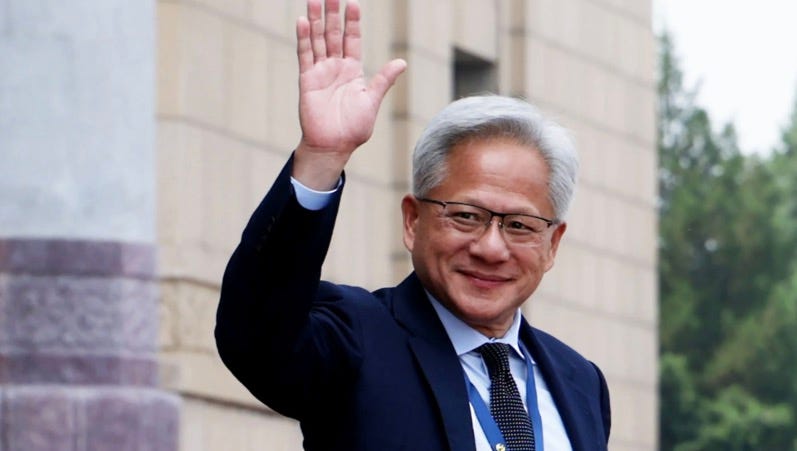


Contrary to what some may believe, I don’t just wake up every morning and write random shit on this blog to fill space. I generally have a roadmap in my mind that I come by honestly and try and share with readers. Over the last six days, as the Nvidia saga has unfolded, I’ve taken plenty of criticism for the points I’ve raised about the company, Jensen Huang, and what this scandal could mean for the market.

And while I certainly haven’t gotten every detail right, I think the broad direction of my concerns has been increasingly validated by subsequent events. Today, I want to revisit those warnings, update readers on where I stand, and reiterate and explain one important point going forward: I don’t think this story is anywhere near over, and I don’t think the market has fully priced in what could come next.

After last week’s AI-driven Nasdaq crash, I wrote a couple of pieces explaining why I thought the initial selloff might only be the beginning. In one of them, titled After The Crash, Another Wave Of Bad News, I wrote:


It’s that the market’s reaction to yesterday’s crash is not nearly as important as what yesterday’s crash may have set in motion.

I expect enormous volatility in both directions, policymakers to begin exploring ways to stabilize markets if the selling continues, and the AI industry’s increasingly questionable valuations to face more scrutiny. Most importantly, I expect the coming days to reveal financial, corporate, and political consequences that simply haven’t had enough time to become public yet.

I continued:


Because I don’t think the biggest question is whether the market can bounce. I think the biggest question is how many companies, investors, and lenders built their plans around the assumption that it would never stop going up.

Yesterday, the market finally started asking that question. Over the next several days, I suspect we’re going to start getting some answers, and I have a feeling some of them are going to be uglier than people expected.

That was my concern then, and it remains my concern today. When a market has been built around a handful of companies, enormous expectations, and the assumption that an investment boom can continue indefinitely, the first sharp selloff isn’t necessarily the whole event. Sometimes it’s just what starts exposing the problems.

And in Nvidia’s case, I think we’re watching that process unfold in real time.

On Sunday morning all we knew was a couple of allegations against Jensen Huang. There was no admission, no major board statement, no follow up reporting. There was the headline that he may have been compromised and that was it. It seemed to be something that could pass quickly. Espionage efforts during a global chip race are hardly surprising and many thought Jensen was likely just an innocent victim.
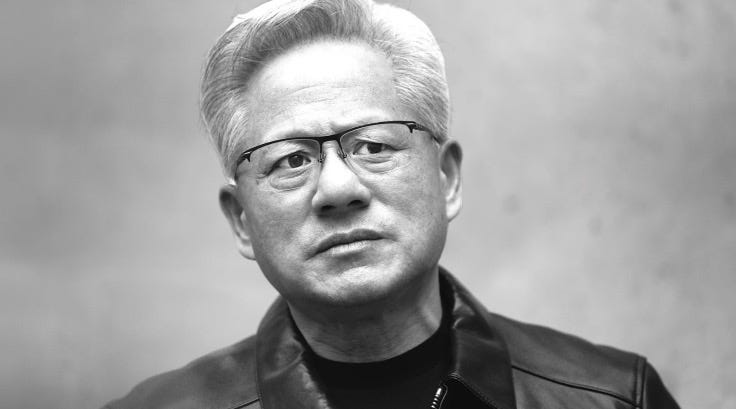


But I still asked the then uncomfortable question of whether Huang could be forced to resign. Then, just hours later on Sunday afternoon, Huang publicly acknowledged an extramarital affair amid reports involving Alice Huang, a Chinese businesswoman at the center of allegations concerning Chinese intelligence and Nvidia’s chip sales.

Those allegations have not, by themselves, established wrongdoing by Nvidia or its CEO. But I thought the potential implications for the company could be enormous, and I wrote:


What would happen if Huang stepped down? How much key-man risk is embedded in Nvidia after he almost single-handedly built it into the company it is today?

And lest we forget…I’m getting ahead of myself here, but that’s what I do….there’s also the uncomfortable reality that major executive departures can sometimes bring previously concealed problems into the open.

I added that new leadership, new scrutiny, and changing incentives can have a way of revealing things that were previously swept under the rug. That wasn’t an allegation that Nvidia was hiding anything. It was a reminder that when a company this important suddenly faces a leadership crisis, the consequences can extend well beyond the original scandal.

As a reminder, Enron began unraveling when a Fortune reporter asked a deceptively simple question: “Is Enron Overpriced?” The road to Theranos’s collapse began with basic questions about whether its blood-testing technology worked as advertised. WorldCom began coming apart when internal auditors started questioning why ordinary operating expenses were being recorded as capital investments.
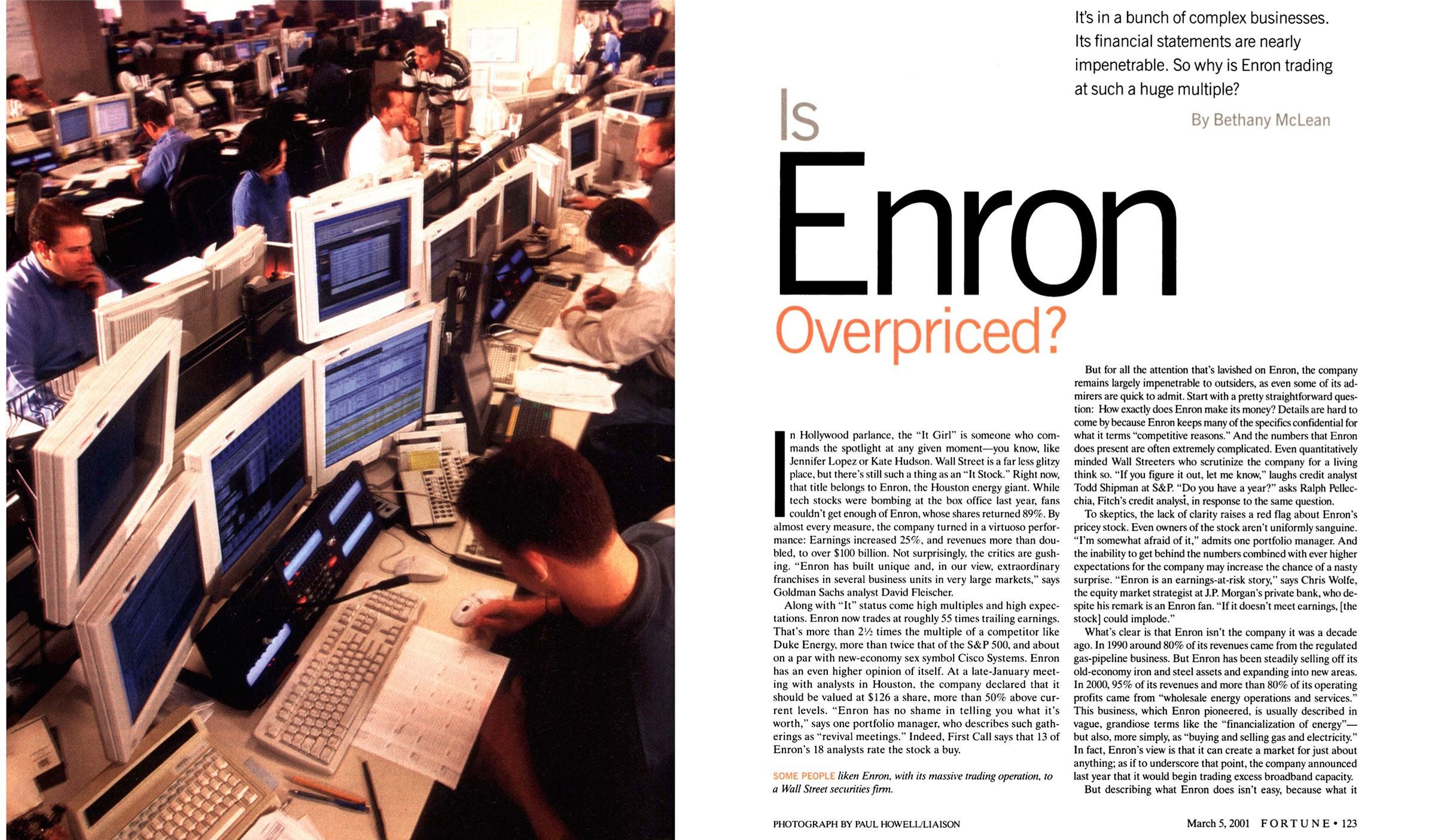


In many cases like these, what initially looked like a narrow question or an isolated discrepancy eventually exposed something far bigger. I’m not saying that will happen with Nvidia. Rather, I’m alerting people to how larger issues sometimes begin…


Yesterday morning, before reports emerged of a second alleged affair involving an Nvidia employee and the board’s preparations to potentially remove Huang, I published another piece titled Why Nvidia’s Nightmare May Be Just Beginning.



Why Nvidia’s Nightmare May Be Just Beginning


Quoth the Raven
·
10 Nov
Read full story

My point was that the obvious questions now concerned Nvidia’s China business, its export-control compliance, the integrity of its customer relationships, and potentially the reliability of management’s prior representations to shareholders.

I wrote: “I think the likely outcome at this point is that Jensen Huang resigns, at a minimum.“ As of this morning, with reporting that the board is preparing to oust him, that possibility looks increasingly likely. But I ended the piece with what I thought was the more important warning: “I’m increasingly concerned about what broader scrutiny could reveal about Nvidia’s books.”


To be clear, I’m not alleging that Nvidia has committed accounting fraud or that its financial statements are inaccurate. I’m saying that when one of the world’s most important companies finds itself embroiled in a scandal involving national security, export controls, major customers, and questions about its CEO’s judgment, people are going to start examining every inch of its business with a level of skepticism that didn’t exist a week ago.

In our subscriber chat yesterday, I said I expected virtually every journalist, analyst, investor, short seller, and investigator with a pulse to start digging into this story. My guess was that more information would continue to emerge. After all, we’re talking about a scandal involving the CEO of one of the most valuable companies on the planet, at the center of the most important technology trade in the world, with potential implications for U.S.-China relations and national security.

Does anybody seriously think the financial press is going to get bored with this after a couple of days?

And last night, right on cue, the deluge continued.


"Killing People To Benefit Someone": Slovakia's Fico "Literally Shocked" After Private Talk With Ukraine's PM


"Killing People To Benefit Someone": Slovakia's Fico "Literally Shocked" After Private Talk With Ukraine's PM


by Tyler Durden
Friday, Nov 13, 2026 - 08:40 PM


Authored by Remix News Staff via Remix News,


Slovak Prime Minister Robert Fico admitted that he was shocked by a private conversation with Ukrainian Prime Minister Serhiy Koretsky about the war between Ukraine and Russia.


Mr. Merz, Germany was wrong about mass migration, it was wrong about nuclear energy, and now you are wrong again about financing the war!
30.6K
Reply
Copy link

"I have no right to reveal the details and never do, but I had a private conversation with the Ukrainian prime minister and was shocked by it," Fico said. He stressed that his reaction primarily concerned information related to the war and its possible further course.

Fico made the comments during a press conference in Bratislava on Tuesday.

"Literally shocked when it comes to the war and further developments in the future," he added. Speaking about war, he said, "It's killing people to benefit someone. For money, for influence. I reject it."

However, Fico did not specify what information the head of the Ukrainian government gave him. He noted that due to the confidential nature of the conversation, he did not intend to reveal details.


During the same conference, Fico referred to planned further financial support for Kyiv, estimated at an additional €70 billion.

German Chancellor Friedrich Merz advocates for all European Union member states to participate in financing aid for Ukraine. According to media reports, Berlin wants to link the agreement on Ukraine to any future multiannual EU budget for 2028-2034.

Fico is firmly opposed to this development. "What the Federal Chancellor is doing is typical blackmail. And I reject it. We have the same veto power as him," said Fico.

He then stated his country was opposed to financing another loan for Ukraine.

"Slovakia will not participate in granting Ukraine another loan of 70 billion. Period. We're done," he said.

The Slovak prime minister stressed that Bratislava does not intend to accept pressure from the largest European Union countries. He announced that if Germany makes the adoption of the next EU budget conditional on the consent of all countries to continue financing Ukraine, Slovakia will use its veto power.

Fico emphasized he did not intend to block countries that want to transfer funds to Kyiv of their own volition, which means that Germany, France and other countries can provide more money to Ukraine, but should not require Slovakia to participate.

In December 2025, European Union countries agreed to loan Ukraine €90 billion. Currently, however, Kyiv points to the need to obtain additional funds for 2027. According to the estimates presented, the financing gap could amount to around €70 billion, of which approximately €45 billion would be covered by the European Union.

Ukraine's seemingly never-ending need for more billions from the EU continues to inflict massive strain on the member states. Czech Prime Minister Andrej BabiΕ‘ also spoke out against making EU budget negotiations conditional on further support for Ukraine. Slovakia, the Czech Republic and Hungary had already excluded themselves from participating in the €90 billion loan promised to Ukraine in December.

Democratic Senator Says 'Beauty' Of Ukraine War Is Paying Ukrainians To Kill Russians


Democratic Senator Says 'Beauty' Of Ukraine War Is Paying Ukrainians To Kill Russians


by Tyler Durden
Friday, Nov 13, 2026 - 08:20 AM


Authored by Dave DeCamp via Antiwar.com,


Sen. Ruben Gallego (D-AZ) said on Monday that the "beauty" of the nearly five-year-old Russia-Ukraine war is the fact that the US is "paying Ukrainians to kill Russians."


Gallego, who joined the Senate last after serving in the House for about 10 years, made the comment on X, where he insisted that Ukraine could win the war if its forces killed enough Russians.

"But Ukraine can win. Thats why I back them. It's a Russian talking point that Ukraine can't win, cause Russia big blah,blah. If Ukraine kills enough Russians they will quit," Gellego, an Iraq war veteran, wrote.

A user replied, telling the Senator to join the Ukrainian foreign legion, to which he replied, "No, that's the beauty of this; we can pay the Ukrainians to kill the Russians."


In another post a few days earlier, Gallego called for Elon Musk to testify before Congress about Ukraine's recent Starlink restrictions. A user asked if he was pushing the Ukraine war for "financial gain," and Gallego replied, "No just hate the fuckin Russians."

The idea that the US is benefiting from the Ukraine war since Russians are being killed without US troops dying has been a common argument of supporters of the proxy war over the years, a talking point that shows disregard for the Ukrainian lives being lost.

The late Sen. Lindsey Graham said at the start of the conflict that as long as the US provides "Ukraine with the weapons they need and the economic support, they will fight to the last person." He later described the war as a "great deal for America" because it was hurting Russia and no US troops have been killed.

Gallego's comments highlight strong support for the proxy war among Democrats, and Ukrainian President Volodymyr Zelensky has recently said he may get more support after the Democratic victory in the US midterm elections. Russia-Ukraine peace talks are ongoing in Abu Dhabi, but so far there has been no sign of a breakthrough.

Anwar plays down Cabinet tensions, says ‘no need to rush’ on Loke’s resignation


Anwar plays down Cabinet tensions, says ‘no need to rush’ on Loke’s resignation


Prime Minister Datuk Seri Anwar Ibrahim said he has yet to decide whether to accept Loke’s resignation and was in no rush to do so. — Bernama pic


Summary

  • Prime Minister Datuk Seri Anwar Ibrahim characterized the Cabinet meeting as "normal," amid heightened political tension between his Pakatan Harapan coalition and Barisan Nasional in the run-up to the Melaka state polls.
  • Anwar downplayed election-related tensions as temporary, expecting them to subside post-election.
  • Reports indicate growing intra-government friction, exacerbated by Transport Minister Anthony Loke's resignation in protest against the conditional clemency granted to former Prime Minister Najib Razak.
  • Anwar has yet to decide on accepting Loke's resignation.


First Published: Friday, 13 Nov 2026 4:25 PM MYT


KUALA LUMPUR, Nov 13 — Prime Minister Datuk Seri Anwar Ibrahim today described the mood at this morning’s Cabinet meeting as “normal”, amid signs of disunity within the government as his Pakatan Harapan coalition goes head-to-head with its unity government ally, Barisan Nasional, in tomorrow’s Melaka state polls.

Anwar played down the tension in the run-up to tomorrow’s vote as part and parcel of an election campaign, and said he anticipates the temperature to cool down again once the election is done.

“When there is an election, the temperature rises briefly. Then it goes back down. But as for the meeting earlier, it was normal. I didn’t notice any issues,” Anwar told reporters after performing Friday prayers at Brickfields here.

Media reports suggested there is growing friction within Anwar’s Cabinet, as the two major governing coalitions traded salvos at the Melaka election campaign trail where incumbent BN had teamed up with rivals Perikatan Nasional to defend the state.


One of Anwar’s staunchest backers, Anthony Loke, has also resigned as transport minister in what is seen as a protest against the conditional royal clemency granted to Datuk Seri Mohd Najib Razak, allowing the former prime minister to serve the remainder of his jail sentence for his SRC International corruption convictions at home.

Anwar said he has yet to decide whether to accept Loke’s resignation and was in no rush to do so.

“I have not accepted the resignation yet. I have received the letter and he said it takes effect (immediately), but I will certainly take some time to review it carefully,” he told reporters.

“There is no need for us to rush.”

China warns US against more chip export controls after Nvidia scandal


China warns US against more chip export controls after Nvidia scandal


A pedestrian places a candle in front of a Nvidia sign outside the company’s headquarters in Santa Clara, California, November 12, 2026. — AFP pic


Summary

  • In light of the Nvidia scandal, China cautioned the US against imposing additional semiconductor export controls, emphasizing that such measures are disruptive to global industrial stability and benefit no parties involved.
  • The Chinese Foreign Ministry urged cooperation based on agreements between their leaders to maintain stable economic relations.
  • The controversy, which includes allegations of rerouted technology and espionage connections, has prompted US lawmakers to advocate for stricter export regulations on chips to China.
  • This issue precedes an upcoming meeting between US President Donald Trump and Chinese President Xi Jinping at an APEC gathering in Shenzhen.


First Published: Friday, 13 Nov 2026 4:29 PM MYT


BEIJING, Nov 13 — China warned the US today against putting additional export controls on semiconductors in the wake of the scandal surrounding AI chip giant Nvidia.

China “has consistently opposed the abuse of export control measures, which disrupts the stability of global industrial and supply chains and serves no party’s interests,” foreign ministry spokeswoman Mao Ning told a regular briefing when asked about calls from US lawmakers to impose more limits on exports of chip equipment to China.

“China and the US should work together to implement the important consensus reached by their respective heads of state and maintain the stable development of China-US economic and trade relations,” Mao said.

Nvidia co-founder Jensen Huang — who resigned yesterday — has admitted to an affair, reportedly with Alice Huang, a former senior executive at Singapore-based data centre company Megaspeed.


Reports allege the Commerce Department under Secretary Howard Lutnick may have failed to act on suspicions that Megaspeed was helping reroute restricted Nvidia technology to China.

US media quoted US lawmakers as saying that they were in favour of imposing additional export controls on chips to China as a result of the snowballing scandal.


“The export controls on chips to China has been a big issue around here. I’m in favour of limiting those exports,” House speaker Mike Johnson was quoted as saying.

“I think there is a developing consensus in Congress that is an important position to take.”


US intelligence reportedly circulated a memo this spring alleging that Alice Huang — no relation to Jensen Huang — was an asset of China’s Ministry of State Security.

Beijing has rejected the allegations and yesterday said that they are a “pretext to for imposing a technological blockade” to stop China advancing in artificial intelligence technology.


The furore comes ahead of a meeting expected next week between US President Donald Trump and Chinese counterpart Xi Jinping in Shenzhen in southern China at a APEC gathering. — AFP

PAS accuses Malaysiakini of taking Hadi’s remarks out of context, rejects racial narrative


PAS accuses Malaysiakini of taking Hadi’s remarks out of context, rejects racial narrative


PAS has accused Malaysiakini of publishing a misleading report on its president Tan Sri Abdul Hadi Awang’s remarks, claiming they were taken out of context. — Picture via Facebook/Abdul Hadi Awang


Summary

  • PAS has criticized Malaysiakini for allegedly misrepresenting comments made by its president, Tan Sri Abdul Hadi Awang, in a recent report.
  • According to a statement on Hadi's Facebook page, the contentious article did not accurately reflect his speech's focus on Islamic politics promoting just governance and safeguarding non-Muslim rights.
  • The PAS president's office emphasized its concern that such media narratives could lead to public misunderstandings and potentially inflame racial tensions before the upcoming Melaka state election.


First Published: Friday, 13 Nov 2026 5:17 PM MYT


KUALA LUMPUR, Nov 13 — PAS has accused Malaysiakini of publishing a misleading report on its president Tan Sri Abdul Hadi Awang’s remarks, claiming they were taken out of context.

In a statement posted on Hadi’s Facebook page today, the PAS president’s office expressed regret over the report titled “Sejahat-jahat orang Islam tak sezalim bukan Islam” (Even the worst Muslim is not as cruel as a non-Muslim), saying it misrepresented the context of Hadi’s speech.

It said Hadi had been explaining that Islamic politics was guided by considerations of sin and reward, which, in turn, would lead to just governance and guarantee the rights of non-Muslims.

“We regret the media narrative, which could cause misunderstandings among the public, and reject any attempt to stir up racial sentiments ahead of polling day for the Melaka state election,” the statement said.


Cabinet seeks AG’s advice on proposal to declassify Najib’s pardon board minutes, says Fahmi


Cabinet seeks AG’s advice on proposal to declassify Najib’s pardon board minutes, says Fahmi


The process of declassifying documents from the Federal Territories Pardons Board meeting concerning former prime minister Datuk Seri Najib Razak is underway and being carried out in accordance with existing laws, said Communications Minister Datuk Seri Fahmi Fadzil. — Bernama pic


Summary

  • The declassification of documents from the Federal Territories Pardons Board meeting regarding former Prime Minister Datuk Seri Najib Razak is in progress, pursued in compliance with legal requirements, as stated by Communications Minister Datuk Seri Fahmi Fadzil.
  • While not explicitly discussed in the recent Cabinet meeting, the process will follow mandatory procedures with guidance from Attorney General Tan Sri Mohd Dusuki Mokhtar.
  • Home Minister Datuk Seri Saifuddin Nasution Ismail supports proposing the declassification to the Cabinet, following suggestions for increased transparency in the context of Najib's conditional pardon and house arrest in the SRC International case.


First Published: Friday, 13 Nov 2026 5:39 PM MYT


KUALA LUMPUR, Nov 13 — The process of declassifying documents from the Federal Territories Pardons Board meeting concerning former prime minister Datuk Seri Najib Razak is underway and being carried out in accordance with existing laws, said Communications Minister Datuk Seri Fahmi Fadzil.

Fahmi, who is also the unity government spokesman, said various legal requirements must be fulfilled before a final decision can be made.

“It (the matter) was not explicitly raised during today’s Cabinet meeting, but I understand that the process is underway.

“The Cabinet has sought advice from Attorney General Tan Sri Mohd Dusuki Mokhtar and the process will adhere to the mandatory procedures,” he said during a post-Cabinet media conference that was broadcasted live today.


Home Minister Datuk Seri Saifuddin Nasution Ismail was reported as saying in the Dewan Rakyat yesterday that he would put forward the proposal to declassify Najib’s Federal Territories Pardons Board meeting minutes to the Cabinet for consideration.

He said he had no objection to bringing the proposal before the Cabinet, although the matter fell under the purview of the Attorney General.

Saifuddin had earlier described a suggestion by Muar MP Syed Saddiq Syed Abdul Rahman to disclose the minutes as a good recommendation, saying it could provide a clearer and more transparent picture of the process.

The proposal comes amid controversy surrounding Najib’s conditional pardon, which allows him to serve the remainder of his prison sentence in the SRC International case under under house arrest.

The Real Reason Jensen Huang had to go

 Nury Vittachi

the real story eventually comes out


THINK ABOUT IT.
- Bill Gates had lots of illicit girlfriends—no problem.
- Elon Musk has multiple children with multiple women—no problem.
- Dario Amodei dated a Chinese woman, Jade Wang, before marrying Cami Clark, who pitched a pornography business to none other than Jeffrey Epstein—no problem.
- But Jensen Huang commits old-fashioned infidelity—and this is such a big problem that he has to resign?
Doesn’t make sense.
Here’s the real story.
.
CHAPTER ONE: BIDEN’S CHIP WAR
Jensen Huang of Nvidia was puzzled. It was 2022, and his video-graphics processors had become globally popular as the heart of high-end computing across the planet.
But that autumn, Biden violated the World Trade Organization’s most fundamental principles. He ordered the world’s makers of advanced semiconductor chips and chipmaking equipment (in the Netherlands, Taiwan and Japan) to stop sales to China.
Biden’s administration implied that the chips were for China’s military gear, but this was a lie. The US’s own security establishment admitted that 99.9 per cent were used for civilian purposes, like medical technology and AI computing.
Huang was dismayed. He could no longer sell Nvidia’s A100 and H100 to China.
.
CHAPTER TWO: SOLVING A PROBLEM
Jensen Huang was a problem-solver. In February of 2024, Nvidia launched the H20, a made-for-China AI chip less powerful than its US-only top model.
That way he could keep the US government happy but also have something to sell to the Chinese.
Not everyone in the US was happy about this, and export rules fluctuated.
.
CHAPTER THREE: THE DEEPSEEK MOMENT
In January 2025, a nerdy young man from the Chinese finance industry announced that his firm Deepseek had quickly and cheaply created a high-efficiency open-weight AI.
The implication was huge: the Chinese were finding ways to develop top level AI functionality without massive clusters of top-tier Nvidia GPUs.
Jensen Huang knew he had to respond urgently to keep his place in the China market. He flew to meet trade officials in Beijing in the middle of April and vowed to make "every effort" to serve the Chinese.
The US anti-China hawks had been quietly mobilizing—and made an announcement. In April of 2025, the US banned all export of Jensen Huang’s H20s to China.
Unbelievable! The Nvidia CEO was furious. "Anybody who thought that one chess move to ban China from H20s would cut off their AI ability is deeply uninformed," Huang told an interviewer at a trade meeting in Taipei.
.
CHAPTER FOUR: HUANG’S SPECIAL SKILL
Then came some rare good news. The Nvidia CEO started lobbying Trump behind the scenes. Huang was a master negotiator – and his efforts proved successful.
In the middle of July, 2025, Huang was back in China—his third trip in 12 months.
Huang appeared without his signature black leather jacket. Instead, he wore a traditional Chinese tang suit, and made some of his speech in Mandarin.
Washington had cleared the way for Nvidia to export the H20 to China, he said. We’re back!
Trump had demanded a cash cut of H20 sales in return for approving the exports—US government policy appeared to be literally for sale.
.
CHAPTER FIVE: SPOOKS WERE NOT HAPPY
Huang was moving chips to China again, and the anti-China hawks in the US government were unhappy—and so were the spooks.
There’s a widespread tendency to visualize the US intelligence community as right-leaning hard men, Trumpites in black suits.
This was the opposite of the truth. The CIA leadership greatly preferred the simple, blanket negativity towards “the enemy” characteristic of the Democratic Party. With Russians, Chinese, and North Koreans portrayed as cartoon villains, black ops were justifiable.
But for all his bluster, Trump had a propensity towards treating the leaders of Russia, China and even North Korea, as actual humans who could be negotiated with.
This transactional approach was enormously problematic for the CIA, which needed cartoon villains to justify their annual budget of more than US$15 billion.
And Trump’s habit of parachuting unsuitable new leaders in to command the intelligence community—such as the widely disliked Mike Pompeo—crystalized the negativity, as CIA chroniclers have written.
.
CHAPTER SIX: A TWIST IN THE TALE
Jensen Huang’s celebrations were short-lived. In an unexpected twist, China in September 2025 said it did not want Nvidia chips and would no longer buy them.
- US$15 billion in sales projections vanished.
- Nvidia had to write off a reported $5.5 billion in inventory losses.
- The company had now completely lost access to China's AI market, estimated at US$50 billion.
- And hard evidence was emerging that Chinese companies were building alternatives even for CUDA (a unique element in Nvidia chips).
Huang wanted more positivity from the US. Nvidia was a US firm, and it went from having a 95% market share in China to 0%. “I can’t imagine any policymaker thinking that that’s a good idea,” he told reporters.
.
CHAPTER SEVEN: AGAIN, HE SOLVES THE PROBLEM
But Huang’s extraordinary skill in dealing with Trump paid off again, and by mid-2026, the Nvidia business found a complex equilibrium had emerged in its China business.
Huang had (in December 2025) persuaded the US President to allow Nvidia to sell even the high-powered H200 chip to China, as long as the US government got 25% of the take. So a range of Nvidia chips could again be sold in China.
- Other Nvidia chips were arriving in China via the black market.
- There were suspicions that companies in Singapore and Malaysia, such as Megaspeed, were flouting export restrictions, also delivering chips.
- Some Nvidia chips were stuck in Hong Kong, trapped by the confusing, ever-changing rules, but were expected to be released eventually.
- On the downside (from Huang’s point of view), new China-origin chips, notably Huawei’s Ascend 950, were catching up with advanced capabilities that mimicked those of Nvidia.
In short, China was back in the game.
.
CHAPTER EIGHT: TAKING HIM DOWN
Something had to be done. China had to be dealt with. But first, Huang had to be taken down.
The US anti-China hawks saw Huang’s success in making deals with Trump as a key part of the problem. It was an element which had to be surgically removed.
The CIA and their partners in the western mainstream media sprang into action.
In October 2026, the US intelligence community told New York Times reporters that there were suspicions that Huang’s mistress, Alice Huang Le, was a Chinese spy.
It provided no evidence.
The allegation was plainly ridiculous—the flow of legitimate and illegitimate chips across the border was no secret, and the idea that discussions about the detailed minutiae of nano-level semiconductor engineering could be exchanged during pillow talk was ridiculous, even comedic.
But when the US intelligence community and the mainstream media join forces, they’re virtually invincible.
At this moment in the process, the complicit media are playing its role. A typical headline was that in the Economist yesterday:
“Jensen Huang must resign.”
.
EPILOGUE
Jensen Huang resigned.
Trump has been weakened.
The world’s public has been fooled with the “honeypot” story.
China’s Huawei is pressing ahead—with new, powerful versions of its Ascend chips slated to come out in 2027 and 2028.