


Bridget Welsh
Published: Dec 3, 2025 10:20 AM
Updated: 5:36 PM
COMMENT | As the results of the Sabah 2025 polls reverberate across Malaysia, it is useful to analyse voting patterns in terms of turnout and support. This information can help provide a more informed assessment of how Sabahans voted in the election.
This piece offers an analysis of ethnic voting behaviour, drawing from the macro results rather than the polling station data, as the latter is not yet fully available.
The analysis is based on the electoral roll used for the election, as a methodology of ecological inference is used to estimate the voting of different groups. One should interpret the findings below as preliminary indicators, as broad trends.
Published: Dec 3, 2025 10:20 AM
Updated: 5:36 PM
COMMENT | As the results of the Sabah 2025 polls reverberate across Malaysia, it is useful to analyse voting patterns in terms of turnout and support. This information can help provide a more informed assessment of how Sabahans voted in the election.
This piece offers an analysis of ethnic voting behaviour, drawing from the macro results rather than the polling station data, as the latter is not yet fully available.
The analysis is based on the electoral roll used for the election, as a methodology of ecological inference is used to estimate the voting of different groups. One should interpret the findings below as preliminary indicators, as broad trends.
A needed caveat
Conducting an ethnic voting analysis properly for Sabah is not easy, as groups are more diverse and differ widely across the state.
For example, there are different types of Bajau on the east and west coasts of Sabah. Also, there is considerable diversity within communities such as the Dusun and Murut.
Moreover, analysing by religious differences - which is the (rather) uninformed ethnic classification label imposed by the Election Commission in differentiating Sabahan voters - is limited, given that many ethnic communities practise different faiths.
This study is based on a careful reclassification of voters by specific local ethnic groups.
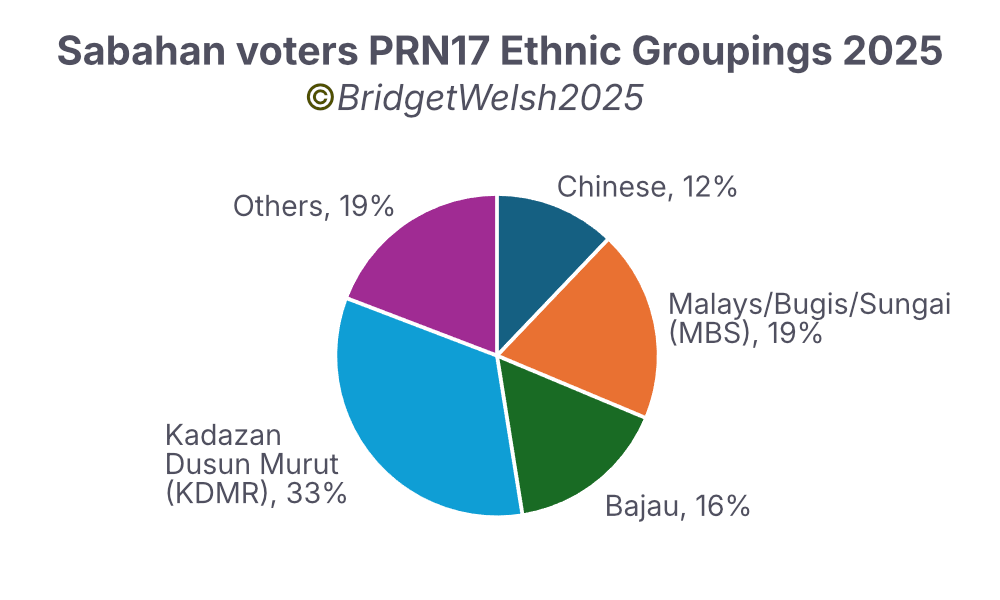
The classification used below groups voters into five different categories – Chinese, Malay/Bugis/Sungai (MBS), Bajau, Kadazan Dusun Murut Rungus (KDMR) and Others.
These groupings were chosen based on previous unique voting patterns and joined together to allow for enough of a sample for this macro analysis.
The share of voters in this grouping is in the chart. Please note that there are considerable differences among many of the “other” communities, such as Bisaya and Kedayan, for example.
Conducting an ethnic voting analysis properly for Sabah is not easy, as groups are more diverse and differ widely across the state.
For example, there are different types of Bajau on the east and west coasts of Sabah. Also, there is considerable diversity within communities such as the Dusun and Murut.
Moreover, analysing by religious differences - which is the (rather) uninformed ethnic classification label imposed by the Election Commission in differentiating Sabahan voters - is limited, given that many ethnic communities practise different faiths.
This study is based on a careful reclassification of voters by specific local ethnic groups.
The classification used below groups voters into five different categories – Chinese, Malay/Bugis/Sungai (MBS), Bajau, Kadazan Dusun Murut Rungus (KDMR) and Others.
These groupings were chosen based on previous unique voting patterns and joined together to allow for enough of a sample for this macro analysis.
The share of voters in this grouping is in the chart. Please note that there are considerable differences among many of the “other” communities, such as Bisaya and Kedayan, for example.
This is all by way of highlighting the need for caution in over-interpreting these findings, as my research has pointed to the need to look at local ethnic communities within seats to best understand ethnic voting patterns.
Nevertheless, here we go.
A decisive swing: Chinese Sabahans
The findings show that the most decisive ethnic swing among voters was the Chinese Sabahans, followed by changes among the Kadazan Dusun Murut (KDM) communities.
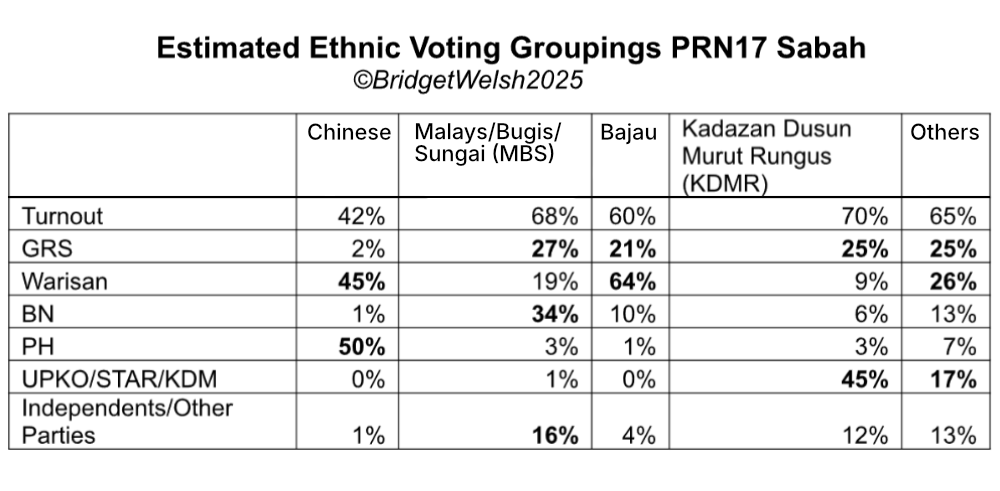
The Chinese swing is estimated at 40 percent. This is very significant and accounts for Warisan’s wins in many urban seats.
Yet, importantly, Pakatan Harapan retained an estimated 50 percent of support among the Chinese voters, with Warisan close behind, capturing an estimated 45 percent.
The pervasive view that Harapan has lost the support of the majority of Chinese Sabahans is incorrect.
Yet, the erosion is considerable. The findings also point to a significant drop in turnout among Chinese Sabahans as well, at an estimated 15 percent from the 15th general election in 2022.
The other ethnic groupings had no significant turnout changes from GE15, with KDM having a modest estimated 3 percent increase in turnout.
The Chinese turnout drop follows national trends and speaks to significant dissatisfaction with the Anwar Ibrahim government in this community.
It is important to note that the incumbent state government of Gabungan Rakyat Sabah (GRS) received minimal support from this community, an estimated 2 percent of its vote.
Many do not really appreciate that Chinese voters comprise large shares of urban seats, but most constituencies are multiethnic.
As will be developed below, the losses were also the product of swings against Harapan from other communities as well. Harapan retained the most support of this community despite the sizeable exodus of support.
Underappreciated swing: KDMR voters
A not adequately recognised swing in this election involves the KDMR communities.
While these communities continue to support different parties, namely PBS (in GRS), Parti Solidariti Tanah Airku (Star), Upko and Parti Kesejahteraan Demokratik Masyarakat (Parti KDM), there were changes in voting support among these parties and with regard to the other Sabah parties/coalitions.
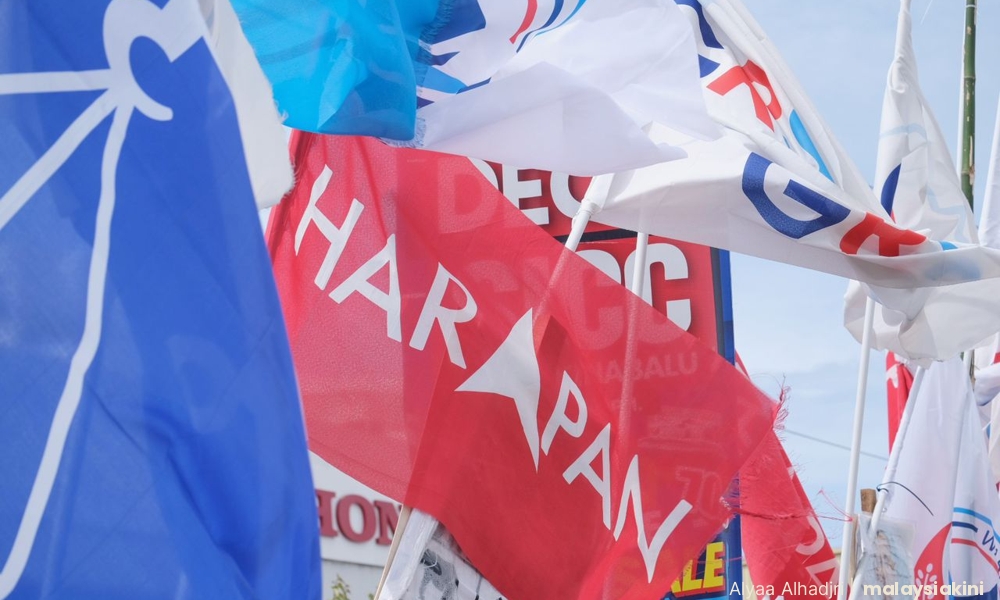
The most striking finding is that KDMR voters left Harapan, GRS and Warisan by an estimated 22 percent, 14 percent and 6 percent, respectively.
In short, the parties/coalitions aiming to have inclusive outreach across Sabahans failed to attract greater KDMR support, as 45 percent of the support was given to the main KDMR parties.
This points to a drop of overall support among the KDMR for PBS, despite the party winning six seats (a loss of one from 2020). Warisan, Harapan and BN all have very low support among KDMR communities, who make up a third of voters in Sabah.
This move toward KDMR parties by KDMR voters, away from the main coalitions/parties of GRS, Harapan and Warisan, speaks to strong sentiments among these communities about KDMR representation and the limitations of these parties/coalitions to win their support.
Some of this is a longstanding gap in support, with Warisan historically winning limited KDMR support over undocumented person issues. Warisan only captured an estimated 9 percent of KDMR support.
The exodus of Star from GRS and Upko from the Madani cabinet and the resulting Sabah First movement, which was concentrated primarily among KDM in terms of voting patterns, helps explain the swing pattern – an overall estimated 42 percent away from the larger parties/coalitions.
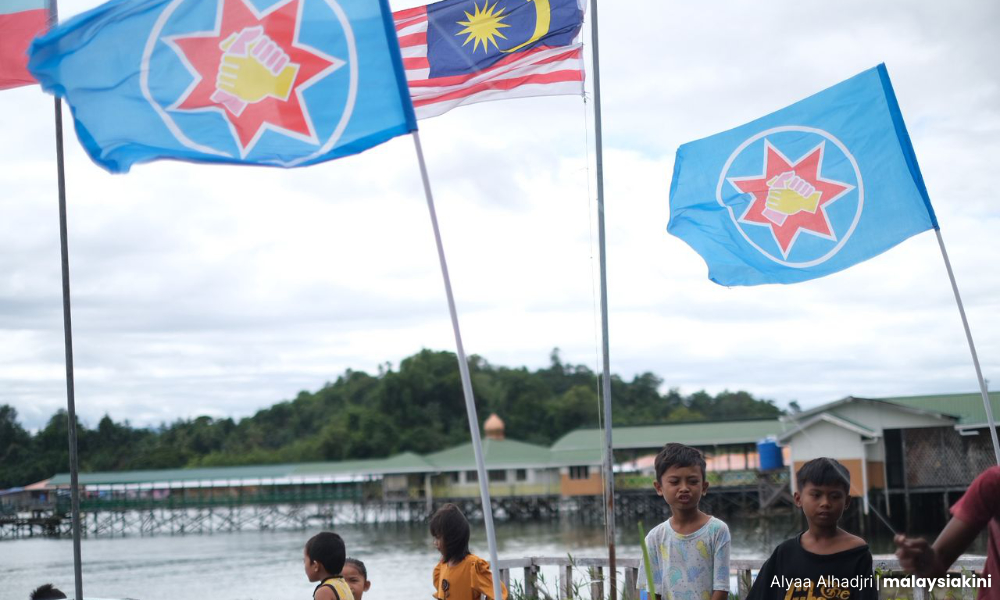
Before these developments occurred, there were concerns among KDMR voters about the Madani government over a perceived prioritisation of Palestinians over the needs of Sabahans among some KDMR voters, most of whom are largely Christian and live in communities in need of basic needs improvements.
Despite differences in who they support, KDMR voters retain considerable political clout, and their voting pattern helps explain why Harapan lost seats in urban areas, Warisan did not win additional seats in the north and interior, and GRS failed to get over the majority line.
Perhaps the most salient finding from the focus groups was that KDMR support for “local parties” was arguably the strongest of all the communities, with the greatest trust placed in parties tied to their communities.
Muslim voter splits
The electoral changes in voting among the Brunei Malays, Bugis, Sungai and Bajau are less clear. They are harder to distinguish as BN and GRS collaborated in earlier polls.
Yet, we do see three macro trends. First is a modest drop in support among Bajau communities of 10 percent compared to support in GE15 for Warisan.
Warisan support varied by seat along the East Coast and in Bajau areas in the West Coast as well. The competitiveness of the 17th state election accounts for part of the drop, but also the “local party” sentiment, while present, was more measured among Muslim voters. Warisan lost an estimated 13 percent of support among MBS voters compared to GE15 in 2022.
Second, Harapan has a Muslim voter deficit. Harapan has not captured high levels of Bajau support in 2022 and this was the case in this election as well – an estimated 1 percent.
Further, Harapan support among MBS communities eroded from an estimated 6 percent to a meagre estimated 3 percent, highlighting gaps in its support among Muslim voters in Sabah.
Third, BN maintained the most support of MBS voters at an estimated 34 percent. Both GRS and Warisan captured a significant share of this community, an estimated 27 percent and 19 percent, respectively. The votes of these communities are split.
Collectively, these findings show that the Muslim vote in Sabah remains divided across parties/coalitions and that the 2025 polls did not have as significant a swing as was evident in other communities.
The “local party” sentiment was fragmented, with BN retaining a core share of the support of many Muslim voters.
Inclusion of a sort: Buttressing a coalition cabinet
The estimated ethnic voting findings also show the limitations of the inclusion of the different parties and coalitions. None of the major coalitions/parties can say they have the electoral support of all the major groupings in Sabah.
GRS has a Chinese deficit, Warisan a KDMR deficit, BN and Harapan multiple deficits in support. Upko, Star and Parti KDM do not win significant support outside of the KDMR communities, although the more micro analysis of seats is likely to show some exceptions in particular races.
These ethnic groupings’ deficits of support highlight the need for inclusion through cabinet appointments and a coalition government.
It is not just about the number of seats of parties, but the need for accommodation is a matter of inclusive representation.
The findings reinforce the need for an inclusive cabinet. Note that Harapan does bring some support from Chinese voters, while Upko boosts the representation ties to KDMR voters.
BN - which has seen considerable erosion of support across communities - brings in ties to the Bugis, Sungai and Brunei Malays, who have been changing their voting patterns in recent elections, especially among younger generations.
With Warisan in opposition, Bajau voters – especially those on the East Coast – do not have strong representation within government.
The ethnic deficits in support for different parties/coalitions are reinforced when one examines patterns of support in different regions of Sabah.
For those interested in the regional variations of support, check out the final episode of “hot seats” in my “Kerusi Panas Sabah” podcast series on the election later this week (link below).
Future analysis will also look at other patterns of voting behaviour - generation, gender and ethnic patterns in more detail when more data is available.
Focus groups persistently suggested that GRS maintained an advantage among women voters, for example, a pattern that will be interesting to assess further.
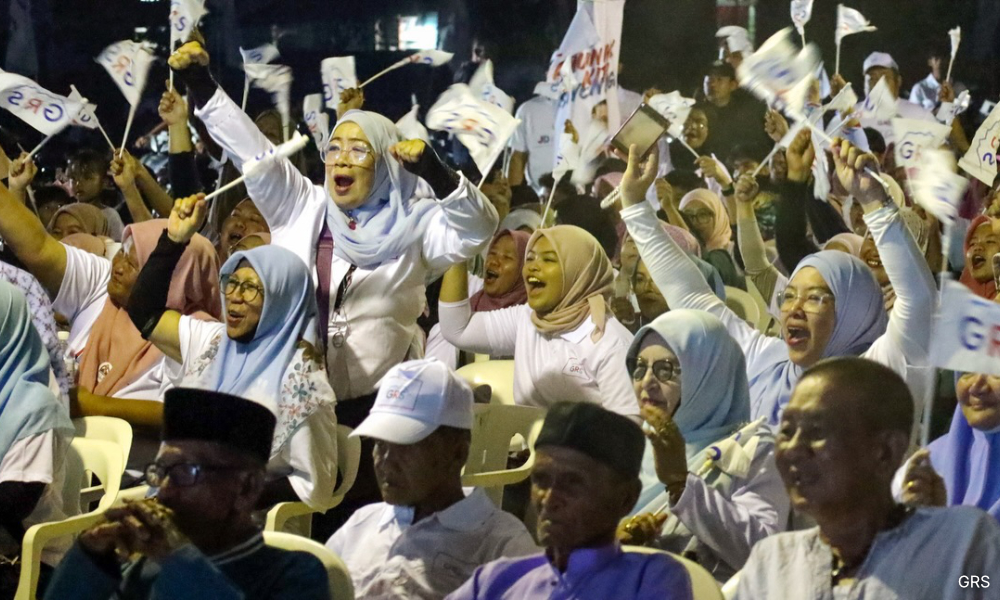
Varied support for ‘local parties’
For now, the macro ethnic voting patterns reinforce the need for the major parties/coalitions to assess their strengths and limitations in engaging Sabahan voters.
For others looking at Sabah voting from afar, making sweeping statements about parties deserving to be the government due to vote share, and others having a total abandonment of support - the data shows a more complex picture.
Ethnic voting has been evident in Sabah for a long time, but it has its own pattern and is more dispersed across different parties. The latest state polls did see changes/swings in ethnic groupings in their support, but this was primarily among Chinese and KDMR voters.
While overwhelming, “local parties” as opposed to federal parties sentiment varied in intensity and direction of who was electorally endorsed to bring this about.
The ethnic voting analysis shows that even with the “local party” sentiment, there remains a varied pattern in voting among Sabahans from different communities; they vote for who they are most “locally” comfortable with.
BRIDGET WELSH is an honorary research associate of the University of Nottingham’s Asia Research Institute, a senior research associate at Hu Fu Centre for East Asia Democratic Studies, and a senior associate fellow at The Habibie Centre. Her writings can be found at bridgetwelsh.com.
She is on the ground in Sabah researching the polls, and her written analysis can be found exclusively in Malaysiakini and through her self-funded podcast Kerusi Panas Sabah.


UndIlah PAS
ReplyDeleteDAP + MIC + MCA + GERAKAN + DLL (all other rejeks) = Tarian Nasional.
ReplyDeletePolitiks is All About Making The Impossible Possible.