
OPINION | Why Are So Many Heavy Vehicle Drivers Linked to Drugs or Crime?
2 Dec 2025 • 8:30 AM MYT

TheRealNehruism
An award-winning Newswav creator, Bebas News columnist & ex-FMT columnist
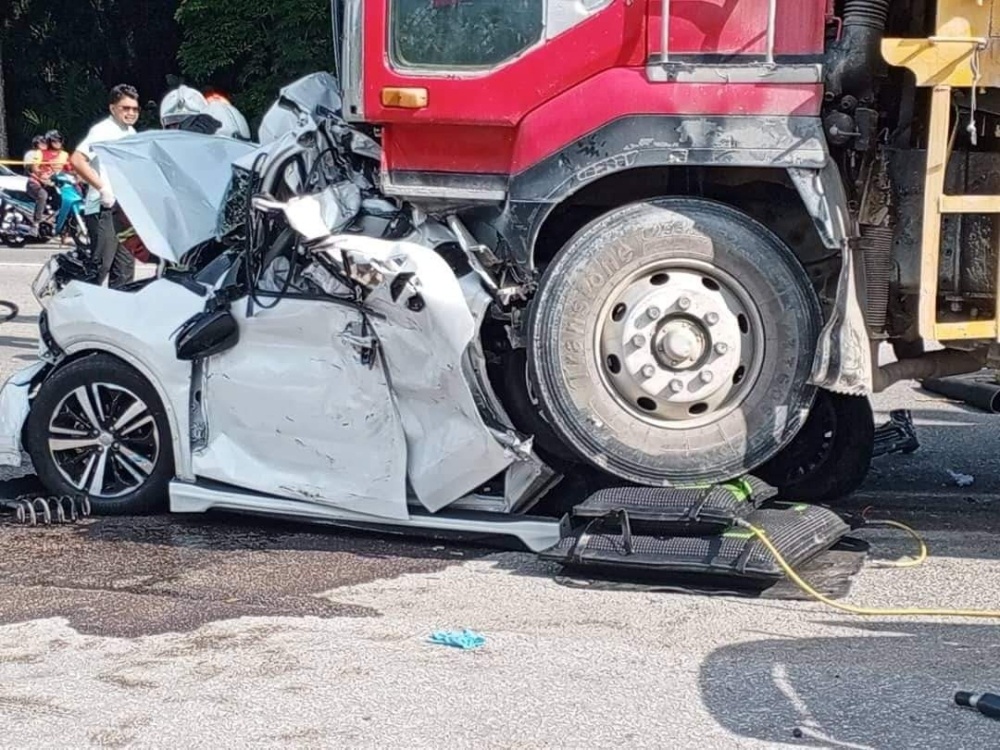
Image credit: Malay Mail
A lorry driver drove 150 kilometres against traffic on the North-South Expressway. Not 15km. Not 50km. One hundred and fifty. In the wrong direction.
According to Hulu Selangor police chief Ibrahim Husin, the driver bolted when officers tried to flag him down near Bukit Beruntung. He sped onto the highway, swerved past oncoming vehicles, and at one point even tried to ram a patrol car, before finally being cornered and arrested. The man later tested positive for methamphetamine and had two prior criminal offences on record.
Shocking? Yes.
Unexpected? Unfortunately, no.
Because we have seen this pattern before.
Recall the horror in Perak earlier this year — nine Federal Reserve Unit personnel killed, crushed in an instant, when a gravel-laden lorry rammed into their truck. The driver in that case, according to Perak police chief Datuk Noor Hisam Nordin, had six criminal records, including drug-related offences.
Then there was the Kajang toll plaza crash, where a lorry ploughed into multiple vehicles, killing a one-year-old child. Kajang police chief Naazron Abdul Yusof confirmed the driver also had multiple criminal records, including for drug-related offences.
Three different cases. Three different tragedies. One unmistakable pattern. All the drivers involved had a history of crime and drug use.
These three cases by the way, are simply the most prominent example of the correlation between lorry drivers in Malaysia with drug use and criminal record. They are by no means, the only examples.
There are so many examples of such a correlation as a matter of fact, that it literally is begging the question "Why do so many heavy vehicle drivers have drug histories or criminal backgrounds?"
When I ask the question to myself at least, only one answer comes to mind:
Is it because people with criminal pasts — especially those with drug records — have almost nowhere else to go?
No employer wants them. No HR department wants the liability. So they end up where society’s refusal to rehabilitate them pushes them:
doing the jobs no one else wants.
Lorry driving might be a physically draining, lonely, poorly paid, and often dependent on impossible delivery deadlines. This might cause some drivers to drive until they literally cannot see straight. Some might speed between destinations because time is money. And some turn to drugs not because they want to get high, but because they are trying to stay awake long enough to survive the day.
What happens when a man who is exhausted, underpaid, and chemically dependent is put behind the wheel of a 10-tonne machine hurtling down the highway?
What happens when they can't find the drugs that is necessary to keep them alert and awake when doing their job?
I don't know which is worse - having a lorry driver who is high on drugs or having one that is driving while having withdrawal issues, because they couldn't find the drug that allows them to cope with the stress of driving a lorry for long hours.
In both cases, I think we might already have found the answers. It is written in the obituaries of the FRU personnel. In the grief of the parents at the Kajang toll plaza. In the sheer terror felt by highway users who see a lorry flying toward them — sometimes in the wrong direction — at dawn.
But this problem is bigger than the drivers. Much bigger.
If these men are desperate enough to take these jobs, then we must also ask:
Are companies quietly exploiting ex-offenders because they can pay them less, push them harder, and get away with it?
Why are enforcement systems so weak that drivers with drug histories, criminal records, or untreated addictions are allowed to operate heavy vehicles capable of killing dozens in seconds, when many of them seem to be still dependent on drugs ? I am not saying that you can't hire a person who used to have a history with drugs to do a job where the lives of many people is in their hands, like that of driving a heavy vehicle on a public road, but isn't the responisble thing to do if you hire such a person, is to at least conduct drug test on the drivers, for at least a couple of years, until you are sure that they are no longer dependent on drugs?
Why are vehicle inspections still spotty, and why are some of these lorries barely roadworthy?
What is it that we think is going to happen when a lorry that is not roadworthy, is driven by a driver that is likely dependent on drugs or suffering from withdrawal symptoms on account of not being able to get their hands on any drugs, while they are likely overworked and on the road chasing a deadline ?
Everyone pretends each new accident is a freak occurrence — a tragedy that “could not have been foreseen”. But the truth is that each of these disasters was foreseeable, because each one fits into a growing pattern that has been staring us in the face for years.
This is not bad luck.
This is not coincidence.
This is a structural failure — in hiring, in enforcement, in rehabilitation, and in oversight.
And unless we address those failures, the next headline — the next viral dashcam video, the next toll plaza tragedy, the next mass funeral — is not a matter of if, but when.
***
Nehru matey, one of your readers wrote in with a 'spot-on' comment.
LEEKAHPOH63
• 8h
drug to boost stamina to do more trips long time practice by express drivers.
Yes, and that's likely the practice in many countries, even & especially in Australia (a large country) where truck drivers drive long, very very long distances.
It's not correct to say drug addicts apply to drive heavy trucks but rather drivers of heavy trucks travelling long distances involving long stretches of time take drugs to sustain themselves over the long duration of quite strenuous effort.
That's why there's now a law requiring two drivers on each coach for coaches on long distances.
How do we combat such dangerous habits?
Well, ensure the driving effort is not overtaxed through regulations and enforcement. The devil will be in the details, as always.


No comments:
Post a Comment