
OPINION | 3 Big Fails of Anwar’s Cabinet Reshuffle
25 Dec 2025 • 8:00 AM MYT

TheRealNehruism
An award-winning Newswav creator, Bebas News columnist & ex-FMT columnist
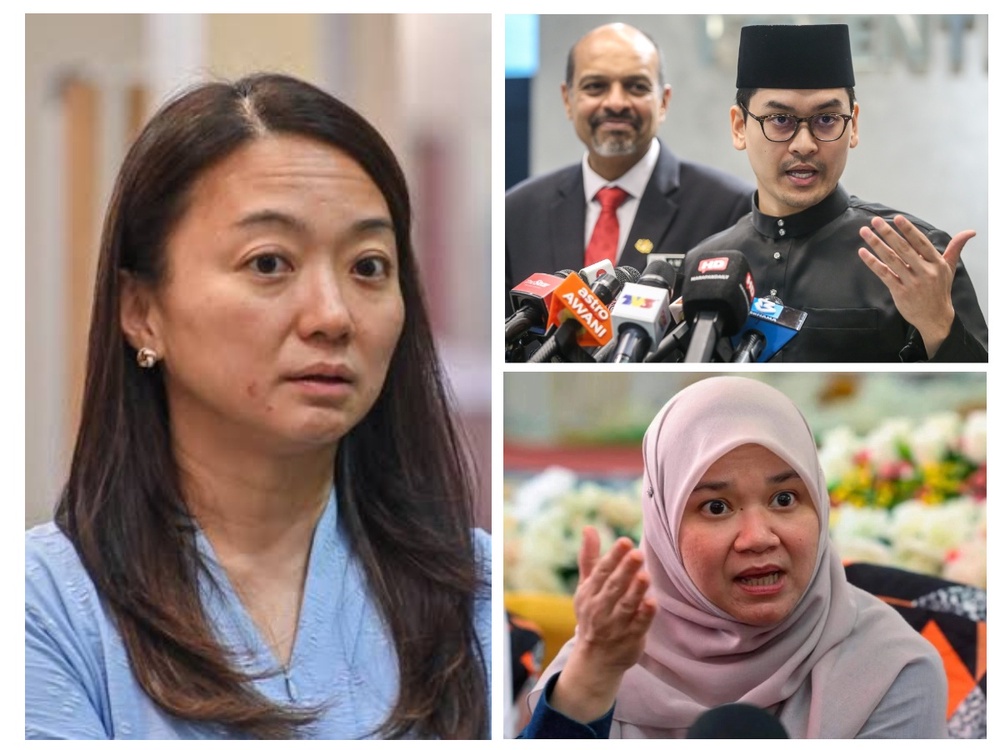
Image credit: Malay Mail / Sinar Harian / The Malaysian Reserve
Prime Minister Datuk Seri Anwar Ibrahim’s latest cabinet reshuffle was widely anticipated as a moment of political reset. Coming on the back of the Unity Government’s poor performance in the recent Sabah state election, many expected the reshuffle to signal humility, course correction, and a recommitment to competence-driven governance.
Instead, the reshuffle has largely achieved the opposite.
Far from restoring confidence, it has deepened public scepticism — reinforcing the perception that political calculation, personal loyalty, and elite insulation continue to outweigh accountability, performance, and reform. In some respects, the reshuffle has even strengthened the opposition’s narrative that the Unity Government is not as different from its predecessors as it claims to be.
Three major failures stand out.
1. Retaining Fadhlina Sidek as Education Minister: Reform Rhetoric Meets Reality
The decision to retain Fadhlina Sidek as Education Minister is perhaps the clearest illustration of the growing gap between the Unity Government’s reformist rhetoric and its actual decision-making.
Few ministers have attracted as much sustained public criticism as Fadhlina. From school safety issues to policy indecision and poor communication, dissatisfaction with her performance has been widespread and persistent. Calls for her removal or repositioning came not only from the opposition, but also from civil society voices and sections of the government’s own support base.
Education is not a peripheral ministry. It shapes the nation’s future workforce, social cohesion, and long-term competitiveness. Leaving a widely criticised minister in charge of such a crucial portfolio sends a deeply troubling signal: that accountability is optional when political loyalty is involved.
This decision strikes at the heart of the Unity Government’s claimed identity. Anwar’s administration has repeatedly positioned itself as an antidote to the cronyism of past regimes — regimes accused of prioritising friendships, family ties, and personal networks over competence and results.
Yet Fadhlina’s retention undermines that claim.
Fadhlina is the daughter a of Anwar's close friend, former ABIM president Siddiq Fadzil, and Fadhlina has such penchant as singing birthday songs to Anwar in public. Combined with her widely panned performance, her retainment is reinforcing the perception that some ministers are shielded from consequences regardless of outcomes, simply because they are powered by the powers that be.. For voters who believed the Unity Government represented a clean break from old political habits, this decision feels less like pragmatism and more like betrayal.
If reform means anything, it must begin with the willingness to replace underperforming ministers — especially in ministries as vital as education.
2. The Over-Concentration of Urban Power in the Hands of a Small Political Cohort
One of the most contentious outcomes of the reshuffle is the growing perception that control over urban governance and development has been concentrated within a narrow group of politicians from the same party.
The Cabinet reshuffle has seen Hannah Yeoh appointed as federal territories minister while DAP deputy chairman Nga Kor Ming was retained as the housing and local government minister.
PAS was quick to highlight this trend, arguing that authority over urban areas — including housing, development planning, and city administration — is increasingly dominated by a small political circle. While PAS predictably framed its criticism in racial terms, for which it was rightly criticised, dismissing the issue entirely on that basis misses the larger and more substantive concern.
The concentration of urban policy power is worrying not because of race, but because of timing and context.
This is happening after highly controversial episodes such as the forced removals and redevelopment disputes involving Kampung Sungai Baru and Kampung Papan, and at a time when the government is pushing forward the Urban Renewal Act (URA). The URA, which allows redevelopment to proceed without unanimous consent from residents, has already sparked fear among urban dwellers — particularly lower-income property owners and long-established communities — that their rights can be overridden in the name of “development”.
When the same cluster of politicians is perceived to be managing these sensitive portfolios, public trust erodes rapidly.
Urban voters may not care which party holds the portfolios — but they care deeply about checks and balances, transparency, and whether there is sufficient diversity of views in decisions that affect their homes and livelihoods. The opposition, especially PAS and PN, is likely to capitalise on this anxiety, not by appealing to ideology, but by presenting itself as a bulwark against unchecked urban redevelopment.
In that sense, the reshuffle has unintentionally handed the opposition a powerful mobilising issue among urban voters of all backgrounds.
3. The Youth and Sports Ministers dubious “Doctor” title and the Return of Cronyism Optics
The appointment of Dr Mohammed Taufiq Johari as Minister of Youth and Sports has reignited uncomfortable questions for the Unity Government — not just about qualifications, but about nepotism, judgement, and credibility.
Taufiq is 29 years old, a first-term Member of Parliament, and notably the son of the current Dewan Rakyat Speaker, Tan Sri Johari Abdul. In isolation, none of these facts would be disqualifying. Youth should not be penalised, and family lineage alone does not negate merit. But taken together — and viewed against a government that claims to be firmly opposed to cronyism — they inevitably invite scrutiny.
Rather than easing public concern, the appointment has intensified it.
Almost immediately, controversy erupted over Taufiq’s use of the “Dr” title. Critics pointed out that his medical degree from Universitas Islam Bandung is not recognised by the Malaysian Medical Council (MMC) and that his GE15 curriculum vitae did not indicate that he had undergone housemanship in Malaysia, a mandatory requirement for registration and legal medical practice.
Madani government critic Datuk Eric See-To highlighted that Taufiq is not listed in the MMC registry, while opposition activist Badrul Hisham Shaharin, better known as Chegubard, claimed the issue had already been raised during the 2022 general election campaign. Chegubard went further by questioning whether continued use of the “Dr” title could potentially constitute misrepresentation under the Penal Code.
A public health officer from the Ministry of Health later stepped in to clarify that using the “Dr” title and practising as a medical doctor are legally distinct matters. According to this explanation, universities may confer the title on medical graduates even if the institution is not recognised by the MMC, provided the individual does not practise medicine in Malaysia without proper registration.
Legally, that defence may be sound. Politically, however, it misses the point.
This controversy is not fundamentally about legal technicalities. It is about optics and trust. Appointing a 29-year-old first-term MP, who is also the Speaker’s son, and whose credentials immediately become a subject of public dispute, undermines the Unity Government’s claim that it has broken from the politics of patronage.
Cronyism does not require illegality to exist. It thrives on perception — on the sense that proximity to power accelerates advancement while experience and performance take a back seat. At a time when many senior and capable MPs remain sidelined, this appointment reinforces the belief that elite connections still matter more than merit.
Instead of symbolising renewal or youth empowerment, the Taufiq Johari episode risks becoming another example of old political habits resurfacing under new branding. For a government that built its moral authority on rejecting such practices, this is not a trivial misstep — it is a damaging contradiction.
Conclusion: A Reshuffle That Raised More Questions Than Answers
Taken together, these three failures reveal a cabinet reshuffle that missed a crucial opportunity.
Instead of projecting renewal, inclusivity, and reformist seriousness, the reshuffle reinforced long-standing anxieties about power concentration, selective accountability, and elite protection. In the aftermath of the Sabah election setback, the public expected reflection and recalibration. What it received instead was reassurance for insiders and frustration for ordinary voters.
If Anwar’s government is serious about distinguishing itself from the regimes it replaced, it must understand this: reform is not declared — it is demonstrated. And demonstrations begin with hard choices, not comfortable ones.
Without addressing these perceptions head-on, the Unity Government risks entering the next electoral cycle burdened not just by opposition attacks, but by the disappointment of its own supporters.


For many Type-M, there is no way DAP can be acceptable in Government. They will not vote for PH as long as DAP is in it.
ReplyDeleteDAP is too closely aligned and unhealthily influenced by Big Corporate Developers for its own good.
ReplyDelete