
OPINION | Akmal Is Not the Problem. He Is the Method
23 Dec 2025 • 1:00 PM MYT

TheRealNehruism
An award-winning Newswav creator, Bebas News columnist & ex-FMT columnist
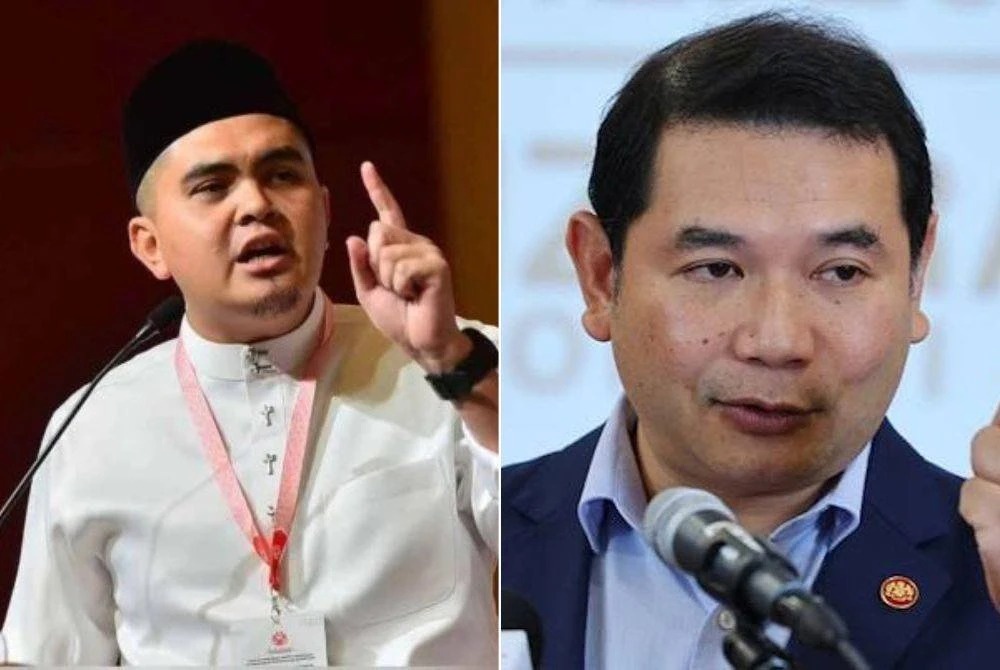
Image credit: Sinar Harian
After the Sabah election made it unmistakably clear that Chinese voters—once Pakatan Harapan’s most dependable base—had walked away in large numbers, explanations poured in from every direction.
DAP blamed insufficient reformist zeal.
Saifuddin Nasution pointed to “Sabah for Sabahans” sentiment.
According to Fekirie Gobet, former deputy communications chief of Sabah PKR, it is poor decisions by central PKR leadership that is to be blamed for Sabah polls defeat.
Rafizi Ramli offered a more dramatic diagnosis: the rot began when Prime Minister Anwar Ibrahim allowed Dr Akmal Saleh to run unchecked for two years.
In podcasts and Facebook posts, Rafizi argued that a series of racially charged episodes —involving socks, flags, incendiary statements—sent a damaging signal to Chinese voters. The message, he said, was simple: you voted for us, but when you were attacked, we stayed silent. Ministers, Rafizi added, were discouraged from responding for fear of destabilising the unity government, leaving everything to Anwar’s cautious calculations.
The damage, Rafizi concluded, is already done.
I think Rafizi is right about the damage. However, on the subject about Akmal being the cause of the damage , I am not too convinced.
The Misdiagnosis
In the way that I see it, Akmal is not the primary reason that that drove off Chinese voters away from Pakatan Harapan. At most, he accelerated a process that was already inevitable.
PH was destined to disappoint everyone—Chinese, Indians, Malays, Sabahans, Sarawakians—not because of individual actors, but because it has no conception of how to build a shared Malaysian political identity.
More than six decades after independence, Malaysia still does not function as a nation in the sociological sense. It is a collection of identity groups sharing a border. In the peninsula, political identity remains racial. In East Malaysia, identity is increasingly territorial rather than national.
When multiple identities coexist without a unifying framework, politics does not become harmonious—it becomes transactional, resentful, and brittle.
Why Malaysia Only Works During Expansion
Malaysia functions best only under conditions of expansion.
In the early years after independence, territorial expansion—Malaya, then Sabah, Sarawak, and Singapore—created momentum and purpose. In the late 1980s and 1990s, rapid economic expansion absorbed social tensions and softened identity conflicts.
When there is expansion, grievances are diluted. When there is stagnation, identity becomes weaponized.
Anwar’s administration however, is presiding over a Malaysia where the economy cannot be said to be expanding, while territorially, we might be facing headwinds domestically and internationally.
Despite optimistic announcements about foreign investment, the government has failed to ignite broad-based economic dynamism. Simultaneously, it has shown little capacity to contain centrifugal forces in Sabah and Sarawak, where local identity increasingly outweighs attachment to the federation.
Internationally, superpowers like China and America are increasingly being seen as a attempting to infringe on our sovereignty.
More crucially, the government lacks the moral authority and imaginative breadth required to articulate a national story capable of transcending race and region.
Governing Without a Vision
When a government cannot expand the economy meaningfully, cannot integrate identities, and cannot offer a shared future, it falls back on a single governing instinct: managing dissatisfaction.
Anwar’s administration is not attempting to resolve tensions. It is attempting to regulate them.
The objective is not harmony, but equilibrium. Not unity, but containment.
Under such a model, frustration must be periodically released—like steam from a pressure valve—but never allowed to explode.
This is the context in which Akmal makes sense.
Akmal as a Safety Valve
Akmal was not an accident. He was a safety valve.
He is a product of the times - like mushroom after the rain, floods during monsoon or forest fire during periods of prolonged drought, he is something that naturally occurs when the conditions are ripe.
He gave voice to Malay frustration in a manner that was noisy, symbolic, and inflammatory—but carefully bounded. Socks, sandwiches, flags. Nothing structural. Nothing irreversible.
Non-Malays were offended, unsettled, and angry—but not mobilised to the point of destabilisation. From the government’s perspective, that outcome was acceptable.
Seen this way, Anwar’s restraint was not weakness. It was consistency.
The same logic now applies elsewhere. As DAP pushes for UEC recognition, Malay unease will rise. Anwar will likely allow the agitation to play out, intervening only if it approaches a dangerous threshold.
In Sabah and Sarawak, localist rhetoric is similarly indulged—not endorsed, but tolerated—as long as it remains cathartic rather than separatist.
When a government cannot expand the economy meaningfully, cannot integrate identities, and cannot offer a shared future, it falls back on a single governing instinct: managing dissatisfaction.
Anwar’s administration is not attempting to resolve tensions. It is attempting to regulate them.
The objective is not harmony, but equilibrium. Not unity, but containment.
Under such a model, frustration must be periodically released—like steam from a pressure valve—but never allowed to explode.
This is the context in which Akmal makes sense.
Akmal as a Safety Valve
Akmal was not an accident. He was a safety valve.
He is a product of the times - like mushroom after the rain, floods during monsoon or forest fire during periods of prolonged drought, he is something that naturally occurs when the conditions are ripe.
He gave voice to Malay frustration in a manner that was noisy, symbolic, and inflammatory—but carefully bounded. Socks, sandwiches, flags. Nothing structural. Nothing irreversible.
Non-Malays were offended, unsettled, and angry—but not mobilised to the point of destabilisation. From the government’s perspective, that outcome was acceptable.
Seen this way, Anwar’s restraint was not weakness. It was consistency.
The same logic now applies elsewhere. As DAP pushes for UEC recognition, Malay unease will rise. Anwar will likely allow the agitation to play out, intervening only if it approaches a dangerous threshold.
In Sabah and Sarawak, localist rhetoric is similarly indulged—not endorsed, but tolerated—as long as it remains cathartic rather than separatist.
There Is an Akmal in Every Community
For all its talk about reform and change, PH's style of governing is actually quite similar to the BN version.
It offers new names and faces, and being a new broom, it will probably be a little more efficient, less corrupt and involved in less cases of power abuse than the old regime, but otherwise, in terms of approach and governing philosophy, it is most likely going to be no different from the old regime.
In other words, just like the old BN regime, that chose to run Malaysia as one house with many different families, without an overarching and encompassing identity to bind us all as one, PH also is going to run Malaysia as one country with many races, without a national identity encompassing and overarching over our racial or regional identities.
This approach guarantees one outcome: every identity group will produce its own Akmal.
Indians have their versions.
Sabahans and Sarawakians have theirs.
Chinese politics will soon produce its own loud, aggrieved figures as disappointment with DAP hardens.
These figures are not aberrations. They are structural products of a political order that substitutes meaning with managed release.
Anwar does not stop people from lashing out. He ensures they do not lash out too hard.
Madani Malaysia, Stripped of Romance
In Anwar’s Malaysia, politics does not offer purpose, belonging, or aspiration.
What it offers is regulated expression of bitterness.
You may vent—periodically.
You may rage—symbolically.
You may offend—within limits.
That is the unspoken social contract.
Personalities like Akmal are therefore not temporary problems to be solved, as Rafizi suggests. They are permanent fixtures of a system that has abandoned ambition in favour of stability.
This is not an inspiring vision. It is not even a satisfying one.
But it may be the only one currently on offer.
And for all its poverty of imagination, it must be said plainly: neither BN, nor PN, nor Rafizi himself has articulated anything meaningfully better.


Imagine what Akmal will say if Penang City Council meeting was conducted in Hokkien…..ha3
ReplyDeleteBirmingham City Council don’t even bother to conduct their meetings in English. 🏴🇬🇧
https://x.com/suffragent_/status/2003531758307082430?s=46