
OPINION | Doubts Emerge About the Youth and Sports Minister’s ‘Dr’ Title
22 Dec 2025 • 7:30 PM MYT

TheRealNehruism
An award-winning Newswav creator, Bebas News columnist & ex-FMT columnist
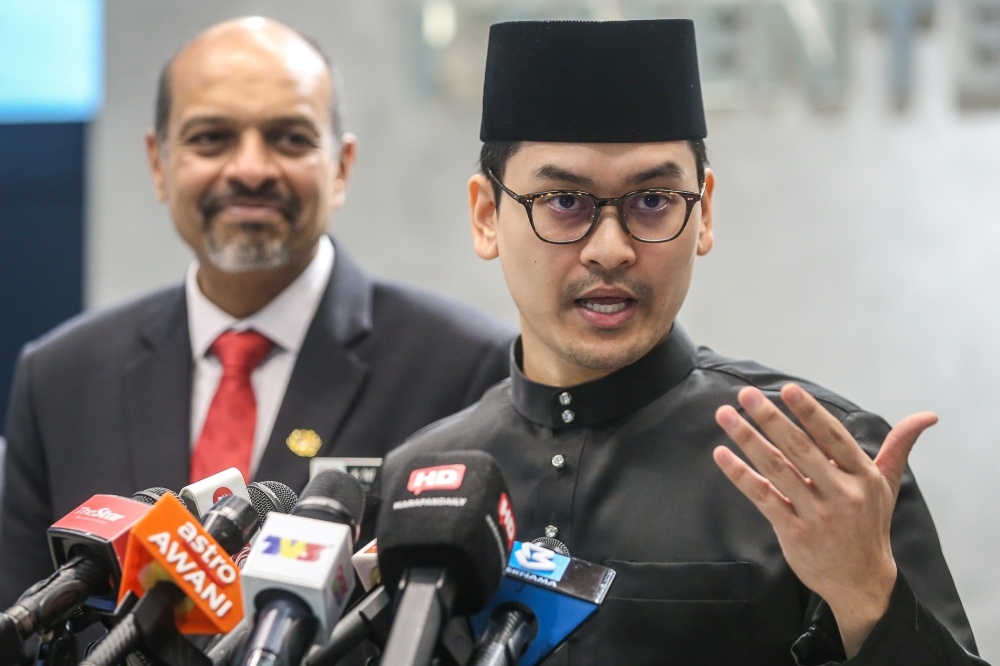
Image credit: Malay Mail
Prime Minister Datuk Seri Anwar Ibrahim’s latest Cabinet reshuffle has produced one damaging headline after another. What was meant to signal renewal and recalibration has instead revived old anxieties about patronage, favouritism, and the persistence of the very political culture the Madani government once promised to dismantle.
It began with widespread criticism over the retention of the Education Minister, despite her widely acknowledged poor performance. This was followed by PAS pointing out that under Anwar’s new Cabinet, control over urban renewal and management has been concentrated within a small circle of ministers and deputy ministers from the same party. The controversy has since deepened with the appointment of the Dewan Rakyat Speaker’s son to a ministerial post—an appointment many argue undermines the reformist narrative at the heart of Madani.
Few decisions, however, have attracted as much public scepticism as the decision to retain Fadhlina Sidek as Education Minister.
I daresay that a significant portion of the country expected Fadhlina to be replaced in the latest reshuffle. Yet, for reasons that remain politically revealing, she not only survived but retained one of the most critical portfolios in government—even as better-performing ministers such as Steven Sim found themselves sidelined.
This outcome is difficult to reconcile with any serious claim that merit, performance, or public confidence were the primary criteria guiding Anwar Ibrahim’s decisions.
Fadhlina is, after all, the daughter of Anwar’s longtime friend Siddiq Fadzil. On its own, this need not be disqualifying. But when combined with her abysmal public ratings, widespread dissatisfaction among educators, and repeated calls for her transfer or removal over the past three years, her retention becomes politically indefensible.
Worse still, Fadhlina has come to be known less for substantive policy achievements than for symbolic displays of loyalty—most notably through such stunt as serenading the Prime Minister publicly on his birthday. In a country deeply scarred by decades of patronage politics, such optics matter. When the most visible traits of a senior minister are proximity to power, family connections, and performative loyalty—rather than competence or reform—the credibility of the Madani project inevitably suffers.
When a minister retains a high-profile portfolio despite a poor track record, close personal ties to the Prime Minister, and a reputation for flattery, it becomes difficult to believe that Madani truly disapproves of the old ways of governance. Instead, it begins to look as though the coalition merely hated the sinners, not the sin. Once the old political actors were removed, the same indulgences quietly resumed—only under a different moral banner.
That suspicion has only been reinforced by another deeply troubling appointment: the elevation of Mohammed Taufiq Johari as Youth and Sports Minister.
At just 29 years old, Taufiq is the youngest minister in Anwar’s Cabinet, a first-time Member of Parliament, and the son of Dewan Rakyat Speaker Tan Sri Johari Abdul. If that alone was not enough to raise eyebrow about his elevation, immediately after his appointment, controversy erupted over his continued use of the “Dr” title—despite serious questions about whether his medical qualifications are recognised by the Malaysian Medical Council (MMC).
Critics have pointed out that Universitas Islam Bandung, where Taufiq obtained his medical degree, is not recognised by the MMC, nor is he listed as a registered medical practitioner. His GE15 curriculum vitae also does not indicate that he ever completed housemanship in Malaysia—a mandatory requirement for medical registration and legal practice in the country.
Opposition figures have gone so far as to argue that the continued use of the “Dr” title in such circumstances could amount to misrepresentation, potentially falling under Section 416 of the Penal Code. Defenders, however, have offered a legalistic rebuttal. A public health officer from the Ministry of Health has argued that the academic title “Dr” may still be used by medical graduates even if they are not registered with the MMC, provided they are not practising medicine in Malaysia.
From a narrow legal standpoint, this defence may be technically correct.
But politics is not governed solely by what is legally permissible. It is governed by standards, symbolism, and public trust—especially for a government that claims to represent a clean break from the past.
The real issue is not whether Taufiq can technically use the title “Dr” without violating the Medical Act. The issue is whether a reformist government should be making appointments that invite such avoidable controversy in the first place. When a young minister with a powerful surname finds himself defending questionable credentials, the problem is no longer administrative—it is symbolic. It reinforces the perception that lineage, access, and loyalty still outweigh transparency and merit.
Viewed together, the retention of Fadhlina Sidek and the elevation of Mohammed Taufiq Johari do not look like isolated misjudgements. They reveal a pattern—one that is uncomfortably familiar to Malaysians who were promised a decisive break from patronage politics.
The tragedy is not that Anwar Ibrahim lacks capable people within his ranks. The tragedy is that political calculation, personal loyalty, and optics continue to trump performance and public confidence.
Reform is not measured by slogans, branding, or moral posturing. It is measured by whether leaders are willing to make difficult decisions—especially when those decisions involve friends, allies, or politically convenient figures. Until that happens, Madani risks becoming exactly what it once condemned: a system that changes faces, not habits.
And if that is the case, history may judge this government not as one that ended old politics, but as one that merely rebranded them—convincing itself that replacing the sinners was enough, while quietly embracing the sin.


And if that is the case, history may judge this government not as one that ended old politics, but as one that merely rebranded them—convincing itself that replacing the sinners was enough, while quietly embracing the sin.
ReplyDeleteAMEN to this.
DrM once said Anwar cannot be trusted. Spot on!