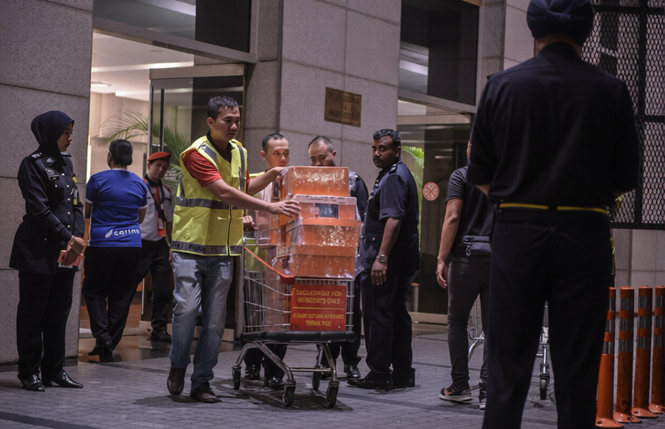
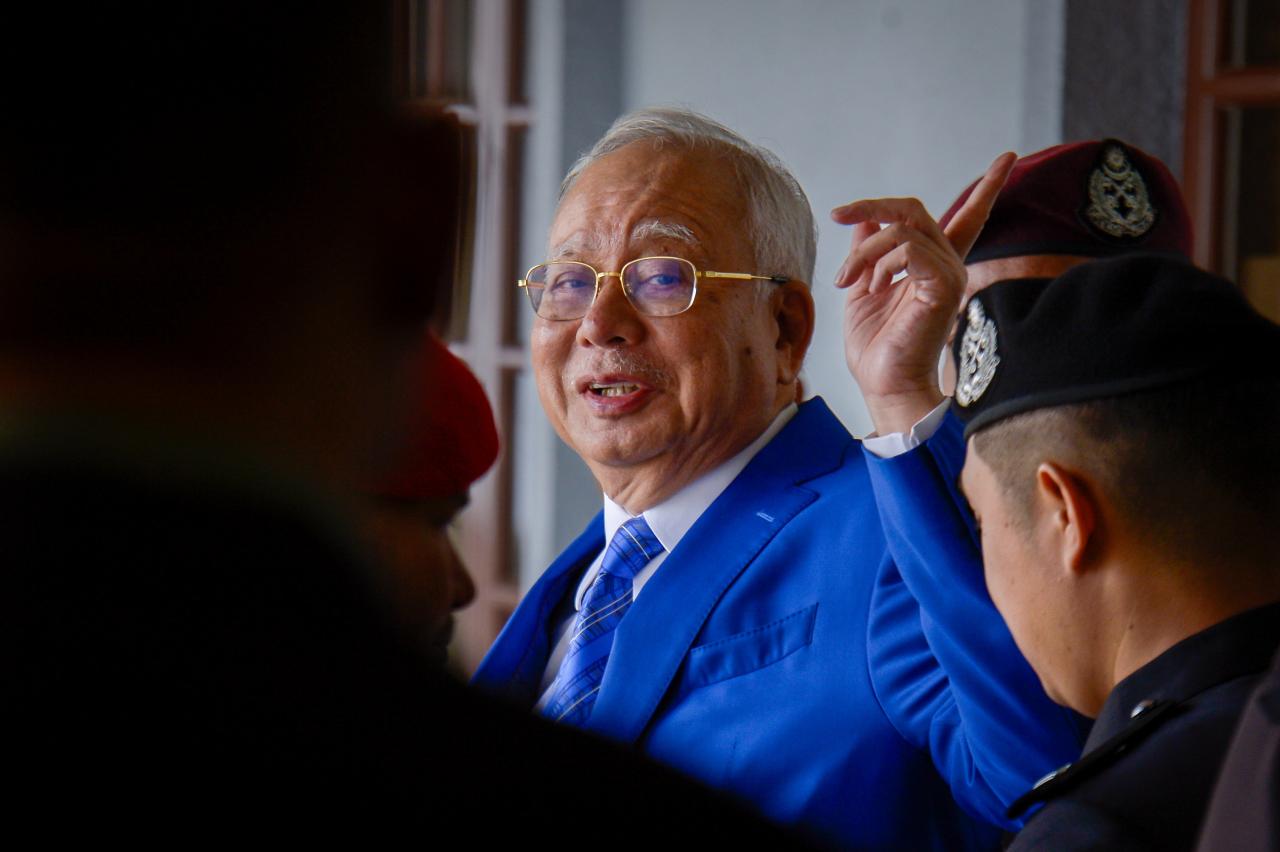
Datin Seri Rosmah Mansor arrives for the 2026 UMNO General Assembly at the World Trade Centre (WTC) in Kuala Lumpur. September 11, 2026 — Picture by Raymond Manuel
Summary
Datin Seri Rosmah Mansor expressed gratitude for the widespread support for her husband, former Malaysian Prime Minister Datuk Seri Najib Razak, amidst efforts to aid him in light of his conditional pardon.
Activating a solidarity fund, Umno rapidly raised over RM1 million to help Najib meet the financial conditions of his pardon related to the SRC International case.
The party emphasized transparency and legality in managing contributions, welcoming donations from party affiliates and the public.
Najib's legal team conveyed his appreciation but stressed that he does not wish his supporters to feel any pressure to contribute.
First Published: Monday, 21 Sep 2026 9:12 AM MYT Last Modified: Monday, 21 Sep 2026 9:14 AM MYT
KUALA LUMPUR, Sept 21 — Datin Seri Rosmah Mansor said the response to her husband’s situation has shown her who has stood by the family “through difficult and good times”, as well-wishers at home and abroad offer to help former prime minister Datuk Seri Najib Razak.
In a statement last night, Rosmah said she was touched, and that the support had not come only from friends and acquaintances in Malaysia.
She said contacts in Brunei, Italy, Singapore and Canada, among other countries, had reached out to express their happiness over the latest developments concerning Najib and to say they wished to contribute.
“They only want to see Datuk return to be with his family. That is all,” she said.
“Today, I realise who the friends are who have always been with us through difficult and good times.”
Her statement did not say how much had been offered or how any overseas contributions would be channelled.
Fine at the centre of the fundraising
Her statement follows the Federal Territories Pardons Board’s decision on Friday to grant Najib a conditional pardon. Under it, he may serve the rest of his SRC International sentence under house arrest until Aug 23, 2028, subject to the payment of a RM50 million fine and other conditions.
The Attorney General’s Chambers has also clarified that the pardon covers only the prison sentence in the SRC International case.
Umno has since set up a solidarity fund to help Najib meet the payment. Party secretary-general Datuk Asyraf Wajdi Dusuki said it raised RM165,645 in its first hour and more than RM634,000 within three hours, with many donations of RM10 or RM50. The fund passed RM1 million by Saturday morning, less than a day after its launch, and Asyraf urged supporters to keep giving, even in small amounts.
Umno president Datuk Seri Ahmad Zahid Hamidi said the fund was open to party leaders, members, supporters and anyone else wishing to contribute voluntarily. He promised it would be run transparently and in compliance with the law.
Najib’s lawyers from Messrs Shafee & Co said in a separate statement that their client was deeply touched but did not want Umno, its members, supporters or the public to feel burdened or obliged on his account.
“I don't trust society to protect us; I have no intention of placing my fate in the hands of men whose only qualification is that they managed to con a block of people to vote for them.”
- Mario Puzo, The Godfather
COMMENT | The political elites in this country are busy blaming each other for who caused the Rohingya issue, which has become a major flashpoint for the Malay community, especially working-class Malays.
The fact of the matter is that the people who are vilifying the Rohingya community are the same people who voted in successive bangsa and agama politicians who used the Rohingya when convenient and are horrified by the economic insecurity they have created.
What we are dealing with is the reality that working-class Malays are in economic competition with various migrants, and this in turn has fuelled xenophobic movements born out of frustration with decades of failed government policies meant to uplift the majority community.
Instead of helping them, such policies have deepened the class conflict within the community.
Forget about political parties or personalities. This is about how the mainstream political establishment used the Rohingya issue to boost religious bona fides without thinking of the economic and social consequences of allowing foreign elements into the local ecosphere already riddled with class and ethnic tensions.
When it was convenient to use these migrants for political and religious purposes, Malay political operatives from both sides of the divide used them as examples of the “injustices” faced by the global Muslim community and as a rallying cry for local Muslim solidarity.
From victims to threats
The reason why the Rohingya are here is that successive regimes and political operatives from the opposition advocated for their place and welfare in Malaysian society.
When these “foreigners” become successful and start gaining economic relevance at the expense of the majority, they suddenly become a threat.
Working-class Malays, already handicapped by interventionist state policies, which supposedly protect their rights and privileges, have to contend with various migrant communities for a slice of the pie.
The fact that the plight of the Rohingyas is championed by the bourgeois class and looked on with scepticism or outright hostility by the working class for years was overlooked by the mainstream Malay political establishment.
Social media opprobrium for the Rohingya always includes elements of how well they are organised, and commentary revolves around the politicians and how they are somehow connected to the “problem”.
Keep in mind that refugees, migrant workers, and “illegals” do the jobs that locals do not want to do, and they only become an issue during times of economic and political uncertainty.
Most workers people think of as “illegal” merely want to make a living and send money back home, but because of the politics of the situation, there are issues involved which affect the social dynamic of locals.
Grain of truth
I know folks do not want to hear this, but if you think that we have extreme religious ideas here, you have no clue of the extreme ideas that could be (and have been) injected into the religious discourse by elements moving in migrant communities.
This idea that the Rohingya are fleeing from oppression is much more complex than the narratives of most activists and state-sponsored hacks.
As reported by Al Jazeera, there is a flourishing trade in brides - some even child brides - by Malaysian-based Rohingya men who cannot find local women to marry.
There has been no discussion or accountability of the millions of dollars of aid from Muslim countries and Western organisations for the benefit of the Rohingya community.
Neither has there been accountability for the numerous Rohingya organisations that claim to advocate for the community but have been assimilated into various Muslim advocacy groups in the country and used when needed to make a religious show of force.
Jumping on the bandwagon
Politicians of every ethnicity have attempted to gain brownie points from this issue.
MCA young women's wing chief Ivone Low got some folks’ knickers in a twist when she commented on the thug-like behaviour of “refugee children” in a series of online video clips.
In response, Pengerang MP Azalina Othman Said said children should not be blamed when “the country” failed to protect them.
The “country” did not fail to protect them. The political apparatus of this country failed to protect them, as it has failed with a great many issues.
It really does not matter if it is BN, Perikatan Nasional, or Pakatan Harapan. Each, at one time, most likely when out of government, has used refugees, especially Muslim refugees, as pawns in an effort to discredit the ruling party or attempt to show how the support of refugees translates to supporting the Malay polity.
All this is not only hypocritical but also mendacious, as both attempt to portray the situation as a religious one - when it comes to Muslim refugees - as opposed to economic or political ones.
And this has always been an economic issue. Remember the hostility then human resources minister M Kulasegaran received when he reminded the Harapan government of its campaign pledge to allow refugees to work?
I still have not forgotten when former prime minister Najib Abdul Razak and PAS president Abdul Hadi Awang had that big rally in support of the Rohingya.
Sekretariat Umat chairperson Aminuddin Yahaya, too, had urged Buddhist monks in Malaysia to state their stand on a demonstration held by their counterparts in Myanmar against Najib’s alleged interference in the Rohingya issue, and whether “killings of innocent people” also go against the teachings of Buddha.
This is one of the major economic issues dominating mainstream Malay politics. This is why there has been a sudden spurt of raids against migrants and the underground economy, which has thrived for years.
This major issue, more than Najib’s pardon, will determine which coalition forms the government; who plays the blame game better will be the deciding factor.
S THAYAPARAN is commander (Rtd) of the Royal Malaysian Navy. Fīat jūstitia ruat cælum - “Let justice be done though the heavens fall.”
Watch: BBC tracks down abusive teacher secretly released early - contains sexual violence
An Indonesian teacher convicted of sexually assaulting a student at an Islamic boarding school has been secretly released from prison early, a BBC Eye investigation has found.
Moch Subchi Azal Tsani or Bechi, as he is known, is the son of an influential Islamic religious leader. His trial sent shockwaves through Indonesia, a Muslim-majority country where millions of parents send their children to Islamic boarding schools.
He was arrested in 2022 at his father's school in East Java where he had taught, after a 15-hour siege involving nearly 1,000 riot police - his family's supporters had gathered in large numbers to prevent his arrest. He was sentenced to seven years in prison later that year.
The government withdrew the school's operating licence, but then President Joko Widodo intervened to keep the school open, arguing that the case involved an individual rather than the institution.
But our investigation has uncovered further allegations against Bechi, 46, and evidence suggesting that the school and the family attempted to suppress them.
Bechi's release comes as the National Commission on Violence against Women warns of an "emergency" of sexual violence in Islamic boarding schools. It says the power of religious leaders is shielding these schools from oversight and repercussions, while discouraging students from reporting abuse.
Bechi was recorded at an event earlier this year by BBC reporters who were undercover
Of the several female students who alleged abuse and rape against Bechi, only one pursued a legal case that led to him being convicted. Her identity has never been made public.
Prosecutors sought the maximum sentence – 16 years – for rape, but the court found Bechi not guilty of rape, and convicted him for the lesser charge of sexual assault.
Undercover footage recorded by the BBC now reveals that he has been released after serving less than half his sentence.
Bechi would have been eligible for parole around March 2027, or would have been released at the end of his sentence in 2029.
Indonesia's Ministry of Immigration and Corrections told the BBC that Bechi was released in August 2025 because of "sentence remissions granted to him in accordance with applicable regulations". The ministry said it could not say why his sentence was reduced.
Ira Puspitasari was another student who testified at the trial, but her allegations didn't lead to separate charges. She waived her legal right to anonymity to speak publicly about this for the first time.
"I was treated as his slave. I was held captive, raped, beaten," she says. "I can never forget what he said to me: 'Don't you realise you're just my slave?'"
After watching the undercover footage of Bechi smiling and greeting supporters at an event in March, she tears up and says: "It's like nothing ever happened."
Ira told the BBC she was raped and sexually abused by him for more than four years, from the time she was 15 years old. She said she tried to run away but Bechi's private security guards tracked her down, kidnapped her and took her to a secluded hut, where Bechi tortured and raped her. She said she was then expelled from the school.
She said she reported all of this to the police but was then intimidated into withdrawing her police report. She shared an audio recording of Bechi's mother telling her to say that "nothing had happened".
Ira is speaking publicly for the first time about her allegations against Bechi
In January this year, after hearing that Bechi may have been released early, BBC undercover reporters attended an annual prayer event at the Shiddiqiyyah Islamic boarding school in East Java.
The reporters saw Bechi wearing a mask and sitting beside his father. Just before he appeared on stage, filming and photography was prohibited, a marked difference from previous years.
Then in March, BBC reporters again captured Bechi on hidden camera at another prayer event for Eid at his family home located in the same compound as the school.
The BBC sought comment from Bechi, his mother and the Shiddiqiyyah school but there has been no response.
The students who testified, including the girl he was convicted of sexually assaulting, were placed under witness protection and Indonesian law requires them to be informed of Bechi's release.
But they were not informed, Ira and another former student who testified told the BBC. They were stunned by the undercover footage of Bechi because they believed he was still in prison.
The ministry said that victims need not be informed because Bechi remains on parole, but the witness protection agency disputed this, saying the victims must still be informed.
Ayu Masuroh says she was never abused by Bechi but she started investigating the allegations of abuse against him after hearing about them from schoolmates. She lives close to the school and says she is frightened about Bechi being out of prison.
"He hates me. His supporters have threatened to kill me many times. I will never feel safe here. I don't feel safe living in Indonesia."
Speaking publicly for the first time, she told the BBC she collected testimonies from at least 10 other female students, all of whom alleged that they were sexually assaulted or raped by Bechi.
According to her, some said Bechi told them they were "chosen", and one of them said Bechi raped her after calling her for a "personal interview".
These accounts were part of the closed-door trial, which alleged years of abuse at the school, according to court records seen by the BBC.
Ira and Ayu both testified at Bechi's trial - and say they didn't know he had been released early until they saw the BBC footage
Nun Sayuti, a former lawyer for the school who later left and began supporting the students, says he is "deeply disappointed" by Bechi's early release, which is a "violation of victims' rights. They went through a long and difficult legal process to bring this case to light".
He, too, testified at trial. He told the court that when the rape allegations first surfaced, Bechi ordered him to make them go away. But when he started investigating the claims, he says he realised he was defending the wrong side and "knew I had to take a stand".
Nun then started collecting evidence and before leaving the school secretly recorded Bechi boasting. In the recording the BBC has heard, he says: "In my position, I can have my way with anyone I want."
The cases that have come to light across Indonesia in recent years may be just the "tip of the iceberg", the commission on violence against women, or Komnas Perempuan, warned in a statement in May.
Students in many schools are unable to report abuse because of inadequate protection mechanisms, it said, and called on the government to strengthen oversight and impose stronger penalties so that religious leaders cannot exercise unchecked power.
Bechi's case is one of Indonesia's most high-profile sexual abuse scandals, given the political influence his father wields.
Kiai Muchtar Mu'thi combines Islamic teachings with a strong emphasis on Indonesian nationalism, and the school he owns in East Java is part of a wider complex that has thousands of loyal followers.
Bechi had been teaching at the school for at least a decade when he was arrested in 2022 despite public opposition.
Hundreds of students and supporters gathered behind the gates of the school to prevent police from entering. They stood shoulder to shoulder, raising their fists and chanting that they were prepared to defend the school "with body and soul".
ANTARAFOTO/Didik Suhartono
Bechi was arrested in 2022 - and tried and convicted shortly after
Over the years, Muchtar and his school – as well as the Shiddiqiyyah complex it sits in – have drawn public figures looking for support in what is a key political battleground.
In 2014, then-presidential candidate Joko Widodo visited during his political campaign. Five years later, his successor Prabowo Subianto did the same.
Indonesia's national police chief visited the school and met Muchtar in August last year, saying he wanted to forge closer ties with Shiddiqiyyah.
It was the family's connections and clout that Ira says persuaded her to withdraw her allegations against Bechi.
"I was terrified," she told the BBC, adding that it escalated as his supporters began giving her death threats.
In June 2018, Ira and her father were summoned to a hotel near the school, she says, where she met Bechi's mother, Nyai Shofwatul Ummah.
Ira secretly recorded their conversation and shared it with the BBC. In it Bechi's mother says that her son had "made mistakes, perhaps in his relationship with Ira. So I apologise".
She then urges Ira to withdraw her police report. "Nothing happened, it's only family business," she tells her.
Ira says that fearing for her safety, she signed a statement retracting her allegations, which she now regrets.
When the case went to trial, Ira says she was questioned for hours, where they "asked these really probing questions – very painful questions. I told the court everything”.
Now watching the footage of Bechi out of prison, she says, "it feels as if he has won and I've lost".
"It's very important the world knows. It's true. He is free. It's just a complete mockery of the law."
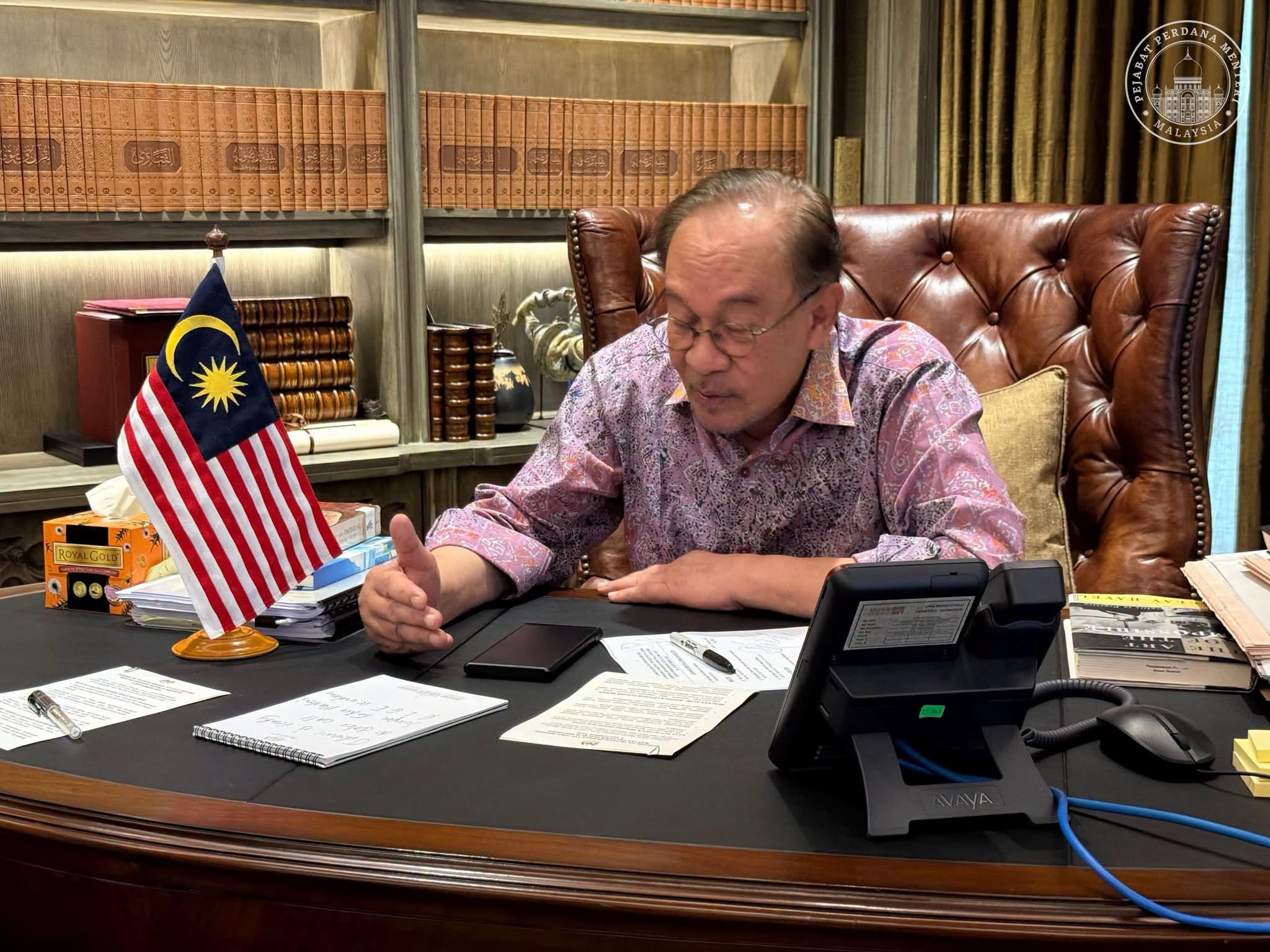
Prime Minister Datuk Seri Anwar Ibrahim said he will meet DAP secretary-general Anthony Loke to hear his views before deciding whether to accept the Transport Minister’s offer to resign. - PMO pic, September 20, 2026
Prime Minister says he understands DAP leader’s stance on corruption but wants to discuss the matter before making a decision
KUALA LUMPUR — Prime Minister Datuk Seri Anwar Ibrahim said he will meet DAP secretary-general Anthony Loke to hear his views before deciding whether to accept the Transport Minister’s offer to resign following the conditional pardon granted to former prime minister Datuk Seri Najib Razak.
Anwar said Loke had personally informed him of his decision, adding that he understood the rationale behind the move as the DAP leader had consistently maintained a firm position against actions that could be perceived as being lenient on corruption, Bernama reported.
“He has informed me, but I haven’t had the chance to discuss anything with him yet. I need to hear his views, but I understand because he is a man of principle. From the start, he has been consistent in opposing anything that could give the impression that we are weak or lenient on corruption.
“Especially when we are taking action against many others, including petty corrupt figures. Therefore, it is best that I meet him, listen to his views, and only then can I make a decision,” he told reporters after attending the Perintis Reformis Reunion Hi-Tea event at the Selangor International Trade Centre (SITC) here today.
Loke announced on Saturday that he was prepared to step down as Transport Minister in accordance with DAP’s position on Najib’s conditional pardon.
He said his official resignation letter would be submitted to Anwar soon.
Asked when the meeting would take place, Anwar said discussions would likely happen after both leaders return from their respective trips to Shanghai, China.
“He just had a meeting yesterday. He has informed me that he will bring the letter and discuss the matter with me. I told him that it is fine, we can meet when we have the time. I am here today, and then heading to Melaka. If I am not mistaken, he is leaving for Shanghai tomorrow, and I will be heading there on Tuesday for discussions with Premier Li Qiang,” he said.
When asked whether the development could trigger a Cabinet reshuffle, Anwar replied: “Let’s take things one step at a time.”
On Friday, His Majesty Sultan Ibrahim, King of Malaysia, granted Najib a conditional pardon, allowing the former prime minister to serve the remainder of his sentence under house arrest until Aug 23, 2028, subject to payment of an RM50 million fine and other conditions.
The Prime Minister’s Department’s Legal Affairs Division (BHEUU) said the decision was made during the 64th Pardons Board meeting for the Federal Territories of Kuala Lumpur, Labuan and Putrajaya, held at Istana Negara. — September 20, 2026
***
Anwar may NOT accept Loke's resignation - PMX's prerogative.
POOR bloke, he then has to continue to serve in the cabinet 😂😂😂
In an official statement released Friday, the Legal Affairs Division of the Prime Minister's Department confirmed that the conditional pardon remains strictly subject to Datuk Seri Najib Razak fulfilling all specified conditions—including payment of the RM50mil fine. - Bernama file pic, September 20, 2026
The house-arrest decision on PM6 Datuk Seri Najib Razak has created an awkward constitutional and political moment for the Madani Government. Now the Government has made its position known.
Hannah Yeoh, as the minister of Federal Territories and heading the Pardons Board had the awkward task of putting her signature on the instrument of government to facilitate Najib’s release from prison.
Yeoh said she gave her views honestly and in the national interest after considering the Attorney General’s written advice.
It is understood that both she and Attorney General Tan Sri Dusuki Ahmad had advised the Board as well as the Yang di-Pertuan Agong Sultan Ibrahim that releasing Najib to serve the remainder of his sentence at his Langgak Duta home may not in the best interest of the country and will put the Madani Government which had been tough on corruption, in the firing line from the Rakyat.
Attorney General Tan Sri Dusuki Ahmad. – Bernama file pic, September 20, 2026
Just a week prior on Sept 11, the Pardons Board convened to deliberate the pardon petitions of 150 people. Sixty five were granted.
Najib’s was not on the agenda as the Board failed to meet full quorum. It is understood that the Yang di-Pertuan Agong wanted a full deck over an important decision such as this.
Which is why on Sept 18 the Board convened again specifically to decide on Najib’s house arrest. The King granted Najib a conditional pardon, allowing him to serve the remainder of his sentence under house arrest until Aug 23, 2028, subject to a RM50 million fine.
That distinction is important. The Government advised. The King decided. There is a temptation, particularly among those politically opposed to Najib, to portray the decision as a failure of PMX Datuk Seri Anwar Ibrahim’s anti-corruption drive where the campaign for accountability for 1MDB formed the crux of Pakatan Harapan’s 2018 election campaign to unseat Barisan Nasional.
Even Anwar’s colleagues have gone hysterical over the decision to release Najib to home confinement, with DAP secretary general Anthony Loke offering his resignation as Transport Minister. That reaction is too simplistic.
The Federal Constitution places the power of pardon in the hands of the Yang di-Pertuan Agong. The Pardons Board advises; the constitutional prerogative belongs to the King. The Board’s composition includes aforesaid Attorney General and minister responsible for the Federal Territories.
That does not mean the Government is irrelevant. Quite the opposite. The Government has a constitutional role in the process. And it exercised that role.
Apart from Yeoh confirming her views and the Attorney General’s written advice, Anwar too has said that his responsibility was to provide advice on the legal implications, national stability and rule-of-law principles, while ultimately recognising the constitutional power of the King. In other words, there is an important distinction between advising against something and being able to veto it.
The Government could say: We believe this will undermine public confidence in the fight against corruption. It could not simply say: Therefore it cannot happen. And once the constitutional authority has exercised that prerogative, the political argument changes.
One needs to distinguish between criticising the decision versus attacking the institution. This is where the politics becomes particularly delicate.
One can criticise the consequences of house arrest. One can debate whether it is consistent with the Government’s anti-corruption messaging. One can question whether the arrangement inspires public confidence. One can debate that house arrest appears to be the privilege of the wealthy, because seriously how can someone who lives in a low cost flat be subject to house arrest? It is impractical.
But there is a constitutional line that politicians need to be careful about crossing. If the argument becomes that the Pardons Board was illegitimate because it did not produce the outcome the Government wanted, or that the King should not have exercised the power granted to him by the Constitution, then the criticism begins to implicate the institution itself.
That is especially problematic in Malaysia because the monarchy is not merely ceremonial. Article 42 of the Federal Constitution expressly provides the constitutional framework for the exercise of the pardon power.
Indeed, the Government has previously defended precisely this constitutional principle. When Najib’s lawyers argued in 2025 that a High Court decision concerning the purported house arrest addendum diluted the King’s pardon powers, the Attorney General’s Chambers rejected that interpretation.
Prime Minister Datuk Seri Anwar Ibrahim is another prominent political figure to have received a royal pardon, releasing him from his sodomy conviction and sentence. – Bernama file pic, September 20, 2026
The AGC stressed that the King’s prerogative to grant pardons is constitutionally protected, while also pointing out that Article 42 requires the Pardons Board process to be followed. There is also a degree of selective amnesia in the outrage surrounding pardons. Malaysia has had royal pardons involving serious criminal convictions.
Former Culture, Youth and Sports Minister Datuk Mokhtar Hashim and Kenneth Lee – the grandson of a founding father Tun H.S. Lee come to mind. Both convicted for murder. Both had sentences reduced from death to life imprisonment. Lee served the remainder of the 20-year sentence at home. Mokhtar freed after eight years in jail.
And eight years ago, Anwar Ibrahim himself received a full pardon. On May 16, 2018, the 51st Federal Territories Pardons Board met at Istana Negara, chaired by the then Yang di-Pertuan Agong Sultan Muhammad V. The Board considered Anwar’s application and, on its advice, the King granted him a full pardon with immediate release.
The AGC later confirmed that then Prime Minister Tun Dr Mahathir Mohamad was present at that meeting and that written advice had been submitted under Article 42(9).
That pardon was consequential.
It released Anwar from prison and removed the immediate legal barrier to his return to politics. Within five years, he was Prime Minister. Nobody seriously argues that Anwar’s pardon somehow meant the Malaysia had abandoned the rule of law. So the question cannot simply be whether pardons are politically uncomfortable. The constitutional system expressly allows them.
The more legitimate question is what happens after the pardon. Anwar has already answered part of that. He said the conditional pardon does not weaken the Government’s commitment to fighting corruption and abuse of power, and that corruption cases, including ongoing proceedings involving Najib, must go ahead. That is where the Madani Government should be judged.
Not on whether it managed to prevent a constitutional prerogative from being exercised. But on whether the institutions under its executive authority continue to investigate, prosecute and adjudicate corruption without fear or favour.
The distinction is fundamental. A pardon is not an acquittal. It does not retrospectively declare that the conviction never happened. It changes the punishment imposed by the state.
The irony is that Anwar now finds himself on the opposite side of a constitutional equation from where he stood in 2018. Then, he was the beneficiary of a royal pardon. Today, he is Prime Minister of a Government that reportedly advised against a course of action involving another former prime minister.
That is precisely why Anwar’s response matters. He cannot simultaneously claim that the monarchy’s constitutional prerogatives must be respected when they benefit him and become politically illegitimate when they benefit his former political adversary. The same constitutional principle has to apply to both. That does not mean the Government must celebrate the decision.
Nor does it prevent ministers, lawmakers or citizens from debating whether house arrest is appropriate, whether the punishment remains proportionate, or what message it sends about corruption.
And perhaps that is the uncomfortable lesson from the Najib affair: Malaysia’s constitutional monarchy is most meaningful when its principles are applied even when the outcome is politically inconvenient. The Madani Government’s credibility on corruption therefore rests not on whether it can control a pardon.
It rests on whether, after the pardon, the law continues to operate independently, consistently and without political interference. That is the test Anwar should welcome — because it is a test of Government, rather than a test of whether the Government can overrule the King. – September 20, 2026
Terence Fernandez is Group Editor in Chief of Big Boom Media which publishes Scoop
State election victories cannot be used as grounds to undermine the monarchy, says the prime minister, pledging to use the full weight of the government machinery to defend constitutional monarchy
Istana Besar Seri Menanti is the official residence of the Yang Dipertuan Besar of Negeri Sembilan, whose position has been questioned by members of the state executive council.
PETALING JAYA: The full weight of government machinery will be deployed to defend constitutional monarchy, Prime Minister Anwar Ibrahim said today, as he questioned the actions of the state executive council in Negeri Sembilan which has sought to depose the state ruler.
“Any dispute concerning the institution must be resolved in accordance with the state constitution and the law rather than through the mass media or political parties,” the prime minister said.
“It is not political parties that determine who becomes the ruler,” he said at a reunion gathering of Perintis Reformis in Shah Alam this afternoon. He added that state election victories could not be used as grounds to undermine the monarchy, as the people had not given their political leaders the mandate to overthrow state rulers.
In taking issue with the role of the current state executive council, which largely comprises assemblymen from Umno, Anwar did not name any party.
However, he said: “A state executive council meets to depose a ruler – by whose right? During the election, did you state in your manifesto that if you won, you would depose the ruler? There was no such thing. The people supported you to defend the royal system, yet having won, you reject the ruler”.
The current state executive council comprises assemblymen from Umno who were elected in the state election on Aug 1 when Barisan Nasional took power winning 18 seats through Umno (16) and MCA (2).
On Sept 16, the executive council, declared that the ruler, Tuanku Muhriz Tuanku Munawir, was no longer the Yang Dipertuan Besar as stated in an earlier proclamation by the state’s territorial chiefs which declared Tunku Nadzaruddin Tuanku Ja’afar, the Tunku Panglima Besar, as the new ruler.
The statement came after weeks of a power struggle when territorial chiefs allied with Tunku Nadzaruddin declared him as the state’s new ruler on July 5. However, the federal government and the menteri besar at the time upheld the position of Tuanku Muhriz.
On Sept 17, the Attorney-General’s Chambers said the executive council had no jurisdiction, authority or power under the Negeri Sembilan constitution to make its announcement on the position of the ruler, and that the menteri besar and state executive council did not have the power to unilaterally vacate the ruler’s position.
Negeri Sembilan’s Yang di-Pertuan Besar Tuanku Muhriz Tuanku Munawir has revoked the appointments of the state’s executive councillors with immediate effect, citing a breach of their oath of office. — Picture by Yusof Isa
Summary
The Yang di-Pertuan Besar of Negeri Sembilan, Tuanku Muhriz, has revoked the appointments of the state's executive councillors for breaching their oath of office following actions related to his removal.
The exco members previously pledged allegiance to Tuanku Muhriz and the state constitution, which they violated during a meeting on September 15.
The incident has led to a constitutional dispute over Tuanku Muhriz's position, with the Attorney General's Chambers affirming that there were no grounds for his removal.
The menteri besar has been tasked with proposing new candidates for the State Executive Council to ensure continuous governance.
First Published: Monday, 21 Sep 2026 12:03 AM MYT
SEREMBAN, Sept 21 — Negeri Sembilan’s Yang di-Pertuan Besar Tuanku Muhriz Tuanku Munawir has revoked the appointments of the state’s executive councillors with immediate effect, saying they breached their oath of office through their actions and statements on September 15.
In a statement last night, Istana Besar Seri Menanti said a member of the State Executive Council holds office at the pleasure of the Yang di-Pertuan Besar under Article XXXVIII(5) of the Laws of the Constitution of Negeri Sembilan 1959.
“His Royal Highness the Yang di-Pertuan Besar of Negeri Sembilan Darul Khusus has revoked the appointment of Members of the State Executive Council, Negeri Sembilan with immediate effect for violating their oath of office,” the statement said.
The palace said the exco members had taken and signed their oath and pledge of allegiance before Tuanku Muhriz on August 7, before their appointments to the council.
It said they had pledged allegiance to the Ruler and the royal institution, undertaken to protect and preserve the sovereignty of the Negeri Sembilan Constitution, and acknowledged the authority vested in the Dewan Keadilan dan Undang.
“They have breached that oath by their actions and statements on September 15,” the statement said.
The September 15 meeting was the one at which the state exco unanimously decided on an Instrument of Proclamation concerning Tuanku Muhriz’s removal and instructed the state secretary to proceed with its gazettement, according to Menteri Besar Datuk Ismail Lasim. Bernama reported that the state government had collectively decided that the proclamation removing Tuanku Muhriz was valid.
The palace said each affected exco member had been individually informed of the revocation in writing.
Ismail has been directed to submit a list of candidates for a new State Executive Council for Tuanku Muhriz’s consideration and consent, pursuant to Article XXXVIII(2) of the state constitution.
The Ruler also expects the menteri besar to ensure the administration of Negeri Sembilan continues without disruption in accordance with the state constitution and that the interests of the public are safeguarded, according to the statement.
The revocations come amid a constitutional dispute over Tuanku Muhriz’s position.
The Dewan Keadilan dan Undang said on September 17 that Tuanku Muhriz remained the lawful Yang di-Pertuan Besar and that there was no vacancy in the position. It also said the state exco and state government had no jurisdiction to determine the validity of the proclamation or the Ruler’s position.
The Attorney General’s Chambers later said the April 19 proclamation concerning Tuanku Muhriz’s removal was invalid because it did not comply with the mandatory requirements of Article 10 of the state constitution.
The AGC also said there was no evidence that any of the disqualification grounds under Article 10(1) applied to Tuanku Muhriz, and that the menteri besar and state exco had no unilateral power to remove him or declare the office vacant.
It said any attempt to gazette or implement the proclamation would be unconstitutional and invalid, and noted that the matter was before the High Court in Seremban, where an interlocutory injunction remained in force.
Israeli soldiers and police close the Atara checkpoint, north of Ramallah in the West Bank. — AFP pic
Summary
On September 20, the Israeli army closed two checkpoints in the northern West Bank, preventing 104 Palestinian teachers from reaching schools, thereby disrupting education for approximately 1,100 students.
Additionally, Israeli forces raided the village of Al-Mughayyir, closing its main entrance and arresting several Palestinians, further affecting local employment and education.
These military actions were part of broader Israeli military restrictions amid escalating violence in the region since the onset of the conflict in Gaza in October 2023.
First Published: Sunday, 20 Sep 2026 7:53 PM MYT
RAMALLAH, Sept 20 — The Israeli army has closed two checkpoints in the northern West Bank, preventing more than 100 Palestinian teachers from reaching schools, an education official said Sunday, Anadolu Ajansi reported.
Azmi Balawneh, director of education in Tubas Governorate, said 104 teachers were unable to reach their schools after the army shut the Tayasir and Ein Shibli checkpoints in the northern Jordan Valley, the official news agency WAFA reported.
He said the closures disrupted classes at six schools and a kindergarten attended by around 1,100 students.
The Israeli army closed the two checkpoints as part of broader military restrictions across the occupied West Bank.
Meanwhile, Israeli forces raided the village of Al-Mughayyir, east of Ramallah in the central West Bank, closed its main entrance and arrested dozens of Palestinians, according to local sources.
The sources told Anadolu that a large Israeli military force raided the village early Sunday, deployed across its neighbourhoods and searched Palestinian homes, supported by infantry units, military vehicles and a drone.
The closure of the village’s main entrance disrupted school attendance and prevented workers and employees from reaching their workplaces, they added.
Al-Mughayyir has witnessed repeated Israeli raids and attacks amid escalating violence by Israeli settlers against Palestinians and their property in the area.
Since the start of Israel’s war on the Gaza Strip in October 2023, the Israeli army and settlers have intensified attacks on Palestinians in the occupied West Bank. — Bernama-Anadolu
An injured Palestinian boy awaits treatment at the Kuwaiti hospital following Israeli strikes in Rafah in the southern Gaza Strip on May 7, 2024. — AFP pic
Summary
The Kuwait Specialty Hospital in Khan Younis, southern Gaza Strip, has suspended all operations except emergency care due to a disruption in fuel supplies caused by the Israeli blockade, according to Anadolu Ajansi.
This suspension could deprive thousands of citizens of essential medical treatment daily.
This development occurs within the larger context of ongoing Israeli military operations in Gaza, which have resulted in significant casualties and the destruction of approximately 90% of the enclave's infrastructure.
First Published: Sunday, 20 Sep 2026 6:28 PM MYT
GAZA CITY, Sept 20 — The Kuwait Specialty Hospital in Khan Younis, southern Gaza Strip, announced on Sunday the suspension of operations in all departments except emergency care due to a halt in fuel supplies amid the Israeli blockade, Anadolu Ajansi reported.
“We regret to announce the suspension of operations in the hospital’s departments, with the exception of the emergency department, starting today, Sunday, due to the cessation of fuel supplies necessary to operate the facility,” the hospital said in a statement.
The facility warned that the continuation of the crisis would result in “thousands of citizens being deprived of medical treatment on a daily basis”.
The development comes amid the repercussions of Israel’s war on the Gaza Strip, accompanied by a tightened blockade and widespread attacks on the territory’s infrastructure and healthcare system.
Since October 2023, the Israeli offensive in Gaza has killed more than 73,000 people and wounded over 174,000 others, while destroying around 90 per cent of the enclave’s infrastructure. — Bernama-Anadolu
I AM going to say something that may surprise some people.
My principal objection to what has happened with Datuk Seri Najib Razak is not the King exercising the constitutional power of mercy.
We have a Constitution. Article 42 provides for pardons, reprieves and respites. The Pardons Board has its constitutional role. The King has his.
We cannot claim to believe in the Constitution only when its processes produce decisions we like.
Najib has now been granted a conditional pardon allowing him to serve the remainder of his initial sentence under house arrest, subject to conditions including payment of a RM50 million fine.
Some Malaysians will agree with it. Many will be furious about it.
But that is not what troubles me most.
The RM50 million is.
UMNO's leadership has now launched a fund asking its members, supporters and ordinary Malaysians to contribute towards Najib’s RM50 million fine.
Think about that for a moment.
And perhaps we should call the party by its historically accurate name when discussing its lineage: UMNO Baru.
The original UMNO—the UMNO of independence, Tunku Abdul Rahman, Tun Razak, Tun Dr Ismail, and Tun Hussein Onn—no longer exists. It was struck off in 1988. Tun Dr Mahathir Mohamad and his allies subsequently registered UMNO Baru. The word Baru was later dropped.
History matters.
And so do ordinary UMNO members.
Most of them are exactly like the rest of us.
They wake up every morning and work. They pay mortgages. They worry about school fees. They look after ageing parents. They calculate what groceries cost. They save for their children’s futures.
They love Malaysia.
We may disagree politically, but I know we share the same patriotism and love of country.
And the overwhelming majority of ordinary UMNO members have never received the privileges of the political elite - which specifically includes the ones embroiled currently in multiple corruption cases, including accusations of stealing from the Pilgrimage Fund Board - essentially stealing from amongst the poorest. These same "leaders" are asking ordinary Malaysians to help the former Prime Minister financially.
A man who spent his entire adult working life in politics and had no other career or job.
A man whose SRC conviction went all the way to the Federal Court.
A man who was subsequently convicted by the High Court in another case involving some RM2.3 billion connected with 1MDB.
And let us remember something else.
When police raided six premises linked to Najib in 2018, they reported seizing cash, jewellery, luxury handbags, watches and other valuables eventually valued at as much as RM1.1 billion.
RM1.1 billion. Let that sink in. RM 1.1 billion in his homes.
And now someone earning RM2,500 or RM3,000 a month is being asked to give cash into a fund to help pay RM50 million so that Najib can serve the remainder of his first sentence in the luxury of his Taman Duta estate, or perhaps one of the many condominiums available to him?
That is the part I cannot understand.
Not constitutionally.
Morally.
The King exercised a constitutional power. Whatever one’s personal feelings about that decision, constitutional government means respecting constitutional institutions and processes.
But nobody’s Constitution requires ordinary Malaysians to pay Najib’s fine.
That is a political choice.
And it tells us something about priorities.
Imagine the difference RM50 million could make to struggling families.
Imagine scholarships for children whose parents could never afford university. Or the yearly flood victims who lose their homes in Kelantan. Imagine dialysis treatment. Food programmes. Assistance for single mothers. Better facilities in rural schools. Help for elderly Malaysians who worked their entire lives and have almost nothing.
Instead, we are passing around the collection tin for a former prime minister so that a RM50 million condition can be satisfied.
This is not about hating Najib.
It should never be about hate.
Nor is it about disrespecting the monarchy. Quite the opposite. We should understand the constitutional distinction between the King’s exercise of mercy and what politicians subsequently choose to do with it.
And it isn’t about attacking ordinary UMNO members either.
I respect them enough to ask the question.
Why should you pay?
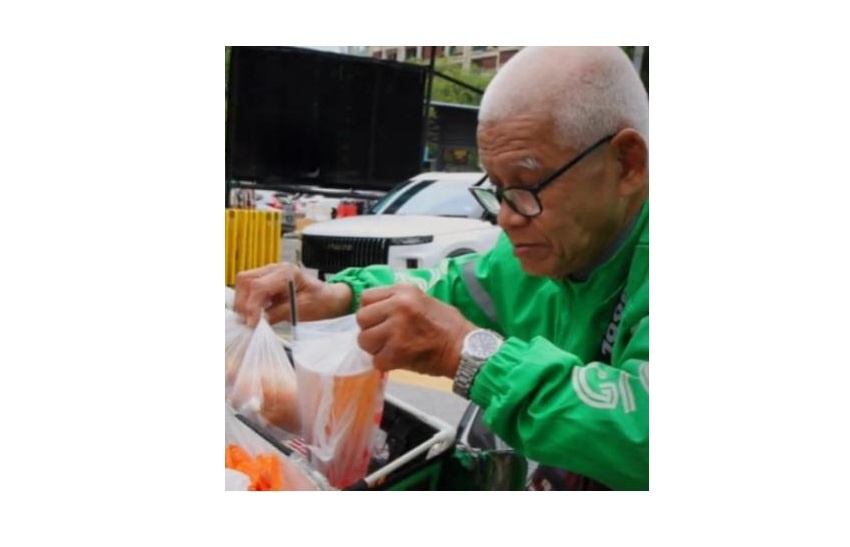
Why should the farmer, teacher, Grab rider, small businessman, clerk or pensioner reach into his pocket?
Mercy is part of justice.
But so is accountability.
A country loses its moral compass when ordinary people are continually asked to make sacrifices for the powerful while the powerful are continually protected from the consequences ordinary people would have to bear themselves.
So by all means debate the pardon.
Lawyers can debate Article 42. Politicians can argue about precedent. Historians can argue about constitutional convention.
But don’t allow that argument to distract us from the much simpler question sitting in front of us.
RM50 million.
Whose responsibility should that really be?
Certainly not the ordinary Malaysian’s. Certainly not the ordinary UMNO members. And if any individual or corporation comes up with large chunks of it, I would ask why. And I would want an answer.
And let's not forget, Najib has already been sentenced to a further 15 years in jail in the 1MDB case. This includes a fine of RM 11.4 billion.
If he loses that appeal, are UMNO members going to be asked to pay that too? – September 20, 2026
Datuk Dr Vinod Sekhar is the publisher of The Vibes and Chairman of the Petra Group
The non-interventionist D.C.-based think tank Quincy Institute for Responsible Statecraft has published an interview with the one Republican who has been most outspoken against Trump's Iran war.
Trump had in turn starting last spring launched a political war of his own against Kentucky Rep. Thomas Massie, who has been in the hot seat, with his political future in question. But Massie has been unrelenting, even after being defeated for another term by the largely unkown Ed Gallrein, a Republican candidate backed by President Trump and the American Israel Public Affairs Committee (AIPAC), and groups like the Republican Jewish Coalition.
Massie, who has unveiled eight articles of impeachment against Secretary of War Pete Hegseth, spoke to Responsible Statecraft about why he's gong after Trump's Pentagon chief - which appears focused on the his launching 'unauthorized' military actions in Iran, without Congressional approval. The argument as laid out below hinges on whether Hegseth was following 'lawful orders' from the Commander-in-Chief. Massie says no.
As it turns out, that potentially 'awkard' (for Republicans) impeachment vote has been entirely avoided for now with an early House election recess.
"A vote to impeach Secretary of Defense Pete Hegseth that could have happened in the U.S. House as early as Thursday will now be avoided, at least until after this year’s midterm election. Republican leaders announced Wednesday they would leave Washington a day earlier than scheduled," CNBC reports.
"House Speaker Mike Johnson’s decision cuts short by a day an already light congressional work period, in a month that will see the House in session for just six days," the report adds. "The chamber is not due back in Washington until after the Nov. 3 election, as lawmakers will now fan out to campaign."
Mike Johnson sent lawmakers home Wednesday, avoiding a Hegseth impeachment vote as well as a bipartisan effort to release additional Jeffrey Epstein files.
House recesses early to avoid vote on Hegseth impeachment
Speaker of the House Mike Johnson sent lawmakers home Wednesday, avoiding a vote on a resolution by Rep. Thomas Massie of Kentucky to impeach War Secretary Pete Hegseth as well as a bipartisan effort to releaseShow more
Below is the Kelley Vlahos interview with Massie transcript produced by Responsible Statecraft [emphasis ZH].
* * *
Responsible Statecraft: Why are you bringing this about right now?
Rep. Thomas Massie: Because we have exhausted every other legislative remedy to make things right. We are at the point now where Hegseth is just ignoring the law. He's ignored the concurrent (War Powers) resolution. He ignored the 60-day limit. They never reached the threshold required under section 2-C under the War Powers resolution of 1973. He's severely degraded the DoD's ability to winnow out civilian targets from their target list.
There is an active and ongoing war that should be stopped immediately, and I think this is an effective way to do it. It's literally the only legislative remedy that I could think of that might work.
RS: I would imagine the timing is important because the House is leaving until after the midterm elections in November.
Massie: Yeah, and the Speaker has to schedule a vote within 48 hours.
I suspect there will be a motion to table; that's usually what these resolve to, if they're not supported.
RS: So what happens then?
Massie: Well, I would encourage people who are even unsure about the bill to vote against the motion to table, and hear the debate.
RS: Let’s get back to the merits of the case here. This is pretty wide-ranging, so you hit the constitutionality of the war, the civilian deaths, the kidnapping of (former Venezuelan President Nicolas) Maduro, the airstrikes on so-called narco boats, even your freedom of speech where Senator Mark Kelly is concerned. You're really going at him with both barrels here.
Massie: There's two categories of articles here. One category, which covers six of the articles, is that he basically followed illegal orders from the president. And these are illegal orders that were issued by the president, but Hegseth is under obligation not to follow them since they were illegal. And there's a category of impeachment articles here that are solely attributable to Hegseth himself where he degraded the infrastructure of the DoD which is supposed to minimize the civilian casualties. That's his. I don't think Trump was involved in that. And then the attack on Mark Kelly, where he weaponized the DoD to squelch the speech of a senator and a veteran. That's solely Secretary Hegseth's doing. So there are things in here which are top-level issues with the administration all the way to Trump, but then there are some that are uniquely Peter Hegseth’s high crimes or misdemeanors.
Peter Hegseth wins the award for most crimes committed. And he just committed one too many; I couldn't take it anymore.
RS: That begs a question, why didn't you just go after Trump?
Massie: Well, I kind of already answered that question. Some of these things, like the civilian targeting, are Hegseth’s alone, and some of it, Trump would probably ascribe to Hegseth and not himself to save his own skin. I just don't think it's politically feasible or viable or even advisable to try to impeach Trump.
RS: A reporter just asked newly confirmed Attorney General Todd Blanche about your articles of impeachment and you. Aside from him saying he thinks Hegseth is doing “a phenomenal job,” he said he disagreed with the characterization that we are in a war, and that a majority of Congress would disagree as well. What do you make of these continuing assertions by the White House, the administration, even members of Congress, that we can't call it a war?
Massie: Well, somebody better give the president that memo. He calls it a war every week.
It's beyond playing with semantics. It's beyond trying to be cute legally. There's no way you can say this is not a war. Even the raid in Venezuela was an act of war. We overturned the government and put boots on the ground. But at least it seems to be over with now that we have their oil and control of their government.
He's wrong about a majority of Congress not thinking it's a war. A majority of Congress passed a concurrent resolution in the House and in the Senate telling them to stop under the War Powers Act.
So with semantics or not, they've been told to stop. They've claimed to stop the war by day 60, and now they say that every time they strike Iran it’s an unconnected military action to the others.
If you want a little something in the weeds here, I read every communication from the White House to Congress. They are sending us notices every time they do a strike pursuant to the War Powers Resolution of 1973. Now they're obligated to do that, and I noticed at least three of these they said were motivated by a strike on a neutrally-flagged vessel. They're claiming the authority to engage in hostilities on behalf of neutrally flagged vessels. And the War Powers Resolution says that it has to be an attack on U.S. soil or soldiers or infrastructure. They're admitting right there in three of these communications to Congress that their predicate was an attack on something that wasn't American.
RS: Did those (War Powers) communications end when they declared the so-called ceasefire, or do they keep coming?
Massie: They keep coming. In fact they refer to the ceasefire in two of these communications after the ceasefire.
RS: That flies in the face of what they're saying publicly
Massie: Yeah, if it's not a war, how is Trump gonna end it after the election like he told everybody in Texas last week?



/file/publisher-c1a3f893382d2b2f8a9aa22a654d9c97/2025/11/6e0fe97dbbdf05235bbf9cfb735329a0.jpg)
/file/publisher-c1a3f893382d2b2f8a9aa22a654d9c97/2024/10/9e7dac6f7fa8c262c638d52b78aa2e56.jpg)
/file/publisher-c1a3f893382d2b2f8a9aa22a654d9c97/2025/06/913aa92c0d8381220ed3d13b8ae0d94d.jpg)
/file/publisher-c1a3f893382d2b2f8a9aa22a654d9c97/2020/11/910feb7830290de77e6066c8cfd3d723.jpg)
/file/publisher-c1a3f893382d2b2f8a9aa22a654d9c97/2025/11/cf976b483a3a105ff9d0d93f99d77588.jpg)


 ANTARAFOTO/Didik Suhartono


.png)