Wednesday, September 16, 2026

Why should anyone believe FAM will really change after Sept 17?


Why should anyone believe FAM will really change after Sept 17?

Why should anyone believe FAM will really change after Sept 17?

The Football Association of Malaysia goes to the polls promising renewal, but a striking number of familiar faces are seeking another place at the table.

frankie dcruz

Malaysian football has seen plenty of new beginnings.

This one comes with a particularly familiar cast.

The Football Association of Malaysia (FAM) goes to the polls tomorrow to elect a president and a new executive committee, seven months after its entire 17-member leadership stepped down following an AFC governance review.

The statutes have been rewritten, the executive committee cut to 11 members, clubs given a greater formal voice and eligibility rules tightened.

On paper, the machinery looks different.

Then comes the candidate list.

Of the 28 candidates whose eligibility and intention to contest have been confirmed, 17 have established FAM connections, including 12 who served on the executive committee that resigned en masse in January.

Only 11 are newcomers who have never sat on FAM’s executive board.

That sits uneasily with an election being presented as the start of a new era.

So why should anyone believe FAM will really change when so much of the old FAM is still seeking a seat at the table?

FAM’s credibility was damaged by a governance failure. Its response was to replace the leadership, submit to an external review and rewrite the rules.

Advertisement
Advertisement

Now a significant proportion of the people from that previous administration are seeking office again.

So what, precisely, is the election supposed to demonstrate?

The answer cannot simply be that the rules have changed.

Rules matter, but rules do not govern football. People do.

That makes this election more than a contest between Ab Ghani Hassan and Shahril Mokhtar for the presidency.

Both come with administrative credentials. Ghani heads the Malaysian Football League, while Shahril is deputy president of the Football Association of Selangor.

Their supporters can make the case for their experience, programmes and ability to lead.

But whoever wins inherits a problem much larger than the presidency.

FAM needs credibility.

That became painfully clear last year when Fifa sanctioned FAM over falsified documentation used in the registration of seven foreign-born players.

Fifa fined the association about RM1.9 million and banned the players for 12 months. The Court of Arbitration for Sport later upheld the disciplinary consequences.

The finding went beyond an administrative lapse. Fifa said using fraudulent documentation to make a player eligible to compete amounted to cheating and damaged trust in the fairness of football.

That trust is now central to Malaysian football’s recovery.

Changing the furniture will not restore it.

The January mass resignation was supposed to mark a decisive break. FAM said the executive committee’s departure would protect the association’s integrity and reputation, allow investigations and internal processes to proceed without interference, and help restore public confidence.

Those were serious words.

Seven months later, some of the same people are seeking office again.

There is nothing inherently improper about an experienced administrator standing for election.

Previous service should not become a lifetime ban from public office. Nor should every former office-bearer carry personal responsibility for every failure during a collective tenure.

But an organisation emerging from a governance crisis cannot expect the public to ignore the symbolism.

If the mass resignation was part of the process of rebuilding confidence, what does it say when much of the same political ecosystem reappears at the next election?

This is not about personalities but about institutional memory.

For months, FAM has responded to pressure from outside, first with Fifa sanctions, then an AFC governance review and finally a rewrite of its statutes shaped by the continental body.

Now the association has to show that it can govern differently without waiting for another crisis, another audit or another international intervention to tell it what needs fixing.

The new statutes give FAM useful tools. A smaller executive committee should make responsibility clearer. Greater representation for professional clubs could broaden decision-making. Tighter eligibility rules should raise the standard for those seeking office.

But no statute can guarantee good governance.

A carefully rewritten rulebook can still sit in the hands of people comfortable with old habits.

That is why the composition of the new executive committee matters as much as the identity of the president.

Will members challenge decisions when they should? Will they insist on proper documentation? Will they accept scrutiny? Will they put the association’s interests ahead of personal, state or club loyalties?

And will anyone tell a powerful colleague when something is wrong?

The public, meanwhile, is not obliged to regard Sept 17 as a cure.

For many supporters, this will be another event inside a football administration that has spent too long asking for patience.

The national team continues to deal with the fallout from the naturalisation scandal, Fifa’s sanctions remain in force and Malaysian football is still trying to repair a reputation damaged far beyond its own borders.

A new president cannot erase that with a victory speech.

Nor can a new executive committee demand confidence simply because affiliates have elected it.

Confidence will return only when FAM makes decisions that withstand scrutiny and accepts accountability when things go wrong.

That means looking beyond the campaign.

The real measure will be whether the new leadership strengthens internal controls, demands proper governance and gives newcomers room to challenge established thinking.

It will also be whether returning administrators recognise that experience has value only when it comes with the willingness to confront what went wrong.

An election can change who occupies the room without changing what happens inside it. That is why the return of so many familiar figures deserves scrutiny.

After everything Malaysian football has been through, FAM is asking the public to believe that a new structure will deliver a different culture while many of the people from the old structure are asking for another turn at running it.

The question is no longer whether FAM can announce a new beginning. It is whether anyone outside the room has enough reason to believe it.

A message from our publisher and chairman


A message from our publisher and chairman


Thank you, Sabah. Thank you, Sarawak. You have helped keep the Malaysian soul alive. Now it is time for the rest of us to stand up and defend it.

Updated 2 hours ago · Published on 16 Sep 2026 8:11AM


This Malaysia will not be surrendered to those who divide us. Not on our watch. Not in our name. - September 16, 2026


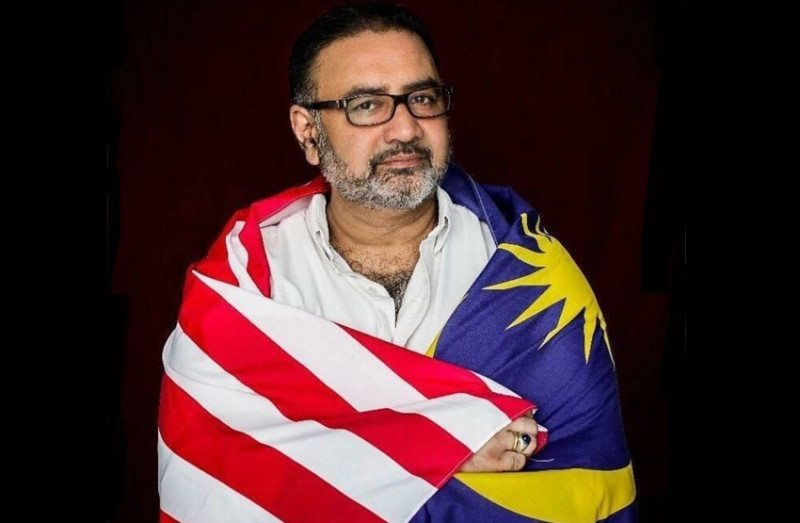
ON this Malaysia Day, I wear our flag with pride — and with gratitude.

To Sabah and Sarawak, thank you.

Thank you for reminding us what Malaysia was meant to be: diverse without fear, different without division, and united without demanding that any of us surrender who we are.

At a time when too much of Malayan politics seems determined to desecrate that Malaysian soul with the tired weapons of race, religion and manufactured outrage, Borneo has continued to protect something precious — the belief that our diversity is not our weakness, but our greatest strength.

Malaysia does not belong to the loudest politician, the narrowest ideology or any single race or religion.

It belongs to all of us.

So today I celebrate not merely a federation formed, but an idea worth defending.

Thank you, Sabah. Thank you, Sarawak. You have helped keep the Malaysian soul alive. Now it is time for the rest of us to stand up and defend it.

Because this Malaysia will not be surrendered to those who divide us. Not on our watch. Not in our name.

This is my Malaysia. This is your Malaysia. This is OUR Malaysia — and we will fight for its soul.

Selamat Hari Malaysia. – September 16, 2026


Datuk Dr Vinod Sekhar is the publisher of The Vibes and Chairman of the Petra Group


***

To translate into a short message a la kt's mindset, wakakaka, 'Frigg you mfer-ing racists' 😂😂😂


Trump threatens to shut Kennedy Center for good after judge blocks name change


Trump threatens to shut Kennedy Center for good after judge blocks name change


The John F. Kennedy Center for the Performing Arts is seen from the Georgetown Waterfront in Washington, DC. A federal judge blocked the Kennedy Center from adding US President Donald Trump’s name to its facade, while the centre’s board separately voted to immediately close its main building amid financial and structural concerns. — AFP pic


Summary

  • US President Donald Trump threatened to permanently close the Kennedy Center after a federal judge ruled against adding his name to the institution's facade.
  • Trump cited safety concerns and proposed extensive renovations, pending a higher court's decision on renaming the center after him.
  • Judge Christopher Cooper upheld an earlier order preventing the addition of Trump's name, emphasizing the need for congressional approval.
  • The Kennedy Center responded by prioritizing safety, while a recent drop in ticket sales and artist cancellations followed Trump's involvement.


First Published: Wednesday, 16 Sep 2026 8:39 AM MYT


WASHIINGTON, Sept 16 — US President Donald Trump threatened yesterday to keep the Kennedy Center closed for good after a judge ruled his name cannot be added onto the famed arts institution’s facade.

Trump said his hand-picked board voted “almost unanimously” to shut the venue immediately for emergency renovations, just a few hours after the federal judge’s decision.

But he warned the “very large and complex” repairs at the building in Washington cannot begin until a higher court rules on whether the center can be renamed after himself.

“If the ruling is a negative one, which it should not be, and is not overturned by the US Supreme Court, the Reconstruction and the Renovation of The Kennedy Center will not take place,” Trump said on his Truth Social network.

The Kennedy Center said in a statement to AFP that the board’s decision “reflects sound judgment and a clear prioritization of safety above all else.”

Shortly after beginning his second term, Republican Trump installed himself as chairman of the center, which is named in honor of late president John F. Kennedy, a Democrat who championed civil rights before he was assassinated in 1963.

The board voted in December to call it the “Trump-Kennedy” Center and installed signage with his name on it.

US federal judge Christopher Cooper previously ordered Trump’s name removed from the exterior and overturned the board’s decision to rename the institution.

Cooper ruled yesterday that Trump’s name cannot be added back, rebuking the center for trying to circumvent his earlier order.

“Simply put,” wrote Cooper in his decision, the board “cannot install memorials for President Trump or anyone or anything else at the Kennedy Center without Congress’s blessing.”


Demolition threat

Trump himself called into the board meeting and berated a Democratic congresswoman who serves on the board and filed the lawsuit that blocked its renaming, CNN reported.

The Kennedy Center takeover is one of several projects aimed at stamping Trump’s brand on the US capital, including a triumphal arch and a half-billion dollar ballroom at the White House.

Workers removed Trump’s name from the building in June, but scaffolding and tarps have remained ever since.

Last month, the board moved forward with a plan to add a new signage on the building that would read “renovated and restored by President Donald J. Trump.”

Cooper yesterday said that plan was in violation of his previous ruling.

Trump and his chosen leaders of the Kennedy Center have argued that its main building, which was constructed in the 1960s, is in a state of dangerous disrepair.

As evidence of the safety problems, the president pointed to a recent incident in which a piece of the ceiling tumbled to the ground following a storm.

“If the Building were open, innocent people would have been killed,” he wrote in a post on Truth Social before the judge’s ruling.

Last month, as part of court proceedings, the Trump administration warned that the center may need to be demolished, if its plans to renovate the building were blocked.

A host of artists canceled concerts at the venue in response to Trump’s takeover, while US media has reported that Kennedy Center ticket sales have plummeted. — AFP


***


The frigging slop of a pig has skin thicker than a rhino.
😠😠😠


Happy Malaysia Day to everyone Malaysian


Mohamad Hasan’s vibes were the sanest to have emerged from Umno


Mohamad Hasan’s vibes were the sanest to have emerged from Umno

Mohamad Hasan’s vibes were the sanest to have emerged from Umno

Umno’s deputy president stuck to a middle-of-the-road stance and his proposed test of PAS’s sincerity was shrewd.

From Terence Netto

Umno’s deputy president Mohamad Hasan (Tok Mat) deserves credit for urging on the party a stance that, to put it broadly, was middle-of-the-road.

He espoused this position in his policy address to the youth, Wanita and Puteri wings of the party.

It was not an easy position to take at a time when rightist voices are shrill within the party such that a disinclination to take the tub-thumping and cymbals-clashing ones would put an exponent on the outs with the muscle flexing crowd.

Not only did Tok Mat reach for the middle octaves, he asserted Umno should not alienate the non-Malays on the Peninsula and its friends in Sabah and Sarawak.

This is the sane middle path that is more recognisably Umno than the leanings of the party towards the ethno-centricism that characterised the Mahathir era (1981-2003).

There are no prizes for guessing who Tok Mat was referring to when he cautioned in his policy address: “You cannot impose your conservative and radical ideology on Umno.”

Although he did not mention names, his suggestion of a test of sincerity of PAS’s desire to collaborate with Umno in state polls and in the general election (GE16) to come was shrewd.

He proposed that PAS dissolve the Terengganu state assembly and allow Umno to contest half the seats in the snap poll.

PAS won 27 state and 7 parliamentary seats the last time that voters in the state went to the polls.

It was a wipeout for Umno.

It would be too much to expect that Umno would simply concede Terengganu to PAS at the next election as part of a collaboration with the Islamist party though that seems to be the drift of the rhetoric emanating from the mullahs.

PAS appears keener than Umno on having such a collaboration.

Hence Tok Mat’s proposed test of PAS’s sincerity that they dissolve the Terengganu state assembly and allow Umno to contest a number of the state seats is not an outlandish proposition.

Unless of course PAS harbours hegemonistic intentions and considers Kelantan, Terengganu, Kedah and Perlis as their fiefdom, and as such off limits to Umno.

Given that Tok Mat has used the occasion of Umno’s general assembly to reiterate that his party rejects conservative and radical leanings in its ideology and following this up with a proposed test of PAS’s sincerity on electoral collaboration, the ball is in the Islamic party’s court, so to speak.

It would be interesting to see how PAS reacts to these leanings and moves by Umno.

Umno is a nationalist party whereas PAS is a religious one; their ideologies cannot easily coexist.

Umno has a modernist outlook whereas PAS, at the end of a long day, would wind up as obscurantist.

It is only realism to accept what all this entails and take one’s drift accordingly.

Terence Netto is a senior journalist and an FMT reader.