Sunday, August 09, 2026

Criticise DAP but labelling it ‘enemy of Islam’ is dangerous, says Marzuki


Criticise DAP but labelling it ‘enemy of Islam’ is dangerous, says Marzuki


Muhyiddin Yassin's former aide warns that demonising the party and its supporters as enemies of Islam is unhealthy for the nation


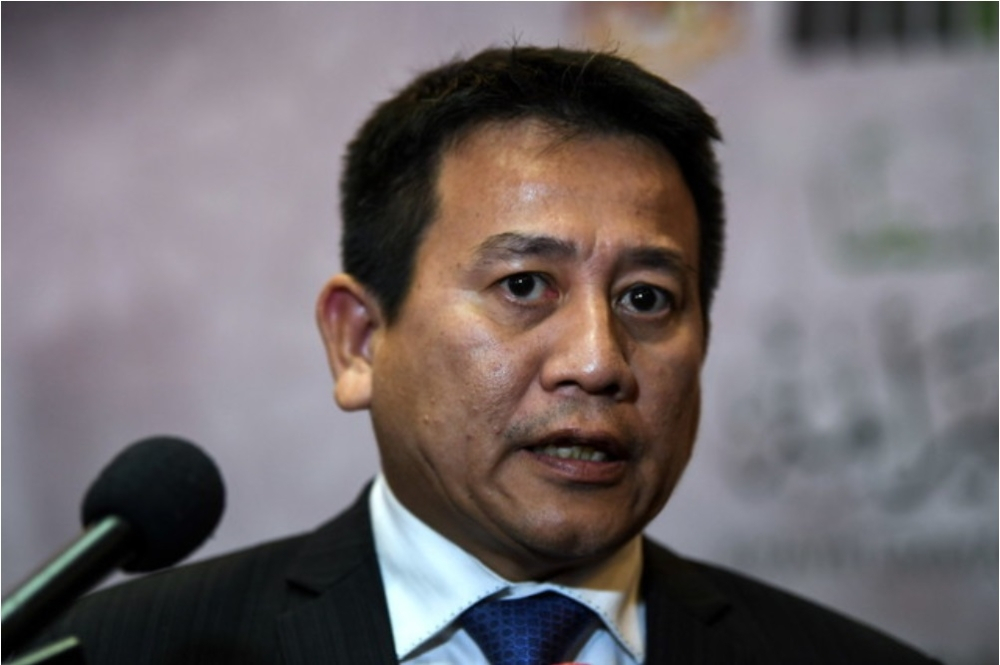
Ex-prime minister Muhyiddin Yassin’s former aide, Marzuki Mohamad, said the rekindling of Umno-PAS ties has led to the two traditional rivals ‘manufacturing’ a common enemy in DAP. (Facebook pic)


PETALING JAYA: A former aide to ex-prime minister Muhyiddin Yassin has criticised PAS president Abdul Hadi Awang for labelling DAP as an enemy of Islam, warning that this is taking the country on an unhealthy trajectory.

Marzuki Mohamad said the rekindling of ties between Umno and PAS has led to the two traditional rivals “manufacturing” a common enemy in DAP, adding that this was necessary to sustain their newly revived pact and mobilise Malay support.

“While political critique of the DAP is entirely legitimate – and something I engage in frequently – demonising the party and its supporters as enemies of Islam is a dangerous escalatory tactic.


“Doing so also inadvertently categorises roughly 75% of the nation’s non-Muslim population as enemies of Islam. This trajectory is profoundly unhealthy for the nation,” he said in a Facebook post.

Yesterday, Hadi claimed DAP was leading Pakatan Harapan in “continuing the work of colonisers to destroy Malay-Muslims”, citing its push to revive local council elections and its “Malaysian Malaysia” vision, among others.


This was slammed by DAP leaders and Wanita Amanah chief Aiman Athirah Sabu, who dared Hadi to haul DAP to court if he had proof to back up his claims.

Marzuki pointed out that Umno and PAS, the country’s two largest Malay-Muslim parties, were engaged in a bitter “Islamisation race” in the 1970s and 1980s.

He said it was during this period that Hadi delivered his infamous speech where he branded Umno members as “kafir” (infidels) and the fight against the Barisan Nasional lynchpin as a “jihad”.

“This ideological race decelerated in the late 1990s when PAS formed an alliance with PKR and DAP, a predominantly non-Muslim and secular party, to challenge the hegemony of Umno and BN.


“Consequently, the political discourse shifted throughout the 2000s to focus on governance, corruption, public welfare, and economic performance.

“Today, these former archnemeses have refashioned themselves as ‘frenemies’ under the banner of Malay-Muslim unity,” Marzuki said, referring to Umno and PAS.


***


Lebai towkay has been exceedingly EVIL in his lies


Liu foresees BN-PN pact falling apart, GE16 ‘free for all’


Liu foresees BN-PN pact falling apart, GE16 ‘free for all’


4 hours ago
Predeep Nambiar


The former DAP leader says with Umno and PAS vying for the same voter base, the split will happen as both feel strong enough to compete for more seats


Former Selangor assemblyman Ronnie Liu, who joined PBM today, said the cooperation between BN and PN in Negeri Sembilan was merely a temporary ‘marriage of convenience’.


PETALING JAYA: A former DAP leader has predicted that Barisan Nasional and Perikatan Nasional’s pact will not last until the next general election (GE16), which he expects will turn into a “free for all” between political parties.

Former Selangor assemblyman Ronnie Liu said the cooperation between the two coalitions in the recent Negeri Sembilan polls was merely tactical and a temporary “marriage of convenience”.

Liu, who formally joined Parti Bangsa Malaysia (PBM) today, said the first signs of trouble in BN-PN could already be seen in negotiations for the Melaka polls.


He said their split would stem from the belief held by both coalitions that they were strong enough to compete for more seats, especially since their key components, Umno and PAS, largely vie for the same voter base.

“Very soon you’ll see cracks between PN and BN. They will divorce and then go their separate ways.


“Then in GE16, it will be a free for all,” he said at a press conference today.

BN remains a key ally of Pakatan Harapan’s in the federal government, while PN makes up the largest bloc in the opposition. The last general election resulted in a hung Parliament with PH winning 82 seats followed by PN (74) and BN (30).

Last week, PBM president Larry Sng predicted that BN-PN could win enough seats in Peninsular Malaysia alone to form the federal government in GE16 if their alliance remains intact.

PBM can perform better than Muda, Bersama


Separately, Sng expressed confidence that PBM could outperform other smaller parties, such as Muda and Bersama, and win several state and parliamentary seats in future elections.


Larry Sng.


“I believe PBM will do better. We’ll do better than Bersama, we’ll do better than Muda, and we’ll do better than other smaller parties,” said the Julau MP, who is also PBM’s sole elected representative.

Sng was asked how he expected PBM to fare compared with Muda and Bersama.

The former Sarawak PKR chief said PBM’s support base in Borneo remained intact with him at the helm and as the sole MP.


He nonetheless acknowledged that building a similar presence in the peninsula would take time.

Sng said PBM has not decided which peninsula state elections it would contest, but the party was open to exploring possible electoral understandings or pacts with other blocs, including in GE16.

Meanwhile, Liu predicted that GE16 would only be held after Malaysia hosts the SEA Games, which will take place from Sept 18-29 next year. This would give PBM slightly more than a year to prepare, he added.

Liu also expressed confidence PBM could win over segments of West Malaysians, saying the party aimed to practice non-racial, non-theocratic politics and provide a new political platform for all.


NAZIs 80 years apart


Iran war live: Tehran sets Hormuz terms, Houthis claim attack on Saudi site


Iran war live: Tehran sets Hormuz terms, Houthis claim attack on Saudi site


Israel announces tender for 627 settler units in occupied West Bank


Israel announces tender for 627 settler units in occupied West Bank

New illegal settlement tender in West Bank deepens Israeli efforts to sever Palestinian ties to Jerusalem, officials warn.

Save

Israeli bulldozers prepare land for the construction of the new settlement of Dotan Valley, near the occupied West Bank city of Jenin
Israeli bulldozers prepare land for the construction of the new settlement of Dotan Valley, near the occupied West Bank city of Jenin, on July 13, 2026 [Alaa Badarneh/EPA]

Israeli authorities have issued a tender for 627 new housing units in the Kochav Yaakov settlement in the occupied West Bank, according to the Palestinian Colonization and Wall Resistance Commission (CRRC).

The Israel Land Authority on Thursday published the tender for the project, which will be built on land in the Ramallah and al-Bireh governorate, the commission said on Saturday.

Recommended Stories

list of 3 itemsend of list

Israel set November 30 as the deadline for construction companies to submit bids, moving the project from planning to construction just 15 months after it was first approved, it said.

CRRC slammed the expansion, saying it is designed to “deepen the separation between Jerusalem and its Palestinian surroundings”.

The illegal Israeli settlement of Kochav Yaakov sits between northern Jerusalem and the twin cities of Ramallah and el-Bireh, within a cluster of settlements Israel administers under the name “Binyamin”.

According to CRRC, the new project covers 253.7 dunams (25.37 hectares or about 63 acres) and was approved by Israeli authorities on April 27, 2025.

It says the tender marks the transition from planning to the “marketing and implementation” stage of settlement construction, with the new units expected to expand the illegal settlement’s built-up area and strengthen its links to nearby settlements and access roads. It added that the decision reflects growing investment in settlements’ economic infrastructure, not just housing.

According to CRRC, Israeli authorities have made 12 illegal settlement tenders in the first half of 2026, including 1,138 housing units concentrated in five main settlements, alongside a separate wave of tenders for industrial zones, offices, nursing homes and tourism facilities.

Illegal settlement expansion and settler violence have surged dramatically across the occupied West Bank this year. Palestinian monitors have recorded more than 11,000 attacks by Israeli forces and settlers across the West Bank since January 2026.

United Nations Secretary-General Antonio Guterres has repeatedly said Israeli settlements have “no legal validity” and constitute a “flagrant violation” of international law.

A 2024 International Court of Justice advisory opinion deemed Israel’s continued occupation of Palestinian territory unlawful.

In defence of compromise


In defence of compromise


Yesterday
Letter to the Editor


People can stomach a great deal of horse-trading when they know what was traded, why, and what they gain. What they punish, rightly, is the sense that a deal was struck in the dark


From Dr Helmy Haja Mydin

When Abraham Lincoln took office in 1861, he filled his Cabinet with men who wanted his job and thought they were better than him.

William Seward, his secretary of state, regarded the new president as a country lawyer out of his depth. Salmon Chase, who was in charge of the Treasury, never quite stopped believing the nomination should have been his.

Doris Goodwin’s book about that administration, “Team of Rivals”, is usually read as a study in magnanimity. It is better read as a study in execution.

Lincoln understood something that eludes many who reach high office. Winning the post is the easy part; doing anything with it is harder, and it cannot be done alone.

That lesson is unfashionable. Across the democratic world, the politician who refuses to bend is admired as a person of conviction, while the one who strikes a bargain is labelled a sell-out.

“Compromise” has taken on the texture of an insult. Populists who trade on this mood promise to govern without concession, as though obtaining 40% of the vote licenses ignoring the other 60%.

The offer is seductive. In almost every case it is also a fraud.


Consider what governing actually demands. A minister may command a portfolio but not Parliament, a coalition partner, a central bank, a constitutional court, a mutinous backbench or a sceptical public. Majorities have to be assembled, then assembled again for the next vote.

Reform depends on civil servants who choose to move quickly rather than slowly, and on voters willing to absorb some pain today for a gain they cannot yet see. None of that can be summoned by a leader’s conviction of their own rightness.

Power, in a working state, is the capacity to make others act, and others will not act for long under someone who treats every disagreement as heresy.

Here also lies the deeper trouble with the politics of purity. It assumes that on any given question there exists a single correct answer, usually conveniently held by oneself, and that those who see it differently are fools or evil. This is hubris dressed as conviction.


Reasonable people hold irreconcilable views about taxation, migration, the balance between liberty and security, and the pace of the energy transition.

What is plainly sensible to a farmer in Kedah looks quite different to a graduate in Kuching or a factory owner in Penang. A political approach that cannot make room for that plurality tends to be blind, and usually brittle.

None of this is peculiar to statecraft. Compromise is the quiet machinery of ordinary life.

Parents settle on bedtimes and screen-time rules that neither they nor their children would have chosen unprompted. Colleagues divide credit, defer to one another and swallow objections for the sake of a shared deadline. All successful marriages involve compromise.

To imagine that politics can do without what every household relies upon is naive at best, and wilfully misleading at worst.

Otto von Bismarck, no one’s idea of a soft touch, said it plainly: “Politics is the art of the possible, the attainable — the art of the next best.”

The Iron Chancellor built a German empire not by pressing every demand to the hilt but by knowing when to bank a partial gain and move on.

The same instinct rebuilt post-war Europe, where in 1950 France and West Germany, enemies in three wars within living memory, agreed to pool the coal and steel that had armed them rather than fight over it. South Africa’s negotiated transition rested on it too, with Nelson Mandela and FW de Klerk each surrendering what a decade earlier had been unthinkable.

Prime Minister Anwar Ibrahim, too, assembled a government consisting of political enemies. Half a loaf, secured and eaten, has fed more people than any quantity of whole loaves promised but never baked.

The case for compromise is not, however, a case for compromising everything, and this is where its advocates, too, often fall silent.

America’s founders split their differences ingeniously over the composition of the Senate and shamefully over slavery, postponing a reckoning that arrived, decades later, as civil war.

Neville Chamberlain came home from Munich in 1938 with a signature and the cheers of a frightened public, having conceded the one thing that should never have been on the table.

The discipline is therefore twofold. A leader must decide in advance which principles are not for sale: the few red lines whose breach would drain the enterprise of its point.

Having drawn them, the leader has to say so, plainly and often. The gravest error of the dealmaker is rarely the deal itself. It is the silence around it, the assumption that supporters will grasp why a concession was necessary and forgive it unexplained.

They will not.

People can stomach a great deal of horse-trading when they are told what was traded, why, and what was protected in return. What they punish, rightly, is the sense that a bargain was struck in the dark.

The purist offers the warm certainty of principle and the reliable disappointment of achieving little with it.

The leader who holds firm on the essentials, bends on the rest and has the nerve to explain which is which tends to leave the deeper mark.

That, in the end, is what Bismarck meant by “the art of the possible”: the patient work of getting things done among people who are sure you are wrong.


Dr Helmy Haja Mydin is chairman of the Social and Economic Research Initiative.

Malaysia’s next boom is buried in its soil


Malaysia’s next boom is buried in its soil


10 hours ago
K. Kathirgugan


The agriculture department's new smart irrigation system is a modest launch with a massive message: Malaysian farming is finally going digital. In a world where food exporters slam their doors shut at the first sign of trouble, we should pour fuel on this fire


Malaysian farming has never been short of sweat. What it has been short of is data.

This week, that started to change. On Aug 3, the agriculture department launched the Smart Irrigation Monitoring System, or SIMS, announced in Putrajaya by its director-general Nor Sam Alwi.

SIMS crunches temperature, humidity, wind speed and solar radiation through the Penman-Monteith FAO 56 formula, the international gold standard for calculating how much water a crop actually needs. Any farmer who registers gets a precise irrigation schedule for his crop and location, plus a 14-day weather forecast.


The ambitions attached to it are quietly serious. The department wants some 200,000 farmers on the system, rolled out in stages starting with 20,000, covering 38 major crops.

It expects SIMS to cut water wastage by more than 20% while trimming the energy bills of every mechanical pump in the land. That is real money in real pockets.

This might sound like a small thing. It is anything but.

Agriculture consumes about 70% of all the freshwater humanity withdraws, according to the Food and Agriculture Organization. Getting water right is often the difference between a farm that makes money and a farm that slowly drains its owner.


SIMS is also our first real step into one of the fastest growing industries on earth. Precision agriculture, the business of farming with data, sensors and satellites, was worth about RM39 billion globally in 2025 and is forecast by research and analysis provider Research and Markets to hit RM71 billion by 2031, compounding at 10.5% a year.

The countries that mastered this game punch absurdly above their weight. For instance, the Netherlands, with a landmass roughly a third the size of Peninsular Malaysia, has used greenhouse technology and data-driven growing to become the world’s second largest agricultural exporter by value.

There is no reason Malaysia, blessed with equatorial sun, fertile soil and rain all year round, cannot play this game too. So, what should we adopt next? Three things, each with a lever we can pull almost immediately.

First, drones. Enter Poladrone, a homegrown startup that raised RM18 million in 2021 in what was reported as Malaysia’s largest seed round at the time, and whose drones already spray and map paddy fields and oil palm estates.


Budget 2026 allocates a record RM2.62 billion in subsidies and incentives to paddy farmers, averaging RM4,300 per hectare per season. Let a slice of that be claimable for certified drone spraying and mapping services, so a smallholder can rent the future instead of having to buy it.

Second, open SIMS up. The system already knows what 38 crops need in every corner of the country, so publish that data through an open interface and let Malaysian startups build irrigation alerts, planting calendars and advisory apps on top of it.

Agriculture and Food Security Minister Mohamad Sabu has pledged that his ministry will keep modernising the agrifood sector under the National Agrofood Policy 2021-2030. Opening this data is the cheapest way imaginable to keep that promise.

Third, controlled-environment farming. Singapore, which farms almost no land at all, aims to produce 30% of its nutritional needs locally by 2030, largely through high-tech indoor farms.

If land-starved Singapore can grow vegetables in stacked trays, Malaysia’s cities have no excuse not to grow their own leafy greens.

I can hear you wondering: why the urgency?

Because the world is quietly telling us to feed ourselves. Our food import bill hit RM93.8 billion in 2024, up 19.1% in a single year, according to the department of statistics Malaysia.

By the ministry’s own recalculation, our rice self-sufficiency stands at just 56.2%, and the bulk of our imported rice comes from just three countries: Vietnam, Thailand and Pakistan.

Now recall what happens when the world gets nervous. In the months after Russia invaded Ukraine, at least 30 countries restricted food exports.

In July 2023, India, the world’s largest rice exporter, banned exports of non-basmati white rice practically overnight. When exporters get scared, they feed their own people first, treaties and trade ties be damned.

Food security is national security. We cannot have one without the other.

There is one more reason to bet big on aggrotech: our farmers are getting old. One in two plantation workers is now aged 40 and above, and few young Malaysians dream of a life swinging a cangkul.

But a farm run on drones, sensors and data is a different proposition altogether: less back-breaking labour, more career in tech.

As agriculture and food security ministry secretary-general Isham Ishak put it in July: “The question before us is no longer whether we have sufficient resources, but whether we have the determination to fully harness the assets already available to us.”

He’s spot on. The sun, the soil and now the software are all in place. All that’s left is for us to plant.


Bersatu turns to RoS after Hadi says party automatically out of Perikatan


Bersatu turns to RoS after Hadi says party automatically out of Perikatan


Bersatu information chief Datuk Tun Faisal Ismail Aziz reportedly said the party plans to lodge a report with the RoS over claims that its PN membership had automatically lapsed. — Bernama file pic


Summary

  • Parti Pribumi Bersatu Malaysia (Bersatu) intends to report to the Registrar of Societies (RoS) regarding claims that its Perikatan Nasional (PN) membership lapsed following intentions to form a new political coalition.
  • Bersatu's information chief, Datuk Tun Faisal Ismail Aziz, criticized PAS for allegedly dominating PN and breaching the coalition's constitution, urging that PN be managed with good governance.
  • Despite PAS president Tan Sri Abdul Hadi Awang's assertion that Bersatu's membership ended, Bersatu maintains its position remains unchanged as it has not finalized joining another coalition.


First Published: Sunday, 09 Aug 2026 12:06 PM MYT
Last Modified: Sunday, 09 Aug 2026 12:58 PM MYT


PETALING JAYA, Aug 9 — Parti Pribumi Bersatu Malaysia (Bersatu) reportedly plans to lodge a report with the Registrar of Societies (RoS) over claims that its Perikatan Nasional (PN) membership had automatically lapsed after the party expressed its intention to form a new political coalition.

Utusan Malaysia reported Bersatu information chief Datuk Tun Faisal Ismail Aziz as saying that PN, which he claimed was now dominated by PAS, should be governed according to its constitution and principles of good governance, rather than the interests of any one party.


“PAS’ repeated actions in breaching the PN constitution and decisions of the PN Supreme Council, including denying the rights of member parties, should be reported to the RoS so that this can be stopped immediately,” he was quoted as saying.


“The PN chairman now appears to be a puppet. The centre of power is in Rusila, and the PAS president can arbitrarily question and breach decisions of the PN Supreme Council and do as he pleases.


“PN is not PAS. PN must be managed in accordance with the PN constitution, fairly, transparently and with integrity, without denying the rights of its members. PN must be restored to what it originally was,” he reportedly added.


On Friday, PAS president Tan Sri Abdul Hadi Awang claimed Bersatu’s PN membership had automatically lapsed after its president, Tan Sri Muhyiddin Yassin, announced plans to form a new political coalition.

He said the PN constitution stipulated that a member would cease to belong to the coalition upon joining another alliance.


Bersatu, however, maintained that its position in PN remained unchanged as it had yet to decide whether to join any other political coalition, including Ikatan Prihatin Rakyat (IPR).