Wednesday, April 01, 2026

Trump is flailing in Iran. Every word he says adds to the muddle


Trump is flailing in Iran. Every word he says adds to the muddle


A wartime leader’s words are critically important. But Trump, contradicting himself and denying reality, is no Churchill

During a White House ceremony on 9 April 1963, then president John F Kennedy bestowed honorary citizenship on former prime minister Winston Churchill, remembering how effectively Churchill inspired millions with his words during the second world war. As Kennedy put it, Churchill “mobilized the English language and sent it into battle”.

The same cannot be said of Kennedy’s successor Donald Trump. Their names may be awkwardly conjoined atop the shuttered Kennedy Center, but the comparison ends there. Kennedy, like Churchill, spoke effectively, with great attention to the facts, particularly during the Cuban missile crisis, when the world’s leaders hung on every phrase and participle spoken by the leader of the free world.

Trump has been much less successful in building support for the Iran war, at home or abroad. Far from uniting the free world, he has been dividing it with a torrent of taunts and threats, mainly directed at allies. It’s a curious way to wage a war, which explains why victory still feels so far away, a month in.

The words of a president are critically important; as Lincoln once said, there is a world of difference between a horse-chestnut and a chestnut horse. But Trump has yet to address the American people in a serious way about his war aims. Traditionally, presidents would build a case for a war in a somber address, delivered from the Resolute Desk of the Oval Office. But nowadays, presidential utterances are more likely to come from Mar-a-Lago, which is not exactly what Churchill meant when he said “we shall fight them on the beaches.” Trump was at his Florida retreat when he announced the war, while wearing a baseball hat, with a video released in the middle of the night of 28 February.

Since then, each interjection has added to the muddle, with shifting statements that routinely contradict each other or simply deny reality. The war is about to end … or it may last a long time. We are not afraid to send boots on the ground … but then again, we may not. The threat from Iran was “imminent” … but it might have taken 10 years to mature, as US intelligence suggested. We “obliterated” Iran’s nuclear stockpiles in 2025 … or maybe we didn’t? We destroyed “100% of Iran’s military capability” … except for its ability to use drones, missiles, mines and speedboats to shut down the strait of Hormuz.

In the war’s fifth week, the muddle has deepened, with inconsistent messaging that clearly betrays the lack of a strategy. Are we going to “obliterate” (that word again) Iran’s civilian infrastructure, as Trump announced on 21 March?

That might be a war crime, as many have argued – much like the war crimes we routinely accuse Vladimir Putin of committing in Ukraine. But never mind, that goal was taken off the table on 23 March, well before the 48-hour deadline Trump had imposed, because Iran was suddenly communicating with him (a claim denied by Iran). The result was a five-day pause to calm markets, dangerously roiled. Then, after a few more angry threats, a new pause was called for, this time for 10 days, to 6 April. Future historians may label this the Stop-and-Go War.

On Monday, he again threatened to target civilian infrastructure, including the desalination facilities that make water available in a parched region, while also claiming “great progress” in the talks that may or may not be happening.

The quest for a ceasefire, if sincere, is a worthy goal. But any peace deal is likely to conclude the conflict with most of Trump’s goals unmet. Again, his speeches keep digging a deeper ditch. At times, Trump has issued stern edicts that sound vaguely reminiscent of the second world war, demanding an “unconditional surrender” that Iran is clearly not offering. Then, when that doesn’t work, he simply moves on to declare that the war has already been “won”. Really?

Victory will come as news to the American people, who were just asked to pay $200bn toward an ongoing war effort. It will also surprise Iran, still lobbing missiles, and threatening to set invaders “on fire”. The two sides remain far apart, with tankers idling in the strait of Hormuz, while the regime ignores Trump’s threats. In advance of the negotiations, Iran is demanding reparations from the US and ongoing control of the strait – a long way from “unconditional surrender”. Their nuclear materials remain undetected, and it’s absurd to claim, as Trump has, that a “regime change” has already taken place.

It is of course possible that peace will result from the talks to come, and a safer Middle East will be the result. But the incoherence of Trump’s plan has wounded American prestige, especially within Nato. That was particularly clear on 16 March, the day that Trump demanded that Nato allies clear the strait of Hormuz. That was always going to be a long shot, given that Nato had never been consulted on this war, and such an effort would have strained Nato resources badly needed in Ukraine. It was also confusing because Trump had earlier declared that the US navy, with far greater resources, would take care of the problem. When no Nato nation sprang into action, Trump erupted on social media and declared that he no longer wanted their help. Later that day, he asked China – an ally of Iran’s – to do the same job. Needless to say, they too refused. On 27 March, he fumed that he might not help Nato nations, even if they were invaded.

Nato has helped the United States in foreign conflicts before – in Afghanistan especially, a war that began in a moment of genuine transatlantic solidarity, in the aftermath of September 11. But it is essentially a defensive alliance designed to protect Europe from Russia, as its founding treaty clearly indicates. That treaty mentions possible attacks on North America or Europe (including Turkey); it says nothing about the Middle East, or using Nato as a traffic cop to keep oil flowing from petrostates.

Another reason for the growing rift is not hard to find. With the passage of two months, it has become clear that Trump’s January obsession with Greenland was a strategic fiasco of the first order. It marked the end of a long period of Nato solidarity, especially in Ukraine (two new Nato members, Finland and Sweden, joined in 2023 and 2024), and the beginning of something far less stable. “Turn left at Greenland,” John Lennon quipped in A Hard Day’s Night, when asked “how did you find America?” Those words have taken on a dark new meaning in 2026, with the former allies walking down divergent paths.

Obviously, Trump failed in his short-term goal of seizing the huge landmass, partly because his speeches wandered from reality and persuaded no one in Canada or Europe (no Chinese or Russian vessels were seen in the region). But the long-term damage was even worse. His quixotic quest deepened Europe’s determination to defend a Nato member’s territory from a threat that was unexpectedly coming from the west instead of the east. Denmark not only refused to give in, it began to prepare – shockingly – for the possibility of a US invasion. The other Nato nations sided with Denmark. The resulting loss of confidence in the United States has been devastating, as Europe’s ongoing ambivalence over the Iran war demonstrates.

The situation has been especially difficult for the United Kingdom, traditionally America’s closest ally, and the whisperer between the US and Europe. Trump has insulted its prime minister, Keir Starmer, repeatedly, as “no Churchill”, and in so doing, he has badly damaged the special relationship that Churchill did so much to will into existence with his oratory. According to a recent poll, only 30% of Britons believe that the special relationship exists any more – a 17 percentage point decline over the past year.

That is a calamity for both countries, and a gift to Putin, who is likely to emerge the real victor of the Iran war. To keep oil prices from climbing, Trump has waived sanctions on Russian oil, greatly replenishing its depleted coffers and giving it the resources it badly needs to continue its flailing war in Ukraine. In the meantime, Britons are struggling to pay catastrophic prices for gas and heating – a wartime consequence Trump never bothered to explain to them.

If Starmer is “no Churchill”, then neither is Trump. For a long time, he has gotten away with a rambling speaking style, “the Weave”, that can be entertaining in a rally setting. But it works less well in a complex military mission, where goals need to be defined, and allies persuaded to join in the fight.

Once, there was no question on that last point. In 1962, when Charles de Gaulle was informed that Kennedy wished to provide him evidence of Russian missiles in Cuba, he said that he did not need to see the photos, because he trusted the word of the president of the United States. Today, no Nato leader would say that.

The war may end soon. Churchill would have conveyed that feeling with the sort of poetry that he was effective at finding (“Now this is not the end. It is not even the beginning of the end. But it is, perhaps, the end of the beginning.”) It was a poetry all the more inspiring for being tinged with realism, and careful to avoid false promises of easy conquest.

We are unlikely to hear that kind of reflective language anytime soon from Donald Trump. When the president was recently asked about a possible end date for the war, he replied: “We’re very far ahead of schedule,” then undermined his own response by adding: “I don’t know, it depends. Wrapping up is all in my mind, nobody else’s.”


  • Ted Widmer is the author of Lincoln on the Verge: Thirteen Days to Washington, and the editor of several anthologies of presidential speeches. He was a speechwriter in the Clinton White House

The US may send thousands of troops to Iran. Have we learned nothing from the past?


The US may send thousands of troops to Iran. Have we learned nothing from the past?


Moustafa Bayoumi


In 2003, the US claimed its Iraq incursion would be brief. Now there’s competition for the title of worst-planned war in American history


Tue 31 Mar 2026 23.00 AEDT


The US-Israel war on Iran is a colossal blunder of world historical proportions. As clear an act of aggression as one can imagine, the war is blatantly illegal, continuing the death blow to international law and norms that began (most recently) with Israel’s genocidal campaign in Gaza.

The war has also been launched with magnificently poor planning, as the United States seems shocked by and unprepared for how Iran uses every means at its disposal to restrict shipping in the strait of Hormuz. And with the massive disruption to the international supply of energy and certain necessary commodities, the global economy is teetering on collapse, with the United States and Israel mortgaging the futures of many poorer nations around the world – especially in Asia and Africa – for their own imperial adventurism.

Now, in what could be a sign of significant escalation after a month of this needless and immoral war, the Pentagon is poised to move thousands of ground troops into the region and readying itself for “weeks” of possible ground operations, according to reports.


Trump’s Iran war is holding him hostage


Read more


Why is this happening again? Have we learned nothing from the past?

More than two decades ago, on 7 February 2003, the US defense secretary, Donald Rumsfeld, told American troops in Europe that any invasion of Iraq would be brief. “It is not knowable how long that conflict would last,” Rumsfeld said. “It could last six days, six weeks. I doubt six months.” With his signature aphoristic speaking style, Rumsfeld might have sounded like a poet to some, but it turns out he was a pretty lousy military planner.

That illegal US-led war began on 20 March 2003, and US combat troops remained in Iraq not for six months but for close to nine years. And that’s if we take official pronouncements at face value. Officially, American combat troops left the country in 2011, but US forces in other roles have remained in Iraq, including in the semi-autonomous Kurdistan region, since the 2003 invasion.

As we all now know, the US never discovered the feared “weapons of mass destruction” that ostensibly led to the war, nor was the US able to transform Iraq into a vassal state. That didn’t mean the war wasn’t enormously costly in terms of lives and expenditures. By 2006, the war had contributed to more than half a million Iraqi deaths, according to a cross sectional survey published in the esteemed medical journal the Lancet. US taxpayers had spent a staggering $1.92tn to support the war by 2020. Meanwhile, more than 4,500 American soldiers were killed. Iraqi society was decimated.


In his 2006 book Fiasco, the Washington Post’s senior Pentagon reporter Thomas Ricks wrote that the invasion of Iraq “was based on perhaps the worst war plan in American history. It was a campaign plan for a few battles, not a plan to prevail and secure victory.”

There may now be competition to Ricks’s damning assessment. When the US-led invasion of Iraq began, the US had assembled a force of 150,000 troops to invade Iraq. The UK contributed about 46,000 troops for the invasion, and other nations also contributed. The combined forces numbered almost 250,000 troops at the time of the invasion. And Iraq, it should be noted, is a much smaller country than Iran, both in terms of population and geography.

This time around, as the US is signaling that it may send ground troops into Iran, it has at its disposal a force of about 50,000 troops in the Middle East. This is only 10,000 more than are usually in the area. The mission objectives being talked about for these US troops – everything from occupying Iranian territory to locating and removing Iran’s stockpiled uranium to seizing control of key islands – seem to me, someone who admittedly is not a military strategist, to be, shall I say, aspirational.

This is not to say that I subscribe to any part of this war. It’s an insult to civilization. It’s also a continuation of the 2003 Iraq invasion. The US believed that overthrowing Saddam Hussein and occupying a major Arab country would forever tilt the dynamics of the region toward Uncle Sam. That didn’t happen. Instead, Iraq’s old rival Iran emerged with much more clout and influence in the years since American boots hit the ground in Baghdad. If the thought now is that Iran must be demolished the way Iraq was demolished, one wonders who the next winner from the limited thinking of US politicians will be. Will it be Russia? Or China? Or both?


Read more


Meanwhile, Israel’s intentions in this war are increasingly clear. While American attention is focused almost exclusively on Iran, Israeli mobilization remains, once again, fixated on grabbing Lebanese territory. (Israel illegally occupied southern Lebanon from 1982 to 2000.) “I have just instructed to further expand the existing security buffer zone,” the Israeli prime minister, Benjamin Netanyahu, said in a video statement on 29 March. “We are determined to fundamentally change the situation in the north [of Israel].” Though Israel claims its actions are in self-defense against rocket fire coming from southern Lebanon, Israel violated its 2024 ceasefire agreement with Hezbollah approximately 10,000 times in its first year of implementation alone. For Israel, Iranian state collapse may be the icing on the cake. But the cake, it seems to me, is Lebanon.

The United States, on the other hand, appears more interested in a Venezuela-style takeover of Iran, and Trump may have fooled himself into thinking this was not only possible but easy. It’s turning out to be not so easy at all, and as the war drags on, and as more American soldiers potentially get caught up in the fight and killed, the popularity of this already unpopular war will plummet further. By introducing ground combat into a poorly planned war and with midterm elections around the corner, it may turn out that the only regime that is changed by this “excursion”, to borrow a euphemism from the American president, is his own.


Moustafa Bayoumi is the author of the award-winning books How Does It Feel To Be a Problem?: Being Young and Arab in America and This Muslim American Life: Dispatches from the War on Terror. He is professor of English at Brooklyn College, City University of New York


Lawyer flags lack of progress in Pamela Ling case after a year


FMT:

Lawyer flags lack of progress in Pamela Ling case after a year

Sangeet Kaur Deo says her client's family was recently approached for basic information that had already been requested at the earliest stage of the investigation


Pamela Ling was reported missing on April 9 last year while en route to MACC’s headquarters to give a statement as a witness in an investigation. (Facebook pic)


PETALING JAYA: Lawyer Sangeet Kaur Deo has questioned the lack of meaningful progress in investigations into Pamela Ling’s disappearance, nearly a year after she went missing.

Sangeet said that after months of silence from the police, Ling’s family, whom she represents, was recently approached for a sudden request for basic information, including what steps were taken upon discovering that Ling had gone missing.

“These are questions that were already posed at the earliest stage.


“These meaningless questions, now emerging without explanation or purpose, confirm that this investigation indeed lacked direction and seriousness from the outset,” she said in a statement.

Sangeet also said that no clear account had been provided detailing what investigations were carried out or whether the concerns Ling raised prior to her disappearance were examined.

“This case involves serious allegations of abuse of power by public institutions, which this government cannot continue to ignore,” she added.

Sangeet urged the prime minister to speak up about Ling’s disappearance, noting that he had taken strong positions in the cases involving Altantuya Shaariibuu and Teoh Beng Hock.

Ling, 42, was reported missing on April 9 last year while en route to the Malaysian Anti-Corruption Commission’s (MACC) headquarters in Putrajaya to give a statement as a witness in an investigation.

MACC launched an investigation into Ling and her husband, Sarawakian businessman Thomas Hah, in May 2024 for alleged corruption and money laundering.


In May last year, the court granted leave for Ling to pursue a judicial review of an arrest warrant taken against her by MACC, granted by the magistrates’ court after she allegedly failed to comply with a summons issued by the anti-graft body to have her statement recorded.

In August, Bukit Aman said they had no leads on Ling’s whereabouts and needed more time for further investigations, having already recorded statements from 48 people in the case of her disappearance.

Police said five vehicles and “around eight suspects” were involved in Ling’s alleged abduction. Three of the vehicles had cloned number plates.


Govt withdraws appeal over Pastor Koh’s classified report


FMT:

Govt withdraws appeal over Pastor Koh’s classified report


3 hours ago
Ho Kit Yen

Court of Appeal orders the government to pay Pastor Raymond Koh’s family RM15,000 in costs


Pastor Raymond Koh was abducted by five masked men in Petaling Jaya on Feb 13, 2017. (File pic)


PUTRAJAYA: The government today withdrew its appeal against a High Court decision granting Pastor Raymond Koh’s family access to a classified report.

Senior federal counsel Nurul Farhana Khalid informed the Court of Appeal that a notice of discontinuation was recently filed.

The court, chaired by Justice Supang Lian and also comprising Justices Ismail Brahim and K Muniandy, struck out the appeal and awarded RM15,000 in costs to Koh’s family.


Earlier, Farhana urged the court not to impose costs on the government.

However, lawyer Michelle Wong objected, arguing that substantial work had gone into responding to the appeal. She sought RM15,000 in costs, pointing out that an application to introduce fresh evidence was filed last month.


Last year, the High Court held the government liable for Koh’s disappearance.

Justice Su Tiang Joo found that one or more current and former police officers, named as defendants, had acted under orders in Koh’s abduction nine years ago.

Su ordered the government to pay over RM37 million in damages to the family.

Koh was abducted on Feb 13, 2017 while driving along Jalan SS4B/10 in Petaling Jaya. During the trial, the court heard that five masked men in black military outfits pulled him from his car.

Amirul’s family needs support, not inflammatory rhetoric


FMT:

Amirul’s family needs support, not inflammatory rhetoric


Yesterday
Tajuddin Rasdi

A tragedy like this should bring Malaysians together, not drive us apart


The tragic death of a father, killed after being struck by a drunken driver, filled me with great sadness this Hari Raya.

Even more disheartening were the news reports, the inflammatory rhetoric on social media, and an opportunistic MP seeking political mileage.


Amirul Hafiz Omar’s death, if not addressed carefully, could deepen a rift in society for decades to come.

The fact that the suspect and the victim were of different ethnicities has allowed certain individuals to racialise what is, at its core, an act of reckless behaviour.


Viewing such irresponsibility through a racial lens unfortunately and undeservedly shifts the focus away from the grieving family, who need support – both financial and emotional.

Harping on the suspect’s apparently “immoral” lifestyle serves no purpose other than to stereotype a community that is likely just as angered by the act, trapping a multiracial society in unproductive whataboutism.

As a father, my heart aches for the victim’s family – in this case, Amirul’s parents, widow, and children.

But it also makes me reflect on the bleak future that faces the perpetrator and the hardship that his parents will have to endure. Both the victims and the suspect, who is in his 20s, deserve help.


This is why we must question the emotionally charged reporting of this tragedy by some media outlets.

The manner in which it was written is a double-edged sword. On one hand, it effectively highlights the family’s anguish, but on the other, it risks raising communal tensions that could harm the nation.

What is the motive behind reporting the story in such a way? For clicks? Why are some media outlets behaving like podcasters who thrive on populist narratives, without the same level of professionalism and conscience?

It is downright irresponsible.

Then there are politicians who focus solely on the racial backgrounds of the victim and the suspect, demanding punishments not stipulated under existing laws.

Why the rush to demand such “justice”? Would these politicians call for the same punishment if the suspect and victim were of the same race? Or if the suspect were their own child?

What if the accident was caused by other factors unrelated to driving under the influence? Shouldn’t we wait for the full investigation?

Again, let us refrain from racialising this tragedy. There is no need to ask whether those involved were Malay, Chinese or Indian. It is enough to know that there is a victim and that a suspect has been arrested.

Tragedy is not caused by one’s colour or creed. Instead, such sorrow should bring us together – to demand better laws or to examine the root causes more deeply.

Let us also sit our children down and help them understand the importance of being responsible behind the wheel.

For now, let us mourn with the family and support them in their hour of need.

And finally, let us pray for Amirul’s family – that they may find comfort during this difficult time – and perhaps also for our country.


***


Prof Tajuddin is spot on - pollies are just exploiting a tragedy for political-racial brownie points - disgusting pollies.


MP moots death penalty for drunk drivers in fatal crashes


FMT:

MP moots death penalty for drunk drivers in fatal crashes

An MP from PAS meanwhile calls for lifetime driving bans for offenders after the fatal crash in Klang yesterday


A dashcam video clip believed to be of the accident showed an overtaking car crashing into an oncoming motorcycle.


PETALING JAYA: An opposition MP has called on the government to consider imposing the death penalty for convicted drunk drivers after the crash in Klang yesterday involving a driver under the influence of alcohol and drugs.

Machang MP Wan Ahmad Fayhsal Wan Ahmad Kamal said the stiffer penalties enacted under the Road Transport Act in 2020 failed to deter offenders from drink driving.

“Therefore, I urge the government to study amending the law to allow for the death penalty to be imposed on drunk drivers who cause death.

“When someone under the influence still chooses to drive, the law should consider that the person has intent to kill, because their actions clearly have a high risk of killing others,” the former Bersatu leader said in a Facebook post.


kt notes: If bloke is drunk, can he (coherently) still choose?


Jerantut MP Khairil Nizam Khirudin meanwhile called for lifetime driving bans for all drink driving offenders, saying suspensions are insufficient.

The PAS leader said the government must take a far tougher line on drink driving given the threat offenders pose to other road users, making it a matter of public safety rather than just a traffic offence.

He said the government should strengthen enforcement under the Road Transport Act and ensure that stiff punishments are consistently imposed.

“One more life has been lost. One more family has been destroyed. Justice must be served,” he said in a statement, urging transport minister Loke Siew Fook to take action.

Under Section 44 of the Road Transport Act, those convicted of causing death while driving under the influence may face 10 to 15 years in prison and a fine of between RM50,000 and RM100,000.

They will also be barred from holding a driving licence for at least 10 years from the date of their conviction.

Repeat offenders can face 15 to 20 years’ jail, a RM100,000 to RM150,000 fine, and a 20-year ban from driving.

A motorcyclist was killed in Klang yesterday morning after being rammed by a car driven by a man in his 20s who was driving under the influence.

A dashcam video clip posted online showed an overtaking car in the opposite lane crashing into an oncoming motorcyclist, sending the victim flying into the air and landing on top of another vehicle.

The suspect has been remanded until Thursday.

PAS Youth chief Afnan Hamimi Taib Azamudden has offered free legal aid to the victim’s family to ensure justice for the deceased.


***


What else can you expect from a PAS minister other than the severest punishment, the death penalty?

Pancung, pancung!!!

Trump tells struggling countries to ‘go get your own oil’ in Hormuz


Trump tells struggling countries to ‘go get your own oil’ in Hormuz


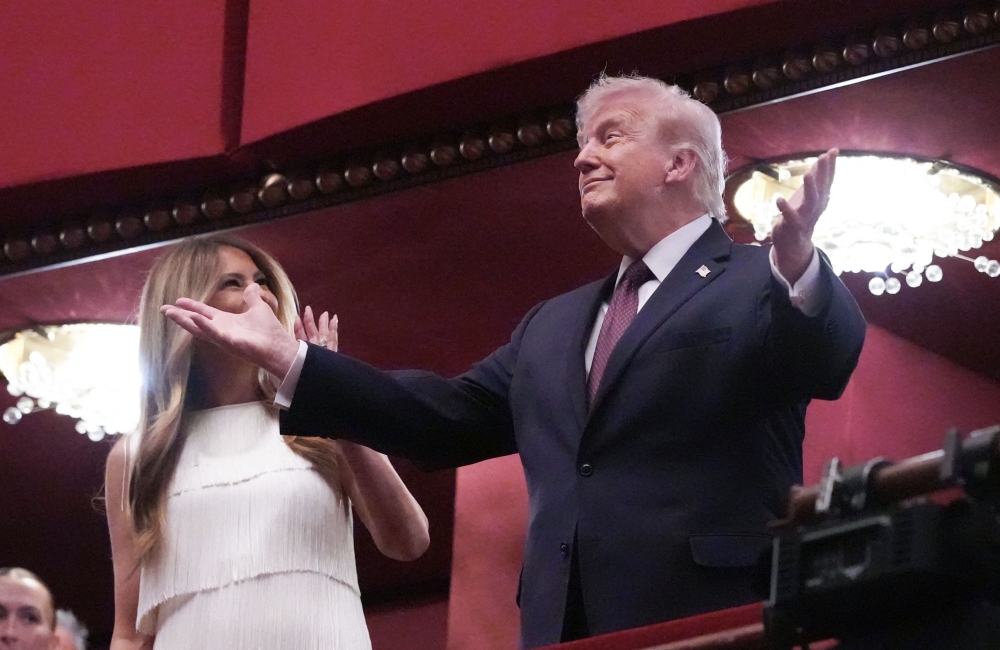
US President Donald Trump and US First Lady Melania Trump attend the opening night of ‘Chicago’ at the Kennedy Center in Washington, DC, on March 31, 2026. — AFP pic

Wednesday, 01 Apr 2026 9:27 AM MYT


WASHINGTON, April 1 — US President Donald Trump said yesterday the countries that have not joined the Middle East war but are struggling with fuel shortages should “go get your own oil” in the Strait of Hormuz.

In a Truth Social post, Trump said countries “that refused to get involved” should “build up some delayed courage, go to the Strait, and just TAKE IT,” adding that the US would not help them.


“The U.S.A. won’t be there to help you anymore, just like you weren’t there for us. Iran has been, essentially, decimated. The hard part is done. Go get your own oil!”

US Defense Secretary Pete Hegseth echoed that message during a news conference yesterday.


“This is an international waterway that we use less than most, in fact dramatically less than most,” Hegseth said.


“It’s not just our problem set, going forward, even though we have done the lion’s share of preparation to ensure that that strait will be open,” he said.

Hegseth also said that the next days of the Iran war will be “decisive,” while refusing to rule out US ground forces playing a role in the conflict.


“The upcoming days will be decisive. Iran knows that, and there’s almost nothing they can militarily do about it,” Hegseth said.

Asked about concerns among some of President Donald Trump’s base about the possible use of ground troops in Iran, Hegseth declined to tip his hand.


Iran talks ‘gaining strength’

“You can’t fight and win a war if you tell your adversary what you are willing to do, or what you are not willing to do, to include boots on the ground,” he said.

“If we needed to, we could execute those options on behalf of the president of the US and this department. Or maybe we don’t have to use them at all — maybe negotiations work,” Hegseth said.

The Pentagon chief said talks on ending the war were making progress even as the more than month-long US-Israeli military campaign against the Islamic republic continued.

“They are very real. They are ongoing, they are active, and I think, gaining strength,” Hegseth said of the negotiations.

He also said he had made an unannounced trip to visit US troops taking part in operations against Iran.

“We were on the ground in CENTCOM on Saturday for about half the day. For reasons of operational security, so those troops are not targeted, the places and bases will not be named,” Hegseth said, referring to the US command responsible for the region.

“Suffice it to say, the trip was an honor. I had a chance to bear witness, and I witnessed the best of America,” he said.

General Dan Caine — the top US military officer — spoke alongside Hegseth, saying that US forces have struck more than 11,000 targets so far.

The US “continues to destroy Iran’s ballistic missile and (drone) capabilities. We remain focused on interdicting and destroying the logistical and supply chains that feed these programmes,” he said. — AFP


***


You frigging MORON, the straits was perfectly and peacefully opened UNTIL you and your shailok MASTER attacked Iran. You should now pay Iran war reparation, you frigging dumbo.


Two-thirds of Americans want swift end to Iran war even if US goals unmet, poll finds


Two-thirds of Americans want swift end to Iran war even if US goals unmet, poll finds


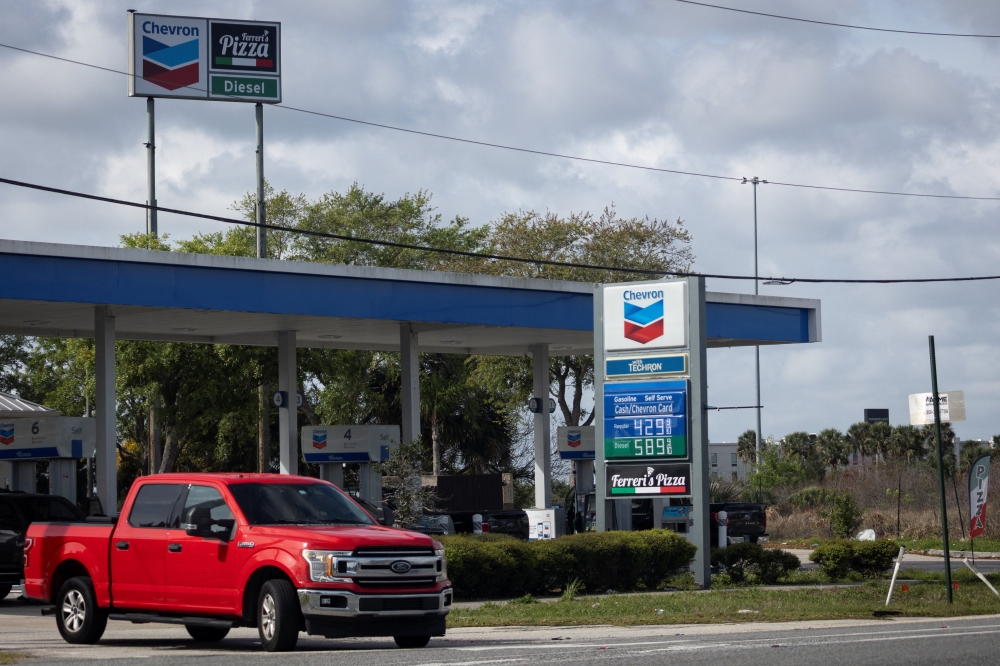
Gas prices are displayed at a gas station as the prices of oil and gas surge, amid the US-Israel conflict with Iran, in Titusville, Florida, US, March 31, 2026. — Reuters pic

Wednesday, 01 Apr 2026 10:04 AM MYT


WASHINGTON DC, April 1 — Two-thirds of Americans believe that the US should work to end its involvement in the Iran war quickly, even if that means not achieving the goals set out by the Trump administration, a Reuters/Ipsos poll found.

Some 66 per cent of respondents to the poll, conducted Friday through Sunday, voiced that view, while 27 per cent said the US should work to achieve all its goals in Iran, even if the conflict goes on for an extended period. Six per cent did not answer the question.


Among Trump’s Republicans, 40 per cent supported ending the conflict quickly even if it did not achieve US goals, while 57 per cent supported a longer involvement. The month-long war has spread across the Middle East, killing thousands of people and has hit the global economy with soaring energy prices, fuelling global inflation fears.

A total of 60 per cent of respondents said they disapproved of US military strikes on Iran, while 35 per cent approved in the survey of 1,021 people. One of the war’s most visible effects in the US has been the rising cost of gasoline, which rose above US$4 a gallon on Monday for the first time in more than three years, data from price tracking service GasBuddy showed.

Two in three respondents said they expected gas prices to worsen over the next year, including 40 per cent of Republicans.


Trump’s Republicans face voters in November for midterm elections that will decide whether they can hold onto slim majorities in the House and Senate. The incumbent president’s party tends to lose seats in Congress in midterm elections.

More than half of respondents thought the conflict will have a mostly negative impact on their personal financial situation, including 39 per cent of Republicans surveyed. — Reuters


Two more medical experts to testify in Zara Qairina inquest


Two more medical experts to testify in Zara Qairina inquest


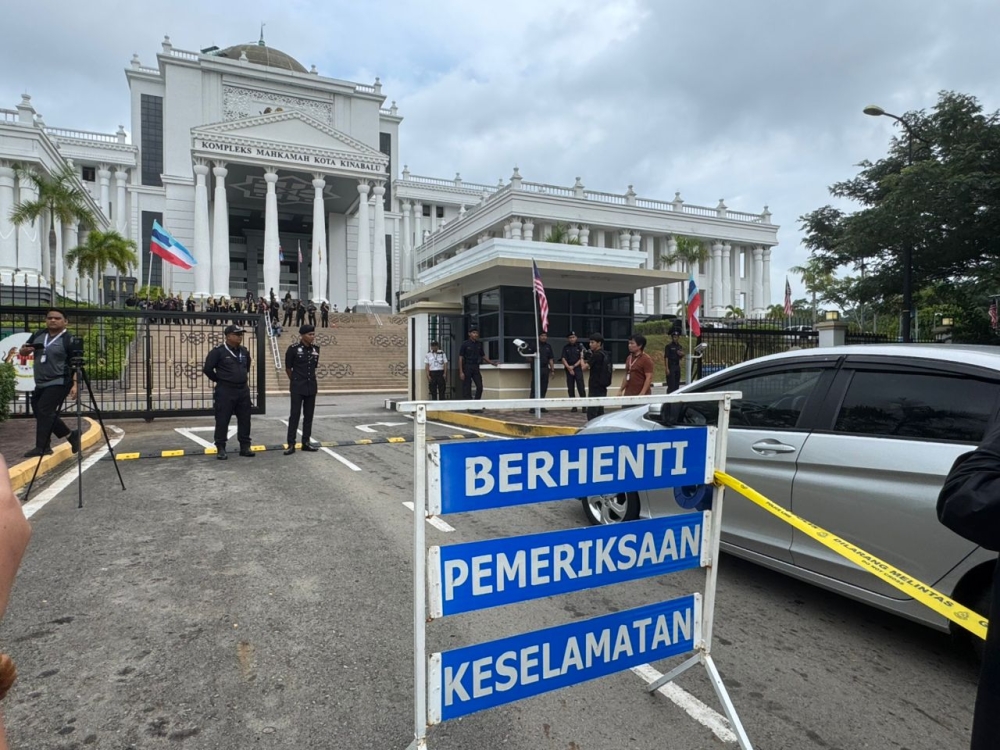
Police conduct security controls in front of the court complex in Kota Kinabalu. The inquest proceedings into the death of Zara Qairina Mahathir will continue with testimony from two more expert witnesses, comprising medical specialists, in sessions scheduled to take place in April. — Borneo Post pic

Wednesday, 01 Apr 2026 11:21 AM MYT


KOTA KINABALU, April 1 — The inquest proceedings into the death of Zara Qairina Mahathir will continue with testimony from two more expert witnesses, comprising medical specialists, in sessions scheduled to take place in April.

Lawyer Shahlan Jufri, representing Zara Qairina’s mother, said the next witness to be called was Dr Chua Sze Huang, a psychiatrist at Hospital Mesra, Bukit Padang here, who is set to testify this Thursday.

He said Dr Chua was expected to present findings from an 84-page psychiatric report on Zara Qairina’s condition prior to the tragic incident on July 16 last year.

“That is a report from a psychiatric specialist on Zara’s condition after interviewing her parents and several others. The report has been prepared, and we received it on March 5.


“We have requested some time to question the doctor, possibly within this month after Thursday, as we need to examine the report in detail,” he told reporters after the inquest proceedings here yesterday.

Shahlan said another witness, pathologist Datuk Seri Dr Phupinder Singh, was also scheduled to testify in the next inquest session.

He said this week’s proceedings would continue until Thursday before resuming from April 13 to 17.


Zara Qairina, 13, died at the Queen Elizabeth Hospital on July 17, 2025, a day after she was found unconscious in a drain near the dormitory of Sekolah Menengah Kebangsaan Agama Tun Datu Mustapha, Papar.

On August 13, 2025, the Attorney General’s Chambers (AGC) ordered the inquest after reviewing the police investigation report, while on August 8, 2025, the AGC issued an order to exhume the girl’s body to enable a post-mortem to be conducted. — Bernama


Driver at centre of viral Klang crash faces murder charge, pleads guilty to drug offence


Driver at centre of viral Klang crash faces murder charge, pleads guilty to drug offence


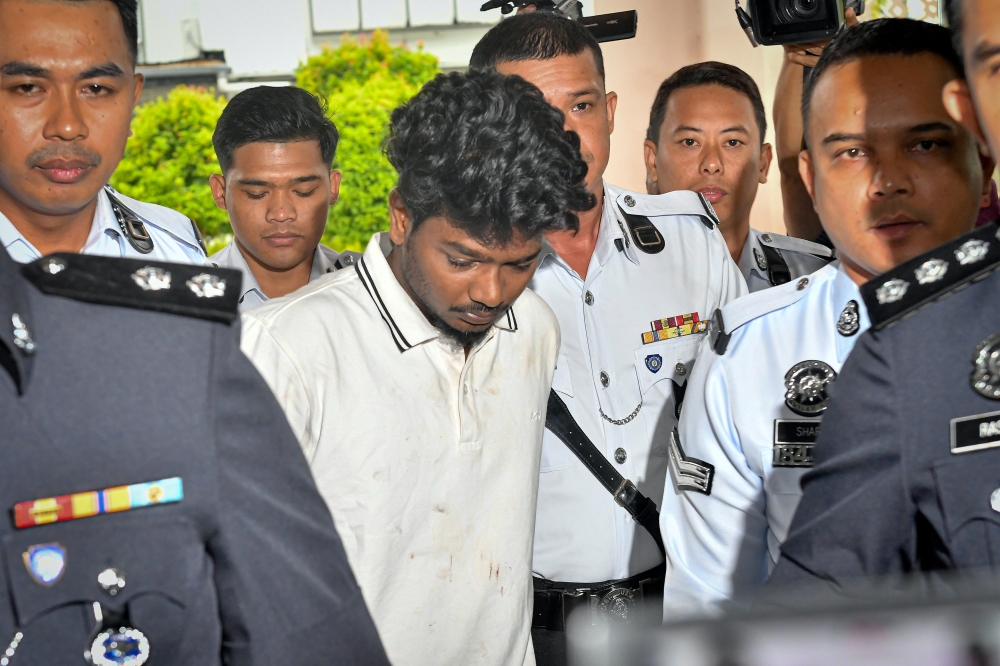
The driver at the centre of a viral crash that hurled a motorcyclist onto another car was brought before the Magistrates’ Court here today to face a murder charge and a separate drug offence. — Bernama pic

Wednesday, 01 Apr 2026 11:26 AM MYT


KLANG, April 1 — The driver at the centre of a viral crash that hurled a motorcyclist onto another car was brought before the Magistrates’ Court here today to face a murder charge and a separate drug offence.

According to Sinar Harian (SH), R. Saktygaanapathy, 28, nodded to indicate he understood when the murder charge was read before Magistrate A. Karthiyayini. No plea was recorded as the case falls under the jurisdiction of the High Court.

He is accused of murdering Amirul Hafiz Omar, 33, on Jalan Raya Barat at 11.47am on March 29.

The charge is framed under Section 302 of the Penal Code, which carries the death penalty or imprisonment of between 30 and 40 years. If the death sentence is not imposed, the law requires no fewer than 12 strokes of the cane.


Separately, Saktygaanapathy pleaded guilty to a charge of self‑administering drugs believed to be benzodiazepines and tetrahydrocannabinol (THC), SH reported.

The offence was allegedly committed at the Narcotics Office of the Klang District Police Headquarters at 3.30pm the same day.

That charge was brought under Section 15(1)(a) of the Dangerous Drugs Act 1952, which provides for a fine of up to RM5,000 or a maximum two years’ imprisonment upon conviction.

Deputy public prosecutor Raja Zaizul Faridah Raja Zaharudin conducted the prosecution, while the accused was unrepresented.


***


The charge for an alleged offence is very serious and the accused must be punished if found guilty. But I don't like the fact that for such a serious charge the accused was UNrepresented.

I also wonder whether the AG Office has been 'pressured' by socio-political pressure to bring about such a serious charge. I don't like it at all.