Thursday, May 01, 2025

Ukraine, US sign minerals deal sought by Trump

Reuters:


Ukraine, US sign minerals deal sought by Trump


May 1, 2025
8:54 PM GMT+10
Updated 10 min ago

The agreement is central to Kiev's efforts to mend ties with Trump and the White House, which frayed after he took office in January.


Summary

  • Deal positions two countries to boost Ukraine's recovery
  • Ukraine official says US may provide new assistance
  • Signing follows months of negotiations, frayed ties
  • Ukraine official says Kyiv decides what, where to mine


KYIV/WASHINGTON, April 30 (Reuters) - Ukraine and the U.S. on Wednesday signed a deal heavily promoted by U.S. President Donald Trump that will give the United States preferential access to new Ukrainian minerals deals and fund investment in Ukraine's reconstruction.

The two countries signed the accord in Washington after months of sometimes fraught negotiations, with uncertainty persisting until the last moment with word of an eleventh-hour snag.

The accord establishes a joint investment fund for Ukraine's reconstruction as Trump tries to secure a peace settlement in Russia's three-year-old war in Ukraine.

The agreement is central to Kyiv's efforts to mend ties with Trump and the White House, which frayed after he took office in January. Ukrainian officials have hoped that the deal would ensure continued U.S. support for Ukraine's defence against Russia.

U.S. Treasury Secretary Scott Bessent and Ukrainian First Deputy Prime Minister Yulia Svyrydenko were shown signing the agreement in a photo posted on X by the Treasury, which said the deal "clearly signals the Trump Administration's commitment to a free, sovereign, prosperous Ukraine."

Svyrydenko wrote on X that the accord provides for Washington to contribute to the fund.

"In addition to direct financial contributions, it may also provide NEW assistance - for example air defense systems for Ukraine," she said. Washington did not directly address that suggestion.

The U.S. has been Ukraine's single largest military donor since Russia's 2022 invasion with aid of more than 64 billion euros ($72 billion), according to the Kiel Institute in Germany.

Before the signing, Trump repeated on Wednesday that the U.S. should get something for its aid to Kyiv, thus the effort to secure a deal for Ukraine's plentiful deposits of rare earth minerals.

In announcing the deal, the U.S. Treasury said the partnership recognized "the significant financial and material support that the people of the United States have provided to the defense of Ukraine since Russia's full-scale invasion."


UKRAINE CONTROLS EXTRACTION DECISIONS


Item 1 of 5 U.S. Treasury Secretary Scott Bessent and Ukrainian First Deputy Prime Minister Yulia Svyrydenko sign a deal that will give the United States preferential access to new Ukrainian minerals deals and fund investment in Ukraine's reconstruction, in Washington, D.C., U.S., April 30, 2025, in this picture obtained from social media. 


Svyrydenko said the accord allowed Ukraine to "determine what and where to extract" and that its subsoil remains owned by Ukraine.

Ukraine is rich in natural resources including rare earth metals which are used in consumer electronics, electric vehicles and military applications, among others. 

Global rare-earth mining is currently dominated by China, which is locked in a trade war with the U.S. after Trump's sharp tariff increases.

Ukraine also has large reserves of iron, uranium and natural gas.

Svyrydenko said Ukraine has no debt obligations to the United States under the agreement, a key point in the lengthy negotiations between the two countries.

The deal also, she said, complied with Ukraine's constitution and Ukraine's campaign to join the European Union, key elements in Ukraine's negotiating position.

The minerals deal and U.S. peace efforts have been negotiated separately but reflect Washington's approach to Ukraine and Russia. Trump has upended U.S. policy by softening the U.S. stance toward Russia and sometimes falsely blaming Ukrainian President Volodymyr Zelenskiy for the war.

U.S. peace proposals have called for recognition of Russia's claim to Crimea, which it seized from Ukraine in 2014, and potentially four other Ukrainian regions. Zelenskiy has said Kyiv would never do so because it would contravene Ukraine's constitution.

"Importantly, the Agreement sends a signal to global partners that long-term cooperation with Ukraine - over decades - is not only possible but reliable," Svyrydenko said on X.

A draft of the U.S.-Ukraine agreement seen by Reuters earlier on Wednesday showed Ukraine secured the removal of any requirement for it to pay back the U.S. for past military assistance, something Kyiv had staunchly opposed.

The draft did not provide any concrete U.S. security guarantees for Ukraine, one of its initial goals.

Separately, Ukraine has discussed with European allies the forming of an international force to help ensure Ukraine's security if a peace agreement is reached with Russia.



Human rights abuses by Israel


Pearls and Irritations
John Menadue's Public Policy Journal


April 30, 2025


Israel is perpetrating a “live-streamed genocide” in Gaza, committing illegal acts with the “specific intent” of wiping out Palestinians, Amnesty International said in their annual report released on Monday.

This is an entry from: Live: Israel carrying out 'live-streamed genocide' in Gaza

“…events of the past 12 months — not least Israel’s live streamed but unheeded genocide of Palestinians in Gaza — have laid bare just how hellish the world can be for so many when the most powerful states jettison international law and disregard multilateral institutions, said Agnรจs Callamard, Amnesty International’s secretary-general.

The report documents how Israeli forces in Gaza have violated the United Nations Genocide Convention by “causing serious bodily or mental harm to civilians” and “deliberately inflicting conditions of life calculated to bring about their physical destruction”.

The report also noted that Israel has repeatedly “denied, obstructed and failed to allow and facilitate” humanitarian access to Gaza, and invaded the southern city of Rafah, despite warnings by the international community and the International Court of Justice about the “devastating effect it would have on the civilian population".

It also outlined how Israeli air strikes have frequently struck civilians who were following evacuation orders, while its forces continued to “arbitrarily detain and, in some cases, forcibly disappear Palestinians”.

“States watched on as if powerless, as Israel killed thousands upon thousands of Palestinians, wiping out entire multigenerational families, destroying homes, livelihoods, hospitals and schools.”

Israel and “its powerful allies, first among them the US, claimed that or acted as if international law did not apply to them”, Callamard observed.


Arresting a Judge


Consortium News
Volume 30, Number 120 —Wednesday, April 30, 2025


Arresting a Judge


This is bigger than what happened in Milwaukee, says Andrew P. Napolitano. The White House is assaulting the separation of powers and the concept of federalism.


F.B.I. agents arresting Judge Hannah Dugan in Milwaukee on April 25. (F.B.I./Wikimedia Commons/ Public Domain)

By Andrew P. Napolitano


Last week the F.B.I. arrested a Wisconsin state judge as she was walking into the courthouse where she works. The feds had alerted the media — but not the judge — to this event, and they arrived and recorded the arrest.

The standard and preferred practice when arresting a nonviolent person who is a public official with deep roots in the community is to invite the person to surrender with counsel.

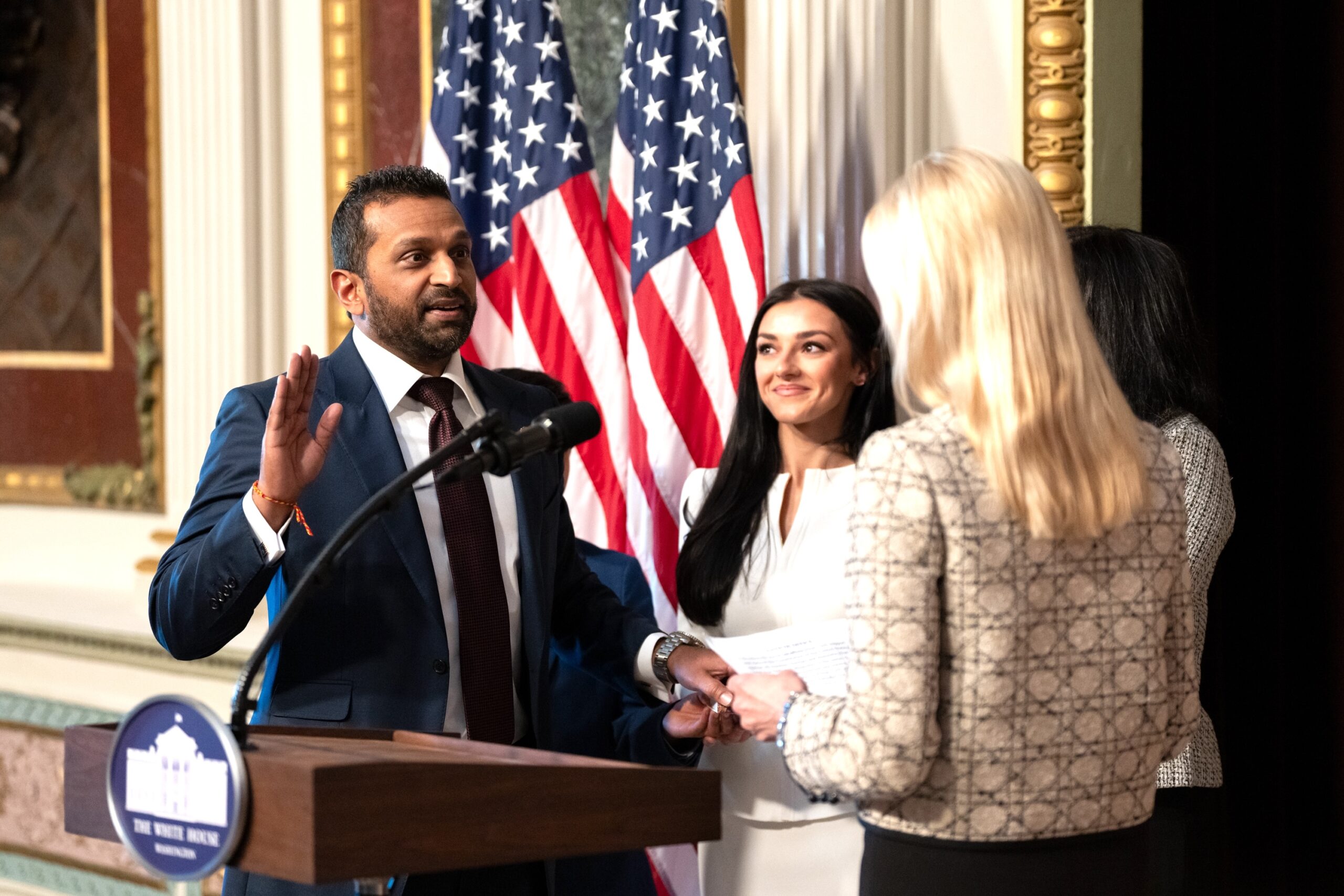
Instead, without notice, this judge was stopped on a public street, handcuffed behind her back — a technique reserved for the most dangerous or threatening individuals — and within minutes, the F.B.I. director himself had posted a photo of this event on his X account.

The feds were unhappy at the manner in which a criminal defendant before this judge was permitted to leave her courtroom. By leaving through a nonpublic exit, instead of through the doors where the feds were awaiting him, his departure frustrated the feds who apparently expected the judge to accommodate them. The technical charge against the judge is obstructing the administration of justice. The true charge was failing to aid the feds. [The Wisconsin Supreme Court suspended Dugan on Tuesday, CNN reports. Her next court appearance is May 15.]

Here is the backstory.

The feds have grown accustomed to commandeering the states to provide assistance when needed — and many states routinely complied. They did so either out of a sense of common purpose or because the feds had bailed them out financially.

Two Supreme Court cases, with largely compatible results, tested this relationship. The first, South Dakota v. Dole (1987), addressed the strings attached to the grants of federal funds to the states. Congress wanted to lower speed limits on highways and decided to bribe the states in order to achieve that goal. It offered huge amounts of cash for paving state and federal highways in return for reducing speed limits to 55 miles per hour.

When South Dakota told the feds that it would take the cash but not the lower speed limits, the Supreme Court ruled that so long as the strings attached to the financial grants are rationally related to the purpose of the grants, the strings are lawful and enforceable. So, South Dakota then took the cash and reluctantly lowered its speed limits. [The National Maximum Speed Law was repealed in 1995 and the state’s speed limit has since been raised.]

Ten years later, Congress enacted gun regulations and ordered the states to enforce them. In a case called Printz v. United States (1997), the late Justice Antonin Scalia wrote for the Supreme Court that the states are still sovereign, they can reject federal cash and federal strings, and the feds cannot commandeer their officials. The federal government, the court held, is one of limited constitutional powers, and the power to commandeer state officials is not among them.


Only Judges Issue Arrest Warrants


Kash Patel sworn into office as director of the F.B.I, by Attorney General Pamela Bondi in Washington, D.C., on Feb. 21. (White House)


Both of these rulings unambiguously recognized the sovereignty of the states. The South Dakota case led to vastly more congressional bribery — the states today simply do not refuse federal cash. The Printz case led to federal frustration. That frustration boiled over outside a Wisconsin courthouse last week when the feds did what was surely unthinkable to Justice Scalia — arresting a sitting state judge who refused to be commandeered by the feds.

Judge Hannah Dugan was presiding over an arraignment for a non-incarcerated defendant when her court officers told her that the feds were in the courthouse hallway seeking to arrest the defendant in her courtroom, and the feds were growing impatient. When she asked to see their arrest warrant, they had none. Instead of an arrest warrant issued by a judge, as the Fourth Amendment requires, they presented an administrative warrant in which one federal agent authorizes another to arrest a person in a public place.

Judge Dugan shares the view of your author that the Fourth Amendment means what it says and thus administrative warrants are blatantly unconstitutional, and she would not recognize it. The purpose of the amendment is to ensure that only judges order arrests. When her business with the defendant in her courtroom was completed, she asked him to leave through the exit used by jurors, which was not accessible to the feds.

She did not inform the defendant that the feds were looking for him, but he apparently sensed that something was up; and when he left the courthouse and was met by feds who were waiting for him, he ran. A brief chase ensued, but the six feds captured the one defendant.

A week later, Judge Dugan was arrested for obstruction of justice.

Her arrest implicates not only the Supreme Court cases above — Wisconsin never agreed to have its officials assist the feds in immigration enforcement in return for federal cash, and the feds cannot commandeer state officials, judges or police, to assist them — as well as the recent Supreme Court decision on immunity. Though that case addresses presidential immunity, it is instructive on the nature of government in America. It teaches that government officials cannot be criminally prosecuted for the exercise of their core functions.

So, if the secretary of defense directs Air Force jets to attack a structure in a foreign country he mistakenly identifies as military but which turns out to be civilian, he cannot be prosecuted for homicide. If F.B.I. agents raid and destroy the wrong house, they cannot be arrested for breaking and entering. And if a judge tells a defendant to leave her courtroom from door A and not door B, because behind B are folks with a phony warrant, she cannot be prosecuted.

This is bigger than Judge Dugan. We are witnessing an unprecedented assault on the separation of powers and the concept of federalism by a White House impatient with the constitutional process and largely indifferent to the role and function of the judiciary. The role of the judiciary is to be anti-democratic — to protect lives, liberties and properties from the other two branches.

If the feds succeed in intimidating judges and bending them to the presidential will, our liberties will have no protection.

Andrew P. Napolitano, a former judge of the Superior Court of New Jersey, was the senior judicial analyst at Fox News Channel and hosts the podcast Judging Freedom. Judge Napolitano has written seven books on the U.S. Constitution. The most recent is Suicide Pact: The Radical Expansion of Presidential Powers and the Lethal Threat to American Liberty. To learn more about Judge Andrew Napolitano, visit here.

Published by permission of the author.

COPYRIGHT 2025 ANDREW P. NAPOLITANO

DISTRIBUTED BY CREATORS.COM

Albanese’s Unlikely Challenger


Consortium News
Volume 30, Number 120 —Wednesday, April 30, 2025


Albanese’s Unlikely Challenger


AUS ELECTION: Running against Anthony Albanese in the Australian prime minister’s Sydney district on Saturday is the unlikely figure of a two-time, Oscar-nominated film director who’s mad as hell and can’t take it anymore.

David Bradbury is hardly new to politics. As a political science graduate he began his career as an ABC radio journalist and went on to become one of Australia’s most successful documentarians, winning many international film festival prizes, five Australian Film Industry awards and two Academy Award nominations for films that often take on difficult political issues.

CNLive! spoke to David Bradbury about his latest political challenge: raising his voice against a Uni-party he believes is taking Australia in the wrong direction, towards war and the impoverishment of its people.

Bradbury’s Oscar-nominated films are Frontline (1979), about the Vietnam war cinematographer and correspondent Neil Davis; and Chile: Hasta Cuando? (1985) about the Pinochet regime. His latest film, The Road to War is about Australia’s AUKUS military alliance with the United States and the United Kingdom, both in his view dangerous allies.

Interviewer and Producer: Cathy Vogan. Time: 19m 10s.

TRANSCRIPT

This is Cathy Vogan for Consortium News, and I’m just entering the headquarters of David Bradbury, renowned Australian film maker who is running in the upcoming election next week in the seat of Grayndler [in Sydney] against Mr. Albanese. David, what brought you to run in this election?

BRADBURY: I’ve got rocks in my head. That’s what brought me here, because I thought that it was going to be a tough battle, and I’ve never had any really serious delusions that I can actually beat the Prime Minister. But I want to make a dent in the popularity of his image, both nationally and here within Grayndler, because I’m disgusted by the two party system, both Albanese and the Labor and, Dutton, even more so, under the Libs and Nationals.

You always knew what we got with the Tories, but with Albanese, it’s been a total sellout for the people that the Labor Party, with its proud traditions for over 150 years or so, stood up for and, I just know now that the two party system is moribund. It’s got to be replaced by vibrant independents, other parties, minority parties like the Greens, the Teals, and we can get democracy in Australia back on track.

VOGAN: Oh, may I take a seat, David, so that I can talk to you about specifics? You made a great film just recently about AUKUS and the submarines. It was about a year and a half ago.Tell us about that aspect of your policy.

Well, I guess that’s what motivated me, Cathy, to decide to run, because I have a great fear, a great concern both as an anti-nuclear activist for over 50 years and as a result of my international reporting in war zones over the planet for the last 45 years. And I say very much, there’s a very real likelihood that Australia will be dragged into a nuclear war by the United States with China.

And, there are no winners at war any way. But if it’s a nuclear war, which it will most likely, pretty quickly turn into, then Australia is going to be the prime casualty for that. It makes sense from a realpolitik point of view, for China, or Russia, to send an inter-continental ballistic missile into Australia’s backyard, like Pine Gap, which is the second most important military strategic spy base in the world for the United States.

It has the advantage of taking it out and rendering it useless, so it can’t spy on what the Russians are doing and what the Chinese are doing, but it also means that it doesn’t automatically end up in mutual reciprocity and mutual destruction between the United States and China or Russia. But for us, it’s a total disaster. It means that the town of Alice Springs, just 27km away from Pine Gap, will be totally annihilated.

If the government were to send in nurses and doctors, paramedics and emergency operators, they would have to ask for volunteers because basically it’s like Chernobyl. It’s a death mission there to go into that. And depending upon what happens when the winds are blowing at the time that nuclear blast happened over Pine Gap, the winds would either blow it over eastward towards our major cities of Brisbane, Sydney and Melbourne, or westwards over towards Perth and lesser populations.

But either way, the world and Australia will never be the same again, and I see that as a real distinct possibility. Push comes to shove between the United States and China that we will be dragged into that we’ve already got B2 nuclear loaded bombers in Tyndall, up in Northern Territory near Katherine. We’ve got B-52 bombers similarly armed, potentially with nuclear weapons, which did all the destruction 50 years ago during the Vietnam War.

We’ve got HMAS naval base in Perth, which is allowing nuclear US warships and submarines which are loaded up with missiles that can blow, one submarine can blow 24 cities off the map in something like about 19 minutes.

And aside from the nuclear submarines that we’ve hoping to get, that $368 billion represents $35 million a day of our taxes. That’s going 365 days a year for the next 30 years, which means that we won’t have the money for public hospitals, public health, public education and public housing, or even affordable housing.

We could have a standard of living equating to Scandinavian countries if we played it smart and didn’t put our taxes into the war weapons manufacturers in the United States and Great Britain, France, Germany and here in our own country. But we don’t. We have lame-brained politicians who basically are going with the people that fuel their campaigns every three years.

It costs a lot of money, as I can tell you, at the grassroots level, to be able to run a political party at election time, to guarantee that your side is going to get in. It costs you millions of dollars. And that means people paid workers. That means hundreds of thousands of dollars in television ads. I mean, $100,000 in propaganda printing materials and so on.

And that basically makes it a contest between Tweedledum Dutton or Tweedledee Albanese. And that’s what’s taken genuine democracy and genuine choice out of the parliamentary system. So that’s why I’m standing basically to say at 73 years of age, I can’t take it anymore. Yeah. And I’m hoping a lot of Australians will see that as well.

VOGAN: I understand, David, because you’ve been deeply involved in politics, as well as being a superb independent film maker that has been nominated for two Academy Awards. You know what you’re doing, but you’ve been deeply involved in the history of Australian politics and international politics for a long time. Could I move on? I saw you at a meeting at Glebe Town Hall about two weeks ago, and that was in relation to the Israel-Palestine issue. And we’ve just seen Blinne Nรญ Ghrรกlaigh back in the ICJ [International Court of Justice]. This wonderful Irish barrister spoke 12 hours ago about what’s happening in Palestine.

What would you do to help those people? And do you think that that’s a very important issue for Australians?

BRADBURY: I was in the United States two days before Trump got elected in November last year, and I stayed until the inauguration, filming for that three months, three times a week, about the good Americans that were going out to protest against the bombing of Gaza.

I watched in disbelief as my fellow protesters and anti-war activists did, as Blinken and Biden gave approval after approval for container ship load after container ship load of 2,000 pound bombs, cluster bombs, ammunition, to basically shore up the IDF, the Israeli Defense Force.

And I watched with disbelief in going into the Congress, into the Senate building week after week, as these brave protesters went to see senators and congressmen and women to appeal to them, to stop the bombs flowing by the Biden administration.

And, they got nowhere at all because America is basically taken over by the weapons and the corporations, manufacturers and so on like that.

VOGAN: And lobby groups.

BRADBURY: And lobby groups, yeah. And the Israeli Zionist lobby in the United States, I couldn’t believe it. I knew it was strong. I know it’s strong here, but going into that seat of power where every fourth office that I went down with my camera, there was a flag for Israel, and there was a flag for the United States, stars and stripes.

And there was a big sign next to the office of the congressmen, woman or senator saying: “We stand with Israel”. And, you know that’s why there’s no hope for the poor Palestinians to getting anything out of the two party system, the Democrats or the Republicans. And it’s the same here with Labor and with the Liberals and Nationals.

Before, it never would. Tom Uren, a prisoner of war of Nagasaki when the bomb was dropped over Nagasaki; supposedly Albanese’s mentor and political godfather that taught him everything he knows. And Jim Cairns, who led the moratorium marchers at the time of the Vietnam War. Gough Whitlam himself… Albanese has a photograph of [former Prime Minister Gough [Whitlam, deposed by the Royal Palace and the C.I.A. in 1975] in his office. What does that mean to Albanese, that is funding basically a defense industry?

There are so many companies in Australia that produce vital component parts for the Lockheed Martin F-35 fighter. That’s the fighter bomber that drops those 2,000 pound bombs on all those innocent people in Palestine, in the West Bank and Gaza and South Lebanon. And Australian companies, to the tune of over 70 companies, are providing those little important component parts that make the difference between whether bomb doors open or not, where the computers that [provide] radar and all that.

Albanese and [Defence Minister] Richard Marles and Paddy Conroy, the minister for defense supplies and industries, they could overnight stop that by saying a) We’re not going to give you any subsidies to produce them in Australia; b) we’re not because you’re complicit in war crimes by sending those component parts over to Lockheed Martin in the United States, to be able to send the F-35 bombers to the IDF.

VOGAN: So, yes. The Teals [Independents], some of the Teals and the Greens are really very concerned. But one of the problems in Australia is, like America, it’s not so easy to speak out about what’s going on in Gaza, and the West Bank as well. People are frightened.

BRADBURY: And why do you think they’re frightened Cathy? Is it because of this Zionist lobby we saw come down in the last 12 months with these, you know, rabid Zionists? I call them rabid. They just target people. They use hate emails. But then when you turn around and say there’s something basically inhumane, something genocidal about what Netanyahu and the IDF is doing in Israel, they then throw the Holocaust, antisemitic card. I’m over that bullshit. You know, they’ve been playing that for so long while they’re doing the same things to the Palestinian people as Hitler and the SS Nazis did to the Jewish people.

And I’m ashamed of Mark Dreyfus, the attorney general who is the grandson of Holocaust victims from Poland that were put into the gas chambers, that he knows better, or should know better, but he’s lining up with his Zionist buddies, going and doing the job that Penny Wong should have been sent over as a foreign minister to do, because he’s Jewish and because he’s a sycophant to the Netanyahu regime.

VOGAN: Well, anti-Semitism wasn’t a problem in Australia before people saw what was going on in Gaza, I mean, really. Don’t you think, well first of all, that that’s been blown up quite a bit, and also that people have something genuine to complain about.

BRADBURY: Yeah, I think it’s tragic that it’s taken the murder of over 50,000 innocent people [in Gaza] in order to be able to put it in perspective, and that started to creep through mainstream media.

Of course, even the ABC, with its so-called objectivity, with some exceptional reporting by John Lyons, doesn’t really give the full picture. We’ve never heard on our mainstream media that Palestine existed before the Second World War for centuries, and Jewish people lived in harmony next to their Palestinian neighbors.

VOGAN: And Christians.

BRADBURY: And Christians as well. But suddenly in 1947, when England discovered it had a Jewish problem and it had a problem of the Jews, what do we do with them? They were displaced in Germany and Poland and in Russia and the Soviet Union, and in England. Quite frankly, at the time, Britain was quite racist towards Jews, and they saw them as being a problem politically and so on. So what did they do? They developed a thesis of bringing them over by ships and landing them into the Holy Land.

And they took over the Palestinian lands, their vineyards, their villages, they armed the Israeli militia who put up all of the young boys from the age of 11 against a village wall – teenagers, men, old men – and shot them. And those guns were supplied by the Brits with the support of America as well, to solve the Jewish problem. That’s where it’s come about.

And bit by bit, through the ’67 Six-Day War, Israel expanded its territory more, now to the point where the poor Palestinians are basically going to be shipped out to anywhere Netanyahu and Trump can send them, so that Trump can make beautiful real estate, beachside properties, and make a lot of money for his family, and Netanyahu as well.

And it’s it’s beyond a shame that the party of the little people, that the little Aussie battler that the Labor Party used to represent is not speaking out about that issue. Gough Whitlam, when he got into power, straightaway stopped our involvement with Vietnam, brought the troops back home. A wonderful movement of human wisdom and intellect. Why doesn’t Albanese follow on the steps of his so-called hero?

He won’t even listen to [former Prime Minister] Paul Keating’s advice that the subs are none of our business. They are lemons, and get out of it there, Albo.

VOGAN: Yeah, well, [Israeli national security minister Itamar] Ben-Gvir is in the United States at the moment, and there’s been quite a lot of protesting from Code Pink, even inside the Capitol. But it seems like one side of politics in Australia would welcome Ben-Gvir, a convicted criminal, to Australia. Albo hasn’t said much about that, has he? What do you think?

BRADBURY: He’s in the position now that we saw how the Arab vote, the Muslim vote went, how it’s going, on Saturday. His mate, Minister Tony Burke, for instance, is fighting for his seat. And, Albanese is going to see a swing against him as well. He’ll get in, I’m pretty sure. He’s a smart operator, and although from his student days, up until two years ago he was a strong, solid supporter of Palestine, politically because of the lobby of the Zionists, within the legal sections, within the media, Murdoch and and so, he just plays it very quietly and tries to be a Tweedledee or Tweedledum in the middle ground.

And that is a shame, because to be a leader of a great country like Australia Cathy, you have to lead. You have to have a vision of what is right and you take the people with you. You don’t listen to the rabid extremists on either side, the left or the right. You go where you know your heart and your conscience tells you. And Albanese hasn’t yet found the, ability, the grace, the courage basically. It takes it takes a lot of guts to to do that with this sort of opposition.

And that is the shame of it, because he will go down in history as being just another prime minister like Johnny Howard goes down in history. But not the great leader that he could be in standing up to the great Australian tradition, which is why we sent men and women off to the Second World War to fight Nazism, to fight extreme fascism.

And that’s what we should be doing, not sending in troops into Palestine, but certainly sending in peacemakers and nurses and paramedics and builders and, the ADF to drop supplies. I mean, what Netanyahu and what the IDF is doing is like… I can’t get words to it. I feel so… I’m moved to tears, like we all are by what’s happening, in our time.

VOGAN: There is a word.

BRADBURY: What is it?

VOGAN: It starts with g

BRADBURY: Genocide. Yes, that’s what it is. That’s what it is folks. It’s genocide. Until we the people tell our leaders it’s not on, not in our name, we don’t want this happening to other fellow human beings on the planet. Get those fascists out of there. That’s what’s going to take. And only that.

Your vote counts on Saturday. But it also counts for every 365 days in the year, between where you put your money, and where you put your vote, your attitudes, your super funds, and so on. Until we get to a point where we really make them squeeze and hurt, the big banks and all the big war manufacturers and so on, we’re going to have more and more of the same, and things are only going to get worse as the planet gets smaller and smaller, with its resources and its ability to give.

Resources that would take seven planets for us all to live at the lifestyle that we in the first world enjoy and take so much for granted. We’ve got climate change kicking in, we’ve got bushfires and floods, tornadoes all over the world. And what is Albanese and what is Dutton doing about that? Oh they’re saying, We’ll give you a $14 break at the petrol pump.Or we’ll give you maybe some tax relief this year.

They should be turning the ADF (Australian Defence Force) into being like the SES, well-trained and abl to do that. That’s for starters. They should be saying stuff off to the fossil fuel companies. We have a responsibility to the young kids of this generation, the teenagers, young people in their 20s and babies who are being born now. Not in 50 years time, when they will be dead and gone.

People would be looking back and saying, what did Albanese do about climate change? What did Dutton do about climate change in their day? Sweet FA. And that’s what’s going down now, at the moment, folks, and our kids are going to pay the price for it. Not in 50 years time, not in 20 years time, in the next five years time and less than that, because it’s going off all over the planet.

And that’s another major reason, as a father of five kids, I’ve come down to Sydney to stand against Albanese as a token voice in the wilderness to say, enough is enough. Albanese, please, please turn it around and do something decent before you die.


Growth Without Jobs, and the Malaysia That Must Emerge


Murray Hunter


Growth Without Jobs, and the Malaysia That Must Emerge


Samirul Ariff Othman
Apr 30, 2025


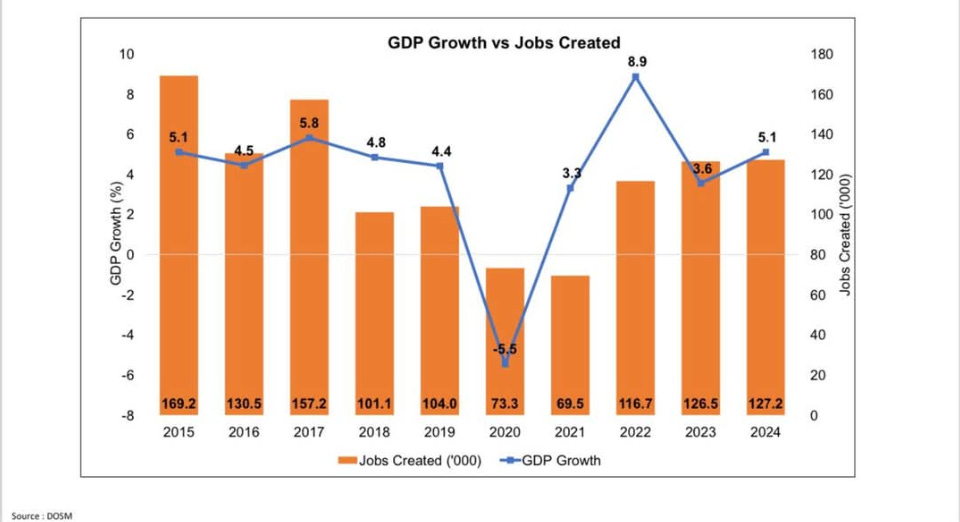
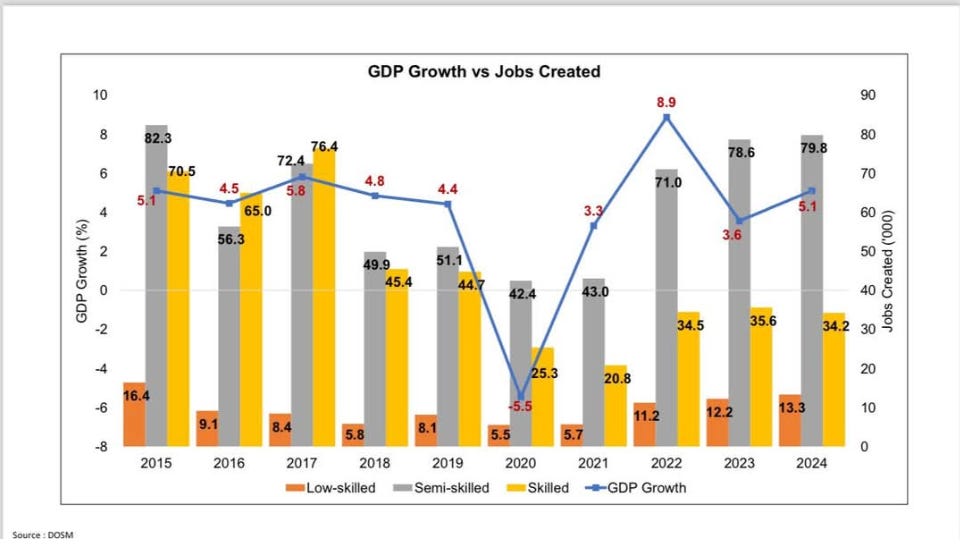
There’s a paradox unfolding in Malaysia right now—its economy is growing, but the jobs are not. Or at least, not the kind of jobs that make young graduates stay, build families, and innovate. Malaysia’s GDP is back on a solid growth path, climbing out from the pandemic pit with a dramatic 8.9% in 2022 and projected 5.1% in 2024. But job creation? It’s stuck in neutral. The number of jobs added each year has barely moved since before COVID-19. Worse, a disproportionate share of those jobs are low- and semi-skilled. In other words, Malaysia is revving its engine—but the wheels are spinning.


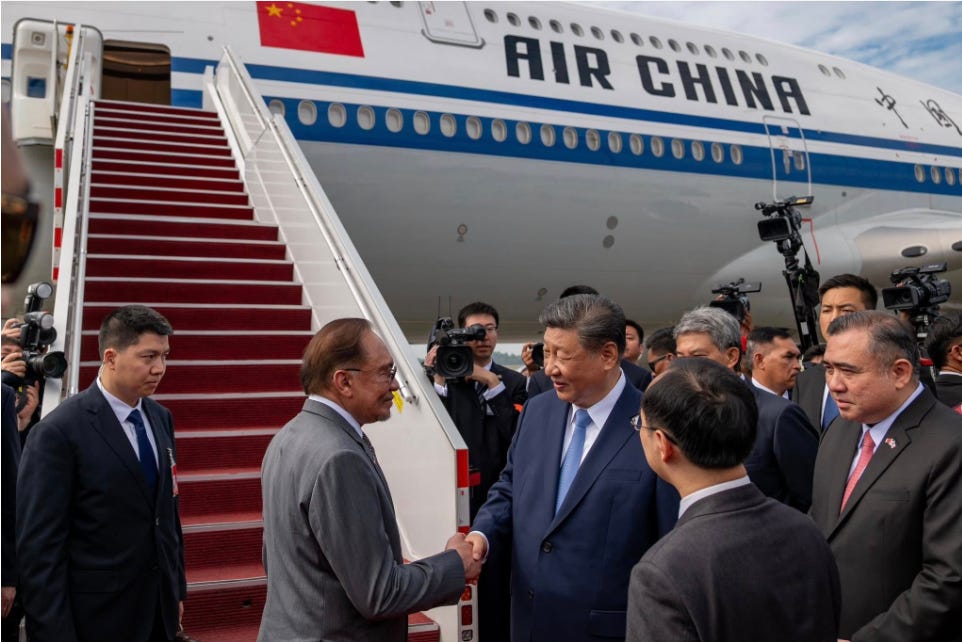
And then, there’s Xi Jinping’s state visit. It was more symbolically or strategically timed. With the United States raising the tariff walls even higher around Chinese goods, China is looking for new lanes—and Malaysia could become one. But here’s the thing: Xi’s visit should not be seen as just another round of economic courtship. It’s a stress test for Malaysia’s readiness to reposition itself in a world that is rapidly bifurcating between spheres of economic influence.

Let’s be clear: Malaysia doesn’t need to replace China’s US$500 billion in exports to the U.S. Nor should it become a mere backdoor for Chinese goods to dodge tariffs. That’s a race to the bottom. What Malaysia can be—and must be—is a strategic value-adder. A place where Chinese components are not just assembled, but improved. A location where R&D is done, certifications are issued, packaging is localized for Islamic and ASEAN markets, and software gets written to make hardware smarter.

The Western critique that Malaysia cannot absorb China’s export overflow often comes from a deeply outdated view of global trade—one that treats products as static goods rather than evolving platforms. The modern supply chain is not linear; it’s modular, iterative, and adaptive. Malaysia doesn’t need to absorb the whole trade volume. It just needs to plug itself into the right nodes—customization, final assembly, advanced testing, precision engineering, green tech—so that it becomes indispensable in the next chapter of global manufacturing.

Xi’s visit may have been more than fanfare. If handled right, it could catalyze:


• Joint ventures in semiconductors, electric vehicles, battery tech, and AI manufacturing.

• Chinese R&D centers being planted in Cyberjaya or Penang, giving local engineers a seat at the table.

• Revived Belt and Road projects—but with a smarter twist: not vanity infrastructure, but ports, logistics hubs, and digital corridors that align with ASEAN’s own supply chain integration goals.

But all of this hinges on one inconvenient truth: Malaysia can no longer afford to grow the wrong way. The charts from the Department of Statistics tell us all we need to know—skilled job creation has barely budged, even in years when growth soared. In 2022, just 11,200 skilled jobs were created out of 71,000 total. That’s less than 16%. In a country producing thousands of university graduates every year, that’s a recipe for brain drain, wage stagnation, and social frustration.

This disconnect between GDP and real jobs is a warning flare. Malaysia risks becoming a “pass-through” economy—goods come in, goods go out, and value is captured elsewhere. That is not a development model. That’s a holding pattern.

What Malaysia needs is alignment. Xi’s visit must sync with national goals like the New Industrial Master Plan 2030, the 12th Malaysia Plan, and the Madani Economic Framework. These frameworks emphasize high-value investments, sustainability, and digital transformation. Malaysia’s challenge is not lack of vision. It’s execution. It’s connecting the dots between investment, skills, and local value capture.


And this is where the China relationship becomes both an opportunity and a test. Malaysia must use this moment to demand more than capital. It must demand capacity building, technology transfer, and serious employment generation in return. That means structuring joint ventures to protect local interests. It means insisting on Malaysian engineers in the boardroom, not just in the factory floor. It means upskilling local SMEs and integrating them into global supply chains—not leaving them on the sidelines while big players shake hands.

This is Malaysia’s geo-economic balancing act. Play this right, and it becomes a neutral but strategic node in both China’s Dual Circulation Strategy and the West’s China+1 pivot. Play it wrong, and it becomes a glorified transshipment hub, forever reliant on someone else’s innovation, someone else’s market access, someone else’s future.

Here’s the final truth: Xi’s visit can be transformative—but only if Malaysia has the courage to ask for more, to think longer, and to demand better. That means not just growing the economy, but growing it in a way that creates good jobs, decent wages, and real opportunities for Malaysians—not just for Chinese exporters or foreign investors.

Because in today’s world, value creation is sovereignty. And the most strategic thing Malaysia can do right now is simple: make itself valuable.

———————————————————

Economist Samirul Ariff Othman is an adjunct lecturer at Universiti Teknologi Petronas, international relations analyst and a senior consultant with Global Asia Consulting. The views in this OpEd piece are entirely his own.


Kedah school sex harassment scandal: Principal, vice-principal step down, teacher gets sack amid police investigation


Kedah school sex harassment scandal: Principal, vice-principal step down, teacher gets sack amid police investigation


The police are investigating a former male teacher at the school following sexual harassment complaints filed by students and former students in April 2025. — Picture by Firdaus Latif

Thursday, 01 May 2025 4:44 PM MYT


ALOR SETAR, May 1 — The principal of Sekolah Menengah Keat Hwa (Persendirian) has resigned following a sexual harassment scandal involving a male teacher.

The school’s vice-principal has also stepped down temporarily while investigations continue, news portal Malaysiakini reported today.


Late last night, the school board said

as principal resigned for health reasons while vice-principal Khor Chee Beng is stepping down temporarily to allow the investigation to proceed smoothly.

The board has now formed a special task force to oversee school operations during this period and will file a formal report to the United School Committees’ Association of Kedah.

The school board plans to form an independent investigation team to look into any possible administrative misconduct.

“This team should consist of members of the association or individuals with public credibility. School board members and the parent-teacher association members will not be involved,” the board was quoted as saying in a statement last night.


The board also cancelled a planned school fundraising bazaar to focus fully on reforms and student safety.

The board expressed deep regret over the incident and said it trusts the law will ensure justice is served.

Malaysiakini also reported seven formal complaints to the police about the teacher have been filed to date, including six from former students.

Kota Setar district police chief Siti Noor Salawati said two investigation papers have been completed and sent to the public prosecutor.

The teacher, employed at the school since 2016, was arrested on April 17 and was later suspended by the school before being terminated.


Police detain another ‘Tan Sri’ businessman in Penang linked to R3.5b MBI Ponzi scheme, suspected proxy to mastermind


Police detain another ‘Tan Sri’ businessman in Penang linked to R3.5b MBI Ponzi scheme, suspected proxy to mastermind


A 53-year-old businessman who recently returned to Malaysia was arrested by police as a suspected proxy to the RM3.5 billion MBI fraud, allegedly founded by Penangite Tedy Teow Wooi Huat in 2012. — File picture by Farhan Najib

Thursday, 01 May 2025 2:50 PM MYT


KUALA LUMPUR, May 1 — A 53-year-old businessman suspected of involvement in the Mobility Beyond Imagination (MBI) Ponzi scheme, is currently being detained at the police lock-up in Jinjang here, marking the third high-profile arrest linked to the RM3.5 billion scandal.​

The suspect, the second person to bear a “Tan Sri” honorific title, was arrested in Penang at about 2am, New Straits Times reported today, citing an anonymous source familiar with the investigation.


Commercial Crime Investigation Department acting director Datuk Muhammed Hasbullah Ali confirmed the arrest, stating that investigations are ongoing.​

The 53-year-old is believed to have acted as a proxy for the scheme’s mastermind, assisting in laundering illicit proceeds.​


“The man had just returned to Malaysia,” the unnamed source told the newspaper, adding that police will seek a remand order against him.​


The arrest is part of “Op Northern Star,” an operation launched on April 18 targeting individuals involved in the MBI scheme.

Earlier phases of the operation led to the arrest of five people, including another “Tan Sri” and a “Datuk Seri,” for their alleged roles in the fraudulent activities.​


To date, authorities have seized and frozen assets worth RM3.51 billion, including a hotel, durian farms, luxury vehicles, watches, and bank accounts.​

The MBI Group International, founded by Malaysian businessman Tedy Teow Wooi Huat, operated a pyramid scheme disguised as a digital coin trading platform called MFC, promoting a virtual currency known as M-Coin.

Launched in Penang in 2012, the scheme expanded to China, Taiwan, Japan, and New Zealand.

By 2017, Malaysian authorities, led by Bank Negara Malaysia, raided MBI’s offices, leading to the freezing of hundreds of bank accounts.

The following year, the scheme collapsed, leaving thousands of investors with significant losses.​

Teow, often referred to as “Jho Low 2” due to similarities with the 1MDB scandal figure, was extradited from Thailand to China in August 2024.

He is accused of defrauding over 10 million investors across Asia, with Chinese authorities estimating losses exceeding 100 billion yuan (approximately RM65 billion).​

Investigations into the MBI scheme have been ongoing for over seven years.

Authorities continue to identify and apprehend individuals connected to the fraudulent operations, aiming to recover assets and provide justice to the victims.


Kindergarten pupil in Johor dies after allegedly being left in van for hours, driver under neglect probe


Kindergarten pupil in Johor dies after allegedly being left in van for hours, driver under neglect probe


Police are investigating a driver, 56, under Section 31(1)(a) of the Child Act 2001, for negligence or endangerment of a child after a five-year-old kindergarten pupil in Taman Bukit Indah died from being left alone for hours inside a school van on April 30, 2025. — Picture by Choo Choy May

Thursday, 01 May 2025 2:09 PM MYT


ISKANDAR PUTERI, May 1 — A five-year-old kindergarten pupil in Taman Bukit Indah has died after being found unconscious in a parked school van, where he was allegedly left alone for several hours.

Iskandar Puteri police chief ACP M. Kumarasan stated that the child is believed to have been left behind since approximately 7.30 am, when the driver dropped off other children at the school.

The boy was found unresponsive around noon and later pronounced dead. His body has been sent to Sultanah Aminah Hospital for a post-mortem examination.

“Police have arrested a 56-year-old man, identified as the van driver, in connection with the incident. He was detained at 2.40 pm yesterday in the same neighbourhood,” he said in a statement today.

Kumarasan added that the suspect has no prior criminal record and a urine test returned negative for drugs.

He is currently being held on remand for seven days under Section 117 of the Criminal Procedure Code, until May 7.

The case is being investigated under Section 31(1)(a) of the Child Act 2001, which pertains to negligence or endangerment of a child.

If convicted, the offender could face a fine of up to RM50,000, a prison term of up to 20 years, or both. — Bernama


Does Malaysia need a Ministry of Economy? (Part 1)


Murray Hunter


Does Malaysia need a Ministry of Economy? (Part 1)


Samirul Ariff Othman
May 01, 2025


Rafizi Ramli was given a ministry with a road to nowhere. The MoE could have been Malaysia’s DOGE.


Malaysia’s newest Ministry of Economy (MoE) was created to oversee long‐term planning and development. In practice, however, virtually all economic policy power remains elsewhere. Key financial controls lie with the Ministry of Finance (MoF) (which sets budgets and taxes), Bank Negara Malaysia (BNM, the central bank, which manages monetary policy), and the Prime Minister’s Office/Economic Planning Unit (PMO/EPU) (which coordinates national development plans). These agencies already handle budgeting, currency, and macroeconomic strategy, leaving the MoE with largely advisory and coordination roles . In short, critics argue the MoE has little independent power – it cannot raise revenue or print money, and many of its planning functions overlap with existing bodies.


• Budgetary and fiscal control in MoF: Malaysia’s Constitution vests revenue and expenditure authority in the Finance Ministry. As one study notes, the MoF “is the custodian of Malaysia’s public finances,” coordinating and scrutinizing state budgets, development programmes, and five‐year economic plans. In effect, any major spending decisions (development allocations, value management, debt issuance, etc.) must pass through the MoF. The MoE’s mandate to “determine ceiling and distribution of development expenditure” is therefore subordinate to MoF approval.

• Bank Negara’s monetary power: The central bank sets interest rates, manages currency and reserves, and oversees financial stability. By law, Bank Negara operates independently on monetary policy, meaning it can counteract or override fiscal moves. As a leading analysis explains, Malaysia’s macroeconomic policy is “coordinated by the EPU, Ministry of Finance and Bank Negara Malaysia” – with the PMO/EPU and MoF driving budget and plan decisions, and BNM steering money supply and inflation. This trilateral core leaves little scope for the MoE to alter macro trends.

• Prime Minister’s Office and EPU coordination: The PMO (through the Economic Planning Unit and inter-agency councils) effectively manages national development strategy. The EPU “plays a central role in managing the national economy and in overseeing national economic policies” (including key programs like the New Economic Policy and Malaysia Plans). It sets policy standards, prepares development budgets, and advises the government on economic issues. The Cabinet Secretary (chief of PMO) likewise “coordinates the policies of the various ministries and ensures that Cabinet decisions are implemented” . In short, the Prime Minister and his Planning Unit already coordinate cross‐ministry economic policy and serve as the “national secretariat” for economic action.

Given this structure, the MoE has limited authority in practice. Its published functions – socioeconomic planning, coordinating inclusive development (Bumiputera agenda), and monitoring projects – overlap with the PMO/EPU, state governments, and line ministries (e.g. Agriculture, Energy, Social Services also fall under MoE’s umbrella). The MoE can formulate plans and conduct research, but it cannot independently allocate revenue or enforce policy. Some analysts argue this makes the ministry largely symbolic or duplicative. As one government briefing notes of Malaysia’s institutional setup, “the Federal Government has authority over macroeconomic policies,” and these are already coordinated by the EPU, MoF and BNM – not by a new economy ministry.

Counterargument: Why a Ministry of Economy Was Created

Proponents of the MoE argue that Malaysia needs a dedicated agency to champion long‐term development and inclusive growth. They point out that the MoE’s remit – from drafting Malaysia Plans to addressing income inequality – is broader than any single ministry. In theory, a specialized ministry can focus on coordination, cutting red tape and ensuring that development policies (like regional projects or green economy initiatives) are aligned. For example, the MoE’s official mandate includes serving as the secretariat to the Majlis Tindakan Ekonomi Negara (National Economic Action Council) and other councils, suggesting it should drive the national agenda. Supporters say a centralized economy ministry could improve focus on non-financial aspects of the economy (like sustainability, digital transformation, and trade negotiations), freeing the MoF to concentrate on fiscal matters.

Moreover, Malaysia’s ruling coalition created the MoE partly to reflect political commitments (e.g. inclusive “Malaysia MADANI” goals). A separate MoE, held by an ally of the Prime Minister, may help ensure diverse views (states’ interests, social sectors) are represented in national planning. By bringing together departments such as Agriculture, Rural Development, and Energy under one umbrella, the MoE might in theory streamline development programs and avoid fragmentation.

Rebuttal: Limited Impact Despite Intended Role

While these arguments have merit in principle, in practice the Ministry of Economy lacks the teeth to deliver such coordination independently. Its successes depend on cooperation from the very bodies that hold real power. Critically:


• Budgets stay with Finance: No matter how good a plan the MoE draws up, it must still pass through the Finance Ministry. If MoF priorities differ (for example, reallocating funds to debt service or subsidies), the MoE cannot override that. The MoE does not prepare the national budget; it only influences the development portion of it. As one academic analysis notes, even state governments’ “five-yearly economic policy” must be scrutinized by the MoF and EPU . Thus the ultimate allocation of resources is not within MoE control.

• Economic levers remain external: Key decisions like adjusting interest rates or currency policy are set by Bank Negara, not by the MoE. External shocks (oil prices, global markets) are handled by central bank interventions and fiscal stimulus packages, again crafted by BNM and the MoF. The MoE’s role in such crises would only be advisory.

• Overlap with PMO/EPU limits novelty: Many initiatives the MoE might claim – like poverty reduction or industrial development – are already embedded in the Malaysia Plan and other established frameworks. For instance, the EPU has traditionally coordinated broad socio-economic targets and major infrastructure projects. The PM’s office chairs national councils and has the final say on policy across ministries. In effect, the MoE often implements directives from those bodies rather than setting independent strategy.

• Real-world evidence: If the MoE had strong independent clout, we would expect to see it prominently influencing policy outcomes. Instead, news reports show it mostly working with others (for example, co-chairing oversight teams with the anti-corruption agency to monitor allocations) – a coordination role rather than a decision-making one. Meanwhile, major policy speeches (e.g. budget announcements, foreign investment treaties) still come from the Finance Minister or Prime Minister, not the Economy Minister.

In sum, while a Ministry of Economy can claim a broad mission statement, the levers of power remain firmly with Malaysia’s long-established institutions. Without budget autonomy or monetary authority, the MoE’s initiatives must be approved and supported by MoF, BNM, and the PMO. This reinforces the critique that the ministry is largely superfluous as an independent actor, rather than a fourth pillar of economic power.

——————————————————————

Economist Samirul Ariff Othman is an international relations analyst. He completed his graduate studies at Macquarie University in Sydney, Australia. The views in this OpEd piece are entirely his own.

Malaysia’s newest Ministry of Economy (MoE) was created to oversee long‐term planning and development. In practice, however, virtually all economic policy power remains elsewhere. Key financial controls lie with the Ministry of Finance (MoF) (which sets budgets and taxes), Bank Negara Malaysia (BNM, the central bank, which manages monetary policy), and the Prime Minister’s Office/Economic Planning Unit (PMO/EPU) (which coordinates national development plans). These agencies already handle budgeting, currency, and macroeconomic strategy, leaving the MoE with largely advisory and coordination roles . In short, critics argue the MoE has little independent power – it cannot raise revenue or print money, and many of its planning functions overlap with existing bodies.


• Budgetary and fiscal control in MoF: Malaysia’s Constitution vests revenue and expenditure authority in the Finance Ministry. As one study notes, the MoF “is the custodian of Malaysia’s public finances,” coordinating and scrutinizing state budgets, development programmes, and five‐year economic plans. In effect, any major spending decisions (development allocations, value management, debt issuance, etc.) must pass through the MoF. The MoE’s mandate to “determine ceiling and distribution of development expenditure” is therefore subordinate to MoF approval.

• Bank Negara’s monetary power: The central bank sets interest rates, manages currency and reserves, and oversees financial stability. By law, Bank Negara operates independently on monetary policy, meaning it can counteract or override fiscal moves. As a leading analysis explains, Malaysia’s macroeconomic policy is “coordinated by the EPU, Ministry of Finance and Bank Negara Malaysia” – with the PMO/EPU and MoF driving budget and plan decisions, and BNM steering money supply and inflation. This trilateral core leaves little scope for the MoE to alter macro trends.

• Prime Minister’s Office and EPU coordination: The PMO (through the Economic Planning Unit and inter-agency councils) effectively manages national development strategy. The EPU “plays a central role in managing the national economy and in overseeing national economic policies” (including key programs like the New Economic Policy and Malaysia Plans). It sets policy standards, prepares development budgets, and advises the government on economic issues. The Cabinet Secretary (chief of PMO) likewise “coordinates the policies of the various ministries and ensures that Cabinet decisions are implemented” . In short, the Prime Minister and his Planning Unit already coordinate cross‐ministry economic policy and serve as the “national secretariat” for economic action.

Given this structure, the MoE has limited authority in practice. Its published functions – socioeconomic planning, coordinating inclusive development (Bumiputera agenda), and monitoring projects – overlap with the PMO/EPU, state governments, and line ministries (e.g. Agriculture, Energy, Social Services also fall under MoE’s umbrella). The MoE can formulate plans and conduct research, but it cannot independently allocate revenue or enforce policy. Some analysts argue this makes the ministry largely symbolic or duplicative. As one government briefing notes of Malaysia’s institutional setup, “the Federal Government has authority over macroeconomic policies,” and these are already coordinated by the EPU, MoF and BNM – not by a new economy ministry.

Counterargument: Why a Ministry of Economy Was Created

Proponents of the MoE argue that Malaysia needs a dedicated agency to champion long‐term development and inclusive growth. They point out that the MoE’s remit – from drafting Malaysia Plans to addressing income inequality – is broader than any single ministry. In theory, a specialized ministry can focus on coordination, cutting red tape and ensuring that development policies (like regional projects or green economy initiatives) are aligned. For example, the MoE’s official mandate includes serving as the secretariat to the Majlis Tindakan Ekonomi Negara (National Economic Action Council) and other councils, suggesting it should drive the national agenda. Supporters say a centralized economy ministry could improve focus on non-financial aspects of the economy (like sustainability, digital transformation, and trade negotiations), freeing the MoF to concentrate on fiscal matters.

Moreover, Malaysia’s ruling coalition created the MoE partly to reflect political commitments (e.g. inclusive “Malaysia MADANI” goals). A separate MoE, held by an ally of the Prime Minister, may help ensure diverse views (states’ interests, social sectors) are represented in national planning. By bringing together departments such as Agriculture, Rural Development, and Energy under one umbrella, the MoE might in theory streamline development programs and avoid fragmentation.

Rebuttal: Limited Impact Despite Intended Role

While these arguments have merit in principle, in practice the Ministry of Economy lacks the teeth to deliver such coordination independently. Its successes depend on cooperation from the very bodies that hold real power. Critically:


• Budgets stay with Finance: No matter how good a plan the MoE draws up, it must still pass through the Finance Ministry. If MoF priorities differ (for example, reallocating funds to debt service or subsidies), the MoE cannot override that. The MoE does not prepare the national budget; it only influences the development portion of it. As one academic analysis notes, even state governments’ “five-yearly economic policy” must be scrutinized by the MoF and EPU . Thus the ultimate allocation of resources is not within MoE control.

• Economic levers remain external: Key decisions like adjusting interest rates or currency policy are set by Bank Negara, not by the MoE. External shocks (oil prices, global markets) are handled by central bank interventions and fiscal stimulus packages, again crafted by BNM and the MoF. The MoE’s role in such crises would only be advisory.

• Overlap with PMO/EPU limits novelty: Many initiatives the MoE might claim – like poverty reduction or industrial development – are already embedded in the Malaysia Plan and other established frameworks. For instance, the EPU has traditionally coordinated broad socio-economic targets and major infrastructure projects. The PM’s office chairs national councils and has the final say on policy across ministries. In effect, the MoE often implements directives from those bodies rather than setting independent strategy.

• Real-world evidence: If the MoE had strong independent clout, we would expect to see it prominently influencing policy outcomes. Instead, news reports show it mostly working with others (for example, co-chairing oversight teams with the anti-corruption agency to monitor allocations) – a coordination role rather than a decision-making one. Meanwhile, major policy speeches (e.g. budget announcements, foreign investment treaties) still come from the Finance Minister or Prime Minister, not the Economy Minister.

In sum, while a Ministry of Economy can claim a broad mission statement, the levers of power remain firmly with Malaysia’s long-established institutions. Without budget autonomy or monetary authority, the MoE’s initiatives must be approved and supported by MoF, BNM, and the PMO. This reinforces the critique that the ministry is largely superfluous as an independent actor, rather than a fourth pillar of economic power.

——————————————————————

Economist Samirul Ariff Othman is an international relations analyst. He completed his graduate studies at Macquarie University in Sydney, Australia. The views in this OpEd piece are entirely his own.


Cruelty in governance: The inhumane culling of stray dogs in Negeri Sembilan


Murray Hunter


Cruelty in governance: The inhumane culling of stray dogs in Negeri Sembilan


P Ramasamy
May 01, 2025


The Negeri Sembilan State Legislative Council must rank among the most callous in the country when it comes to animal welfare.

It is utterly shocking and heartbreaking that the council could endorse a proposal to kill stray dogs found loitering in Malay-majority areas of the state — without a shred of compassion or consideration for these defenceless animals.

Is the council implying that stray dogs are intentionally choosing to loiter in Malay areas? Such a suggestion defies logic and borders on absurdity. Dogs, like all animals, roam based on instinct, not racial or ethnic lines. This narrative is deeply troubling and reeks of politicization of a matter that should be dealt with through science, humanity, and common sense.


There are far more humane and established methods for managing the stray dog population, chief among them being neutering programs. These have proven effective in controlling stray numbers while upholding animal welfare. Instead of senseless culling, efforts should be directed toward funding and expanding these programs.

I urge the Menteri Besar Aminuddin Harun to clarify: who exactly will carry out this act of killing? Is it to be sanctioned vigilante action? Or will an official body be tasked with this barbaric job? Let’s be clear — only the Veterinary Department has the authority to intervene in cases where animals pose a verified danger to human life. No other agency should be given the right to cull stray dogs arbitrarily.

Are dogs now being viewed as enemies of the Malay community? Or is this yet another political ploy designed to embarrass the state government or gain support by vilifying innocent animals?

Animal welfare groups have long advocated for compassionate, sustainable solutions. Culling is not only outdated — it is ineffective and morally reprehensible. Dogs are God’s creatures, just like humans. Our position as the dominant species does not entitle us to inflict cruelty on other beings under the guise of public safety.

Frankly, I struggle to find words strong enough to condemn this heartless move by the Negeri Sembilan lawmakers. I am equally baffled and outraged by the subtle racial undertones being tied to the presence of stray dogs in specific areas. If the government genuinely believes stray dogs are a problem only in Malay areas, why not release them in non-Malay areas? Such logic exposes the dangerous irrationality underlying this policy.


I call on all animal rights organizations to seriously consider legal action against the state government to halt this madness. Nothing could be more shameful or inhumane than this deliberate slaughter of innocent animals.

There are far more pressing challenges for the government to address — rising unemployment, worsening pollution, endemic corruption, and more. The lives of voiceless animals should not be the battleground for misplaced priorities or political theatrics.


The culling of stray dogs must stop. It is a disgraceful stain on the conscience of our elected representatives — one that the people of Negeri Sembilan should not accept in silence.

Indian billionaire Adani pauses US$10b chip venture with Israel’s Tower, sources reveal


Indian billionaire Adani pauses US$10b chip venture with Israel’s Tower, sources reveal


Indian billionaire Gautam Adani addresses delegates during the Bengal Global Business Summit in Kolkata, India April 20, 2022. Adani’s group has paused discussions with Israel’s Tower Semiconductor for a US$10 billion chip project as it did not make strategic and commercial sense for the group, two people familiar with the matter told Reuters. — Reuters pic

Thursday, 01 May 2025 10:54 AM MYT


BENGALURU, May 1 — Indian billionaire Gautam Adani’s group has paused discussions with Israel’s Tower Semiconductor for a US$10 billion (RM43 billion) chip project as it did not make strategic and commercial sense for the group, two people familiar with the matter told Reuters.

India’s western Maharashtra state in September announced approval for Adani and Tower to set up a facility which would produce 80,000 wafers per month and create 5,000 jobs, helping Prime Minister Narendra Modi’s ambition of making India a chipmaking hub.


Adani Group had previously said the project was being evaluated, but the talks with Tower have been now been put on hold after the Indian conglomerate’s internal evaluation found there was still uncertainty about how much demand — especially in India — the business can generate, said the first source with direct knowledge of the matter.

“It was more of a strategic decision. Adani evaluated it and decided, let’s wait,” said the source, adding there is a possibility talks can resume at a later date.


A second source briefed on the matter said Adani Group was not satisfied with the amount of financial contribution Tower was willing to make into the partnership, without disclosing details.


Tower was to provide technological expertise in the deal, but “Adani wanted Tower to have more skin in the game” in financial terms, the person added.

Adani and Tower did not respond to Reuters queries. The sources declined to be identified as the decision has not been made public.


The Israeli contract chipmaker makes analogue and mixed-signal semiconductors used mainly in automobiles.

The re-think in plans by Adani, who oversees a sprawling business with a significant presence on the global stage, could be another setback for Modi’s “Make in India” plans for promoting the semiconductor industry.

Modi has made chipmaking a top priority for India’s economic strategy in pursuit of gaining a greater geopolitical edge in electronics manufacturing.

Still, India does not yet have an operational chipmaking facility. A proposed US$19.5 billion joint venture between Indian conglomerate Vedanta and Taiwan’s Foxconn fell apart in July 2023, amid concerns raised by New Delhi about project costs and delayed incentive approvals.

The most high-profile projects currently under development include a US$11 billion chipmaking and another chip testing plant by the Tata Group, and a US$2.7 billion chip packaging unit by US-based Micron.

Adani’s assessment about the sector’s outlook ascertained that chipmaking, then packaging it for end use and then selling it to potential customers, may not generate as much demand locally, which happens in bigger manufacturing hubs like China, said the first source.

The group was of the view the project “required further evaluation about how does India make sure chips manufactured are sold in India,” the source added. “The market is still nascent.”

UBS this month estimated United States and China are the biggest markets for global semiconductors end-demand, together accounting for a 54 per cent share. India’s share this year will be 6.5 per cent. — Reuters


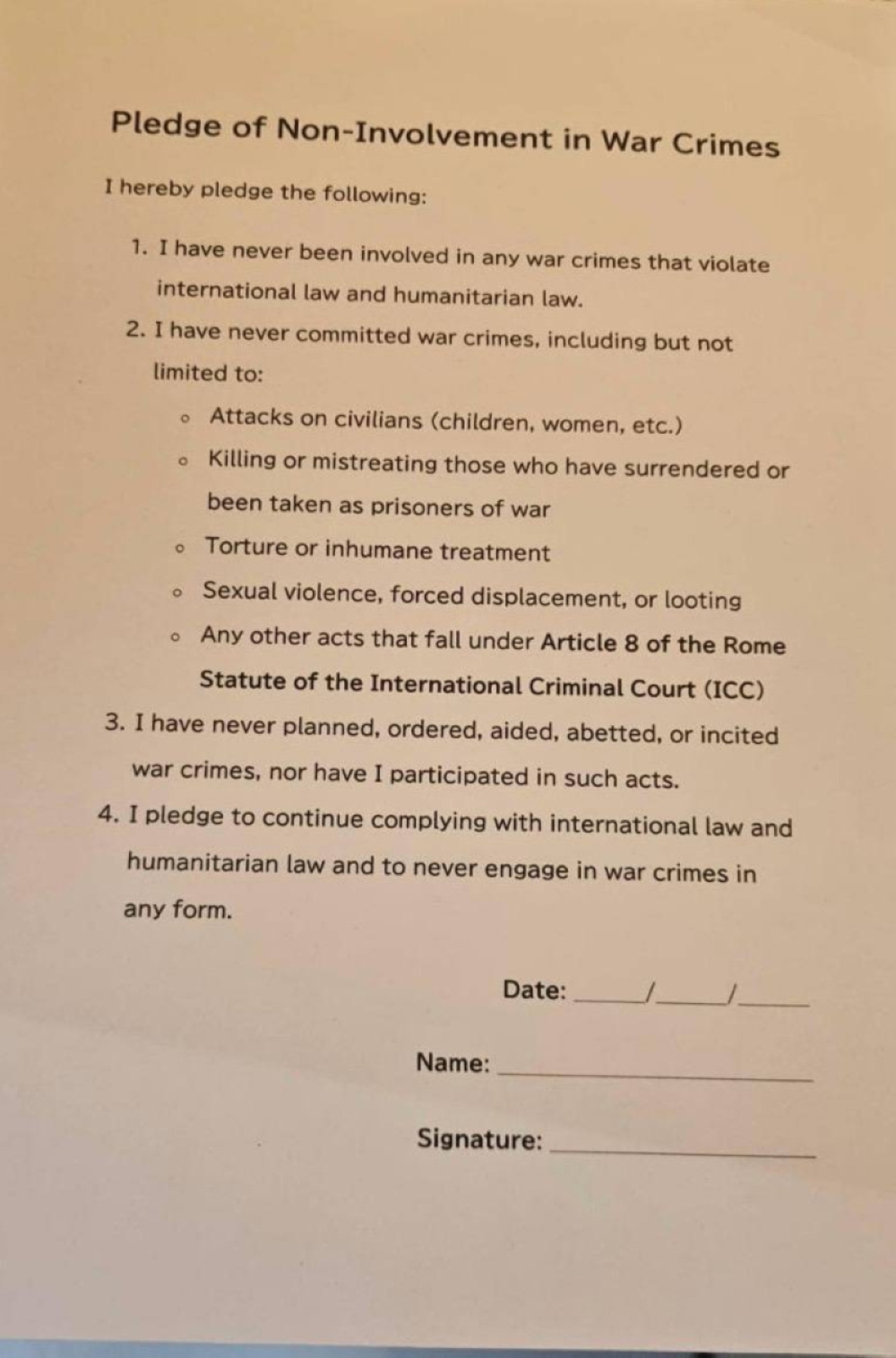
In Japan, Israeli tourist asked to sign war crimes form in Kyoto guesthouse


In Japan, Israeli tourist asked to sign war crimes form in Kyoto guesthouse


Tourists walk past shops during a visit to Fushimi Inari Shrine in the city of Kyoto on January 13, 2025. An Israeli tourist was asked to sign a declaration denying involvement in war crimes when checking into a guesthouse in Kyoto earlier this month, prompting a formal protest from Israel’s ambassador to Japan. — AFP pic

Thursday, 01 May 2025 12:39 PM MYT


KYOTO, May 1 — An Israeli tourist was asked to sign a declaration denying involvement in war crimes when checking into a guesthouse in Kyoto earlier this month, prompting a formal protest from Israel’s ambassador to Japan.

According to a report in The Japan Times, a letter from the Israeli ambassador — obtained by the publication — stated that the tourist received the document from the manager of Wind Villa guesthouse after presenting his passport, and was informed that the requirement applied only to Israeli and Russian nationals.


Israeli Ambassador Gilad Cohen condemned the act as discriminatory and emotionally distressing, urging Kyoto Governor Takatoshi Nishiwaki to ensure such incidents do not happen again.

“This discriminatory act, based solely on nationality, caused the guest significant emotional distress,” Cohen wrote, arguing the request breached Japan’s hotel business law.


In response, the guesthouse issued an open letter on X, saying the declaration is required from individuals they identify as “potentially having been involved in war crimes,” based on their nationality and recent military or paramilitary service.


The guesthouse insisted the practice is meant to protect other guests from psychological stress and is not discriminatory, adding that accommodation is not denied to those who refuse to sign.


Countries cited by the guesthouse include Israel, Russia, Palestine, Syria, Myanmar, and others, with the policy specifically targeting those who served in the past 10 years.


The Israeli tourist, identified by Ynet as a Navy reservist who served as a combat medic, was told that those without military backgrounds are not asked to sign the document.

The guesthouse insisted the practice is meant to protect other guests from psychological stress and is not discriminatory, adding that accommodation is not denied to those who refuse to sign.

Kyoto Prefecture instructed the city government to investigate the matter, which concluded that the guesthouse had not violated hotel regulations since guests were allowed to stay without signing the document.

Nonetheless, the city deemed the practice “inappropriate” and advised the guesthouse accordingly.

This is not the first such incident; in a separate case last year, another Israeli tourist was denied lodging at a Kyoto hotel based on nationality, resulting in a verbal warning from the city.


Beijing delays US trade talks amid Trump team divisions, eyes tariff fallout in July


Beijing delays US trade talks amid Trump team divisions, eyes tariff fallout in July


People visit the Memorial Hall of the First National Congress of the Chinese Communist Party as video of Chinese President Xi Jinping is played on the screen in Shanghai, China, April 29, 2025. China is holding off on entering serious trade negotiations with the United States as it waits to see which of former President Donald Trump’s advisers will shape his evolving trade policy, according to sources familiar with the matter. — Reuters pic

Thursday, 01 May 2025 12:08 PM MYT


BEIJING, May 1 — China is holding off on entering serious trade negotiations with the United States as it waits to see which of former President Donald Trump’s advisers will shape his evolving trade policy, according to sources familiar with the matter.

Beijing is in no hurry to resolve the tariff deadlock, citing deep divisions within the Trump administration’s trade team and ongoing uncertainty about the final direction of US policy, according to a report published in the South China Morning Post.


“There is no clear sign which clique will win,” one source said, referencing the competing views of Trump’s key advisers — Peter Navarro and Robert Lighthizer, who favour decoupling, and Treasury Secretary Scott Bessent, who supports a balanced deal.

The source said engaging in talks prematurely would risk exposing Beijing’s negotiating position without knowing who would ultimately be on the other side of the table.


A commentary by a state-linked social media account, Yuyuan Tantian, said while the US had approached China through multiple channels for talks, there was “no need” for Beijing to respond without substantial moves from Washington.


China is expected to watch closely until the end of July, when a 90-day reprieve on tariffs imposed by the US lapses. These tariffs, announced on April 2, apply to most countries except China, which was not granted the grace period.

“The key is to see how much the US market can handle and how it performs around July,” said another source, suggesting tariff increases were likely but should remain moderate.


Beijing is also monitoring deals the US might strike with other countries, such as India and Indonesia, during the grace period before determining its next steps.

In the meantime, China has intensified efforts to strengthen economic ties beyond the US and advance domestic self-reliance initiatives that have been in place since 2020.

Officials say this strategy has boosted China’s resilience, making its high-end manufacturing increasingly indispensable and hard to replace in the global supply chain.

While acknowledging America’s economic strengths, the same source cited unpredictability and internal political constraints as weaknesses that complicate the US’ ability to coordinate and maintain a consistent trade strategy.

By mid-April, over 75 countries had reached out to the US for trade discussions, including Japan, although progress remains unclear with many reporting a lack of clear proposals from Washington.

Asean nations, also affected by the tariffs, face limited options and are reluctant to take sides amid the escalating US-China rivalry, sources said.

Joerg Wuttke, a partner at the advisory firm DGA-Albright Stonebridge Group, noted that the US administration lacked cohesion, with Trump’s personal decision-making taking precedence over structured policy discussions.

Trump adviser Peter Navarro claimed that 90 deals could be completed within the grace period, but Treasury Secretary Bessent is leading the negotiations. Still, Trump’s personal preferences are expected to dominate final decisions.

Despite public claims by Trump that Chinese President Xi Jinping had reached out, Beijing denied the assertion, labelling it “fake news” and clarifying that no formal talks had begun.

Sources confirmed that communication between both sides has never fully ceased but remains informal and strategic, with no fixed agenda or clear timeline for talks.

Observers expect the situation to evolve after summer, when the economic impact of tariffs could trigger rising US consumer prices and possibly shift Trump’s stance based on public response and political pressures.


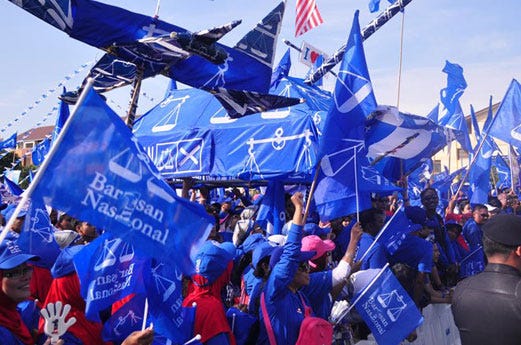
The decline of BN’s non-Malay partners: Time for MCA and MIC to rethink their loyalties


Murray Hunter


The decline of BN’s non-Malay partners: Time for MCA and MIC to rethink their loyalties


P Ramasamy
May 01, 2025


A recent exchange between leaders of Barisan Nasional (BN) highlights the deepening cracks within the coalition. An UMNO leader, reacting to the frustrations expressed by the MCA Secretary-General, advised the MCA not to sulk but to strengthen its ties with the Chinese grassroots to reinforce BN’s position.

However, the dissatisfaction voiced by the MCA is not baseless. The party has found itself increasingly marginalised within BN, a coalition where UMNO’s hegemonic rise has directly contributed to the weakening of its non-Malay partners—MCA, MIC, and Gerakan. It is disingenuous for any UMNO leader to claim that UMNO bears no responsibility for the MCA’s current decline.

UMNO’s dominance, especially in the spheres of ethnicity and religion, eroded the relevance and influence of its non-Malay counterparts. As UMNO pursued a narrow ethno-religious agenda, it created a political climate where the MCA and MIC struggled to maintain credibility among their respective communities.

Today, BN is a shadow of its former self. As UMNO itself weakened due to internal strife and competition from other Malay-Islamic parties, the collateral damage was felt most acutely by the MCA, MIC, and Gerakan.

The situation worsened when BN, for political expediency, aligned with Pakatan Harapan (PH), including the Democratic Action Party (DAP)—a party long portrayed by UMNO as a threat to Malay interests, and a scapegoat for the MCA’s and MIC’s eroded support among non-Malays. UMNO’s embrace of DAP was seen by many as a betrayal, particularly by MCA and MIC leaders and supporters.

Defending this alliance as political strategy only serves to mask the reality of the betrayal felt by BN’s non-Malay partners. To claim that MCA’s decline is entirely self-inflicted while ignoring the overarching manipulation by UMNO is a distortion of history.

The real question now is why MCA and MIC continue to remain subservient to a weakened UMNO. Has decades of political conditioning under UMNO’s dominance stripped these parties of the will to chart their own paths?

It is perhaps time for MCA and MIC to acknowledge that the BN coalition, as it stands, is no longer a meaningful vehicle for the representation of their communities. The long-standing political and cultural subordination to UMNO has left these parties without initiative or pride.

The path forward must involve serious introspection and the courage to break away from a coalition that no longer serves their interests. Only then can MCA and MIC hope to regain relevance and reconnect with their grassroots.


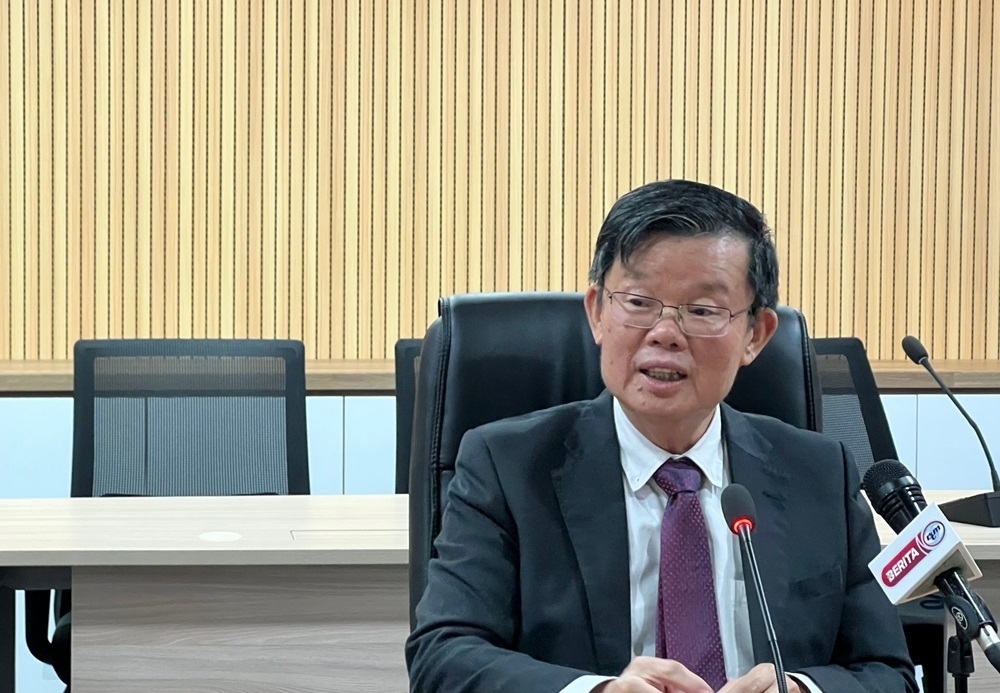
Penang records RM17.3b in manufacturing investments, creating 16,254 jobs, says CM on Labour Day


Penang records RM17.3b in manufacturing investments, creating 16,254 jobs, says CM on Labour Day


Penang recorded approved manufacturing investments worth RM17.3 billion in 2024, strengthening its position as Malaysia’s leading technology investment and innovation hub, said Chief Minister Chow Kon Yeow. — Picture by Opalyn Mok

Thursday, 01 May 2025 10:05 AM MYT


GEORGE TOWN, May 1 — Penang recorded approved manufacturing investments worth RM17.3 billion in 2024, strengthening its position as Malaysia’s leading technology investment and innovation hub, said Chief Minister Chow Kon Yeow.

In his Labour Day message today, Chow said this comprised 182 projects which created about 16,254 job opportunities last year.

“Along with sustainable economic growth and encouraging investment performance, the labour market in Penang continues to strengthen, with the latest data from the Labour Force Survey for the fourth quarter of 2024 showing the state’s unemployment rate at 2.2 per cent.

“Penang recorded a labour force participation rate of 73.2 per cent, thus proving that people are increasingly optimistic about the labour market and encouraging them to look for jobs,” he said.


He said the state has also strengthened its reputation as a focal point for international trade, particularly in the electronics and semiconductor sectors, which are experiencing rapid growth.


In conjunction with Labour Day, Chow said that the state government would continue to champion the rights and welfare of workers through inclusive policies, skills training programmes, and creating more high-value job opportunities.

He stressed that the development of digital, green, and smart technology sectors will continue to be given priority so that workers remain relevant and competitive.


“I also urge all employers to continue to maintain harmonious and fair relationships with their employees as the long-term success of an organisation depends not only on profits, but also on the well-being and happiness of its workforce,” he said. — Bernama