
Iran War is Boiling Over

by MKTContext
Wednesday, Aug 19, 2026 - 8:33
Welcome to MktContext! I am a professional money manager, trader, and investor who has been timing and beating the market for over a decade. We specialize in predicting market direction by studying the economy and market signals. Join 13,000 subscribers at MktContext.com for our weekly deep dives and analysis!
Negotiations between the US and Iran have reached an impasse. Trump keeps insisting that a deal is coming, which has kept oil markets sanguine. Unfortunately, a diplomatic off-ramp is becoming less likely.
The key difference since the first resolution in April is that both sides are no longer aligned. Iran wants to maintain dominance over Hormuz, while the US wants sweeping concessions. Additional air strikes have accomplished nothing. Given these directly conflicting motivations, a quick resolution is unlikely. The IRGC is prepared to drag out the conflict until Trump leaves office in 2029; time is on their side now.
“One way is to prolong this war until we get to the next term of the presidency and cause attrition, so that if anyone else wants to attack Iran, they will know there is a cost.”
-Brigadier General Mohammad Reza Naqdi,
Top Adviser to IRGC Commander
Supreme Leader Khamenei promoted more hardliners to leadership positions to further discourage negotiating. Shifting their goal away from a settlement toward permanent military resistance.
Iran has also requested war reparations from the US as a condition of negotiations. This is an impossible ask, meant solely to signal disengagement. They are capitalizing on the fact that Trump is answerable to voters and hesitant to commit to a full-scale ground invasion.
Meanwhile, Iran continues to ramp up economic pressure. The Houthis (Iran’s regional proxy) escalated attacks in the Bab el-Mandeb Strait and on Saudi refineries this week, while Hormuz remains closed. They are now discussing with Oman a 5% to 7% cargo fee on ships transiting Hormuz.
Consequently, we think the oil market is underpricing the risk. As global commercial inventories and strategic reserves deplete, the world cannot respond to a shortage as it did previously. Inventories were never replenished after the first disruption and are now approaching critical levels:
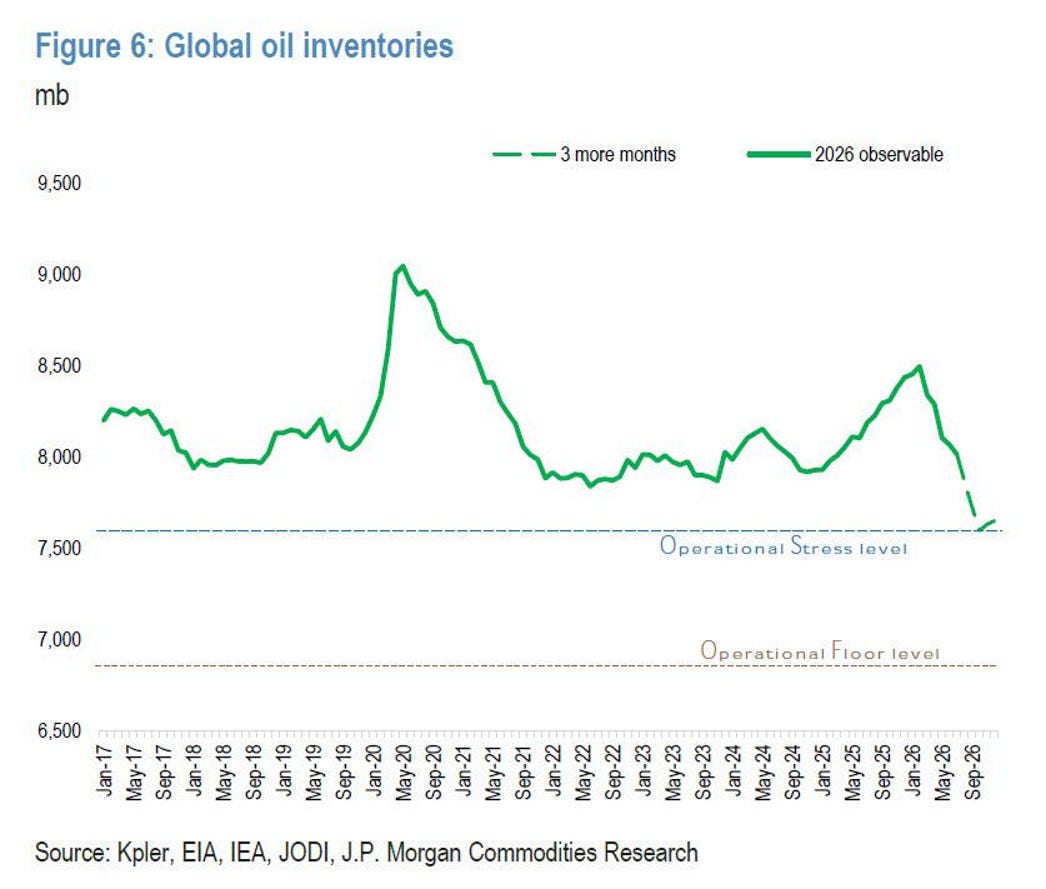
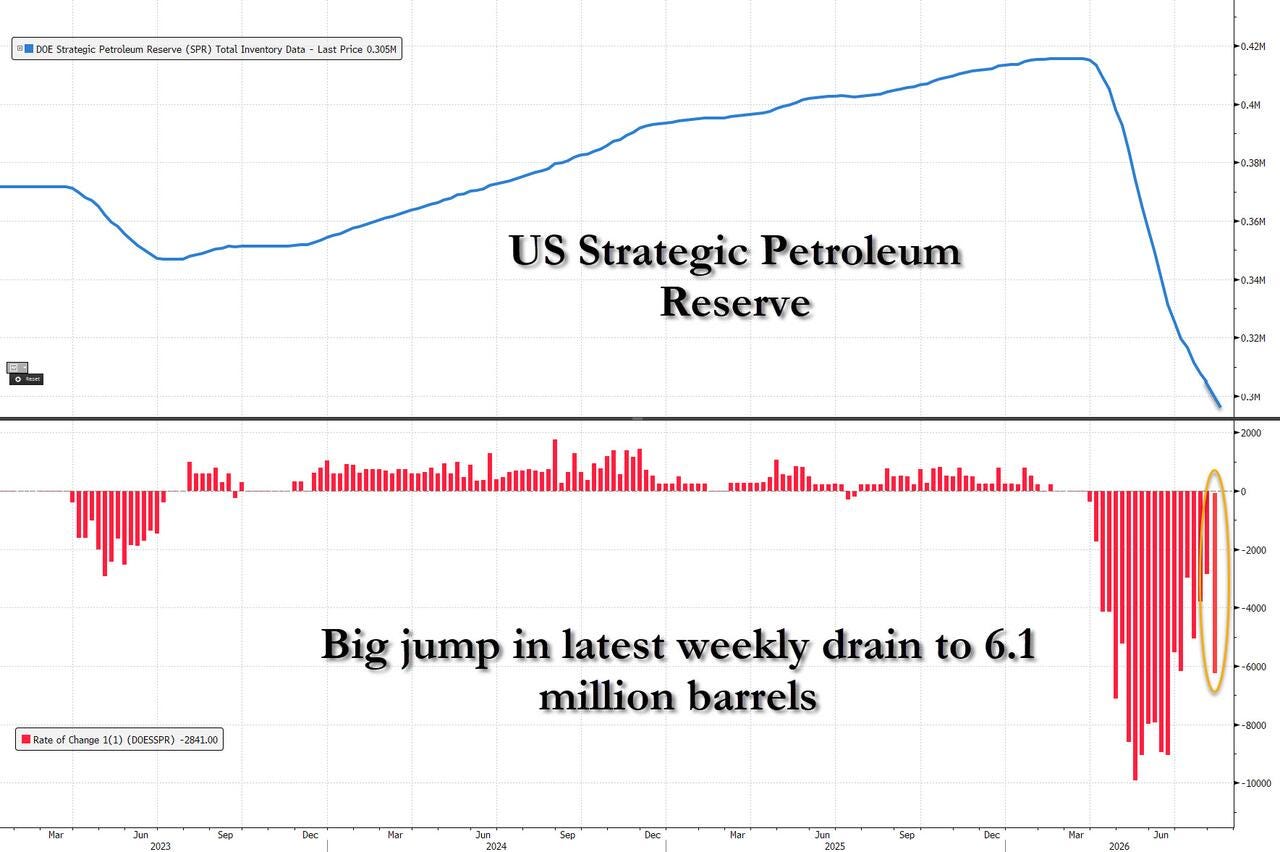
In particular, the US Strategic Reserve has worked overtime to make up for lost supply, falling below 300M barrels for the first time since the 1980s. 250M barrels is the operational minimum, so it can’t go much lower.
Why are oil prices still relatively low? Whenever oil prices spike, the Trump administration suppresses them with announcements of an impending deal. Traders who tried to bet on higher prices got burned repeatedly.
Thus, the market is scared to reprice risk at the exact moment a prolonged stalemate is most likely, supply is dwindling, waterway traffic is disrupted, and the supply cushion has disappeared.
For every additional month the conflict lasts, the world must release hundreds of millions more barrels from reserve and restrain consumption. This may be fine for a few months, but will eventually dampen economic activity.
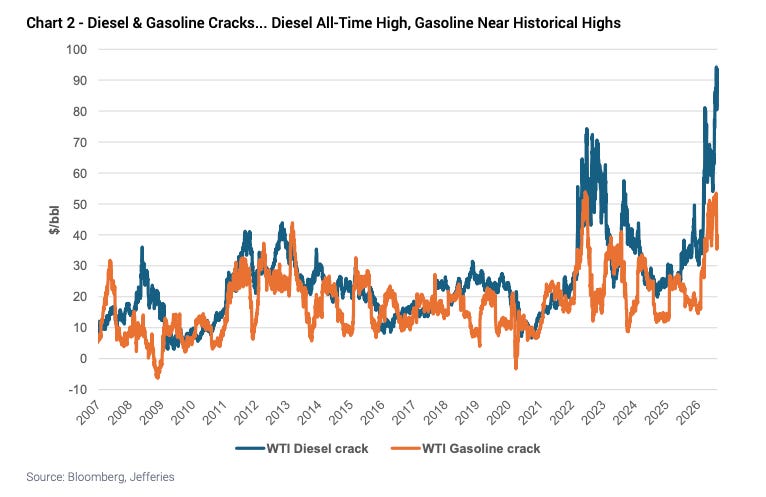
These stresses are appearing in refined products markets (e.g. gasoline and diesel) which reached all-time high prices amid record shortages. A market like this is vulnerable to disruption even while pricing in a path toward de-escalation.
In the long run, the conflict will resolve slowly and unpredictably. A sudden breakthrough would require difficult concessions such as the US granting economic relief without nuclear dismantling, or Iran relinquishing both nuclear capabilities and maritime leverage. Until this equilibrium breaks, we can expect ongoing low-level skirmishes, volatile oil markets, and endless brinkmanship.
Get the rest of this article, including our portfolios and trades, at MktContext.com!


Supreme Leader Khamenei is just a vegetable ler... no date verifiable video, audio or still photo of him has surfaced... the rest are just making use of his name.
ReplyDelete