


S Thayaparan
Published: Dec 29, 2025 9:00 AM
Updated: 12:00 PM
“Do not obey in advance. Most of the power of authoritarianism is freely given. In times like these, individuals think ahead about what a more repressive government will want, and then offer themselves without being asked. A citizen who adapts in this way is teaching power what it can do.”
COMMENT | One of the more galvanising images of the reformasi movement was of Anwar Ibrahim, now prime minister, black-eyed and arm raised defiantly.
Many folks who were politically apathetic flocked to the reformasi banner because the thinking was that if the state could do this to a former deputy prime minister, what would they do to the average rakyat?
Of course, the state had been doing nefarious things to the rakyat for decades, and nobody cared. This was what was so totemic about the Reformasi movement. It was a moment in time when a certain section of the voting rakyat woke up.
This was about institutional dysfunction, but more importantly, how the police were used as the thug-like extension of the political class. Anwar knew this, and his bitter statements against the political class reflected this sentiment.
‘You give them evidence, and they refuse to act’
In 2009, Anwar, the victim of police abuse, was disgusted - “I believe there is a cover-up because it involves the VVIPs. I am disgusted, I think it is very unfortunate with all the evidence provided, they can brush it aside,” he told reporters at Parliament.
Published: Dec 29, 2025 9:00 AM
Updated: 12:00 PM
“Do not obey in advance. Most of the power of authoritarianism is freely given. In times like these, individuals think ahead about what a more repressive government will want, and then offer themselves without being asked. A citizen who adapts in this way is teaching power what it can do.”
- Timothy Snyder, “On Tyranny: Twenty
Lessons from the Twentieth Century”
COMMENT | One of the more galvanising images of the reformasi movement was of Anwar Ibrahim, now prime minister, black-eyed and arm raised defiantly.
Many folks who were politically apathetic flocked to the reformasi banner because the thinking was that if the state could do this to a former deputy prime minister, what would they do to the average rakyat?
Of course, the state had been doing nefarious things to the rakyat for decades, and nobody cared. This was what was so totemic about the Reformasi movement. It was a moment in time when a certain section of the voting rakyat woke up.
This was about institutional dysfunction, but more importantly, how the police were used as the thug-like extension of the political class. Anwar knew this, and his bitter statements against the political class reflected this sentiment.
‘You give them evidence, and they refuse to act’
In 2009, Anwar, the victim of police abuse, was disgusted - “I believe there is a cover-up because it involves the VVIPs. I am disgusted, I think it is very unfortunate with all the evidence provided, they can brush it aside,” he told reporters at Parliament.
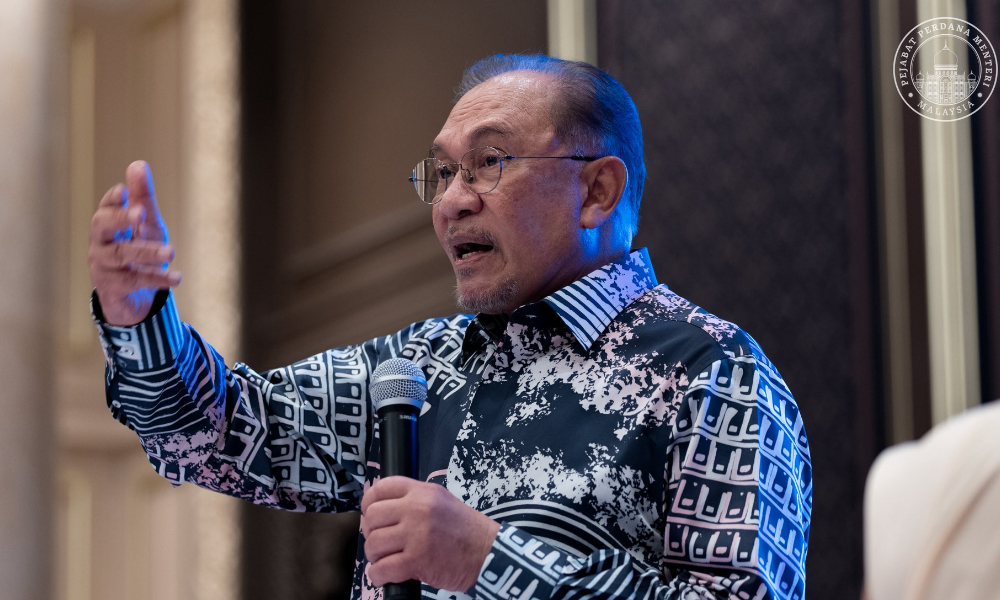
Prime Minister Anwar Ibrahim
“It is typical of the government - you give them strong evidence, medical reports, they refuse to act and allow them to go free,” he added.
Keep in mind that, as far as the police and the political class are concerned, former inspector-general of police (IGP) Abdul Hamid Bador said it like it is when he revealed the “our boy” state of play in the police - “The minister was said to have arranged for ‘his boy’ (the retired senior Special Branch officer) to lead the Special Branch.”
The police force has become a culture of its own, succoured by religion, racism, and handouts, riddled with corruption and sharing a symbiotic relationship with the criminal underclass of Malaysian society, and beholden to political masters who have always been engaged in protracted internal power struggles.
Anwar’s daughter, Nurul Izzah, decried the whitewashing of former IGP Rahim Noor and described him as a “brutal assaulter”.
“It is typical of the government - you give them strong evidence, medical reports, they refuse to act and allow them to go free,” he added.
Keep in mind that, as far as the police and the political class are concerned, former inspector-general of police (IGP) Abdul Hamid Bador said it like it is when he revealed the “our boy” state of play in the police - “The minister was said to have arranged for ‘his boy’ (the retired senior Special Branch officer) to lead the Special Branch.”
The police force has become a culture of its own, succoured by religion, racism, and handouts, riddled with corruption and sharing a symbiotic relationship with the criminal underclass of Malaysian society, and beholden to political masters who have always been engaged in protracted internal power struggles.
Anwar’s daughter, Nurul Izzah, decried the whitewashing of former IGP Rahim Noor and described him as a “brutal assaulter”.

Nurul Izzah Anwar
“I unequivocally oppose this appointment of a brutal assaulter of an innocent man, as he lay there blindfolded and handcuffed - left without medical attention for days.
“This being then lied to the whole world as to the victim’s whereabouts and well-being. Shame on those who executed this travesty,” she had said.
One scandal after another
The past year has been a defining one for the police, in all the wrong ways.
The police and Madani are scuttling away from numerous deaths in custody, and botched investigations by the police have placed a spotlight on accountability and transparency.
The alleged execution of three men in Malacca and the subsequent investigation for murder does nothing to dispel the lack of trust in the state security apparatus and Madani.
The fact that the police officers involved in this alleged murder have not been remanded echoes what Anwar said in 2009.
When the mother of Wan Muhammad Daniel wanted to lodge a report about the torture of her son by the police, an officer allegedly told her that the police officers involved would only get two years and a fine of RM2,000, but the state would reopen the case against her son.
“I unequivocally oppose this appointment of a brutal assaulter of an innocent man, as he lay there blindfolded and handcuffed - left without medical attention for days.
“This being then lied to the whole world as to the victim’s whereabouts and well-being. Shame on those who executed this travesty,” she had said.
One scandal after another
The past year has been a defining one for the police, in all the wrong ways.
The police and Madani are scuttling away from numerous deaths in custody, and botched investigations by the police have placed a spotlight on accountability and transparency.
The alleged execution of three men in Malacca and the subsequent investigation for murder does nothing to dispel the lack of trust in the state security apparatus and Madani.
The fact that the police officers involved in this alleged murder have not been remanded echoes what Anwar said in 2009.
When the mother of Wan Muhammad Daniel wanted to lodge a report about the torture of her son by the police, an officer allegedly told her that the police officers involved would only get two years and a fine of RM2,000, but the state would reopen the case against her son.
A rape victim’s case was not only grossly mishandled by the police but also badly managed by the Attorney-General’s Chambers.
When she went public with her story, apparently, this was what a police officer said to her - “(The police officer) told me what I did (uploading the Facebook post) is wrong, and that the assailant will pursue legal action if I don’t take down the post. I was also told to present myself at the station for my statement to be recorded.
“I asked him what wrong I had committed. He didn’t answer, and he never followed up with me on the matter,” she said.
Pay attention because this is an important point this rape survivor makes when Seputeh MP Teresa Kok rightly raised her case in Parliament.
As reported in the press, “I am speechless with the answer from the Home Ministry. The answers on paper differ from what is happening in reality, as none of the PEM stages (standard of notification) were applied in my case.”
The abyss between what’s spoken and what’s known
This is what the state relies on. On paper, there are procedures in place which would make the state security apparatus look like a transparent and accountable organisation.
But the reality? If you want to understand the kind of attitudes in the state security apparatus when it comes to women, you only have to look at the incident in Malacca where two women were turned away from lodging a report because they did not observe the dress code.

Digital Minister Gobind Singh Deo was correct when he said, “The immediate focus of the police officer on duty should have been to assist the victims in recording the details of the incident, and not turning them away as in this case.”
But then again, the police seem to be focused on other issues. When they are not busy with moral policing, they have a history of self-investigating and covering up alleged crimes.
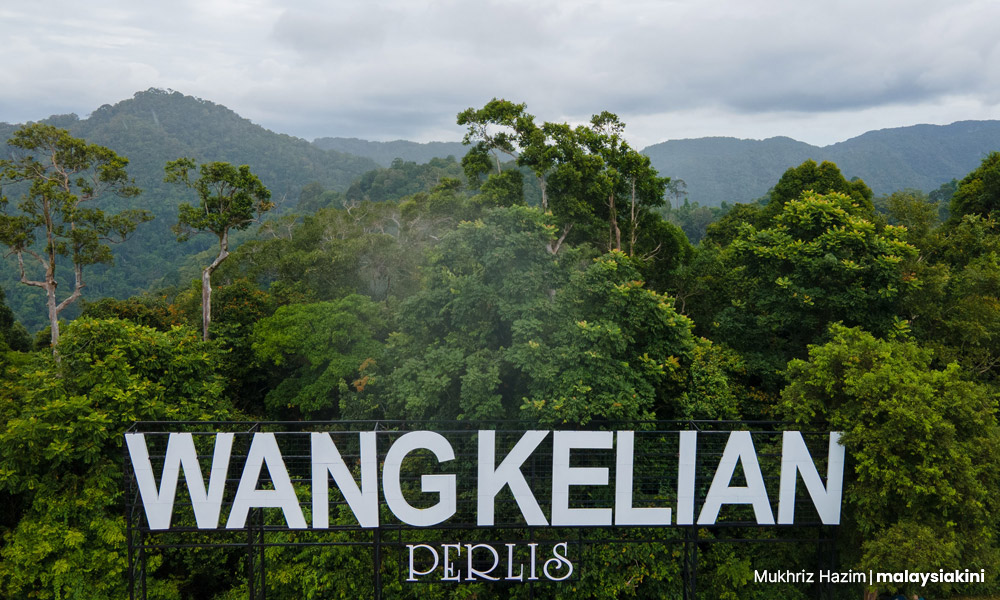
In the horror that was the Wang Kelian human trafficking camps, where hundreds of migrants were suspected to have died, Bukit Aman released a statement saying that no police personnel were involved.
Never mind that the evidence was tampered with. Never mind that there was circumstantial evidence of wrongdoing. Never mind that political operatives from the highest levels of the government were repeating the same denials as the state security apparatus, despite there having been no independent investigation.
Again, doesn’t all of this remind everyone of the cover-up Anwar was raging against in 2009 and in events which are taking place now?
And who could trust the police anyway? They have asked the public to help locate M Indira Gandhi’s criminal ex-husband, but the reality is (there is that word, again) that the state security apparatus had always known where he is.
A former IGP has admitted this - “The public does not know where he (Riduan Abdullah) is, but I know. I urge him to come forward so that this matter can be solved amicably.”
‘It’s not shocking anymore’
Throughout the year, when the nefarious actions of the police have been dragged out into the light, all Home Minister Saifuddin Nasution Ismail does is deflect from the issues, carry water for the police, offer conflicting and unsubstantiated views, or do nothing unless ordered by the cabinet.
Meanwhile, Saifuddin is up to his neck in the Fifa/FAM scandal, and guess who investigates his actions if there is ever an investigation? That is right, the police.
Muda central committee member Rashifa Aljunied begins her excellent piece with, “Unfortunately, we live in a reality in which police violence isn’t shocking anymore.”
Which says a lot about the iconic image of the black-eyed Anwar.
S THAYAPARAN is commander (Rtd) of the Royal Malaysian Navy. Fīat jūstitia ruat cælum - “Let justice be done though the heavens fall.”


No comments:
Post a Comment