Sunday, August 02, 2026

Israel kills eight in Gaza despite Trump’s Hamas disarmament plan


Israel kills eight in Gaza despite Trump’s Hamas disarmament plan

Strikes hit Gaza homes two days after US unveiled plan for Hamas disarmament, Israeli withdrawal.

Israeli forces have killed at least eight Palestinians in strikes across the Gaza Strip, Gaza’s civil defence said.

Among those killed on Sunday were a man and woman hit in an Israeli helicopter strike on an apartment south of Deir el-Balah, the Palestinian Civil Defence said. Separate strikes killed several others across the territory, including three people in Khan Younis and one person in Gaza City’s Old City.

Recommended Stories

list of 3 itemsend of list

The strikes came on Sunday, two days after United States President Donald Trump’s Board of Peace published a 15-point roadmap for implementing last year’s Gaza ceasefire agreement, extending a pattern of continued Israeli strikes despite diplomatic breakthroughs.

The roadmap has yet to be implemented on the ground. Hamas has said it will hand over its weapons for storage only after Israel halts military operations and withdraws its forces in line with last year’s agreement. An Israeli official told the Reuters news agency there would be no withdrawal from current positions unless Hamas undergoes “genuine disarmament”.

Israeli Prime Minister Benjamin Netanyahu has not publicly commented on the initiative, but far-right National Security Minister Itamar Ben-Gvir has called it unacceptable and said Israel should continue targeting Hamas leaders.

Former senior Fatah official Mohammed Dahlan, based in the United Arab Emirates, said Jared Kushner, Trump’s son-in-law and a senior adviser on the US initiative, told him he was working with Israel to halt the attacks on Gaza. Dahlan said talks with Washington were continuing, and that the agreement’s success now depended on Israel fully ending its daily strikes.

Separately, Israeli strikes destroyed a medical supply warehouse in central Gaza on Saturday, leaving a crater 20 metres (66ft) wide and 10 metres (33ft) deep, part of a broader wave of attacks that has continued despite the ceasefire push.

Anthony Loke’s first defeat in 22 years and what it tells us — Khoo Ying Hooi


Anthony Loke’s first defeat in 22 years and what it tells us — Khoo Ying Hooi


Summary

  • Anthony Loke's unexpected defeat in Chennah ends his 22-year unbeaten electoral streak and underscores shifts in Malaysia's political landscape.
  • Despite his strong history and reputation, factors such as racialized attacks, local dissatisfaction, and weaker voter mobilization contributed to the loss.
  • While this defeat signifies a fragile coalition in Chennah, it highlights broader challenges facing Loke and the Democratic Action Party (DAP).
  • The election result demands introspection from DAP and raises questions about Malaysia's evolving political dynamics.


First Published: Sunday, 02 Aug 2026 2:35 PM MYT


AUG 2 — Anthony Loke has lost Chennah.

That announcement carries weight because, for 22 years, he had never lost an election.


Since 2004, Loke had built one of the most consistent electoral records in Malaysian politics.


He won in Lobak, moved to Chennah, became the MP for Seremban, rose to lead DAP and eventually became one of the most visible, and arguably most successful, ministers in the federal government.


The result was not entirely unexpected. Loke himself had described Chennah as a 50-50 contest, and the warning signs were already visible before polling day.


Even so, the defeat is politically significant. It is not simply the loss of a state seat, but the end of a 22-year unbeaten electoral record belonging to one of DAP’s most important leaders.

All eyes are on Anthony Loke now as well as on DAP.


In his speech after the result, Loke accepted the outcome and took responsibility without immediately reaching for excuses.

What matters now is whether he and DAP are willing to look honestly at why Chennah was lost.

The mood on the ground had been tense throughout the campaign. Increasingly, the contest seemed to be less about local issues and more about bringing down the DAP secretary-general.

BN leaders made no attempt to hide this. Ahmad Zahid Hamidi openly called on voters to “bungkus” Loke.


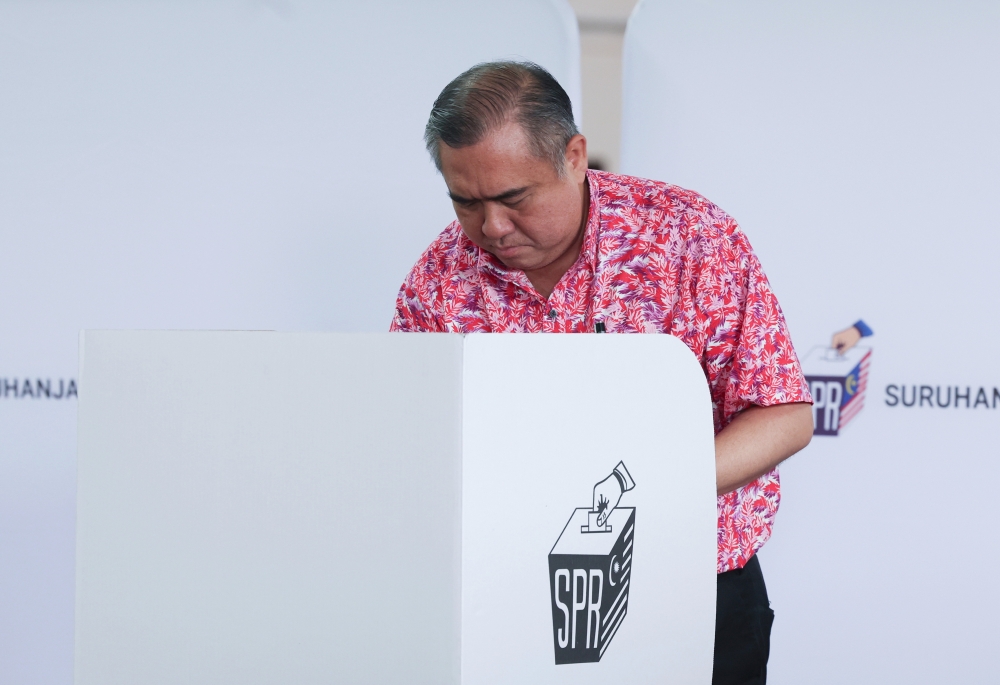
DAP secretary-general Anthony Loke casts his ballot at the polling centre at SJKC Kelpin in Jalan Tok Ungku, Taman Ujong, Seremban, during the 16th Negeri Sembilan state election on August 1, 2026. — Bernama pic


It was a remarkable attack because Zahid and Loke are colleagues in the same federal government.

They sit together in Cabinet, but in Chennah, Zahid was asking voters to bring Loke down.

The attacks against Loke became increasingly personal and racialised. Claims were circulated that he wanted to become menteri besar, that Malay political power would be weakened if he won, and that he had interfered in Negeri Sembilan’s adat and royal institutions.

Chennah was always more fragile for DAP than its recent results suggested. Loke had held the seat since 2013, but it remained a mixed constituency that required support across Malay villages, Chinese new villages and smaller communities.

This time, the support that had kept Loke in Chennah for three terms simply did not come together.

According to ElectionData.MY, Malay voters made up 47.8 per cent of the electorate, followed by Chinese voters at 42.6 per cent.

Orang Asli voters accounted for another 6.3 per cent. Chennah was never a seat DAP could take for granted.

Turnout in Chennah was about 84 per cent in 2013 and 82.9 per cent in 2018, before falling to around 66 per cent in 2023.

At the time of writing, statewide turnout for the 2026 election had reached 65.38 per cent by 4pm, with the final figure still to come.

Turnout alone does not explain Loke’s defeat, especially when the margin was so small.

But it does raise a harder question. Was he defeated because more voters actively turned against him, or because not enough of those who had supported him before felt compelled to come out? In a close seat, that difference matters.

The broader result was clearly difficult for Pakatan Harapan (PH), of which DAP is a part. But Chennah deserves to be analysed on its own terms because Loke was not an ordinary candidate.

He carried his own reputation, his record in government and the weight of being DAP secretary-general.

His defeat was shaped by the wider political mood, but it cannot be explained by that mood alone.

A “partnership” between Barisan Nasional-Perikatan Nasional (BN-PN), weaker mobilisation among some of Loke’s supporters, local dissatisfaction, campaign organisation, and attacks involving race, adat and royalty may all have played a part.

When the margin is this narrow, no single factor needs to be decisive on its own. A few small shifts can be enough.

For years, Chennah was proof of Loke’s political reach. It showed that a senior DAP leader could hold a mixed, semi-rural seat not once, but three times.

His image as a moderate, practical and hardworking politician mattered. So did his ability to win support beyond DAP’s usual base.

That is why this defeat matters. It does not mean that support for Loke disappeared, nor does it mean that his political style has failed.

But it shows that the coalition he built in Chennah had become much more fragile than before.

Once the result came in, almost all attention turned to Loke. That was inevitable. He is DAP’s secretary-general, a senior minister and someone who had not lost an election in 22 years.

But Chennah should not be read only as Anthony Loke’s personal failure. The wider question is what DAP and PH missed.

His first defeat may tell us more about Malaysia’s changing political ground than many of his victories ever did.

* Khoo Ying Hooi, PhD is associate professor at Universiti Malaya.

Who is Ismail Lasim, the new Negeri Sembilan menteri besar?


Who is Ismail Lasim, the new Negeri Sembilan menteri besar?


Datuk Ismail bin Lasim’s rise to the state’s highest political office comes as a continuation of his long-standing presence in Negeri Sembilan politics. — Picture via Facebook/Ismail Lasim


Summary

  • Datuk Ismail Lasim has been sworn in as the menteri besar of Negeri Sembilan, marking a pivotal change in state leadership.
  • With a career spanning over two decades in public service and a long-standing affiliation with Umno and Barisan Nasional, Ismail brings extensive legal, legislative, and administrative experience.
  • Having held key executive portfolios and serving as the chief of Umno's Kuala Pilah division, he is positioned to focus on forming a new Executive Council and fostering socio-economic growth in the state.


First Published: Sunday, 02 Aug 2026 12:07 PM MYT
Last Modified: Sunday, 02 Aug 2026 12:13 PM MYT


KUALA LUMPUR, Aug 2 — Datuk Ismail Lasim has been officially sworn in as the new menteri besar of Negeri Sembilan before the Yang di-Pertuan Besar of Negeri Sembilan, Tuanku Muhriz Tuanku Munawir.

The ceremony marks a major transition in the state’s leadership, elevating a veteran politician and legal practitioner to the top executive office after more than two decades of public service in state administration.


Who is lsmail?


Ismail’s rise to the state’s highest political office comes as a continuation of his long-standing presence in Negeri Sembilan politics. Born and raised in Kuala Pilah, the 63-year-old built his early career as a lawyer, graduating with a Bachelor of Laws degree from Universiti Malaya.


He practiced as an advocate and solicitor for nearly two decades from 1985 to 2004 with Messrs. Halim & Ismail before transitioning to full-time governance and political roles.


A political veteran

His political footprint in Negeri Sembilan is rooted in Umno and the broader Barisan Nasional coalition. Over a 26-year electoral career, Ismail has established himself as one of the coalition’s most resilient local leaders, successfully contesting eight state election races across two key constituencies in Kuala Pilah.


He first entered the Negeri Sembilan State Legislative Assembly in 1999 as the representative for Senaling, a seat he held continuously for four terms until 2018.

During the 14th General Election, he shifted to the neighboring state seat of Juasseh, serving a term before returning to contest and reclaim the Senaling seat in the 2023 state election.


Experienced man

Beyond his legislative tenure, Ismail brings extensive administrative experience to the menteri besar’s office.

He served as a state executive council member for over a decade under former menteri besar Tan Sri Mohamad Hasan, overseeing critical state infrastructure portfolios that included public works, utilities, water, energy, and telecommunications.

Following the formation of the state Unity Government, he took on the portfolio for education and human capital.


Who is he in Umno?


At the organisational level, Ismail holds significant weight within the state political machinery. He currently serves as the chief of the Umno Kuala Pilah division and acts as the state chapter’s information chief, serving as a key bridge between party leadership and grassroots operations.

As he steps into the state’s top post, Ismail’s immediate focus will centre on finalising his new Executive Council lineup. Umno vowed to uphold “moderate” politics even as it partnered ultra-conservative coalition Perikatan Nasional, pledging to drive socio-economic growth initiatives across the state.


Politics matters, economy matters more if not most — Phar Kim Beng


Politics matters, economy matters more if not most — Phar Kim Beng


Summary

  • Recent political developments in Negeri Sembilan highlight the crucial interplay between economics and elections.
  • The alliance between Barisan Nasional (BN) and Perikatan Nasional (PN) aims to mitigate economic anxieties and appeal to the Malay-Muslim electorate grappling with rising living costs.
  • While political cooperation intends to offer stability amidst uncertainty, the real test lies in governance and the ability to address structural challenges impacting household finances.
  • Ultimately, the electorate's focus is on which coalition can credibly improve their economic circumstances, a factor that will significantly influence Malaysia's political landscape.


First Published: Sunday, 02 Aug 2026 9:03 AM MYT


AUGUST 2 — Politics shapes governments, but the economy shapes elections.

That is perhaps the most important lesson emerging from the latest political developments in Negeri Sembilan.


Much attention has been devoted to the electoral understanding between Barisan Nasional (BN) and Perikatan Nasional (PN), whereby BN contests 25 seats while PN contests 11.


Political observers have understandably focused on the electoral arithmetic, the symbolism of former rivals cooperating, and what such an arrangement could mean for future state and national elections.


Yet beneath these political calculations lies a more fundamental reality.


The growing appeal of political unity among segments of the Malay-Muslim electorate is inseparable from widespread concerns over the rising cost of living.

Identity politics may provide the language of political mobilisation, but economic anxiety provides much of its emotional force.


The author argues that while political alliances shape election campaigns, it is voters’ concerns over the cost of living and confidence in economic management that ultimately determine electoral outcomes.


Most Malaysians do not evaluate the economy by examining quarterly GDP figures, export statistics or fiscal balances.

They evaluate it every time they visit the supermarket, pay school fees, settle utility bills or refill their petrol tanks. What economists describe as inflation translates into ordinary families wondering whether their salaries can stretch until the end of the month.

For many households in Negeri Sembilan, as elsewhere in Malaysia, living costs have become the defining issue. Housing remains expensive for young families.

Childcare costs continue to increase. Food prices remain stubbornly high despite government efforts to cushion consumers through targeted subsidies.

Small businesses face higher operating costs while consumers have become increasingly careful with discretionary spending.

Economic pressure affects every community. Yet political responses often differ.

Among many Malay-Muslim voters, economic uncertainty has reinforced the appeal of greater political consolidation.

This does not necessarily mean that every voter suddenly agrees on ideology or policy. Rather, periods of economic stress often encourage voters to support political arrangements that appear more stable, more united and better positioned to defend their economic interests.

History demonstrates that when people become financially anxious, they rarely separate economics from politics.

They seek governments that promise certainty amid uncertainty. Whether such promises are ultimately fulfilled is another matter altogether.

BN and PN clearly recognise this political reality.

Their decision to avoid multi-cornered contests is not simply about electoral efficiency. It is also an attempt to reassure voters that political fragmentation should not worsen economic uncertainty.

After their cooperation in Johor, both parties have strong incentives to test whether a similar formula can succeed in Negeri Sembilan.

This explains why the alliance has attracted so much attention. It is not merely an agreement over seats. It is an experiment to determine whether political cooperation can convert economic dissatisfaction into electoral support.

Yet winning an election is far easier than governing afterwards.

No political coalition, regardless of ideology, can simply legislate away global economic pressures.

Malaysia remains deeply integrated into the international economy. Global commodity prices, supply chain disruptions, exchange rate movements and geopolitical conflicts all influence domestic inflation.

The recent volatility in energy markets, together with continuing uncertainties in global trade, reminds Malaysians that many price increases originate far beyond the country's borders.

Consequently, whoever forms the next government in Negeri Sembilan—or eventually Putrajaya—will inherit identical structural challenges.

The electorate understands this more than politicians sometimes assume.

Voters appreciate that governments cannot control every external shock. What they expect instead is competent management, transparent governance and policies that reduce the burden on ordinary families rather than transferring additional costs onto them.

This is where political credibility becomes decisive.

Pakatan Harapan cannot assume that respectable macroeconomic performance alone will satisfy voters if household finances remain under strain.

Equally, BN and PN cannot assume that electoral cooperation automatically translates into confidence in their ability to govern effectively.

The contest is therefore no longer simply about personalities or party symbols.

It is increasingly about competence.

Can the winning coalition generate higher-paying jobs?

Can it improve productivity rather than merely expand subsidies?

Can it attract quality domestic and foreign investments that create sustainable employment?

Can it strengthen education and technical training so younger Malaysians can compete in an increasingly technology-driven economy?

These questions matter far more than campaign rhetoric.

Young Malaysians, especially first-time voters, are acutely aware that their future depends not only on political stability but also on economic mobility. Many graduates delay marriage because housing remains unaffordable.

Others postpone starting families because childcare costs continue to rise. Small entrepreneurs struggle with financing costs while established businesses confront shrinking profit margins.

These everyday concerns shape voting behaviour more profoundly than many campaign strategists acknowledge.

Negeri Sembilan therefore represents more than another state election. It serves as an important indicator of how Malaysians balance identity, leadership and economic performance when casting their votes.

Politics will always matter in a democracy.

Coalitions will continue to evolve. Alliances will form and dissolve. Leaders will rise and fall.

But throughout democratic history, voters have consistently demonstrated one enduring principle.

When economic confidence weakens, politics changes.

Conversely, when governments succeed in improving living standards, political stability usually follows.

That is why the ultimate challenge for every political coalition is not merely to win elections but to earn the lasting trust of the people through competent economic stewardship.

For voters in Negeri Sembilan, the question is therefore straightforward.

Which coalition offers not only the most persuasive political narrative, but also the most credible plan to improve the daily lives of ordinary Malaysians?

The answer to that question may well determine not only the outcome in Negeri Sembilan, but also the direction of Malaysian politics in the years ahead.


* Phar Kim Beng is a professor of Asean Studies and a director at the Institute of International and Asean Studies, International Islamic University Malaysia.

It’s official: Ismail Lasim takes over as Negeri Sembilan menteri besar


It’s official: Ismail Lasim takes over as Negeri Sembilan menteri besar


Kuala Pilah Umno chief Datuk Ismail Lasim has been sworn in today as the new menteri besar of Negeri Sembilan. — Picture via Facebook


Summary

  • Datuk Ismail Lasim has been appointed as the new Menteri Besar of Negeri Sembilan, following his victory in the Juasseh seat during the 16th state election.
  • The swearing-in ceremony was attended by key members of the royal family and political leaders.
  • Ismail's appointment comes after Barisan Nasional (BN) secured 18 seats in the election, forming a coalition government with Perikatan Nasional (PN) that holds a two-thirds majority.
  • This transition follows the dissolution of the previous state assembly and change in leadership after BN withdrew its support for the former menteri besar.


By Malay Mail
First Published: Sunday, 02 Aug 2026 11:35 AM MYT
Last Modified: Sunday, 02 Aug 2026 12:18 PM MYT


KUALA PILAH, Aug 2 — Juasseh State Assemblyman Datuk Ismail Lasim was today sworn in as the new Menteri Besar of Negeri Sembilan.

Ismail, 67, took his oath of office before the Yang Dipertuan Besar of Negeri Sembilan, Tuanku Muhriz Tuanku Munawir, at the Throne Room of Istana Besar Seri Menanti here at 11.29 am.


Also in attendance at the swearing-in ceremony were the Tunku Ampuan Besar Tuanku Aishah Rohani Tengku Besar Mahmud, Tunku Besar Seri Menanti Tunku Ali Redhauddin Tuanku Muhriz, and Tunku Panglima Besar Tunku Zain Al-‘Abidin Tuanku Muhriz.


The ceremony was also attended by the Undang Luak of Sungai Ujong, Datuk Klana Petra Muhammad Faris Johari, and the Undang Luak of Rembau, Datuk Sedia Raja Hassan Ab Hamid.


Barisan Nasional (BN) deputy chairman Datuk Seri Mohamad Hasan and other state elected representatives were also present.


In the 16th Negeri Sembilan state election, Ismail won the Juasseh seat with a majority of 4,091 votes after securing 6,907 votes, in a three-cornered contest against Bersatu’s Mohd Zuhaimi Md Yusof and Pakatan Harapan’s Mohd Aidil Abdullah.

Mohd Zuhaimi and Mohd Aidil secured 506 votes and 2,816 votes, respectively.


Yesterday’s Negeri Sembilan state election results saw BN secure 18 seats, while Perikatan Nasional (PN) won seven, thereby enabling the two coalitions to form the state government with a two-thirds majority.

A total of 36 state seats were contested in this election, involving 103 candidates.

In the 15th Negeri Sembilan state election, PH won 17 state seats, followed by BN (14) and PN (five), leading to the formation of a PH-BN state government.

The Negeri Sembilan State Legislative Assembly was dissolved on June 5 after the state BN withdrew its support for the leadership of then menteri besar Datuk Seri Aminuddin Harun on April 27, paving the way for the state election to be held. — Bernama


Israel culprit behind illegal migration surge from Morocco into Spain


From the FB page of:


Spanish actor Javier Bardem has amplified claims linking the extraordinary migration surge from Morocco into Spain with the growing political pressure facing Pedro Sánchez’s government.
Posts reshared by Bardem alleged that Israel and its allies stood to benefit from the crisis because Spain has taken a strong position against Israel’s actions in Gaza and refused to fall in line with Washington and Tel Aviv.
The timing has inevitably raised questions. Around 60,000 people reportedly entered Ceuta from Morocco in an unprecedented border rush, placing enormous pressure on Spain and fuelling political outrage across Europe.
However, an allegation this serious requires real evidence. Bardem’s decision to share the claim does not prove that Israel designed or coordinated the migration movement, and no credible investigation has yet established such a plot.
What is undeniable is that migration can be exploited as a political weapon, while fear and chaos often benefit those seeking to weaken governments.
The public deserves an independent investigation—not speculation presented as confirmed fact.


Iran war live: Trump cancels attack, says ‘perimeters of a deal’ agreed


Iran war live: Trump cancels attack, says ‘perimeters of a deal’ agreed