Friday, May 01, 2026

Hokkaido zoo worker arrested for allegedly incinerating wife’s body in animal waste furnace


Hokkaido zoo worker arrested for allegedly incinerating wife’s body in animal waste furnace


Police in Japan are questioning a zoo employee over allegations he used an incinerator at his workplace to dispose of his wife’s body, according to local media reports. — AFP pic

Friday, 01 May 2026 2:58 PM MYT


TOKYO, May 1 — Japanese police arrested a man for allegedly incinerating his dead wife at the zoo where he worked, officials and local media said today, following the discovery of human remains.


Police arrested Tatsuya Suzuki yesterday evening on suspicion that he “transported the victim’s body to a tourist facility” in the northern island of Hokkaido and “destroyed it through incineration there,” a local police official told AFP.


The victim, 33-year-old Yui Suzuki, was identified by local media as his wife. Police have not said how she died.


While held in voluntary police questioning, Suzuki said he used his zoo’s incinerator—meant to dispose of waste and dead animals—to burn the woman’s body “for a few hours,” local media reported.


His confession sent police scouring the incinerator for her remains, whose partial discovery paved the way for Suzuki’s arrest, local media said.

While alive, the wife once told her relatives that her husband was threatening to “burn you until no trace of you will be left”, public broadcaster NHK said, citing investigative sources.


The gruesome case forced the Asahiyama Zoo, a popular tourist attraction closed since early last month as part of regular maintenance ahead of the summer season, to delay its reopening scheduled for Wednesday.

Today, the zoo resumed business, with officials bowing to visitors and apologising for the trouble caused.

“The zoo is in an extremely difficult situation at the moment,” Hirosuke Imazu, mayor of Asahikawa City, which operates the facility, said, according to NHK.

“But we would like to turn your support into our energy, and convey the beautiful lives of our animals,” he said. — AFP

The long game: How UMNO rebuilt power after GE14 defeat


By R. Paneir Selvam
17 hours ago


FEW political parties survive the kind of electoral humiliation suffered by the United Malays National Organisation (UMNO) in the 2018 and 2022 Malaysian general elections. Fewer still manage not only to endure, but to reinsert themselves at the centre of power.


Yet UMNO has done precisely that, adapting its strategies, exploiting fragmentation among rivals, and mastering coalition politics with a pragmatism that its opponents underestimated.


The collapse of the Pakatan Harapan (PH) government in 2020 was not a spontaneous implosion but the culmination of careful political manoeuvring. The Sheraton Move demonstrated how UMNO, despite its weakened electoral standing, could still act as a kingmaker.

By aligning tactically with the Malaysian United Indigenous Party (BERSATU) and defectors from PH, UMNO helped dismantle the reformist government it had lost to just two years earlier.

This was not simply political revenge, but strategic recalibration. UMNO recognised that in a fragmented landscape, electoral strength alone was no longer the sole determinant of power; coalition leverage mattered more.


UMNO president Datuk Seri Ahmad Zahid Hamidi
Malaysian Exam Preparation


What followed was even more revealing. UMNO entered into cooperation with its erstwhile rival, Bersatu, under the Perikatan Nasional (PN) banner.

However, this partnership was inherently asymmetrical. UMNO’s grassroots machinery, patronage networks, and historical legitimacy far outweighed Bersatu’s comparatively shallow organisational base.

By lending temporary credibility to its partner, UMNO simultaneously created the conditions for its weakening. The eventual rupture between the two, culminating in UMNO’s distancing ahead of GE15, left Bersatu exposed and struggling to sustain relevance outside a broader coalition framework.

In effect, UMNO executed a classic game-theoretic strategy: cooperate when advantageous, defect when necessary. It maximised short-term gains while ensuring that its partner did not grow strong enough to become a lasting competitor.

This pattern has continued in the post-2022 political arrangement, where UMNO joined a unity government alongside PH, led by the People’s Justice Party (PKR) and supported by the Democratic Action Party (DAP).
Political Commentary Service


At first glance, this alliance appeared to favour PH. UMNO, weakened by electoral losses and corruption scandals, seemed to occupy a junior position. Public perception suggested PH was setting the agenda. Yet UMNO has again recalibrated its approach.


(Image: Selangorkini/Hafiz Othman)


Rather than confronting its partners directly, it has adopted a subtler strategy: shaping internal dynamics within PH itself. From a strategic perspective, this resembles a divide-and-influence model.

By maintaining rhetorical pressure on DAP, often through appeals to its traditional Malay base, UMNO preserves its core support while subtly straining cohesion within the governing coalition.

At the same time, its position in government allows it to influence policy direction and public narratives, complicating PH’s reformist messaging.

This dual-track approach serves multiple objectives. First, it prevents PH from consolidating a unified voter base. Second, it creates ambiguity over who truly leads the government.

Increasingly, perceptions have shifted towards the idea that UMNO is exerting disproportionate influence within the coalition.

Recent developments at state level reinforce this pattern. UMNO’s decision to withdraw support from the PKR-led administration in Negri Sembilan signals a willingness to disrupt even its own coalition arrangements when strategically useful.

Such moves are not isolated incidents but calculated demonstrations of leverage. By showing it can unsettle governments, UMNO reinforces the message that stability depends on its continued participation.


PH’s challenge is therefore not merely electoral, but strategic. The coalition has yet to fully internalise the lessons of UMNO’s earlier dealings with Bersatu and PN. In both cases, UMNO entered partnerships from a position of weakness, only to emerge stronger by outmanoeuvring its allies.

There is little indication that its approach within the current PH–Barisan Nasional framework differs fundamentally.

Compounding PH’s vulnerability are internal uncertainties. The anticipated departure of Datuk Seri Rafizi Ramli from PKR removes a key strategist and policy voice.

Meanwhile, perceptions of weakened leadership within DAP raise questions about its ability to counterbalance UMNO’s influence. These developments create a window of opportunity for UMNO to assert itself further.

UMNO’s longer-term objective appears increasingly clear: to rebuild dominance not through immediate electoral victory, but through incremental positioning.

By the time of the next general election, it aims to have reshaped the political landscape by weakening rivals, consolidating its base, and projecting itself as indispensable to stability.

The situation in Sabah illustrates this dynamic. Voter unease with the PH–BN partnership reflects broader ideological inconsistency. PH, once defined by its opposition to UMNO politics, now governs alongside it, creating cognitive dissonance among supporters.

UMNO, by contrast, has demonstrated far greater ideological flexibility, prioritising power retention over doctrinal consistency.

Adding to this is the quiet reintegration of UMNO figures previously sidelined or suspended, signalling internal consolidation and renewed confidence within the party.

For PH, particularly PKR, the stakes are increasingly existential. The coalition must decide whether it is merely coexisting with UMNO or being strategically outmanoeuvred by it.

Recognising UMNO’s pattern of engagement—cooperate, consolidate, then dominate—is the first step. The second is developing a counter-strategy that restores clarity of purpose and public trust.

Whether PH’s leadership is prepared to confront this reality remains uncertain. The risk is not only electoral defeat, but strategic irrelevance.

UMNO has shown it does not require overwhelming public support to wield power—only the ability to navigate a fractured political landscape more effectively than its rivals.

If PH fails to adapt, it may find that the party it once defeated has not only survived, but quietly regained the upper hand. ‒ April 30, 2026


R. Paneir Selvam is Principal Consultant at Arunachala Research & Consultancy Sdn Bhd (ARRESCON), a think tank specialising in strategic and geopolitical analysis.


Australia can’t have self-reliant defence and nuclear submarines


Pearls and Irritations


Australia can’t have self-reliant defence and nuclear submarines


April 29, 2026


In the latest in our Foreign Policy Rethink series, Mike Gilligan argues that Australia’s renewed focus on defence self-reliance is incompatible with its deepening commitment to AUKUS and nuclear submarines.

Amid the attention demanded by the US-Israel war on Iran, Australia’s Defence Minister Richard Marles has released a little-noticed but promising new defence strategy – the 2026 National Defence Strategy.

It talks of self- reliance, as if that is a breakthrough for Australia. But self-reliance dates back 50 years, to the nation’s first Defence White Paper of 1976. Geopolitical realities at that time led us to pursue independence from America, though the path was unknown and sure to be tough and costly. Australia created a disciplined defence planning culture – ensuring defence dollars would not be diverted beyond our own priorities eg to US. Any treaty obligations to the US would be met from capabilities developed for our self-reliance. The United States agreed.

Politically, self-reliance was embraced bi-partisanly in 1976. Every Australian government thereafter, up to and including Malcolm Turnbull’s (Defence White Paper 2016) stuck with it.

In 2021, under Prime Minister Morrison, Australia’s independence evaporated into airy embrace of America and Britain as security partners via AUKUS. This triumvirate somehow decided that Australia should build nuclear submarines, to attack China alongside the US. In a twinkle Australia became an arm of American power. Australians had no say. Our disciplined, imaginative and regionally-respected independence of four decades was dumped. Without analysis or Labor whimper. The Albanese opposition unashamedly supported AUKUS on a skimpy briefing.

When the Albanese government gained power in 2022, America’s influence was accelerated. Minister Marles’ 2003 Defence Strategy was developed by hired academics of US security background. Self-reliance, specifically, was buried and so were decades of independent thought, policy and practical progress. Henceforth, fighting China with the US would be Australia’s defence objective:

“ Australia has a strong and deep Alliance with the United States, which is no longer the unipolar leader of the Indo-Pacific… for the first time in 80 years, we must go back to fundamentals, to take a first-principles approach as to how we manage and seek to avoid the highest level of strategic risk we now face as a nation: the prospect of major conflict in the region that directly threatens our national interest’ (2023 National Defence Strategy).

Now, after three years of US-centric fundamentalism, Minister Marles has discovered “self-reliance”. This is a big shift.

Fifty years ago, Australia experienced a capricious America up close, on foreign policy and the alliance. We had emerged from war on Vietnam exploited and bloodied, having acted foolishly, with no ANZUS treaty obligation. Hard thinking was afoot (within political and administrative circles) on distancing Australia. Then came President Nixon’s Guam doctrine in 1969, declaring that henceforth Australia must assume to be on its own:

“As far as the problems of military defence, except for the threat of a major power involving nuclear weapons. The United States is going to encourage and has a right to expect that this problem will be handled by, and responsibility for taken by, the Asian nations themselves.”

Gough Whitlam had visited China in 1971. On his becoming Prime Minister in 1972 work was already advanced on an independent Australia. The nation’s first ever Defence White Paper emerged in 1976, from the Fraser government, calling for self-reliance. Big change flowed. The military Services were rationalised into a single Defence Force. The Navy’s aircraft carrier was scrapped by the Hawke government at its first Cabinet. Decades of imaginative advances ensued, within strong policy and financial discipline.

Our transformation suited America, focused on Europe and West Asia. It was not until President Obama took exception to China’s economic rise that the US suddenly required fealty from Australia, to deal with China. And the US found it in Prime Minister Gillard, schooled by then-ambassador to US Beazley. Thereafter Australia was progressively embedded in US war planning against China, without explicitly forsaking self- reliance – until the Morrison government.

Scott Morrison was elected Prime Minister by political comrades aware of his capacity for turning viable endeavours into financial wreckage. That talent is on full display in the AUKUS device. Morrison committed Australia to a bit-part in America’s putative domination of China, to spend a possible $368 billion for attack submarines against our largest trading partner. The submarine cost was then, and remains, out of sight on any planning axis – over seven times Australia’s total annual defence budget to buy into a minor role in the US war machine in China’s approaches.

Morrison ignored the risk that this prolonged diversion of resources would leave Australia unable to defend itself. As did the Albanese government in 2023. Each of these last two Prime Minister has trivialised the judgement of every Australian government since 1976.

The question today is whether the Albanese government now appreciates that the depths it is plumbing in nuclear submarines are anathema to self-reliance. To date the government has been silent on the risk which the US itself has repeatedly warned – that US priorities will vary, but not always in accord with Australia’s. The ANZUS treaty has limited application which the US has made plain. Abrogation risk and financial overcommitment make the nuclear submarine a national folly. To claim that Australia can build self-reliant security while pursuing that folly would be an egregious national deceit.

Quite simply, Australia’s self-reliant defence is impossible while pursuing nuclear submarines. Defence Minister Marles’ adoption of a self-reliant defence policy is to be commended. But Australians must see signs of government unease about the submarine project. Easy enough, without fear of exaggeration.


The views expressed in this article may or may not reflect those of Pearls and Irritations.


Mike Gilligan

Dr Mike Gilligan worked for 20 years in defence policy and evaluating military proposals for development, including time in the Pentagon on military balances in Asia.


***


Reality is that Oz has been taken for a $368billion ride.


Is Taiwan already independent? As Trump-Xi summit nears, here’s what ‘Taiwan independence’ really means


Is Taiwan already independent? As Trump-Xi summit nears, here’s what ‘Taiwan independence’ really means


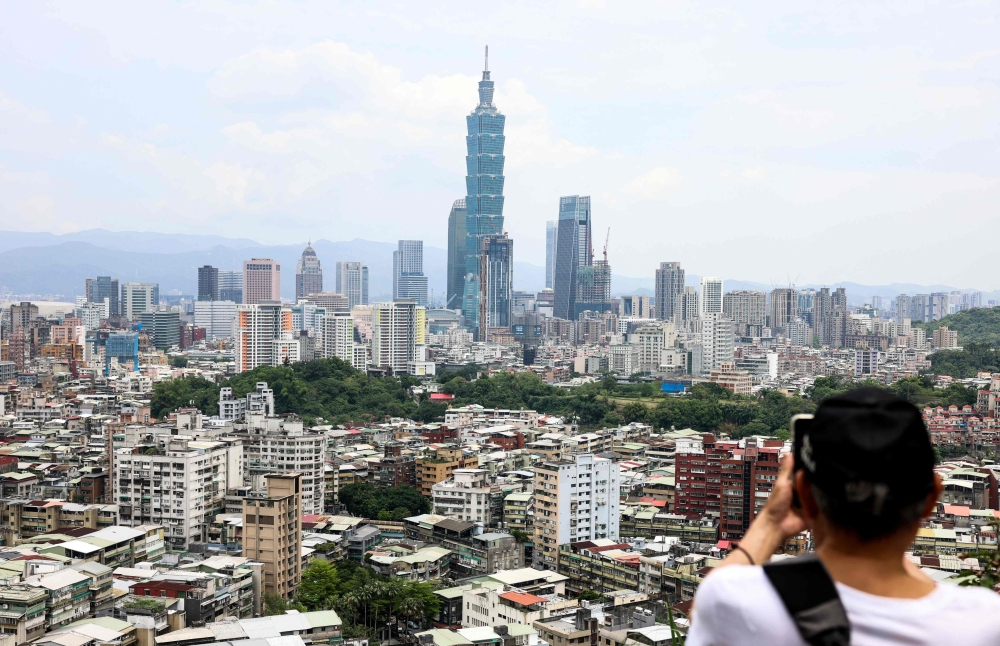
A man takes photos of the Taipei 101 building standing among residential and commercial buildings in Taipei on April 28, 2026. For decades, the Republic of China in Taipei also claimed to be the legitimate Chinese government, but in 1971 Beijing took over the China seat at the United Nations from Taipei. — AFP pic

Friday, 01 May 2026 7:00 AM MYT


TAIPEI, May 1 — US President Donald Trump and Chinese President Xi Jinping will meet in Beijing next month for a summit where China is likely to try and make the issue of “Taiwan independence” a major part of the agenda.


Below ‌are some questions and answers about what is meant by the term “Taiwan independence”.


What is Taiwan’s history and formal name today?

Previously known as Formosa, the island has been home to indigenous people for thousands of years, before the Dutch and Spanish briefly ruled parts of it in the 1600s.

The Qing dynasty incorporated Taiwan as part of Fujian province in 1684 and only declared it a separate ‌Chinese province in 1885.


Following the Qing’s defeat in a war with Japan, it became a Japanese colony in 1895. In 1945, it was handed over to the Republic of China government at the end of World War Two.

In 1949 after being defeated by Mao Zedong’s Communist forces, the Republic of China government fled and moved its capital to Taiwan, and Republic of China remains the island’s formal name.


Mao set up the People’s Republic of China, and claimed it was the only legitimate Chinese government for the whole of China, including Taiwan, as the Republic of China’s successor state.

What is Taiwan’s international status?

For decades, the Republic of China in Taipei also claimed to be the legitimate Chinese government, but in 1971 Beijing took over the China seat at the United Nations from Taipei.

Currently only 12 countries maintain formal ties with Taipei, mostly small developing nations such as Belize and Tuvalu.

Most major Western countries and US allies maintain close unofficial ties with Taiwan by recognising the Republic of China passport and having de facto embassies in each other’s capitals. Taiwanese citizens can freely travel to most countries using their Taiwanese passports.

The US severed official ties with Taipei in 1979 but is bound by law to provide the ‌island with the means to defend itself. The US officially takes no position on Taiwan’s sovereignty under Washington’s “One China” policy.

China says it will not renounce the use of force ⁠to bring Taiwan under its control. Beijing has offered Taiwan a “one country, two systems” model ⁠similar to Hong Kong, which promised the city a high degree of autonomy, though no major political party in Taiwan supports ⁠that.

Opinion polls in Taiwan have repeatedly shown most ⁠Taiwanese wish to maintain the current status ⁠quo in relations with China.

China also says that United Nations Resolution 2758, passed in 1971, means the world legally recognises Taiwan belongs to China. The resolution states that the People’s Republic of China is the only legitimate government of China.

The government in Taipei says that is nonsense given the resolution made no mention of Taiwan or its status. Last year, the US ⁠State Department said China was intentionally mis-characterising the resolution as part of broader “coercive attempts to isolate Taiwan from the international community”.


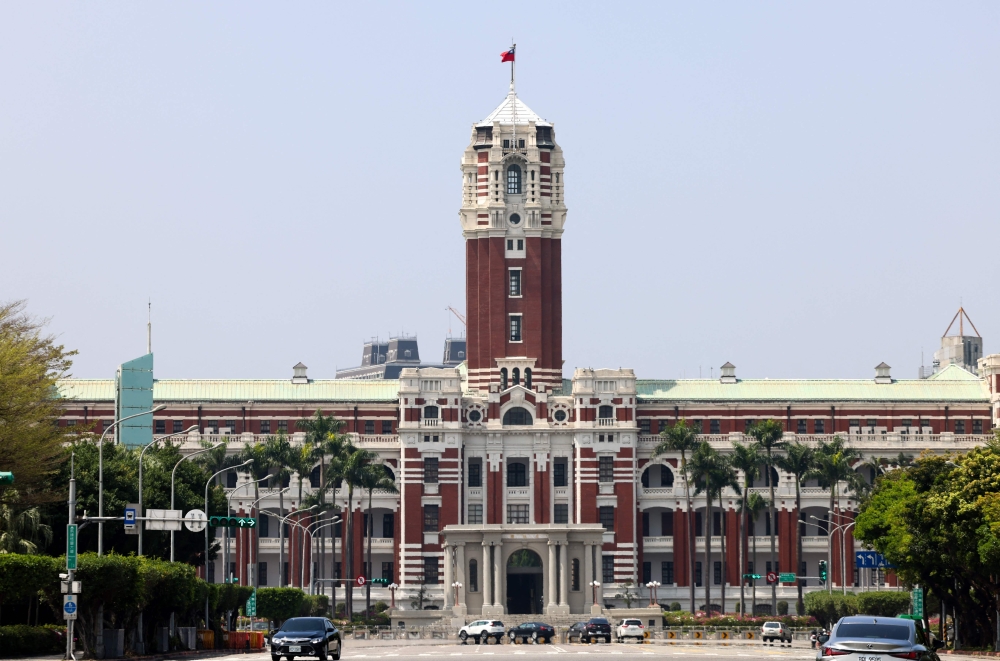
The Presidential Office Building of Taiwan stands among residential and commercial buildings in Taipei on March 17, 2026. — AFP pic


Is Taiwan already an independent country?

Taiwan, whose people elect their own leaders and whose government controls a defined area of territory with its own military, passport and currency, enjoys de facto independence even if that is not formally recognised by most countries.

Taiwan’s government says the Republic of China is a sovereign state and that Beijing has no right to speak for or represent it given the People’s Republic of China has no say in how it chooses its leaders and has never ruled Taiwan.

Could Taipei declare a “Republic of Taiwan”?

It would be very difficult and require ⁠parliamentary approval of a constitutional amendment and then a referendum, rather than a simple declaration by President Lai Ching-te.

At least 75 per cent of lawmakers would need to pass that amendment, and the ruling Democratic Progressive Party and main opposition party the Kuomintang (KMT) currently have an equal number of seats.

The DPP, which has ⁠been in power since 2016, has not made an attempt to change the constitution. The KMT strongly opposes any attempts to change the name of Republic of China.


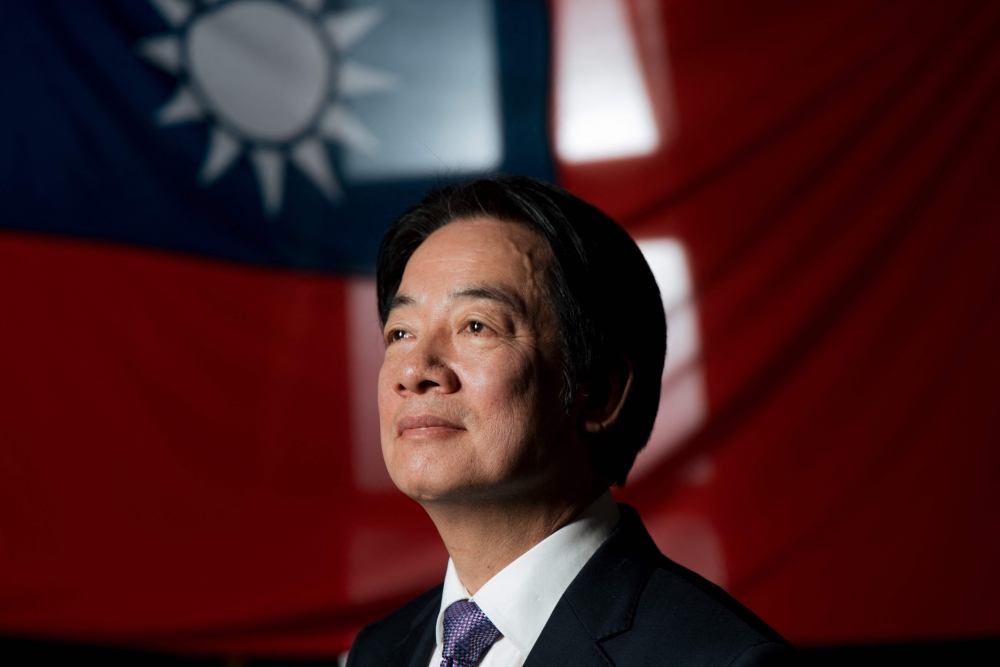
Since taking office in 2024, Lai has said on several occasions that the Republic of China and People’s Republic of China are ‘not subordinate to each other’, which Beijing says means he believes the two are separate countries ‌and so he is therefore pushing an independence narrative. — AFP pic


What does Taiwan’s president ⁠say about independence?

China ⁠detests Lai and calls him a “separatist”. Before Lai was elected president he made comments about being a “practical worker for Taiwan independence”. Lai maintains he simply meant Taiwan is already an independent country.

Since taking office in 2024, Lai has said on several occasions that the Republic of China and People’s Republic of China are “not subordinate to each other”, which Beijing says means he believes the two are separate countries ‌and so he is therefore pushing an independence narrative.

Does China have a legal framework to prevent formal Independence?

In 2005, China’s largely rubber-stamp parliament passed the Anti-Secession Law that gives the country the legal basis for military action against Taiwan if it secedes or if the “possibilities for a peaceful reunification should be completely exhausted”, but the law is vague and does not give details. — Reuters


How the UAE’s Opec exit could reshape its trade ties with Saudi Arabia


How the UAE’s Opec exit could reshape its trade ties with Saudi Arabia


An installation depicting barrel of oil with the logo of Organisation of the Petroleum Exporting Countries (Opec) is seen during the COP29 United Nations climate change conference in Baku, Azerbaijan November 19, 2024. — Reuters pic

Friday, 01 May 2026 7:00 AM MYT


ABU DHABI, May 1 — The United Arab Emirates’ withdrawal from Opec weakens the group’s control over global oil markets ‌and potentially risks widening a rift with Gulf neighbour Saudi Arabia, the de facto leader of the crude producers’ organisation. From diverging oil policies to geopolitical tensions over Yemen and Sudan, and growing economic rivalry, the UAE and Saudi Arabia’s relationship had been heading for a showdown for a while now, according to analysts.


How likely is the Saudi-UAE row to hit ‌trade?


Saudi Arabia and the UAE are so deeply enmeshed in trade, investment and logistics that analysts say a full-blown economic rift is unlikely and would serve neither’s self-interest.

The region is already reeling from the fallout of the Iran conflict and its impact on investor and business sentiment. The last thing Gulf Cooperation Council nations need is more disputes and disruptions to the smooth conduct of business in the region, said Fareed Mohamedi, managing director at SIA-Energy International.

Still, trade links in the region have been reshaped before. In June 2017, Saudi Arabia, the UAE, Bahrain and Egypt severed ties with Qatar almost overnight over a range of allegations, including fomenting regional unrest that Doha denied.


The Qatar blockade targeted a smaller economy with fewer interdependencies. Qatar, a much smaller oil producer, left Opec in 2019. The UAE, which has a capacity of around 5 million barrels a day, and a large excess capacity, has the ability to significantly disrupt oil markets.

How connected are their economies?


Saudi Arabia is the UAE’s largest trading partner in the Arab world.

The value of Emirati-Saudi non-oil bilateral trade totalled US$41.3 billion (RM163 billion) in 2024 according ‌to the UAE’s economy ministry, up from US$37.3 billion in 2023. Saudi data showed that annual bilateral trade was up roughly 42 per cent since 2020. The UAE was ⁠the kingdom’s fifth-largest destination for exports and its third-largest source of imports in 2024.

Commerce between ⁠the two runs deep, spanning everything from refined petroleum and gold, to jewellery and re-exported consumer goods like ⁠electronics. Much of this trade flows through Dubai’s Jebel ⁠Ali port, a major hub for ⁠goods entering the Saudi market, even as Riyadh spends big to expand its own ports to capture more direct shipments.

In March, the Saudi Ports Authority (Mawani) announced the opening of a new trade corridor with new shipping services linking King Abdulaziz Port in Dammam with ports in Sharjah and Abu Dhabi in the UAE. Consumer markets are deeply ⁠intertwined. Shoppers at Lulu hypermarkets, an Emirati chain ubiquitous in both countries, routinely toss Saudi-made staples into their trolleys: Almarai milk, Jomara dates, Alyoum chicken.

A move toward a boycott would undermine both countries’ wider economic goals, said Alice Gower, a partner at London-based advisory firm Azure Strategy.

What about investments?

The UAE was the second-largest contributor by volume to Saudi Arabia’s net foreign direct investment inflows in 2024, with inflows worth 9 billion riyals (US$2.4 billion), according to Saudi Arabia’s General Authority for Statistics. Saudi direct investments in the UAE are over US$4.3  billion, according to Emirati data. An HSBC survey in November revealed that nine out of 10 international businesses in the UAE ⁠plan to increase trade and investment with the kingdom over the next five years.

Are the two Gulf states economic rivals?

Yes. The UAE has forged nearly 30 bilateral trade deals with countries, leapfrogging slower Gulf Cooperation Council negotiations that would have included Saudi Arabia. Saudi Arabia has ⁠also taken steps seen as competitive, such as its 2021 directive requiring foreign firms to set up regional headquarters in Riyadh to qualify for government contracts — a move widely ⁠viewed as an ⁠effort to lure companies away from Dubai, the Gulf’s finance and tourism hub.

Why do their trade ties matter for the Middle East?

The Saudi-UAE economic relationship underpins much of the region’s trade and investment flows. Both countries act as a gateway for capital, goods, and services — Saudi Arabia as the largest Arab economy and the UAE as a major logistics and financial ‌hub.

Regional stability is the top priority for both Gulf states, and any boycott would risk undermining confidence in their long-term economic masterplans and discourage investment and engagement in the region, Gower said. Any prolonged strain between the two states would ripple across the Middle East. — Reuters

Northern entry points at risk of smuggling should be led by police, says border agency chief


Northern entry points at risk of smuggling should be led by police, says border agency chief


AKPS director-general Datuk Seri Mohd Shuhaily Mohd Zain said the agency required an Entry Point Commander who was well-versed in transborder crime and capable of acting swiftly to strengthen operational capabilities at the relevant entry points. — Bernama pic

Friday, 01 May 2026 8:43 AM MYT


PUTRAJAYA, May 1 — The Malaysian Border Control and Protection Agency (AKPS) has proposed that all entry points in the north of Peninsular Malaysia at risk of being exploited for smuggling activities be led by senior police officers.

AKPS director-general Datuk Seri Mohd Shuhaily Mohd Zain said the agency required an Entry Point Commander who was well-versed in transborder crime and capable of acting swiftly to strengthen operational capabilities at the relevant entry points.


Still With the Same Health Fund? Seniors Say It’s a Costly MistakeBilly Savings


Government Rebate: Read This Before Choosing Your Health Insurance Planbillyexploressavings.c...


Canberra: Hairdresser Shares The One Thing She Tells Every Client Who Is Losing Their HairHaloGrow


“I am appealing to the government for all northern entry points with risk of smuggling to be placed under such leadership by police officers because at this early stage, we need those who are experienced in transborder crime operations,” he said when appearing as a guest on Bernama TV’s Ruang Bicara programme yesterday.

Mohd Shuhaily also expressed appreciation to the Royal Malaysia Police (PDRM) for its swift action in a shooting incident involving the AKPS Bukit Kayu Hitam commander early this year.


“Many thanks to Inspector-General of Police Datuk Seri Mohd Khalid Ismail for the assistance rendered to my commander recently, which was prompt and decisive, ensuring that the confidence of my personnel was not severely affected.

“This is also where, if an Entry Point Commander comes from PDRM, he would have a more structured network and support system to respond swiftly and effectively,” he said.

In the 5.40 am incident on Feb 25, a vehicle driven by AKPS Bukit Kayu Hitam commander SAC Mohd Nasaruddin M Nasir was shot at about one kilometre from the Malaysia-Thailand border by a suspect on a motorcycle.


On the recruitment of Malaysian Armed Forces (MAF) veterans into AKPS, he said it was an effective measure to strengthen the country’s border control while safeguarding the welfare of former military personnel.

Mohd Shuhaily said AKPS and the Defence Ministry (MINDEF) were also studying a more comprehensive and structured mechanism to expand the involvement of MAF veterans in the agency.

“I, together with the Chief of Defence Force and the secretary-general of MINDEF, are trying to explore something more robust, something more conclusive that can resolve AKPS issues.

“At the same time, it can serve as a platform for veterans to work while ensuring their welfare is taken care of, as they are still young,” he said.

Despite being a new agency, Mohd Shuhaily said AKPS had already recorded major achievements, including nearly RM82.1 million in seizures throughout 2025, proving the integrity of its workforce. — Bernama

What Trump’s looming war powers deadline means for Congress authority and US military action


What Trump’s looming war powers deadline means for Congress authority and US military action


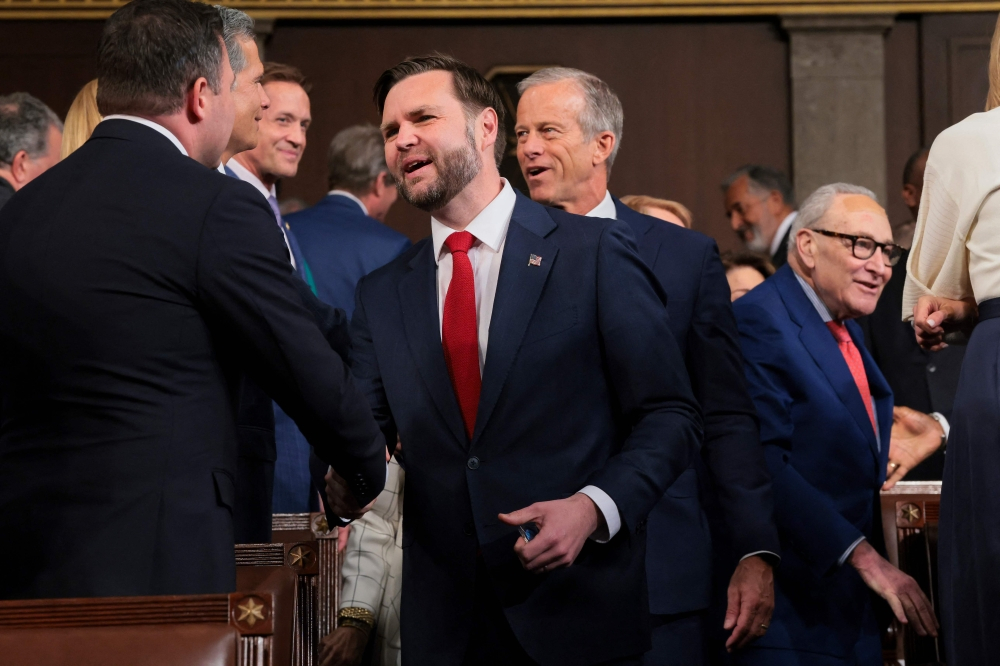
US Vice President JD Vance and Senate Minority Leader Chuck Schumer (D-NY) arrive ahead of Britain's King Charles III address to a Joint Meeting of Congress in the House Chamber at the US Capitol in Washington, DC, on April 28, 2026. — AFP

Friday, 01 May 2026 8:54 AM MYT


WASHINGTON, May 1 — President Donald Trump was facing a midnight deadline yesterday to secure congressional authorization for the war against Iran, though the looming cutoff is not expected to rein in his military plans.

The 60-day clock, triggered when Trump notified Congress of strikes in early March, requires the administration to begin winding down hostilities unless lawmakers authorize the use of force.

With no such approval in place, the deadline sets up a direct constitutional clash between the White House and Congress.

Democrats say the president is already on shaky legal ground—and will be in clear violation once the threshold passes.


“After we cross that 60-day threshold, there can be no more doubts that he’s violating the War Powers Act,” Senate Democratic leader Chuck Schumer said, urging Republicans to help end the conflict.

The administration disputes that interpretation, arguing the clock was effectively paused by a ceasefire announced last month.


“For War Powers Resolution purposes, the hostilities that began on Saturday, February 28 have terminated,” a senior administration official told AFP late on Thursday, noting that there has been no exchange of fire between the United States and Iran since an April 7 ceasefire.

Defense Secretary Pete Hegseth told lawmakers on Thursday the government believes “the 60-day clock pauses or stops” during a halt in fighting—a claim Democrats reject as unsupported by the law.

With tens of thousands of US troops deployed in the Middle East and mounting economic and political costs at home, the dispute presents a high-stakes test of Congress’s authority over war powers, more than 50 years after the law was passed in the wake of the Vietnam War.

Senators voted on Thursday to reject a resolution aimed at curbing Trump’s authority, the latest in a series of failed attempts by Democrats to force an end to the conflict.

‘That time has come’

While most Republicans have so far backed the president, unease is growing within the party as the deadline approaches.

Some Republicans have signaled they may reconsider their support if the war continues without a clear strategy or authorization.

Utah’s John Curtis said the deadline demands action, warning that continued operations require a firm constitutional footing.

“That same law is clear that after 60 days, military action must begin to wind down unless Congress provides formal authorization,” he said, adding that he would not support continued force without lawmakers weighing in.

Despite mounting pressure, efforts to block the war face steep odds. Even if a resolution passes the Senate, it would still need approval from the Republican-controlled House and could be vetoed by Trump.

The War Powers Act has rarely succeeded in limiting presidential war-making, with courts generally reluctant to intervene and disputes typically left to the political arena. But Democrats remained hopeful of reining Trump in.

“Some of my colleagues have indicated that the War Powers Act’s 60-day mark is the moment they may join our efforts to bring this war to its conclusion. That time has come,” said Senator Adam Schiff, who introduced Thursday’s failed resolution.

“After two months of war, thirteen service members’ lives lost, and billions of dollars squandered, it is time we recognized that the price we have paid is already too high.” — AFP

China urges US to keep ties stable, warns Taiwan is ‘biggest risk’ ahead of Trump visit


China urges US to keep ties stable, warns Taiwan is ‘biggest risk’ ahead of Trump visit


A State Department official confirmed the phone call and said it was to arrange Trump’s trip but did not give further details. — Reuters file pic

Friday, 01 May 2026 11:59 AM MYT


BEIJING, May 1 — China’s foreign minister on yesterday urged the United States to maintain “stability” between the two powers and warned that Taiwan posed the biggest risk, weeks before President Donald Trump visits Beijing.


In a call with US Secretary of State Marco Rubio, Foreign Minister Wang Yi said that Beijing and Washington should “safeguard the hard-won stability” in China-US relations, China’s foreign ministry said.


The talks also discussed the Middle East, where China has been a key partner of Tehran but has largely kept its distance after Trump joined Israel in attacking Iran, sending global oil prices spiralling.

A State Department official confirmed the phone call and said it was to arrange Trump’s trip but did not give further details.

Trump is scheduled to visit China on May 14-15 to see President Xi Jinping—the Republican billionaire’s first trip to the rival power since returning to the White House in January 2025.


During Trump’s first year back in office, Washington and Beijing clashed over trade and tariffs until a truce was declared in October, when Trump and Xi met in South Korea.

“Both sides should safeguard the hard-won stability, prepare well for key high-level interactions, expand areas of cooperation” and manage their differences, Wang told Rubio, according to a readout from the Chinese foreign ministry.


While ties have “generally remained stable” under Trump and Xi, Wang “emphasised that the Taiwan issue concerns China’s core interests and is the biggest risk point in China-US relations”, it said.

Beijing claims Taiwan as part of its territory awaiting reunification and is sharply critical of US military assistance to the self-ruled island and its support of Taipei on the international stage.

“The United States must honor its commitments and make the right choices, opening new perspectives for bilateral cooperation and do its part to promote world peace,” Wang said.

The statement from the Chinese ministry said Wang and Rubio had “exchanged views” on the situation in the Middle East, without offering further details. — AFP

Tiong says Malaysia’s tourist arrivals continue to grow despite Middle East conflict


Tiong says Malaysia’s tourist arrivals continue to grow despite Middle East conflict


Tourism, Arts and Culture Minister Datuk Seri Tiong King Sing (centre in black shirt) said that Malaysia has seen an increase in tourists from Asia and Europe despite the Middle East war. — Picture by Raymond Manuel

Friday, 01 May 2026 9:40 AM MYT


KUALA LUMPUR, May 1 — Tourism, Arts and Culture Minister Datuk Seri Tiong King Sing said tourist arrivals in Malaysia continue to grow despite the Middle East conflict.

Tiong said this during a press conference with local media following the launch of the Rain Rave Water Music Festival (RRWMF) at Bukit Bintang last night.

“Up until today, our tourist numbers continue to grow, thank God for helping us.

“Although there is a dip in tourists from the Middle East, there is a slight increase in the number of tourists coming from Asian and European countries,” Tiong said.

He added that the decline in tourist numbers from the Middle East is due to the current US-Israel conflict with Iran, which is contributing to a global energy crisis.

Apart from that, Tiong also said that in light of the current economic situation, the RRWMF programme is one of the ways to further spur local economic growth, while dismissing critics who called the three-day music festival a waste of resources.


“We have conducted thorough calculations and internal discussions; this is far from a waste of resources,” Tiong clarified.

“Without initiatives like this, tourist arrivals would likely dwindle. Furthermore, these programmes provide vital business opportunities for the B40 community. How can we expect to revitalise our economy if we do not create these platforms?”

“We must help them but at the same time, whichever areas we can save, we save, and whichever need a bit of push, we can run programmes — this is to help stabilise the local economy,” he added.

The three-day RRWMF runs from April 30 to May 2 and is held in conjunction with the Visit Malaysia Year 2026 campaign, which aims to attract 43 million visitors to the country.


***


Penang should hold such water festivals twice a year - particularly marvellous especially during hot spells😂😂😂


Iran threatens escalation as Hormuz Strait remains shut, raising global economic risks


Iran threatens escalation as Hormuz Strait remains shut, raising global economic risks


Tehran warns of “long and painful strikes” against U.S. positions as tensions deepen over control of a key maritime chokepoint, with energy markets rattled and diplomatic efforts stalled

Updated 2 hours ago
Published on 01 May 2026 9:18AM


Briefing scheduled for Trump on Thursday about strike options by US military, US official says as UAE bans citizens from visiting Iran, Lebanon and Iraq (photo from Reuters) - May 1, 2026


IRAN has issued a stark warning of military escalation against the United States, threatening retaliatory strikes if Washington renews attacks, as the Strait of Hormuz remains closed amid a protracted conflict that is shaking global energy markets.

Two months into the war involving the U.S., Israel and Iran, the closure of the vital shipping lane — through which roughly a fifth of the world’s oil and gas supplies pass — has driven sharp volatility in energy prices and heightened fears of a wider economic slowdown.

A fragile ceasefire has been in place since April 8, but diplomatic efforts to resolve the crisis have stalled, with Tehran continuing to block the strait in response to a U.S. naval blockade targeting its oil exports.

Reuters, on Friday, quoted a US official saying that Donald Trump was scheduled to receive a briefing on Thursday outlining options for fresh military strikes intended to force Iran back to the negotiating table.

Reports of the planned briefing initially pushed Brent crude above US$126 per barrel before easing to around US$114.

Iranian Foreign Ministry spokesman Esmaeil Baghaei downplayed expectations of swift diplomatic progress.

“Expecting to reach a result in a short time, regardless of who the mediator is, in my opinion, is not very realistic,” he said.

Tensions remained high on the ground, with Iranian media reporting air defence activity in parts of Tehran, where systems were said to be engaging drones and unmanned surveillance aircraft.

Regional spillover risks also intensified, with the United Arab Emirates banning its citizens from travelling to Iran, Lebanon and Iraq, and urging those already there to return home.

Trump reiterated that Iran would not be allowed to develop nuclear weapons and said fuel prices would “drop like a rock” once the war ended, underscoring the domestic political stakes ahead of upcoming U.S. elections.

Iran’s military leadership, however, signalled readiness for further confrontation. A senior official from the Islamic Revolutionary Guard Corps warned that any renewed U.S. attack would trigger “long and painful strikes” on American positions across the region.

Aerospace Force Commander Majid Mousavi was quoted as saying: “We've seen what happened to your regional bases, we will see the same thing happen to your warships.”

In a strongly worded message, Supreme Leader Mojtaba Khamenei indicated Tehran’s intention to maintain control over the strait.

“Foreigners who come from thousands of kilometres away ... have no place there except at the bottom of its waters,” he said, adding that Iran would eliminate “the enemies' abuses of the waterway”.

The crisis has prompted concern at the highest international level.

UN Secretary-General António Guterres warned that prolonged disruption to the strait could have severe global consequences.

“The longer this vital artery is choked, the harder it will be to reverse the damage,” he told reporters in New York, cautioning that extended instability could depress global growth, drive up inflation and push tens of millions more into poverty and hunger.

The United States faces a looming deadline to either wind down the conflict or justify its continuation to Congress, with analysts expecting the administration to seek an extension or bypass the requirement altogether.

Despite mounting economic strain exacerbated by the blockade, analysts suggest Iran may be able to sustain a prolonged standoff, complicating Washington’s strategy of economic pressure.

Military options under consideration reportedly include expanding strikes, maintaining the blockade, or deploying ground forces to secure parts of the strait and reopen it to commercial shipping.

At the same time, Washington has floated plans for a multinational maritime coalition to safeguard navigation through the waterway once hostilities subside, though European partners have signalled willingness to participate only after the conflict ends.

Diplomatic channels remain active but fragile, with regional mediators including Pakistan seeking to prevent further escalation as indirect exchanges continue between Tehran and Washington. - May 1, 2026


Military truck loses control, crashes into toll plaza, 15 personnel injured


Military truck loses control, crashes into toll plaza, 15 personnel injured


Ampang Jaya District Police Chief, Assistant Commissioner Khairul Anuar Khalid, said police received information about the incident at about 4.40 pm.

Updated 1 hour ago
Published on 01 May 2026 9:50AM


Further investigations are still being conducted to identify the exact cause of the incident. - May 1, 2026


FIFTEEN army personnel were injured when a military truck is believed to have experienced brake failure before crashing into the Bukit Teratai Toll Plaza area, Sungai Besi-Ulu Kelang Expressway (SUKE), Kuala Lumpur, on Thursday evening.


Ampang Jaya District Police Chief, Assistant Commissioner Khairul Anuar Khalid, said police received information about the incident at about 4.40 pm.

According to him, the accident involved a truck belonging to the Malaysian Armed Forces, which was travelling from Sungai Besi Camp towards Kuala Kubu Bharu.

"Initial investigations found that the truck involved is believed to have lost control before crashing into the toll plaza area.

"The accident is believed to have been caused by a failure of the vehicle's brake system," he said in a statement.

Further investigations are still being conducted to identify the exact cause of the incident.

He said that as a result of the incident, 15 personnel who were in the back of the truck were injured.

"All the victims were taken to Ampang Hospital by the ambulance team for further treatment," he said.

He added that further investigations are still being conducted to identify the exact cause of the incident.

"The case is being investigated under Section 43 of the Road Transport Act 1987," he said. – May 1, 2026

Over 7,000 turn up for Rain Rave day one, KL police chief warns public against misconduct


Over 7,000 turn up for Rain Rave day one, KL police chief warns public against misconduct


KL police chief Datuk Fadil Marsus told local media that the number was expected to swell past the 10,000 mark by midnight. — Picture by Raymond Manuel

Friday, 01 May 2026 9:15 AM MYT


KUALA LUMPUR, May 1 — The opening of the Rain Rave Water Music Festival (RRWMF), held in conjunction with Visit Malaysia Year 2026, saw a massive turnout with over 7,000 attendees gathered in the heart of the city.

KL police chief Datuk Fadil Marsus told local media that the number was expected to swell past the 10,000 mark by midnight.

“The atmosphere is incredibly vibrant, and we anticipate this momentum to continue through tomorrow afternoon, which will conclude on May 2.

“My officers are stationed throughout the venue. We are committed to ensuring this programme runs smoothly and safely,” he said last night when met by reporters.

He added that 500 officers and personnel, including reinforcements from Bukit Aman and all district police headquarters in Kuala Lumpur, were deployed for the opening night alone.

Organised by the Ministry of Tourism, Arts and Culture (MOTAC), the three-day music festival has transformed the streets of Bukit Bintang into a massive, high-energy wet dance floor.

In light of that, Fadil reminded the public to pay close attention to official traffic updates and to plan their journeys accordingly, as numerous roads in the area are currently closed.

He also issued a firm reminder about social conduct, warning against drug use and any immoral behaviour at the event.

“Numerous roads are currently closed. Please pay close attention to official traffic notices and plan your journeys accordingly to avoid congestion.

“To those visiting, I want to emphasise: please prioritise your safety. Ensure there is no involvement with drugs or any immoral behaviour,” he said.


‘Wanted to win a Nobel Prize’: Convicted ex‑Harvard scientist now leads China’s state‑funded brain‑interface lab



‘Wanted to win a Nobel Prize’: Convicted ex‑Harvard scientist now leads China’s state‑funded brain‑interface lab


Charles Lieber leaves federal court after he and two Chinese nationals were charged with lying about their alleged links to the Chinese government, in Boston, Massachusetts January 30, 2020. — Reuters pic

Friday, 01 May 2026 7:00 AM MYT


  • Charles Lieber leads China’s i-BRAIN lab with advanced resources and state funding
  • Lab is recruiting researchers for studies on monkeys as models for human brain-computer interfaces
  • Case highlights limits of US safeguards on technology with military uses, analysts say


SHENZHEN, May 1 — An American scientist convicted of lying to US authorities about payments from China while he was at Harvard University has rebuilt his research lab in Shenzhen to pursue technology the Chinese government has identified as a national priority: embedding electronics into the human brain.

Charles Lieber, 67, is ‌among the world’s leading researchers in brain-computer interfaces. The technology has shown promise in treating conditions such as ALS and restoring movement in paralysed patients. But it also has potential military applications: Scientists at China’s People’s Liberation Army have investigated brain interfaces as a way to engineer super soldiers by boosting mental agility and situational awareness, according to the US Defence Department.

Lieber was found guilty by a jury and convicted in December 2021 of making false statements to federal investigators about his ties to a Chinese state programme to recruit overseas talent, and tax offenses related to payments he received from a Chinese university. 

He served two days in prison and six months under house arrest, and was fined US$50,000 (RM198,375) and ordered to pay US$33,600 in restitution to the Internal Revenue Service. During the case, his defence said he was suffering from an incurable lymphoma, which was in ‌remission, and he was fighting for his life.

Three years after he was sentenced, Reuters has learned that Lieber is now overseeing China’s state-funded i-BRAIN, or the Institute for Brain Research, Advanced Interfaces and Neurotechnologies, with access to dedicated nanofabrication equipment and primate research infrastructure unavailable to him at Harvard. The lab is an arm of the Shenzhen Medical Academy of Research and Translation, or SMART.

“I arrived on April 28, 2025 with a dream and not much more, maybe a couple bags of clothes,” Lieber said of his move to China at a Shenzhen government conference in December. “Personally, my own goals are to make Shenzhen a world leader.”

Lieber, through an assistant, declined an interview request, citing “current commitments.” He didn’t respond to written questions from Reuters.

SMART last year appointed Lieber as an investigator, according to a post on i-BRAIN’s website dated May 1, 2025. That news was covered by some media outlets. The same day, i-BRAIN said Lieber had also been appointed its founding director — an announcement that went unreported at the time.

This story is the most comprehensive account of Lieber’s activities since he moved to China. Reuters is reporting for the first time that his lab has access to dedicated primate research facilities and chip-making equipment; that it sits within a sprawling ecosystem of state-backed institutions bankrolled by billions of dollars in government funding; and that it is housed within an institution that is luring top scientific talent back from the United States.

In 2011, Lieber was named the world’s top chemist of the preceding decade in a set of scientific rankings published by Thomson Reuters, the parent of Reuters news agency. Thomson Reuters, which in 2016 sold the business that compiled the rankings, declined to comment.

Some analysts say Lieber’s ability to reconstitute his laboratory after a federal criminal conviction for lying about his ties to China shows how US safeguards on technology with potential military uses haven’t kept pace with Chinese government efforts to acquire it. That concern is amplified because of Beijing’s military-civil fusion strategy, whereby civilian scientific resources and research are shared with the military.

“China has weaponised against us our own openness and our own efforts for innovation,” said Glenn Gerstell, a non-resident senior adviser at the Centre for Strategic and International Studies and former general counsel of the US National Security Agency from 2015 to 2020. “They’ve flipped that and turned it around against us, and they’re taking advantage of it.”

The Chinese Ministry of Science and Technology and the defence ministry didn’t respond to questions about China’s development of brain-computer interfaces. SMART and i-BRAIN also didn’t reply to requests for comment about their research and the recruitment of Lieber.


Primate research

Lieber’s new perch appears to give him richer resources ‌than he had in the United States.

In Shenzhen, i-BRAIN in February installed a deep ultraviolet lithography system made by semiconductor-equipment giant ASML, according to the lab’s website. The Dutch company’s machines print the tiny circuits essential to cutting-edge chips. At Harvard, Lieber used shared lithography equipment at the university’s Centre for Nanoscale Systems. The centre serves more than 1,600 users annually, according to its website.

i-BRAIN’s model ⁠is two generations behind restricted machines, but still likely to cost around US$2 million, according to Jeff Koch of semiconductor-research firm SemiAnalysis.

ASML told Reuters it wouldn’t comment publicly about its customers.

On the same ⁠campus, Lieber also has access to Brain Science Infrastructure (BSI) Shenzhen, a research lab with 2,000 primate cages and dedicated space for i-BRAIN’s work, according to the latter’s website. Many researchers in the field consider primate trials a prerequisite for human trials for invasive brain-computer interfaces. The ⁠BSI facility is part of the Chinese Academy of Sciences and is funded by the Shenzhen government. ⁠None of them responded to questions about brain-computer interface technology and the role of primate research ⁠in its development.

Domestic and international researchers are being recruited by i-BRAIN for electrophysiology studies on rhesus monkeys as models for human brain-computer interfaces, according to a September 2025 post on its website, which invites prospective applicants to contact Lieber.

There is no indication that Lieber conducted primate research at Harvard. The elite Massachusetts university closed its New England Primate Research Centre in 2015 under sustained pressure over animal welfare and funding challenges.

Jung Min Lee, a researcher who co-authored nanofabrication papers with Lieber at Harvard, has joined him at i-BRAIN as research associate professor, according to its website. Lee, who couldn’t be reached for comment, is an expert in stitching flexible electronics into brain tissue.

Harvard didn’t respond to Reuters questions about Lieber and Lee.

John Donoghue, a Brown University professor and neuroscientist who pioneered a brain-computer interface system known as ⁠BrainGate, said primate work is “absolutely critical” in translating neural interface technology to humans, but faces regulatory and funding hurdles in the United States.

“With so many hassles with non-human primate research here, to have somebody give you all this support, access to technology, a concentrated centre, a national initiative — those are things that are very attractive,” he told Reuters.

SMART’s 2026 budget, funded entirely by Shenzhen’s government, rose nearly 18 per cent to about US$153 million. The academy’s budget papers don’t indicate the proportion of that funding dedicated to i-BRAIN.

SMART was established in 2023 under founding president Nieng Yan, a structural biologist. Her return to China a year earlier after five years at Princeton University was hailed in domestic media as the homecoming of a “goddess scientist.” Yan and Princeton didn’t reply to Reuters questions about her role at Shenzhen and the recruitment of Lieber.

Alongside SMART sits the legally separate but functionally twinned Shenzhen Bay Laboratory, which launched in 2019 with a five-year budget from Shenzhen’s government of around US$2 billion. Both are based in Guangming Science City, a national science hub of manicured parks and waterways. The two institutions share the same leadership and offices, and will also occupy a dedicated 750,000-square-meter site that is under construction at a planned cost of US$1.25 billion. Shenzhen Bay Laboratory didn’t respond to a request for comment.

Signs guiding visitors to SMART’s premises are emblazoned with the slogan: “Innovate with the Party.” A Reuters reporter was denied access to i-BRAIN’s offices while trying to deliver a letter to Lieber.

Lieber joins at least six others who have moved to SMART from US ⁠institutions, though all of them are Chinese-born researchers returning home.

China named brain-computer interface technology a national growth priority in its new five-year plan in March 2026. Zheng Shanjie, head of China’s National Development and Reform Commission, said in October that the rise of brain-computer interfaces and related technologies “will be equivalent to creating another Chinese high-tech sector in the next 10 years.”

The US Defence Advanced Research Projects Agency is also investing in brain-computer interfaces for drone and cyber defence applications, according to the agency’s programme description. Research projects led by Lieber at Harvard received over US$8 million in funding from the Defence Department since 2009, court documents show. The Pentagon didn’t ⁠respond to questions about the technology’s military uses and Lieber’s role at Shenzhen.


Vying for a Nobel prize

Lieber’s 2021 conviction was one of few wins for the US Justice Department’s China Initiative, launched during the first Trump administration to counter Chinese economic espionage and intellectual-property theft. The initiative was wound down under President Joe Biden after a record of failures and criticism for racial profiling.

While still on supervised ⁠release, Lieber obtained court approval for at least three ⁠trips to China in 2024, including one that US District Judge Denise Casper granted for “employment networking,” court documents show. Judge Casper didn’t respond to a request for comment.

Lieber’s defence team said in a pre-sentencing memorandum in 2023 that the scientist had been suffering from lymphoma and was largely confined to his home, leaving only for medical appointments, brief walks, and occasional visits to a local farm. During a 30-year career at Harvard he spent over 80 hours a week in the lab, and when not working, Lieber spent time “coaching wrestling, and growing giant pumpkins in the back yard,” according to his defence.

Lieber acknowledged being “young and stupid” in getting involved with China’s Thousand Talents Programme, the state-backed initiative to recruit overseas experts, his lawyer told the court in 2021. When he was arrested in 2020, Lieber told FBI agents he “wanted to win a Nobel Prize” and be ‌recognised for his work, according to prosecutors.

The FBI declined to comment and the Justice Department didn’t respond to questions.

The Lieber case illustrates a broader failure of US policy, some analysts say.

“If you think of him as a vector for tech acquisition that runs contrary to US interests, we identified that, punished him, and that did nothing to stop the big-picture trend,” said Emily de La Bruyère, co-founder of China-focused consultancy Horizon Advisory and a senior fellow at the Washington-based Foundation for Defence of Democracies, a nonprofit research institute considered hawkish on foreign policy.

Gerstell, the former US official, described Lieber as “Exhibit A” in how US legal tools are inadequate.

“This is a guy who was convicted of precisely the thing that we want him to be convicted of in this context, and yet the minute he’s released from house arrest, he’s off in China,” he said. — Reuters

Infantino: Iran will compete in World Cup and play matches in United States as scheduled


Infantino: Iran will compete in World Cup and play matches in United States as scheduled


Fifa President Gianni Infantino speaks during the 76th FIFA Congress at the Vancouver Convention Centre on April 30, 2026, in Vancouver, Canada. — AFP pic

Friday, 01 May 2026 9:36 AM MYT


VANCOUVER, May 1 — Fifa President Gianni Infantino reiterated that Iran will play their World Cup games in the United States as scheduled, as football’s power-brokers met in Vancouver yesterday.


Iran’s participation at this year’s World Cup in Canada, Mexico, and the United States has been shrouded in uncertainty since the eruption of war in the Middle East in February following strikes by the United States and Israel.


Infantino, who has repeatedly stated that Iran will be at the World Cup, underscored that stance at the start of his address to delegates as Fifa’s 76th Congress got underway in western Canada.


“Let me start by the outset, confirming straightaway that of course Iran will be participating at the Fifa World Cup 2026,” Infantino said. “And of course, Iran will play (in) the United States of America.”


Infantino’s remarks drew swift support from close ally US President Donald Trump, who told reporters in the Oval Office he was “OK” with Iran’s participation.

“Well, if Gianni said it, I’m OK,” Trump said. “I think let ‘em play.”


Iranian officials had floated the idea of shifting their group games from the United States to Mexico, but that proposal had already been nixed by Infantino.

In a further twist last week, Italy-born US special envoy Paolo Zampolli was reported to have floated the idea of Italy taking Iran’s World Cup place.

The US government later distanced themselves from that proposal, with US Secretary of State Marco Rubio saying Iran’s footballers would be welcome.

But the tension surrounding Iran’s World Cup participation rumbled into the build-up to Thursday’s summit.

Iran’s delegation was the only absentee from the 211-member congress as Thursday’s meeting got under way after a clash with Canadian border officials earlier this week.

Officials from the Iranian football federation (FFIRI) abruptly left Canada after landing in Toronto, abandoning their onward trip to Vancouver.

Iranian media said FFIRI president Mehdi Taj—a former member of Tehran’s Islamic Revolutionary Guard Corps (IRGC) — and two colleagues flew home after being “insulted” by Canadian immigration officers.

Canada, which designated the IRGC a terrorist organization in 2024, said Wednesday that individuals linked to the force were “inadmissible.”

Iran, who are due to be based in Tucson, Arizona, during the World Cup, face New Zealand, Belgium and Egypt in Group G.

The Iranians open their World Cup campaign against New Zealand in Los Angeles on June 15.


Infantino election boost

Fifa supremo Infantino went into yesterday’s summit with his organization under fire over skyrocketing ticket costs for the World Cup, which one supporters group has branded a “monumental betrayal” of fans.

Infantino brushed off those criticisms in his address, insisting that all revenues from the World Cup—estimated between US$11 and US$13 billion—would be pumped back into football development.

“There are expensive tickets, yes, (but) there are also affordable tickets,” Infantino said. “And what is important is that all the revenues that we generate from the world go back to the entire world and finance football in all of your countries.”

Infantino’s close ties to US President Trump have also come under scrutiny.

Advocacy group Fairsquare filed a formal complaint in December arguing that Infantino had breached FIFA rules concerning political neutrality by awarding Trump the inaugural “FIFA Peace Prize” during last year’s World Cup draw.

However Infantino received a huge boost to his hopes of securing re-election as the head of world football yesterday after receiving pledges of support from the African and Asian regional confederations.

The Confederation of African Football (CAF) and Asian Football Confederation (AFC) have both said they will back Infantino if, as expected, he stands for a fourth term in 2027.

The African and Asian confederations account for 101 votes in FIFA’s presidential election out of a total of 211.

Infantino has already secured support for re-election from South American football’s ruling body CONMEBOL, which is worth a further 10 votes. — AFP


Explained: How police remand works and why suspects cannot be publicly identified before facing official charges


Explained: How police remand works and why suspects cannot be publicly identified before facing official charges


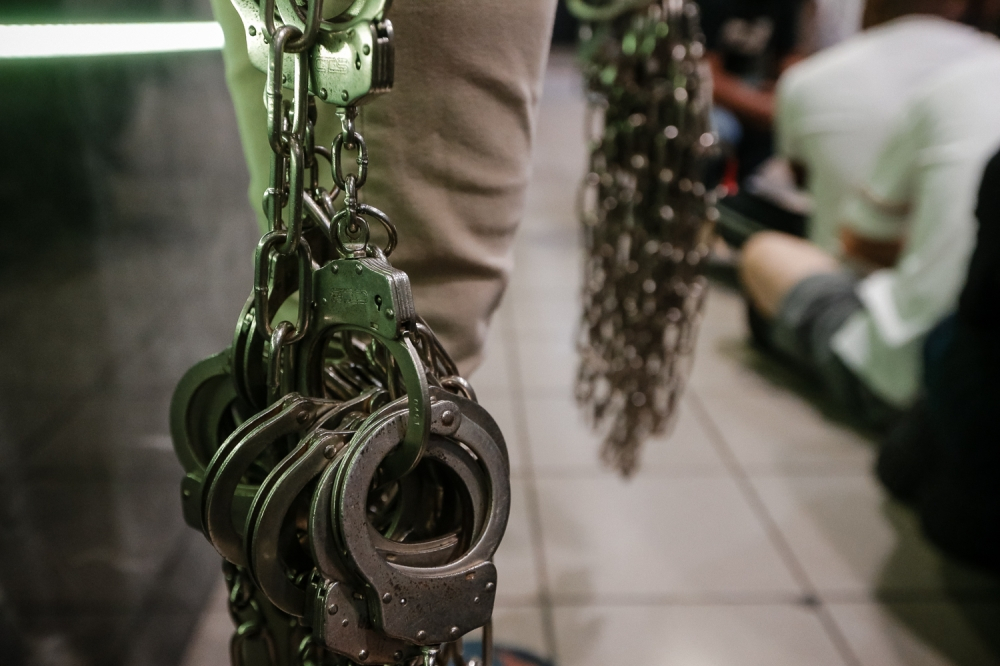
A general image of handcuffs taken on August 22, 2024. — Picture by Raymond Manuel

Friday, 01 May 2026 7:00 AM MYT


KUALA LUMPUR, May 1 — In the hours following the apprehension of a suspect, before any formal charges are filed, a court process determines whether the person in custody can be held longer to facilitate ongoing police investigations.

This formal process — a remand proceeding — is an important part of the Malaysian criminal justice system in which magistrates decide if police have sufficient grounds to continue detaining a suspect.

However, because the process largely occurs out of public view except in cases of public interest, it may be unfamiliar to many.

Past instances have arisen where suspects are widely identified or speculated about online through viral footages or posts following an arrest.

However, legal safeguards remain in force at this stage, including media restrictions on public identification such as revealing a suspect’s face or name.

So why the secrecy then?

It is important to understand what leads to a remand in the first place.

Under Section 28 of the Criminal Procedure Code (CPC), the police cannot hold a person in custody for more than 24 hours for investigation without a magistrate’s authorisation.

If investigations cannot be completed within this period and police seek to detain a suspect beyond 24 hours on the basis that the allegations are well-founded, they must apply to the Magistrate’s Court within that timeframe for further detention.

This application — typically made for a remand order — is provided for under Section 117 of the CPC.

A person is therefore “remanded” when the magistrate issues a remand order to extend the suspect’s detention beyond 24 hours.

In short, the purpose of a remand is to give the police more time to complete the investigation and to decide whether there is enough evidence to charge the suspect with the suspected offence.

Most importantly, a suspect is still considered innocent at the remand stage.

TLDR: Individuals on remand have not been formally charged, and restrictions on naming them or publishing identifiable images are meant to protect the integrity of investigations and uphold the presumption of innocence.

Okay, so what happens if I am remanded?


According to the Office of the Chief Registrar of the Federal Court of Malaysia, several steps take place during a remand proceeding.

First, the police must give the magistrate reasons justifying why they need to detain the suspect beyond 24 hours and the court then considers these reasons and later issues the remand duration.

If the offence investigated relates to imprisonment of less than 14 years, detention shall not exceed four days for the first application and three days for any subsequent application.

If the offence relates to imprisonment exceeding 14 years, detention shall not exceed seven days for the first application and seven days for the second application.

During remand, a suspect in custody at a police lockup may make several requests according to their rights enshrined under Article 5 of the Federal Constitution and further codified under Section 28A of the CPC.

This includes being represented by a lawyer of their choice, contacting their family members to inform them of their whereabouts, getting reasonable medical attention and even lodging complaints of ill-treatment.

The magistrate can either allow or refuse a remand order, and if allowed, the police must then charge the suspect or release him/her.

TLDR: Police must justify continued detention by applying for a remand order, with the duration subject to legal limits depending on the offence being investigated, and if no remand is granted, the suspect must be released within 24 hours.