Tuesday, March 02, 2021

Playing the 'pendatang' charade all over again

Malaysiakini:


Playing the 'pendatang' charade all over again

by Kua Kia Soong

It was refreshing to hear Sultan Ibrahim Sultan Iskandar say that Johor appreciates the role played by the Chinese community in developing the state since the beginning of the Johor Sultanate in the 16th century. He said the Chinese were invited to Johor as “guests” by his forefathers to help develop the state and were not pendatang (immigrants). They were invited to Johor to open the land and cultivate plantations. “They are the ‘Bangsa Johor’ – just like the Malays, Indians and others, who are all Malaysians,” he stressed.

Obviously, the Johor Sultan is as sick as most of us are over the charade that continues to play out in the communalist politics of this country over who is ‘Pribumi’ and who is ‘Pendatang’. Already, Umno is calling on Malays to unite for the approaching GE15.

Certainly, the sultan’s forefathers invited the prominent Chinese commercial capitalists who in turn organised indentured labourers ("coolies" they were called) to work in the plantations and other enterprises. Those towkays who stayed on in the country were immigrants. Why were they not? Any wealthy person who decides to emigrate to another country as an investor would also be an immigrant in that country if he or she decides to stay in that country.

As the Malayan economy expanded at the turn of the 20th century, the services sector also expanded, and more immigrants came. My grandfather first came to Singapore at the turn of the 20th century because of the hard times in China at the time. He tried to make a living selling fruits, among other things, until he decided to come over to Batu Pahat. He must have been quite enterprising for he went on from the rice trade to found the Batu Pahat Bank, which according to the late Prof Khoo Khay Kim in an article in The Star in the 80s (‘The Bankers of Batu Pahat’), was the first bank to open outside Kuala Lumpur. He was also president of the Batu Pahat Chamber of Commerce during his prime. The present Johor Sultan’s grandfather, Sultan Sir Ibrahim Sultan Abu Bakar honoured him with an SMJ title. Still, he was an immigrant in Malaya at the time since he did not return to live in China.

There are many examples of Chinese entrepreneurs who came to Malaya from humble beginnings. The boss of Hwa Tai, the publicly-listed biscuit company, started as a labourer carrying sacks of rice for a shop in Batu Pahat; the boss of China Press, Zhou Ruibiao, was a rag-and-bone man who went round collecting bottles to recycle. There are countless other examples of immigrants who helped to develop the country.

Malaysians will also remember the Umno general assembly in 2010 when the top Umno leaders were poking fun at each other’s immigrant backgrounds. The Umno bigwigs who were on stage were goaded for their Bugis, Achinese and other foreign origins. Of course, the father of the biggest Umno bigwig at the time was an immigrant from Kerala, India!

The bumiputera/immigrant conceptual trick

But by some “conceptual trick”, these political bigwigs are defined as "Malays" no matter their ancestral origins (whether they are from Indonesia, Kerala, Pakistan or the Middle East) and therefore qualify as "bumiputeras" who are entitled to special privileges in this country.

It so happened that in the same week as the 2010 Umno general assembly, the Galas by-election in Kelantan was in full swing and the papers highlighted the fact that in the historic Kampung Pulai in the constituency, a Hakka Chinese community had been living there for 500 years and yet amazingly they still did not have titles to their land! Why? Because they are considered “immigrants”, that is, they had not been granted titles to their land, apparently because they had not “assimilated” by converting to Islam and sloughing off their "immigrant" stigma.
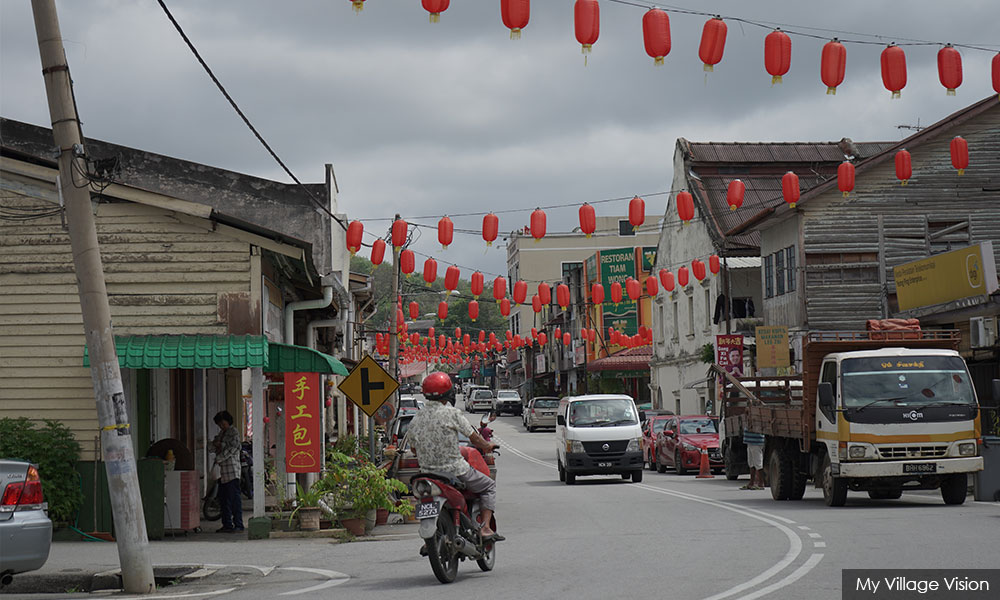


There are more than 500 Chinese new villages in the country with a population of some two million and many face this problem. They have existed for more than 70 years ever since the emergency. At every election, a few households will be dished out land titles in the same way that citizenship is occasionally dished out to a handful of elderly residents. The boss of the Yongdaohu restaurant where I frequent only recently got his Malaysian citizenship after living in this country and paying taxes for more than 50 years.

Are these Chinese and Indian Malaysians asking for special privileges? No, they are only asking for the simple birth right that accompanies having been born in this country and for having lived and contributed to this country through so many years.

The citizenship issue was a ruse to divide the anti-colonial forces

The citizenship issue was thrown into the Independence struggle to put the anti-colonial forces on the defensive – namely, who are the "pribumi" (indigenous people) and who are the pendatang (immigrants) and therefore not qualified for citizenship except through stringent conditions. Victor Purcell, who served as a colonial officer, wrote: “But up to Independence, the fact remained that Malayan-born or Muslim immigrants from Indonesia were ‘subjects of the rulers’ and automatically Malayan citizens, whereas the Chinese, Indians, etc. had to satisfy certain conditions of the law in order to become citizens.”

I have been monitoring this rather contrived controversy since the 1970s and never fail to be bemused by the antics of leaders of Malay-based parties. On Nov 8, 1983, then Umno culture minister Anwar Ibrahim referred to non-Malays in Parliament as the “new immigrants”. After his 1998 sacking by Dr Mahathir Mohamad, he finally recanted his foolish past. Mahathir also referred to non-Malays as immigrants on Aug 21, 1985. And during the rather contrived controversy between Umno and MCA over this issue toward the end of 1986, an “eminent historian” even suggested:

"Malaysian Chinese are still considered ‘immigrants’ but can become ‘pribumis’ (indigenous people) if they are able to assimilate Malay customs and religion (Islam)”.

Somehow, the eminent historian overlooked an elementary point of logic – namely, how could a ‘non-pribumi’ become a ‘pribumi’ simply by assimilating when the latter is strictly a historical category? He unwittingly exposed the fact that the ‘pribumi/pendatang’ distinction is rooted in political ruse and has nothing to do with historical justification!

The obsession with ‘race’

Since the anti-colonial struggle, politicians of Malay-based parties have been obsessed with race. It is not surprising when there is so much at stake for them in terms of economic largesse especially after the New Economic Policy was implemented in 1971. Mahathir’s Malay Dilemma is rooted in that paradigm. This obsession with race has little currency in the anthropology or sociology disciplines, not to speak of human rights in the international community. Sir Roland Braddel, former president of the Council of the Malayan branch of the Royal Asiatic Society, and once legal adviser to Umno has pointed out:

“There is, strictly speaking, no such thing as the Malay race; there are Malay people, the Malay culture and the Malay language, etc.” (The Study of Ancient Times in the Malay Peninsula and Straits of Malacca”, MBRAS, 1980:3).

Serious scholars of history, anthropology and ethnography are not concerned with the chauvinistic question of “who was here first?” just to please racists and communalists. They are more concerned with holding a humanistic and enquiring attitude. The racists may like to know that the concept of race used by geneticists and the like has no relevance to the political differences between people. There is no concept of dominance (ketuanan) or subordinance (kehambaan) as far as the rights of citizens are concerned in a democratic country.

As history is our witness and as the fat cats who cream the largesse of the NEP also know, "Malays" are also immigrants to this country, while the Orang Asli have the sole claim to the epithet “original people” or Orang Asal. But alas, do they enjoy “bumiputera” special privileges?
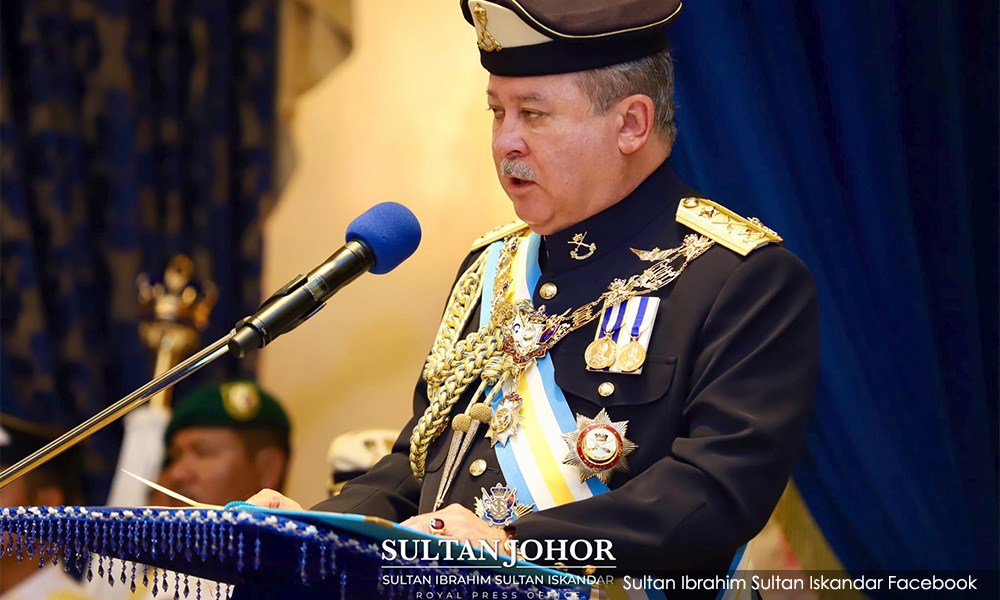


The Sultan of Johore is sensitive to the fact that non-Malays have been referred to as “immigrants” or pendatang because their citizenship status in this country has been continually questioned by communalist politicians for so long. Thus, even though the Chinese had settled in Kampung Pulai, Kelantan and Malacca for some 500 years; in Perak, Penang, Singapore since the 19th century or longer, only 500,000 Chinese and 230,000 Indians held citizenship in 1950 (Federation of Malaya Annual Report, 1950:24). This represented merely a fifth of the total Chinese population even though by 1947, more than three-fifths of the Chinese and one-half of the Indian population in Malaya were locally born (1947 Census, 1949:29).

A speech by Tan Cheng Lock, then senior Chinese representative on the Legislative Council of the Straits Settlements on Oct 19, 1932, is rather revealing:

“I look in vain for any tangible sign or indication of any active interest, practical sympathy, and encouragement that has been shown by the government of late toward… the Straits-born Chinese who have formed a continuous colony in this country for more than 500 years, and the locally-born Chinese subjects of the Protected Malay States who have made this country their home.

“On the contrary, these loyal subjects of Malaya are, practically speaking, not to be allowed in future to own and cultivate rice lands in this country of their birth though foreigners from Sumatra and Java are granted that privilege...” (R Emerson, “Malaysia”, 1964:513).

At the time, according to “A Report on the 1931 Census” compiled by CA Vlieland:

“Only a negligible fraction of the Malay population consists of descendants of pre-19th century immigrants… more than half of it has less than 50 years’ prescriptive right to the title ‘owners of the soil’. The Malays are in fact merely immigrants of generally longer standing than the other migrant races represented in the peninsula and are in no sense an autochthonous population.”

From the foregoing, it is clear the "pribumi/pendatang" distinction is an elaborate charade designed and played out by communalists since colonial times. So, let us take the recent refreshing call by the Sultan of Johor to stop referring to non-Malays as pendatang in a positive spirit and reaffirm that the status of nationality and citizenship has the crucial implication that every citizen is equal in the eyes of the law. It does not matter in the least whether citizens have been recently naturalised, or that their forefathers came here centuries ago; whether they were invited by sultans or came as refugees or indentured labourers to escape the hard times in their original lands.

“For all our languages, we can’t communicate

For all our native tongues, we’re all natives here

Sons of their fathers dream the same dream

The sound of forbidden words become a scream

Voices in anger, victims of history

Plundered and set aside

Grown fat on swallowed pride…”


(Natives by Paul Doran)


KUA KIA SOONG is adviser of Suara Rakyat Malaysia (Suaram)


How Bangladesh considers its kinfolk the Rohingya adrift at sea

Bangkok Post:

Bangladesh: 'No obligation' to help Rohingya at sea

Dhaka expects India or Myanmar to take refugees adrift in Andaman for nearly two weeks


Bangladesh Navy personnel help a Rohingya child out of a navy vessel that was taking refugees to be resettled on Bhasan Char island in December. (Reuters File Photo)

DHAKA: Bangladesh is under “no obligation” to shelter 81 Rohingya Muslim refugees adrift for almost two weeks on the Andaman Sea and being assisted by neighbouring India, said Bangladesh foreign minister AK Abdul Momen.

The Indian coast guard found the 81 survivors and eight dead crammed onto a crippled fishing boat and were trying to arrange for Bangladesh to take them, Indian officials said on Friday.

But Momen told Reuters late on Friday that Bangladesh expects India, the closest country, or Myanmar, the Rohingyas’ country of origin, to accept them.

“They are not Bangladesh nationals and in fact, they are Myanmar nationals. They were found 1,700 kilometres away from the Bangladesh maritime territory and therefore, we have no obligation to take them,” said Momen, who is in the United States.

“They were located 147km away from Indian territory, 324km away from Myanmar,” he said by phone, adding that other countries and organisations should take care of the refugees.

Indian foreign ministry officials did not respond to requests for comment.

External Affairs Ministry spokesman Anurag Srivastava said on Thursday that India was “in discussions with the Government of Bangladesh to ensure their safe and secure repatriation”.

India’s foreign ministry did not respond to requests for comment on whether it would accept the refugees onto Indian soil.

One senior Indian official, who declined to be named as he was not authorised to discuss the matter with media, said India planned to help the refugees with food and water, but it was not planning to take them ashore.

New Delhi did not sign the 1951 Refugee Convention, which spells out refugee rights and state responsibilities to protect them. Nor does it have a law protecting refugees, though it currently hosts more than 200,000, including some Rohingya.

More than 1 million Rohingya refugees from Myanmar are living in teeming camps in Bangladesh, including about 700,000 who fled after the Myanmar military conducted a deadly crackdown in 2017.

Traffickers often lure Rohingya refugees with promises of work in Southeast Asian countries like Malaysia.

The United Nations High Commissioner for Refugees (UNHCR) expressed alarm this week over the missing boat.

India on Thursday said around 47 of the occupants of the boat are in possession of ID cards issued to them by the UNHCR office in Bangladesh, stating that they are displaced Myanmar nationals.

The refugees have been drifting in international waters after leaving southern Bangladesh on Feb 11 in the hope of reaching Malaysia.

On Saturday, they were under the aid and surveillance of India as officials were holding talks to return them to Bangladesh, said the senior Indian official who is not authorised to speak to the media.

The boat, which sailed from the massive Cox’s Bazar refugee camp, was carrying 56 women, eight girls, 21 men and five boys.

Many of the survivors, according to Indian officials, were sick and suffering from extreme dehydration, having run out of food and water after the boat’s engine failed four days into their journey.

“Has Bangladesh been given the global contract and responsibility to take and rehabilitate all the Rohingya or boat people of the world?” Momen said. “No, not at all.”

Momen said the UNHCR should also take responsibility as many people on the boat hold ID cards from the UNHCR office in Bangladesh.

“If (the refugees) are UNHCR card holders, why did they allow traffickers to take their card holders to adrift on the high sea leading to death?”

UNHCR officials were not immediately reachable for comment.


Ku Li tells Umno leadership to decide on severing ties with Bersatu, & no-confidence vote on Muhyiddin

MM Online:

Ku Li tells Umno leadership to decide on Bersatu ties, no-confidence vote on Muhyiddin


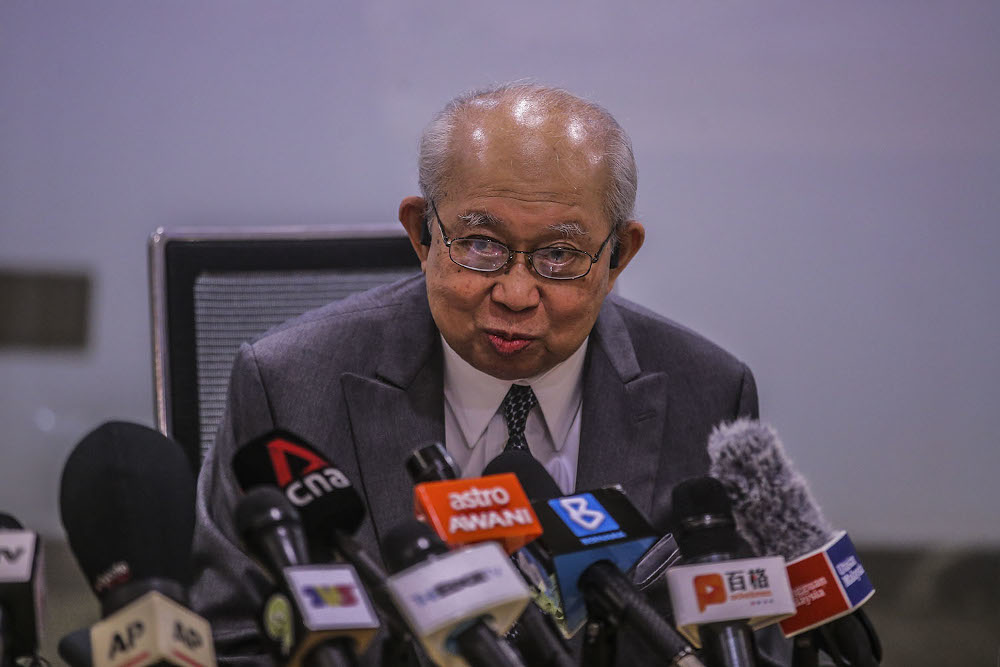
Gua Musang MP Tan Sri Tengku Razaleigh Hamzah speaks during a press conference at Yayasan Al Bukhary, Kuala Lumpur December 14, 2020. — Picture by Hari Anggara

KT note: Hello? When did Ku Li get a Tan Sri?

KUALA LUMPUR, March 2 — Tan Sri Tengku Razaleigh Hamzah demanded today for Umno to hold an emergency supreme council meeting to decide on cutting ties with Bersatu and push for a vote of no confidence against Prime Minister Tan Sri Muhyiddin Yassin.

In a statement today, he reminded the party’s leaders that 147 Umno divisions have already made the call to cut ties with Bersatu.

“The Supreme Council must hold an emergency meeting to decide that all of its members must severe their cooperation with Bersatu, in line with the spirit and demands of the 147 Umno divisions, and must vote to reject the leadership of Tan Sri Muhyiddin Yassin as the prime minister, and the leader of the Perikatan Nasional government, and call all MPs from all component parties within Barisan Nasional to also reject the leadership of Tan Sri Muhyiddin Yassin as the federal government’s prime minister, before Parliament is called to reconvene this month of March,” he said.

*********

kt notes:

Ku Li's sense of urgency must have come from his perception that Muhyiddin and accomplice Ass-binte are deviously and successfully manipulating PAS and enticing UMNO frogs to rally to the PPBM banner, promising an end to UMNO's existence as a significant Malay political force. - read also Shafie: Govt offered Billions for frogs.

Also, Muhyiddin's government has recently performed abysmally with managing the pandemic, MCO and the scandalous double standards, thus the timing is opportune for UMNO to strike ... NOW, when PPBM is at its lowest popularity.

Any prolonged furtherance of the Muhyiddin government will be to UMNO's immense disadvantage and peril - read also Slow death awaits Umno if it stays with PN.


Tahukah Atuk tentang keluarga Macik menerima wang dari Jho Low?

Malaysiakini:


Was Dr M aware of allegation against Zeti and family, asks anti-graft watchdog

An anti-corruption watchdog is the latest to demand answers over a report which implicated former Bank Negara Malaysia (BNM) governor Zeti Akthar Aziz and her family in the 1MDB scandal.

The Center to Combat Corruption and Cronyism (C4) also trained its guns on former premier Dr Mahathir Mohamad, noting that he appointed Zeti, who is now the chairperson of Permodalan Nasional Bhd (PNB), as a member of the Council of Eminent Persons after the last general election.

“Was Mahathir aware of this matter?

“Zeti’s appointment as a member of the council clouds the efforts in pursuing the truth behind the 1MDB scandal.

“This is also affected by her appointment as PNB chairperson. If this matter was within his knowledge, then this is nothing but a gross abuse of office,” it added in a statement today.

C4 was responding to media reports on Singapore authorities alerting BNM of suspicious transactions amounting to RM66 million from fugitive businessperson Jho Low to a firm allegedly owned by Zeti's husband and son in 2015 when she was still heading the central bank.

“If the bizarre 1MDB money trail had not already provided overwhelming shock and awe at the gruesome level of thievery, this revelation, if true, will speak volumes of the corruption of our institutions.

“The chilling fact of the matter in this expose is that, if there is any truth to the matter, the integrity of BNM as a whole would be seen as fully compromised and would smell foully of complicity and corruption.

“This information must be confirmed urgently by the authorities. Silence will only lead to more questions and speculations about the matter, further weakening any trust the people have left in our institutions and authorities,” it added.


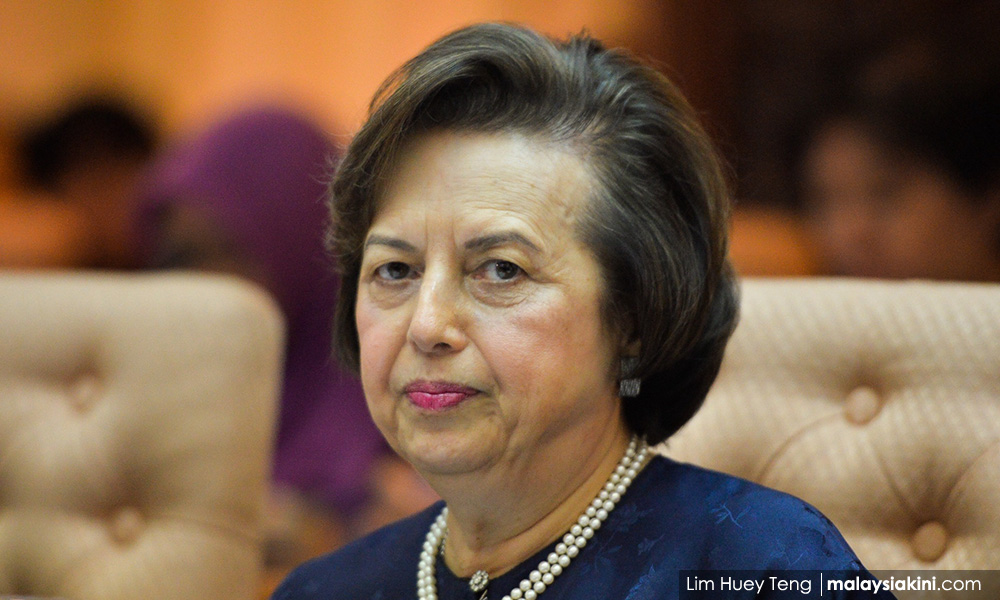
Former Bank Negara governor Zeti Akthar Aziz

Apart from Mahathir, C4 also wanted answers on whether Zeti knew of the transactions as she was still in office at the time and if BNM, which is supposed to be an independent institution guarding against financial fraud, was in the know and failed to act.

“C4 calls for immediate answers and further investigation into the matter and for the parties involved to come clean on the matter.

“It bears reminding again and again that the funds of 1MDB were siphoned from the people.

“Accountability must be the cornerstone of every administration, and such discoveries make it difficult for the trust deficit of the people towards the administration and its institutions to be overcome,” it added.

Yesterday, Malaysiakini reported that DAP lawmaker Lim Lip Eng had also demanded answers over the latest allegation, stressing that BNM's reputation was at stake.

Last December, it was reported that Zeti's husband and their two sons had admitted knowing about receiving money from 1MDB funds.

The admission was contained in statutory declarations signed in March 2019. The money was in the accounts of Cutting Edge Industries in Singapore, and the three admitted to being the beneficial owners of the accounts.

The statutory declarations, according to FMT, were certified as authentic by the attesting lawyers.

Meanwhile, controversial blogger Raja Petra Kamaruddin had also raised the matter, prompting PKR president Anwar Ibrahim to seek answers from Zeti.

In her response, Zeti described the allegation as “false and malicious”.

“I wish to reiterate that my family and I have never received any sums of money from 1MDB,” the former BNM governor said, adding that she had extended her fullest cooperation with the 1MDB investigations.


Zeti also said she had provided the police and the MACC with all the necessary information in relation to the investigations on 1MDB and former premier Najib Abdul Razak.

“I am unable to make any further statements as I am a potential witness in the ongoing criminal trial of the former prime minister,” she added.

Last July, Najib was sentenced to 12 years’ jail and slapped with an RM210 million fine over the misappropriation of funds linked to SRC International Sdn Bhd, a former 1MDB subsidiary.

He is also facing another 25 charges of money laundering and abuse of power involving RM2.28 billion of 1MDB funds.

Zeti had maintained that she was not aware of the funds which flowed into the former premier's accounts.

She claimed that in 2015, Najib had summoned her to his office when he was still the prime minister and tried to convince her to clear him, but she refused.

In an exclusive interview with Malaysiakini following his defeat in the 2018 general election, Najib claimed that Zeti was aware of the sum in his bank account, which he alleged was a donation from a Saudi prince.


Puad gets to say "double standards" in Muhyiddin's face again thanks to Edmund Santhara

FMT:

Does only a deputy minister get to be a responsible parent? asks Puad


Umno Supreme Council member Mohd Puad Zarkashi says people are at a loss as to how deputy FT minister Edmund Santhara was allowed to go on leave.

PETALING JAYA: An Umno Supreme Council member has questioned why a deputy minister can be granted 55 days’ leave to be with his family overseas when people are not allowed to cross district and state borders.

In a Facebook post, Mohd Puad Zarkashi said people were at a loss as to how deputy federal territories minister Edmund Santhara was allowed to go on leave.

Yesterday, Santhara said Prime Minister Muhyiddin Yassin approved his leave to travel to New Zealand to be with his family and wife who is ill.

“YB Santhara gave the reason that he applied for leave and permission to travel to New Zealand to be a responsible father,” said Puad.


“Are regular folk not allowed to cross district and state borders to visit their families because they are regarded as irresponsible parents? They are not asking to travel overseas,” he said.

Puad said he felt sorry for frontliners who have not had their leave approved.

He said elected representatives should frequently visit their constituencies, more so during the pandemic and the flood season, which also affected Santhara’s Segamat constituency.

“Isn’t a two-week break enough? During the Barisan Nasional era, the leave for ministers and deputy ministers would be frozen during the flood season.”

He said former prime minister Najib Razak was not exempted as he had to cancel his holiday when Kelantan was hit by major flooding in 2014.

“Is the deputy FT minister’s post no longer important? The (case of) double standards in this country is getting more apparent.”


Boo: Why vaccinate elected reps ahead of more at-risk healthcare workers?

Malaysiakini:


Boo: Why vaccinate elected reps ahead of more at-risk healthcare workers?

Johor DAP committee member Dr Boo Cheng Hau (above) has questioned the logic of vaccinating elected representatives ahead of more at-risk healthcare workers.

While both groups qualify for early vaccination under Phase 1, Boo pointed out that unlike elected representatives, some healthcare workers deal directly with Covid-19 patients, including administering tests on them.

He said this includes private healthcare workers who have to administer tests on Covid-19 patients.

Boo, who is himself a private healthcare general practitioner and was previously infected with Covid-19, said healthcare workers face a higher risk than elected representatives.

"Many ministers and state exco members have already got their first dose of Covid-19 vaccine before both the public and private healthcare workers have got theirs.


"Quite astonishingly, these political leaders are actually listed as Category 2 for vaccination prioritisation, together with private general medical practitioners, dentists and healthcare workers," Boo said in a statement.

Several senior government leaders have received their first dose of Covid-19 vaccine but other leaders, such as Home Minister Hamzah Zainudin and Perlis Menteri Besar Azlan Man, have given up their slot to healthcare workers.

Boo was responding to the guideline issued by the Special Committee for Ensuring Access to Covid-19 Vaccine Supply (JKJAV), which defines who qualifies for early vaccination under Phase 1.

He said if the Covid-19 vaccine is to be administered to elected representatives at this juncture, they should be in the high-risk group with co-morbidity and are senior citizens aged above 60.


"It is not only an inequality in prioritising vaccination among both the public and private health care workers but it shows how sick and selfish our leaders are," Boo said.

The JKJAV guideline was drafted in response to mounting complaints of attempts to jump the vaccine queue.

The guideline groups qualified personnel for early vaccination under Phase 1 into two categories.

The first category involves healthcare workers and technicians who are directly involved in dealing with and treating patients.

They include medical officers, pharmacists, science officers, nurses, X-ray technicians and ambulance drivers.

The second category includes the wider healthcare community, such as general practitioners, private dentists, traditional medicine practitioners and private lab workers.

Also included in the second category are enforcement officers, teachers with multiple morbidities, ministers and elected representatives.


Is there a need for deputy FT minister, says PKR leader

FMT:

Is there a need for deputy FT minister, says PKR leader


Lok Ker Chean of PKR Wanita questions whether deputy minister Edmund Santhara is needed.

PETALING JAYA: A PKR women’s wing leader has questioned if Edmund Santhara’s position as deputy Federal Territories minister is needed, after his announcement that he had been granted leave of 55 working days.

Loh Ker Chean, communications director of PKR Wanita, also questioned if the state of emergency was not even needed as Prime Minister Muhyiddin Yassin had allowed the deputy minister to take leave for such a long period during a time of the Covid-19 pandemic crisis.

“The question here is whether the position held by Santhara is important in the cabinet now? Simply put, if he is able to disappear just like that for 55 days with the permission of the prime minister, does this mean that the emergency situation proposed by the government is not as severe as described?” she said.

Santhara had issued a statement on Sunday after questions were raised about how he was allowed to go abroad and be away in time of crisis. He said Muhyiddin had allowed him to go on leave to be in New Zealand with his family, partly because his wife is ill, and to visit his children who are studying there.

He left for New Zealand on Dec 23 and was in quarantine for two weeks.

Loh criticised Muhyiddin’s decision for approving the leave, saying that the Cabinet is also responsible for the frontliners who are unable to carry out their roles as parents, children or spouses in their families.

“They sacrifice time with family because they understand the importance of their task in fighting Covid-19,” she said.

She also criticised Santhara for not giving priority to national needs, saying: “I regret the attitude of Santhara who did not immediately think of shortening his leave and returning to Malaysia to join hands with Malaysians to fight the Covid-19 epidemic at this difficult time after the declaration of emergency which was implemented since Jan 12.”

She urged him to return and apologise to the people or resign immediately for failing to perform his duties, especially during the emergency period.

She also called on Muhyiddin to sack Santhara in order to restore the people’s confidence in the government.


Monday, March 01, 2021

Warisan join BN-Umno for GE15? BN-UMNO collaborates with PH?

FMT:

Could Warisan join BN-Umno for GE15?


KOTA KINABALU: Warisan, which ruled Sabah as an opposition state after the last general election, may swing to other parties and coalitions instead of working with Dr Mahathir Mohamad’s Pejuang in the coming general election (GE15), say analysts.

This is because Pejuang, whose status is still up in the air with its registration rejected by the Registrar of Societies, will have little to offer the Sabah-based party in its quest to return as a political powerhouse in the country.

Universiti Malaysia Sabah senior lecturer Romzi Ationg said one speculation that is gaining traction is that Warisan could work with Barisan Nasional-Umno in GE15.

He said there are rumours in political circles that Warisan is also revisiting its pact with Pakatan Harapan (PH) and will thus need a strong substitute to ensure its own survival if it did part ways with PH.


Romzi Ationg.

“Anything is possible in politics but I dont think it is good for Warisan to focus on Mahathir and Pejuang,” he told FMT.

“Warisan president Shafie Apdal, who along with PH boss Anwar Ibrahim had been touted as prime ministerial candidates, should focus on consolidating his party’s grip on Sabah as well as federal politics by collaborating with parties who many consider to be more relevant to Malaysian politics.

“The political outfit (that Warisan should work with) should also be capable of making Sabah a developed state on par with others in the peninsula.”

Romzi was commenting on socio-political analyst Awang Azman Pawi’s suggestion that Warisan would likely throw its support behind Mahathir in GE15 due to Shafie’s “personal relationship” with the former prime minister.

Although he is not 100% convinced Warisan will eventually link up with its current political enemy, Romzi said Warisan could work with BN-Umno instead of Perikatan Nasional because of the former’s stability. Shafie himself was a former Umno vice-president and has good friends within the top Umno circles.

Romzi said Warisan and BN-Umno could complement each other, with Warisan requiring an ally to gain more seats in GE15 and BN-Umno needing a solid local-based party that could help it re-establish its position in Sabah.

“Why would Warisan pick BN-Umno over PN? Among the reasons is that Umno is still strong in the peninsula (compared to PN),” he said.

Whether such an alliance would materialise remains to be seen as Warisan deputy president Darell Leiking had previously said his party would never join forces with Umno.

This came after a claim that many of the peninsula-based party’s MPs and those from BN were backing Anwar to form a new government.

Sabah Umno is part of the Gabungan Rakyat Sabah (GRS) coalition, together with PN and PBS. Yesterday, Warisan assemblyman Hassan A Gani Pg Amir left Warisan to back GRS, which is now affiliated to the PN government.

Political observers, however, consider the ties between Sabah Umno and its GRS partners to be tenuous, particularly with Sabah PPBM, especially after the tensions over the chief minister’s post following last year’s state election

.

Arnold Puyok.

Sabah Umno helped GRS secure a slim majority by winning 38 seats but conceded the chief ministership to Sabah PPBM, which angered a host of Umno leaders.

Universiti of Malaysia Sarawak deputy dean Arnold Puyok said Warisan working with BN-Umno may not sit well with some of its supporters.

“But Warisan should be ready to work with anyone if it aspires to be at the helm once again,” he said, adding that he believed Warisan was still keeping its options open as far as political allies for GE15 is concerned.

He also pointed out Warisan could stand to suffer more losses than gains if the party sided with Mahathir, who he felt was a divisive figure both in Sabah and neighbouring Sarawak.

“By now, Warisan should realise that Mahathir was partly to blame for PH’s downfall

.

Tony Paridi Bagang.

“The risks of working with Pejuang far outweigh the benefits for Warisan,” he said.

Sabah UiTM’s Tony Paridi Bagang, however, disagreed with Romzi and Puyok, believing that Warisan will eventually opt to maintain its political alliance with PH but work with Pejuang at the same time.

“The Warisan-Pejuang cooperation can be seen as an attempt to be kingmakers in the coming polls,” he said.

Whether that is accepted by PH is another matter, he said, but as history has shown, anything is possible in Sabah politics.

*********

kt notes:

UMNO Supreme Council member Johari Abdul Ghani just said (Malaysiakini): ... it was his personal opinion that the leader of another party could become the prime minister, as long as the anchor party is in control of the ruling coalition and helming significant ministries.

"But the deputy prime minister, education minister, and finance minister portfolios should be given to the anchor party; then only will the coalition be stable."


Obviously he meant UMNO will be the 'anchor party' but will be amenable to Anwar (PKR) becoming PM if there is an alliance between PH and BN for GE15. But he stated rather pointedly that UMNO will only accept the leader of another party (or coalition) [Anwar?] as PM if UMNO gets the positions of DPM, Education Minister and Finance Minister. I wonder why he omitted the Home Ministry from UMNO's grab?

Shafie: Govt offered Billions for frogs

FMT:

‘Billions’ offered to court MPs and assemblymen, claims Shafie


Warisan MPs and assemblymen were being courted every day, party president Shafie Apdal says after Hassan A Gani Pg Amir quit to join the ruling coalition.

KOTA KINABALU: Incentives to defect, running into “billions of ringgit”, have been offered to Warisan MPs and assemblymen to betray the party, Warisan president Shafie Apdal said today.

He said he was among those to whom the offers were made.

According to Shafie, members of his party were courted almost every day by people allegedly aligned to the Gabungan Rakyat Sabah (GRS) ruling coalition, with some even offering “billions of ringgit” in exchange for leaving Warisan.

Shafie claimed that the government was using funds to buy over assemblymen and MPs instead of dealing with the problem of nearly 700,000 people who were unemployed, many of whom were going hungry.

“Where is our country headed? The King has advised us to prioritise national and economic stability,” he said at a press conference here today.

Warisan shows allegiance pledge by defecting assemblyman

Shafie said action will be taken against Sebatik assemblyman Hassan A Gani Pg Amir, who quit to declare himself an independent.

He said the party Hassan had made a pledge and signed a document of allegiance to Warisan in front of the party’s lawyers, he said. “We will leave it to the lawyers,” said Shafie. “We never forced him to make the pledge but he did it voluntarily like all other Warisan candidates.”

A video of Hassan swearing his allegiance was also shown to reporters after a Warisan meeting attended by all its MPs and assemblymen today.

In the video, dated Sept 10 last year, Hassan had promised to hand in his resignation as Sebatik assemblyman to the Sabah governor and the Sabah state assembly if he switched parties.

Hassan quit the party on Feb 25, saying he was saddened that Warisan had prioritised politics over the well-being of the people, who were struggling to cope with the pandemic.

His decision to side with GRS means the coalition – which comprises Perikatan Nasional (PN), Barisan Nasional (BN) and PBS – now has the backing of 48 of the 79 assemblymen in the state.

In the state election last year, Hassan defeated PN’s Muis Picho by a 522-majority, garnering 2,665 votes.


Mahathir now blames foreign investors as unreliable and non-dependent for tech-transfer

FMT:

We cannot continue to depend on foreign investors, says Mahathir


Malaysia must target industrial production for the world market, says Mahathir. (Reuters pic)

KUALA LUMPUR: Malaysia cannot be too dependent on foreign direct investment if it wants to achieve developed nation status, according to former prime minister Dr Mahathir Mohamad.

He said the country needed to be in control of technology and targeting industrial production for the global market such as being done by other Asian countries including China, Japan and South Korea.

“We (Malaysia) depend on foreign investors, (they) build factories which do not belong to us (Malaysia). All profits are repatriated (to their countries) and we (Malaysia) do not get the technology completely,” he said at an online forum organised by the National Professors Council (MPN).

He said South Korea is now the manufacturer of the world’s biggest ships after becoming aware that there was demand in the world market.

Prof Raduan Che Rose, head of the professors’ council, said his research on the transfer of technology by multinational companies in Malaysia showed that the country was being used more as a production plant.

“All the research, strategic matters remain with the respective countries. The mistake was perhaps in the early stages before, when we were desperate to create jobs at the manual level,” he said.

*********

kt notes:

Same old Mahathir's whine. We had all the opportunities but couldn't even get a basic car right, couldn't complete even a small naval ship (Sing built 6 frigates under French licence), Perwaja kantoi, stadium roofs in East Coast collapse, roads eff-ed up, water in Selangor forever eff-ed, etc etc etc.

Stop blaming foreign investors - of course they do/did it for profit so what's wrong with those investors taking their portions of earnings back, at least our citizens have jobs.

Malaya/Malaysia was once so far ahead of South Korea so don't talk cock about being in control of technology this-and-that. Those Koreans work their guts out, sacrifice themselves,  apart from investing in research and a good educational system. Don't look at South Korea's exports of ships, fighter planes, cars, trucks, heavy vehicles, Panther tanks, etc but at its simple non-technological export of K-Pop, K-girls etc - innovation lah instead of hunting for poor Sajat.


3 Amanah reps hopped to PKR due to Dr M factor

FMT:

3 Amanah reps may have left due to Dr M factor, says a PKR leader


Amanah deputy president Salahuddin Ayub (left) and PKR Youth secretary Syukri Razab are involved in public spat over three Amanah assemblymen in Johor switching to PKR.

PETALING JAYA: Cracks are starting to show in Pakatan Harapan (PH) with the coalition leaders of two component parties openly attacking each other over three Johor Amanah assemblymen crossing over to PKR.

Taking a swipe at Amanah deputy president Salahuddin Ayub who expressed regret over its coalition partner accepting the assemblymen into its fold, PKR Youth secretary Syukri Razab said the leader seems confused about his political alignment.

“Salahuddin was seen to be so affected when PKR accepted the three ex-Amanah men that he accused PKR of disrespecting the PH spirit.

“What about Salahuddin’s own stance? He remains close with the group (Pejuang) that did not want to be in PH and even openly attacked the PKR president,” he said in a direct reference to Salahuddin’s links with Dr Mahathir Mohamad.

He urged Salahuddin to do some “self-reflection” and break away from the attitude of his former party (PAS) which he said practised two-faced politics.

Syukri said Salahuddin should instead be thankful that PKR had offered an alternative platform for the three assemblymen to remain with PH.

“Does he want PKR to reject the three assemblymen and leave them to freeze in Amanah when their hearts are no longer with the party?”

Mahathir’s faction of Pejuang MPs are not officially a part of PH or Perikatan Nasional, while the former prime minister has continued to criticise Anwar Ibrahim.

Syukri claimed that Amanah members were being unsettled by leaders choosing to be friendly with Mahathir while being in PH, adding that this might be why more members had been leaving the party for PKR.

“This might be why they are moving to PKR, which is seen to be clearer and stronger in its principles.”

It was reported yesterday that three Johor Amanah assemblymen had decided to leave the party to join PKR. Amanah communications director Khalid Samad said this would not affect ties within PH or between the two parties.


Lim Lip Eng (DAP) wants Zeti, MACC & BNM to speak up on Jho Low-linked fund going into Zeti's family accounts

FMT:

Break the silence on Zeti’s 1MDB links, says DAP man


The Edge has reported that Zeti Akhtar Aziz was Bank Negara governor when the central bank was informed of suspicious movement of funds from accounts linked to Low Taek Jho or Jho Low.

PETALING JAYA: The Bank Negara (BNM) governor, the Malaysia Anti-Corruption Commission (MACC) and former BNM governor Zeti Akhtar Aziz must all come clean on reports that the central bank knew of funds linked to fugitive Low Taek Jho going into the accounts of Zeti’s husband and son, an MP said.

In a Facebook post, Kepong MP Lim Lip Eng said it has been more than two days since the report surfaced and it was time for the authorities to break their silence.

He urged current BNM governor Nor Shamsiah Mohd Yunus to deny the allegations made by The Edge and state the actions that the central bank will take against the report.

“Secondly, MACC has to disclose if any investigation was carried out over the allegations, and whether the allegations are true or false.


“Thirdly, Zeti herself should disclose what legal action she or her family have taken, or will take, against the allegations,” he said.

On Saturday, The Edge reported that Singapore police had informed Bank Negara of suspicious transactions involving a company owned by Zeti’s husband and one of her sons, with the funds coming in from accounts linked to Low, more famously known as Jho Low.

It said, according to documents it had sighted, that the Commercial Affairs Department had shared this information with the central bank in 2015 and 2016. Zeti was BNM governor when this information was relayed to it.

This involved suspicious funds going into the account of Iron Rhapsody Ltd, which was owned by Zeti’s husband, Dr Tawfiq Ayman, and a son who was not named.

“Several inflows of funds into this account triggered a suspicious transaction report (STR), that took place in 2008 and 2009. But Bank Negara was only alerted in 2015 and 2016.

“Soon after this, investigators in Malaysia, Switzerland and the US launched probes into the theft and laundering of billions of dollars that belonged to 1MDB,” the report said.


The source of four of the transactions, it added, involved funds from profits that Low and his cohorts made from the RM5 billion 1MDB/TIA (Terengganu Investment Authority) bonds arranged by Ambank in 2009.

In December last year, Umno Youth lodged a report against Zeti and her family following a blog post claiming that they had received over RM100 million from Low, which included 1MDB funds.

According to the post, Zeti’s family members had allegedly executed statutory declaration in which they admitted to having received funds from Singapore bank accounts, and that they had come from a company linked to Low.

Was Najib Razak responsible too?

FMT:

It’s final – ex-tow truck driver to hang for Ambank founder’s murder


Koong Swee Kwan has exhausted all legal avenues and his last resort now is an appeal for clemency to the King. (Bernama pic)

PUTRAJAYA: A former tow truck driver will hang after he failed in his final appeal for the murder of Arab-Malaysian Bank founder Hussain Ahmad Najadi eight years ago.

A three-member Federal Court bench chaired by Rohana Yusuf also affirmed Koong Swee Kwan’s 18-year jail term for the attempted murder of Najadi’s wife, Cheong Mei Kuen.

The accused, 52, gunned down Najadi at a parking lot of the Kuan Yin Temple near Lorong Ceylon in Kuala Lumpur between 1.30pm and 2pm on July 29, 2013.

Rohana, who sat with Abdul Rahman Sebli and Hasanah Mohammed Hashim, in dismissing Koong’s appeal, said the trial judge had considered his defence.

“We find there is overwhelming evidence of the commission of the crime,” she said.

She said the accused’s defence was bare denial, an afterthought and a concoction.

*********

kt notes:

So Koong Swee Kwan will hang for the murder of Arab-Malaysian Bank founder Hussain Ahmad Najadi.

I have googled here and there but couldn't detect any mention of his intent to murder. I was wondering, based on the precedence mentioned by Pakatan supporters of the two policemen sentenced to death for the murder of Altantuyaa Shariibuu, a murder must have a motive, without which the two policemen would not have murder Altantuyaa.

Thus the mob screamed out that Najib Razak must have paid them to murder the Mongolian model, or they would not have.

On this basis, can we blame Najib Razak also for the murder of Hussain Ahmad Najadi, since I can't find Koong Swee Kwan's motive anywhere?


Gombak voters slam Azmin’s defence

FMT:

Gombak voters slam Azmin’s defence, say suit has nothing to do with Anwar


Azmin Ali left PKR and orchestrated the Sheraton Move for his own gain and political advancement, not his constituents, say voters in Gombak.

PETALING JAYA: Allegations over Anwar Ibrahim’s sexual misconduct and practise of nepotism in PKR is no defence for Azmin Ali to ditch Pakatan Harapan (PH) last year and form a new government with those he had previously accused of corruption.

Ten voters in Azmin’s Gombak constituency, who alleged that he had breached his fiduciary duties, said he had other means within the internal party structure of PKR to raise his complaints against Anwar.

“It is also no answer as to why the defendant (Azmin) caused the toppling of the then federal government and his subsequent act in colluding with individuals from Barisan Nasional who were credibly accused of corrupt practices,” they said in their response to Azmin’s defence filed last month.

The response, sighted by FMT, was filed by Messrs Yohendra Nadarajan in the Kuala Lumpur High Court last week. A case management would be held on March 13.

Azmin, who was Anwar’s deputy in PKR, said in his defence that “I will adduce evidence that has never come to public knowledge during the trial” when the suit is heard.

He added that his decision to leave the party was made after concluding that Anwar was not qualified to lead PKR nor become the next prime minister.

He cited a number of strong allegations made against Anwar about his sexual practices, which, according to Azmin, was immoral for a Muslim.


Azmin said two people, Mohammed Yusoff Rawther and Aidil Azim Abu Adam, had stated that they were victims of Anwar’s immoral acts.

“Allegations of sexual misconduct have been made against Anwar since he returned to lead PKR,” he added.

Anwar had denied the allegations of sexual misconduct, while Aidil Azim has since claimed that he was manipulated into making the allegations against Anwar.


Azmin also said Anwar had created differences among Pakatan Harapan leaders because he constantly pushed the leaders to make him the prime minister as soon as possible.

The voters, who filed the action in November, said as an MP, Azmin owed a fiduciary duty and was a trustee to his constituents.

“Azmin only owes a duty to all Malaysians as a Cabinet member but this proceeding does not concern that matter,” they said of Azmin who is now international trade and industry minister.


The plaintiffs contended that Azmin left PKR and orchestrated the infamous Sheraton Move for his own gain and political advancement, not for the benefit of his constituents.

They said Azmin need not know his constituents individually for him to exercise the fiduciary duty because they voted for him based on the principle that an MP served all people in the seat.

The plaintiffs said the Sheraton Move brought no benefit to the Gombak constituency.

Azmin had also claimed in his defence that whatever representation he made in the election manifesto prior to the 14th general election (GE14) was not binding on him as it was merely a statement of intent and policy.

“If that is true, then it would mean that candidates for elections to Parliament are given a license to lie and commit deceit during election campaigns,” they further said in their response.


The plaintiffs said they had believed Azmin was an honest man and that he would live up to his promises.

The plaintiffs said they were sadly disappointed by Azmin’s deceitful and unlawful conduct.

The 10 voters also want a declaration that Azmin had violated his oath of office to protect, preserve and defend the Federal Constitution.


Muhyiddin’s future rests with UMNO but UMNO is between the Devil and the Deep Blue Sea

FMT:

After a year in power, Muhyiddin’s future rests with Umno


Political analysts say the possibility of the PN government lasting another year will depend on its cooperation with Umno. (Bernama pic)

PETALING JAYA: Muhyiddin Yassin has survived a year in power. Whether his Perikatan Nasional government will last another year will depend on its cooperation with Umno, according to political analysts.

Bridget Welsh of the University of Nottingham Malaysia said Muhyiddin’s government had started off strongly. It received praise for its handling of the Covid-19 pandemic and the economy.

However, all that changed after the Sabah elections in September 2020, which led to a third wave of Covid-19 infections, with the number of daily new infections running into four digits, accompanied with higher death rates.

“We saw a lot of political tension from within his own coalition, as well as a kind of failure to use his ‘honeymoon period’ to effectively address healthcare and economic issues,” Welsh told FMT.


Bridget Welsh.

While anything could happen given the current political instability in the country, Welsh said it was likely the prime minister would attempt to form alliances to continue staying in power.

“The fact that he’s had to declare an emergency is a liability for him politically, but Muhyiddin’s biggest challenge is not from Pakatan Harapan. It comes from Umno,” she said.

Oh Ei Sun, senior fellow at the Singapore Institute of International Affairs, also said the viability of the current ruling coalition “depends to a large extent on Umno’s intentions”.

The PN government has suffered waves of criticisms in the past few months, primarily on its “haphazard and knee-jerk responses” in governance.


Oh Ei Sun.

Oh said if Umno decides to break with PPBM, then the country might see a new ruling coalition which “could include Umno as its backbone, perhaps even in the driver’s seat as Umno has desired over the past year”.

He said Umno and PAS had between them garnered more than 75% of Malay votes, so they have a huge support base.

A decision on Umno’s ties with PPBM is expected to be made at the party’s annual meeting, scheduled for March 27-28.

Although there was a general expectation of a snap general election this year, Oh predicted it would unlikely take place, as PPBM needed more time to “drum up its support”.


Azmi Hassan.

Former academic Azmi Hassan added that another big factor for the continued existence of PN was its approach in “subduing” Umno.

He said PPBM had to rethink its political strategies, after it had upset Umno by possibly aiming for the latter’s seats in the next general election (GE15).

“PPBM needs Umno more than Umno needs them. I see Umno would have no qualms of going solo, so PPBM would have to sacrifice more to secure its future after GE15,” said Azmi.

He added that Muhyiddin and PPBM would have to make more difficult decisions in the coming year, especially since they would once again be under scrutiny in Parliament.

*********

kt notes:

UMNO is, in my reckoning, caught between the Devil and the deep blue sea. If it stays on in PN, its strength will be slowly but steadily (and stealthily) siphoned off by a treacherous unscrupulous Machiavellian PPBM (PRIBUMI Bersatu), but if it goes off alone it may suffer the same fate as in GE14 where the Malay votes will be split.

To make matters worse, its option of just going off with PAS as the Muafakat Nasional appears no longer to be neither a viable nor safe option as PAS has been sluttishly linking her arms with PRIBUMI Bersatu, a generous Sugardaddy - VELL-y romantic, VELL-y sweet, VELL-y sexy.


Why Guan Eng shouldn’t have been allowed to sue Perkasa

TMI:

Why Guan Eng shouldn’t have been allowed to sue Perkasa


A PERSON’S good reputation has long been a valued commodity. Even in ancient Rome, abusive chants were apparently punishable by death. In modern days, the tort of defamation allows individuals to take civil action against those who tarnish their good name and cause them harm.

It has been established however, in several jurisdictions, that public officials should be treated differently when they are criticised in their official capacities. After all, having been elected to serve the public, allowing them to sue that same public for defamation due to criticisms about how they do their job seems counterproductive, to say the least.

It is in this light that we examine the recent majority decision of the Federal Court regarding former Penang chief minister Lim Guan Eng. The court found that Lim was entitled to sue Perkasa and its then president Ibrahim Ali for remarks made about Lim’s official trip to Singapore, as “a public official must be allowed the same rights as any person and allowed to be sued for defamation”.

What are the implications of this decision for freedom of expression in Malaysia and should the law be amended so that public officials are no longer allowed to sue for defamation when criticised in relation to their official capacities?


Right to criticise

In allowing Lim to sue Perkasa, the Federal Court overruled a 2016 Court of Appeal decision in a defamation suit brought by former Pahang menteri besar Adnan Yaakob against Utusan Malaysia. The Court of Appeal dismissed the suit, holding that as the menteri besar held public office, he should be open to public criticism and ought to be precluded from suing for defamation in his official capacity. Allowing public officials to sue for defamation would be contrary to the public interest, as found in the English House of Lords case Derbyshire v Times Newspaper Ltd.

The Court of Appeal also relied on the right to freedom of expression as enshrined in Article 10(1)(a) of the federal constitution. It stated that “the public should have the right to discuss their government and public officials conducting public affairs of the government without fear of being called to account in court for their expressions of opinion”. The court remarked that it would be wrong and inappropriate for public officials to receive plaudits for their achievements on the one hand, while denouncing criticisms through defamation suits on the other.

Other jurisdictions such as the United Kingdom and the United States have recognised that allowing public officials to sue for defamation would inhibit freedom of speech and affect the public and the media’s ability to hold the government to account. From as early as 1923, a US case (City of Chicago v Tribune Co) stated that “a despotic or corrupt government can more easily stifle opposition by a series of civil actions than by criminal prosecutions.” It went on to state that every citizen should therefore have a right to criticise an inefficient or corrupt government without fear of civil as well as criminal prosecution.

Current US law holds public officials to a higher test when they sue for defamation in their official capacity. They are required to prove “actual malice”, meaning that they must prove that the defendant made the offending statement knowing it to be untrue or with reckless disregard about its truth.


Personal capacity vs official capacity

The Federal Court in Lim’s case has chosen not to make such distinctions. It held that public officials can sue for defamation as long as the defamatory statement identified them as individuals in government, instead of critiquing the government body as a whole. As long as the statement could be read as referring to them as individuals, there was no distinction between whether a public officer was being defamed in their official or personal capacity.

This position poses a minefield for those wanting to criticise the government. Such criticisms would invariably reference individuals holding positions of power. Governmental powers are always exercised by individuals and the propriety of which are therefore tied to the character, moral, and conduct of those individuals.

Therefore, to draw a line in the sand between criticisms of the government in general, and criticisms of individuals in government, is impracticable and amounts to an impossible policing of free speech. The European Court of Human Rights has long observed that “political invective often spills over into the personal sphere; such are the hazards of politics and the free debate of ideas, which are the guarantees of a democratic society.”

Disproportionate powers

Public officials ought to be held to a different standard when it comes to defamation suits due to their privileged positions in relation to the public. If one made a defamatory statement about their neighbour, that neighbour would not have the benefit of the state apparatus and media to counter those statements, unlike public officials.

Given the resources available to them, it would be preferable for public officials to rebut allegations and criticisms levelled against them through facts and explanations, rather than relying on defamation suits.

Public officials in Malaysia wield the might of the state and already have an arsenal at their disposal when it comes to countering unwanted speech. If defamation is added to this, it further tips the balance of power in politicians’ favour when it comes to facing public criticism.

The case of JB Jeyaretnam in Singapore is an example of the serious consequences that can result from defamation suits filed by public officials. Jeyaretnam was Singapore’s first opposition member of Parliament and he was sued multiple times for defamation, including by two prime ministers. When he eventually defaulted on the substantial damages awarded against him, he was declared bankrupt and this disqualified him from standing for office.

Amendments needed

While a balance must be struck between freedom of expression and protecting individual reputations, that balance has to be carefully considered when it comes to public officials and public authorities. Defamation has long been weaponised by those in power to silence dissent and curtail free speech because it carries with it a threat of crippling penalties as can be seen in Jeyaratnam’s case.

The decision of the Federal Court has exposed the fault lines in our laws on defamation. The courts are not the ideal forum to address the chasms arising from the deficiencies in our laws through policy considerations. There is an urgent need for Parliament to reform our Defamation Act 1957 to bring it in line with modern times and international standards by introducing a prohibition against public officials and government bodies from suing the individual. While a person’s good name is of great value, so is the people’s freedom to challenge their government’s actions, and the individuals who carry out those actions. – March 1, 2021.

* Ding Jo-Ann is an adviser for the Centre for Independent Journalism. New Sin Yew is a lawyer.

***

kt notes:

Now that this case involves Guan Eng, my remarks will be taken by many of my visitors as a prejudiced statement, wakakaka, in that I agree with the author of this article.

But my personal stand, to wit, against public officials (servants) suing a member of the public for criticism as slander, stems from observing a case in Australia where such a slander suit was involved. The plaintiff, a CEO of GBE (government business enterprise - almost akin to Malaysia's GLC) was eff-ed kaukau for initiating such a suit. I agree with the above well-written reasonings.


ICC should not trial only Africans and Asians

NST:

NST Leader: The case against ICC


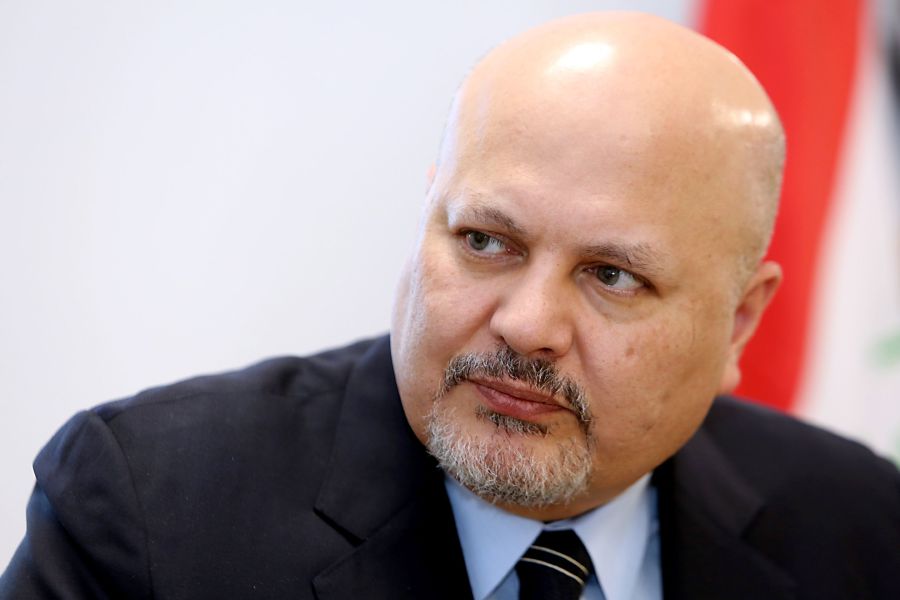
(FILES) A file photo taken on July 27, 2019 shows head of the United Nations Investigative Team to Promote Accountability for Crimes Committed by ISIL (UNITAD) Karim Khan in Baghdad. - British human rights lawyer Karim Khan was elected on February 12, 2021 to be the new prosecutor of the International Criminal Court, a daunting job which has seen the incumbent end up under US sanctions. (Photo by SABAH ARAR / AFP)

THE International Criminal Court has just got its third chief prosecutor, Karim Khan, a British barrister. On Feb 12, the day of Khan's appointment to the ICC, British Foreign Secretary Dominic Raab told the British media that Khan's appointment would be "pivotal in ensuring we hold those responsible for the most heinous crimes to account and gain justice for their victims".

Seriously, Raab? The "we" is interesting, though we didn't expect the British influence on the court to start this early. This then is the crux of the problem of the ICC.

The Global South sees the ICC as an international legal instrument in the hands of the Global North to punish the former.

It is not wrong in so thinking for several reasons. Firstly, in all of the 22 years the ICC has been around, it has indicted more than 40, all of them Africans. Unless the Global North is telling the world that war crimes aren't in its DNA.

History tells us otherwise. A war crime tribunal set up in Malaysia, too, clearly points to war crime DNA in the blood of the British and Americans involved in the Iraq War.

No one can accuse the Kuala Lumpur War Crimes Tribunal of being a kangaroo court as it had judges of international repute. The judgment, extempore though it was, was lodged with the ICC and the United Nations, but neither did anything to push global justice forward.

Perhaps because those found guilty by the tribunal were the then British prime minister Tony Blair and former American president George W. Bush.

Britain and the United States are members of the UN Security Council, which has referral rights under the Rome Treaty, the instrument that created the ICC. If Raab really meant what he said, he will get Britain to refer, at least the alleged British war criminals, to the ICC, as the Rome Treaty provides for.

Secondly, the ICC has a structural problem. Blame it on the Rome Treaty.

The ICC can only act if national courts are unwilling or unable to try a case. It must first get past the member-state hurdle.

Here the ICC is aided by a proviso: if the crime is committed by the citizens of a non-member state in the territory of a member state, the court has jurisdiction to try the case.

The case against Myanmar, a non-party, is a case in point as the war crimes are said to have continued in Bangladesh, where the Rohingya have sought refuge. Thirdly, this is of no help when it comes to the ICC trying citizens of the UNSC's Permanent 5 — the US, Britain, France, Russia and China — or their allies as an UNSC resolution enables it to suspend the case for 12 months.

And a further 12 months, ad infinitum, is one interpretation, under Article 16 of the Rome Treaty. In other words, the ICC is being told to not even try.

Fourthly, should the ICC still start one, it will be up against sanctions as former chief prosecutor Fatou Bensouda discovered when the then US president Donald Trump did just that.

The message is: the UNSC members and its allies can do no wrong. Well done, Bensouda, for telling the world might is never right.

Now, we wait for Khan to "hold those responsible for the most heinous crimes to account and gain justice for their victims". Just let them not be only Africans and Asians.