

UEC: What it means to take an exam your own country won't accept
Ayesha Sheik Mazrul
Published: Jan 1, 2026 9:30 AM
Updated: 5:09 PM
For a generation of Malaysian students, preparing for the Unified Examination Certificate (UEC) has become an exercise in navigating dual realities.
They pour hours into study, sit for examinations widely recognised by universities and employers abroad, and yet find the qualification lingering in a policy twilight at home.
Several states, including Penang, Sarawak, Sabah, and Selangor, have taken the unprecedented step of recognising the UEC for purposes such as entry into state‑owned universities, state scholarships, and even civil service eligibility, offering a glimpse of inclusion that the federal system stubbornly withholds.
At the federal level, the story is markedly different. The UEC is still not recognised as a qualification for entry into Malaysia’s public universities, a position that policymakers justify based on alignment with the national education policy.
Among the chief concerns cited are mastery of Bahasa Melayu and the successful completion of compulsory subjects, such as history, in the Sijil Pelajaran Malaysia (SPM) - benchmarks that the national framework holds essential for citizenship, civic participation, and social cohesion.
Published: Jan 1, 2026 9:30 AM
Updated: 5:09 PM
For a generation of Malaysian students, preparing for the Unified Examination Certificate (UEC) has become an exercise in navigating dual realities.
They pour hours into study, sit for examinations widely recognised by universities and employers abroad, and yet find the qualification lingering in a policy twilight at home.
Several states, including Penang, Sarawak, Sabah, and Selangor, have taken the unprecedented step of recognising the UEC for purposes such as entry into state‑owned universities, state scholarships, and even civil service eligibility, offering a glimpse of inclusion that the federal system stubbornly withholds.
At the federal level, the story is markedly different. The UEC is still not recognised as a qualification for entry into Malaysia’s public universities, a position that policymakers justify based on alignment with the national education policy.
Among the chief concerns cited are mastery of Bahasa Melayu and the successful completion of compulsory subjects, such as history, in the Sijil Pelajaran Malaysia (SPM) - benchmarks that the national framework holds essential for citizenship, civic participation, and social cohesion.
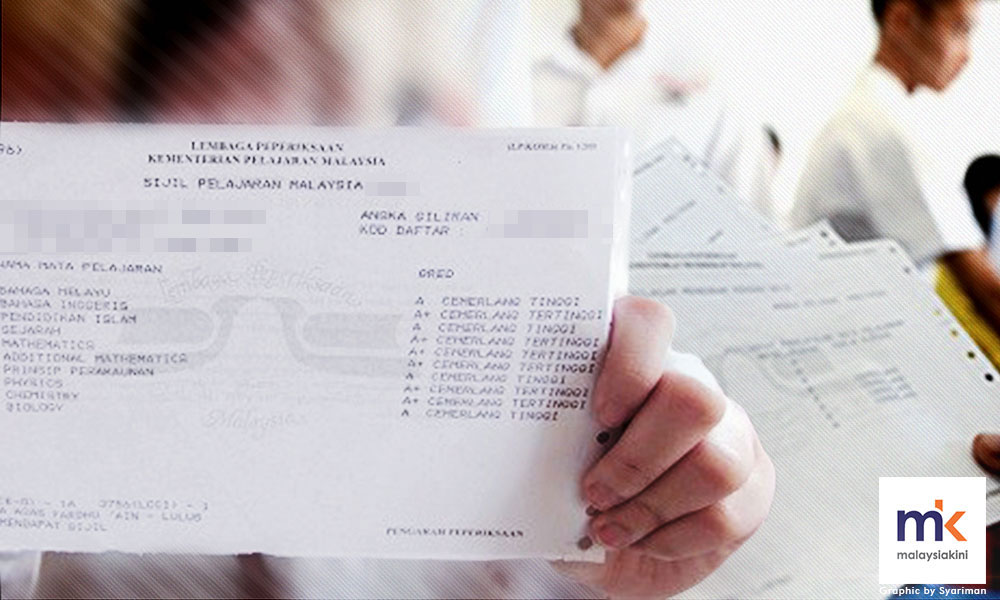
SPM results
This disconnect leaves students in a limbo where their hard‑earned qualifications open doors internationally and in parts of their own country, but remain insufficient for broader national acceptance.
Trilingual studies, dual syllabuses
At Tsun Jin High School in Kuala Lumpur, Yong Zi Ni, 18, and Chong Jae Fang, 17, navigate this reality quietly, moving between subjects taught in three languages and a timetable that rarely eases.
Contrary to common assumptions, neither Yong nor Chong described their decision to take the UEC as a “political statement”.
“I did not so much ‘choose’ UEC, but I chose to attend a Chinese independent school. So naturally, UEC became my main pathway in education,” Yong said, adding that attending a Chinese-type primary school led to her current choice, where she could continue her education in her mother tongue.
This disconnect leaves students in a limbo where their hard‑earned qualifications open doors internationally and in parts of their own country, but remain insufficient for broader national acceptance.
Trilingual studies, dual syllabuses
At Tsun Jin High School in Kuala Lumpur, Yong Zi Ni, 18, and Chong Jae Fang, 17, navigate this reality quietly, moving between subjects taught in three languages and a timetable that rarely eases.
Contrary to common assumptions, neither Yong nor Chong described their decision to take the UEC as a “political statement”.
“I did not so much ‘choose’ UEC, but I chose to attend a Chinese independent school. So naturally, UEC became my main pathway in education,” Yong said, adding that attending a Chinese-type primary school led to her current choice, where she could continue her education in her mother tongue.

(From left) Yong Zi Ni, Chong Jae Fang, and their teacher San Son Cheng
Chong, on the other hand, said taking the UEC is not a rebellious act to challenge the nation’s education system, but rather a question of choosing the most suitable education for her moving forward.
“It’s not something that I want to do because I want to go against the rules. I think it’s more of preparing yourselves for a pathway.
“You’re preparing yourselves for your future through a pathway that either you are more familiar with or that you’re more comfortable with,” she said.
At their school, sitting for both SPM and UEC is compulsory. That means learning the same subjects - mathematics, sciences, history - through different syllabuses, in different languages, often on the same day.
“It’s not something that I want to do because I want to go against the rules. I think it’s more of preparing yourselves for a pathway.
“You’re preparing yourselves for your future through a pathway that either you are more familiar with or that you’re more comfortable with,” she said.
At their school, sitting for both SPM and UEC is compulsory. That means learning the same subjects - mathematics, sciences, history - through different syllabuses, in different languages, often on the same day.
For context, the UEC is a standardised test administered by the Malaysian Independent Chinese Secondary Schools Working Committee (MICSS) since 1975.
The committee is represented by members of the United Chinese School Committees’ Association (Dong Zong) and the United Chinese School Teachers’ Association (Jiao Zong). The two associations are also jointly known as Dong Jiao Zong.
UEC subjects are taught and examined in Chinese, while SPM requires answers in Malay or English. The constant switching, they said, is one of the biggest challenges while learning.
The committee is represented by members of the United Chinese School Committees’ Association (Dong Zong) and the United Chinese School Teachers’ Association (Jiao Zong). The two associations are also jointly known as Dong Jiao Zong.
UEC subjects are taught and examined in Chinese, while SPM requires answers in Malay or English. The constant switching, they said, is one of the biggest challenges while learning.

Leaders of Dong Jiao Zong meeting Education Minister Fadhlina Sidek in October 2024
However, despite the trilingual difficulties, both students take it as a benefit, as they gain a more comprehensive understanding in their studies, linking knowledge from both syllabuses to create a broader vision.
Adapting to restricted options
For many outside the system, the most striking aspect of the UEC is its lack of recognition by public universities and the civil service.
For students taking the exam, that reality is neither new nor shocking, as they were acutely aware of the implications but still made a deliberate choice to sit for the certificate.
That sense of being excluded is familiar to Tan Dick Xin, a 2020 UEC graduate from Hin Hua High School in Klang, Selangor, who recently finished her studies at a local private university when the public debate surrounding UEC reignited.
“I can’t say I feel excluded (from the UEC debate) now. But if this had happened while I was applying to universities, I would certainly feel that way.
“I guess the anger would come from the fact that public universities can recognise a Chinese high school diploma, but not us,” she said.
However, despite the trilingual difficulties, both students take it as a benefit, as they gain a more comprehensive understanding in their studies, linking knowledge from both syllabuses to create a broader vision.
Adapting to restricted options
For many outside the system, the most striking aspect of the UEC is its lack of recognition by public universities and the civil service.
For students taking the exam, that reality is neither new nor shocking, as they were acutely aware of the implications but still made a deliberate choice to sit for the certificate.
That sense of being excluded is familiar to Tan Dick Xin, a 2020 UEC graduate from Hin Hua High School in Klang, Selangor, who recently finished her studies at a local private university when the public debate surrounding UEC reignited.
“I can’t say I feel excluded (from the UEC debate) now. But if this had happened while I was applying to universities, I would certainly feel that way.
“I guess the anger would come from the fact that public universities can recognise a Chinese high school diploma, but not us,” she said.
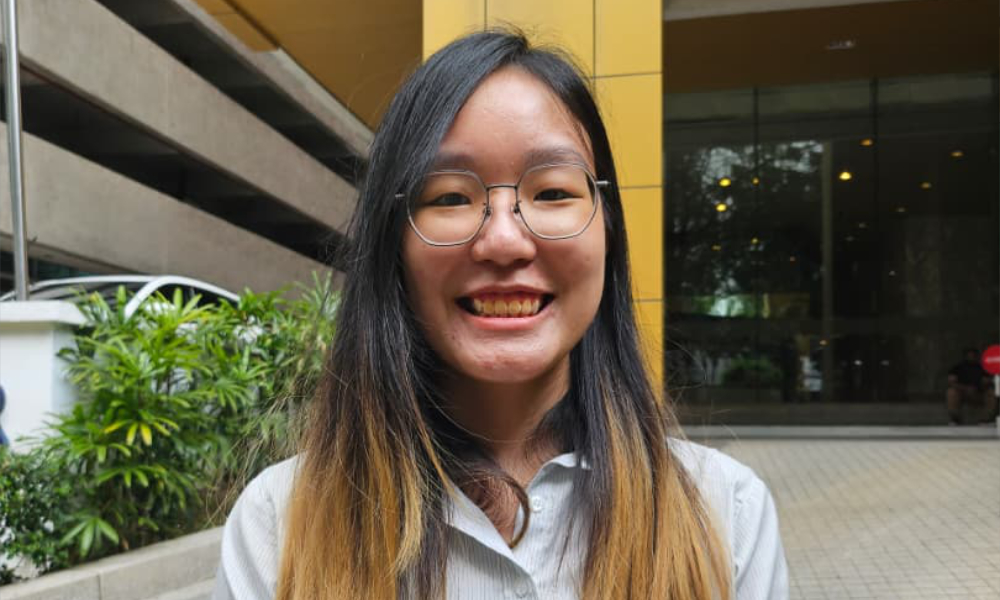
Tan Dick Xin
Like many UEC candidates, Tan and her family had planned early for private or overseas education. Her father already set aside funds, understanding that the UEC had narrowed her options domestically.
She eventually completed a private degree, navigating requirements that sometimes still demanded SPM credits as a backup.
Tan pointed out that many UEC graduates opt for semi-private institutions like Tunku Abdul Rahman University of Management and Technology (TAR UMT) due to its affordability, especially when combined with loans or scholarships.
“I can say that mostly for people who take UEC, they already know that they will end up at an overseas or private school.
“Some say we are rich, but we are just really planning carefully. That’s just what we have to do,” she said.
Who recognises the UEC?
According to a 2025 list by Dong Zong, the UEC is recognised by 268 institutions in 15 countries and territories worldwide, of which 98 are based in the United Kingdom.
Others include Australia (33), Japan (19), Canada (17), New Zealand (15), China (12), Hong Kong (12), Singapore, Ireland, Macau, the Netherlands, Taiwan, the US, and Russia.
In addition to these, it said some UEC graduates have also managed to gain acceptance in Thailand, India, Italy, and Germany.
READ MORE: Unified Examination Certificate: Are the criticisms justified?
According to the list, 23 institutions of higher learning in Malaysia recognise the exam.
In universities where they are accepted, the UEC is generally considered equivalent to the STPM or the UK’s GCE A-Level. Thus, they can be used for admission into foundation, diploma, and bachelor’s degree programmes.
UEC holders are accepted in government teachers’ training colleges if they also have a credit in SPM BM and a pass in SPM History and English. Such graduates may only enrol in programmes that lead to a career in SJKC schools.
For entry into the public service, the UEC is generally not recognised. Sarawak, however, accepts UEC holders into its state civil service, provided that candidates have also obtained a pass in Bahasa Malaysia at SPM level.
In Penang, the state government has, in practice, recognised the UEC in limited contexts, most notably for recruitment into state government-linked companies (GLCs) and for certain state-level roles linked to the state administration.
However, this does not amount to blanket recognition of the UEC for all state civil service positions, as appointments remain subject to federal public service rules, with recognition confined to areas where the state exercises discretion.
Malacca, by contrast, has never formally recognised the UEC for entry into its state civil service. Although a 2018 announcement raised the prospect of possible acceptance, this was never translated into an operative policy through the required state and federal processes.
The state, therefore, continues to adhere to standard federal civil service requirements, without any special provision for UEC holders.
The Selangor government, meanwhile, moved to recognise the UEC in 2015, during Azmin Ali’s tenure as menteri besar.
However, this recognition was limited to entry into certain state-linked educational institutions, such as Universiti Selangor (Unisel) and other colleges under the state’s purview.
Recognition in this educational context does not automatically extend to appointments within the Selangor state civil service.
Records of the Selangor state assembly showed that the 2015 decision formalised UEC recognition solely for the purpose of further education at selected state institutions, and did not include recognition of the certificate as a qualification for employment in the state public service.
Further clarification from assembly proceedings indicates that appointments to the Selangor civil service, whether on a permanent or contract basis, remain subject to the regulations of the federal Public Service Department (PSD) and the relevant national service circulars.
Applicants are therefore required to hold qualifications recognised by the Malaysian Qualifications Registry (MQR) and the Higher Education Ministry.
Why federal govt won’t recognise UEC
The BN-led federal administration addressed this issue in numerous public statements, including through written replies in the Dewan Rakyat.
In one such reply dated March 16, 2016, the Higher Education Ministry said the cabinet had decided on Nov 6, 2015, that “the government could not recognise the UEC at this time because it is not based on the national curriculum and is not in line with the national education philosophy. This is the reality that has to be accepted because it is linked to national interests and sovereignty.”
Like many UEC candidates, Tan and her family had planned early for private or overseas education. Her father already set aside funds, understanding that the UEC had narrowed her options domestically.
She eventually completed a private degree, navigating requirements that sometimes still demanded SPM credits as a backup.
Tan pointed out that many UEC graduates opt for semi-private institutions like Tunku Abdul Rahman University of Management and Technology (TAR UMT) due to its affordability, especially when combined with loans or scholarships.
“I can say that mostly for people who take UEC, they already know that they will end up at an overseas or private school.
“Some say we are rich, but we are just really planning carefully. That’s just what we have to do,” she said.
Who recognises the UEC?
According to a 2025 list by Dong Zong, the UEC is recognised by 268 institutions in 15 countries and territories worldwide, of which 98 are based in the United Kingdom.
Others include Australia (33), Japan (19), Canada (17), New Zealand (15), China (12), Hong Kong (12), Singapore, Ireland, Macau, the Netherlands, Taiwan, the US, and Russia.
In addition to these, it said some UEC graduates have also managed to gain acceptance in Thailand, India, Italy, and Germany.
READ MORE: Unified Examination Certificate: Are the criticisms justified?
According to the list, 23 institutions of higher learning in Malaysia recognise the exam.
In universities where they are accepted, the UEC is generally considered equivalent to the STPM or the UK’s GCE A-Level. Thus, they can be used for admission into foundation, diploma, and bachelor’s degree programmes.
UEC holders are accepted in government teachers’ training colleges if they also have a credit in SPM BM and a pass in SPM History and English. Such graduates may only enrol in programmes that lead to a career in SJKC schools.
For entry into the public service, the UEC is generally not recognised. Sarawak, however, accepts UEC holders into its state civil service, provided that candidates have also obtained a pass in Bahasa Malaysia at SPM level.
In Penang, the state government has, in practice, recognised the UEC in limited contexts, most notably for recruitment into state government-linked companies (GLCs) and for certain state-level roles linked to the state administration.
However, this does not amount to blanket recognition of the UEC for all state civil service positions, as appointments remain subject to federal public service rules, with recognition confined to areas where the state exercises discretion.
Malacca, by contrast, has never formally recognised the UEC for entry into its state civil service. Although a 2018 announcement raised the prospect of possible acceptance, this was never translated into an operative policy through the required state and federal processes.
The state, therefore, continues to adhere to standard federal civil service requirements, without any special provision for UEC holders.
The Selangor government, meanwhile, moved to recognise the UEC in 2015, during Azmin Ali’s tenure as menteri besar.
However, this recognition was limited to entry into certain state-linked educational institutions, such as Universiti Selangor (Unisel) and other colleges under the state’s purview.
Recognition in this educational context does not automatically extend to appointments within the Selangor state civil service.
Records of the Selangor state assembly showed that the 2015 decision formalised UEC recognition solely for the purpose of further education at selected state institutions, and did not include recognition of the certificate as a qualification for employment in the state public service.
Further clarification from assembly proceedings indicates that appointments to the Selangor civil service, whether on a permanent or contract basis, remain subject to the regulations of the federal Public Service Department (PSD) and the relevant national service circulars.
Applicants are therefore required to hold qualifications recognised by the Malaysian Qualifications Registry (MQR) and the Higher Education Ministry.
Why federal govt won’t recognise UEC
The BN-led federal administration addressed this issue in numerous public statements, including through written replies in the Dewan Rakyat.
In one such reply dated March 16, 2016, the Higher Education Ministry said the cabinet had decided on Nov 6, 2015, that “the government could not recognise the UEC at this time because it is not based on the national curriculum and is not in line with the national education philosophy. This is the reality that has to be accepted because it is linked to national interests and sovereignty.”
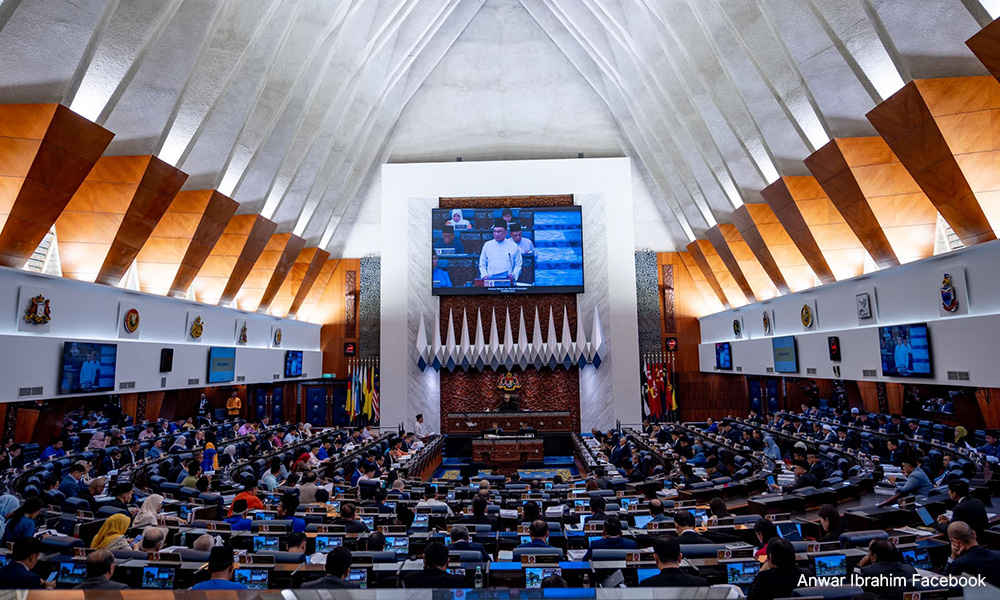
Dewan Rakyat
The reply also stated that the Education Ministry had given three reasons for the non-recognition, which were in line with the cabinet’s decision.
It said Malaysian independent Chinese secondary schools do not follow the national education policy, while the UEC examinations are not monitored by the Education Ministry or any entity recognised by the government.
The reply also stated that the Education Ministry had given three reasons for the non-recognition, which were in line with the cabinet’s decision.
It said Malaysian independent Chinese secondary schools do not follow the national education policy, while the UEC examinations are not monitored by the Education Ministry or any entity recognised by the government.
READ MORE: Ex-task force chair likens UEC debate to ‘political rabbit hole’
The curriculum used in the UEC is also not equivalent to the national curriculum and examinations, said the ministry.
It added that the UEC BM subject is not equivalent to its SPM counterpart, and the UEC did not cover enough Malaysian history.
The debate over UEC recognition resurfaced in Malaysia recently following social media remarks by DAP deputy chairperson Nga Kor Ming, who revealed that his party would meet with Prime Minister Anwar Ibrahim to seek recognition for the exam.
He made the same statement at an independent high school fundraising dinner in Taiping, a day before the post. Nga’s remark reignited backlash against DAP and allegations that the party is seeking to undermine the Malays and pressure Anwar.

Nga Kor Ming
Anwar later weighed in on the issue, saying that as long as the priority of mastering the Malay language is upheld, he has no objection to other languages - whether English, Chinese, Tamil, or Arabic - being taught. This, he added, extends to the UEC, which uses Chinese as its medium of instruction.
He reminded all parties that any demands touching on religious or racial sensitivities must consider the constitutional position of the national language.
‘No less Malaysians’
For all three interviewees, one misconception hurts more than others: the idea that sitting for UEC makes them less Malaysian.
The national debate surrounding UEC, often framed around identity, loyalty, and race, feels distant from their daily reality, as the exam is just another educational milestone rather than a pursuit of identity for them.
“What hurts me the most is actually the feeling that people are talking about us, but not talking with us.
“We are not going to divide this country. We are just trying to learn, to grow, and to build the country in another way. In another cultural lens,” Yong said.
The 18-year-old actively participates in public speaking and forum competitions in both Malay and English, and said such generalisations are unfair and disconnected from reality.
Tan reiterated the same sentiments, adding that claims that the UEC promotes cultural separatism are untrue, as the syllabus doesn’t push any form of “Chinese culture agenda”.
“I saw this video on YouTube that brought up a really good point. He said that we actually don’t know what we are fighting for.
“For students like me, UEC students, we actually just want a chance to go to a public university,” she said, adding that public debates on the issue remain unproductive and do not offer any tangible solution.
For Chong, the ongoing debate often feels disconnected from students’ lived realities, adding that the long-running debate just views students like her as symbols rather than people, and how that can get emotionally exhausting.
However, all she can do now is move on, as the future will still arrive despite protracted debates.
“I think, as students, it’s more important to build (towards) your goals and focus on what you’re working on right now.
“If you dwell too much on these discussions, it can affect you emotionally or cause unnecessary stress. So it’s important to have a clear mindset and just move forward in your own way,” Chong added.
Anwar later weighed in on the issue, saying that as long as the priority of mastering the Malay language is upheld, he has no objection to other languages - whether English, Chinese, Tamil, or Arabic - being taught. This, he added, extends to the UEC, which uses Chinese as its medium of instruction.
He reminded all parties that any demands touching on religious or racial sensitivities must consider the constitutional position of the national language.
‘No less Malaysians’
For all three interviewees, one misconception hurts more than others: the idea that sitting for UEC makes them less Malaysian.
The national debate surrounding UEC, often framed around identity, loyalty, and race, feels distant from their daily reality, as the exam is just another educational milestone rather than a pursuit of identity for them.
“What hurts me the most is actually the feeling that people are talking about us, but not talking with us.
“We are not going to divide this country. We are just trying to learn, to grow, and to build the country in another way. In another cultural lens,” Yong said.
The 18-year-old actively participates in public speaking and forum competitions in both Malay and English, and said such generalisations are unfair and disconnected from reality.
Tan reiterated the same sentiments, adding that claims that the UEC promotes cultural separatism are untrue, as the syllabus doesn’t push any form of “Chinese culture agenda”.
“I saw this video on YouTube that brought up a really good point. He said that we actually don’t know what we are fighting for.
“For students like me, UEC students, we actually just want a chance to go to a public university,” she said, adding that public debates on the issue remain unproductive and do not offer any tangible solution.
For Chong, the ongoing debate often feels disconnected from students’ lived realities, adding that the long-running debate just views students like her as symbols rather than people, and how that can get emotionally exhausting.
However, all she can do now is move on, as the future will still arrive despite protracted debates.
“I think, as students, it’s more important to build (towards) your goals and focus on what you’re working on right now.
“If you dwell too much on these discussions, it can affect you emotionally or cause unnecessary stress. So it’s important to have a clear mindset and just move forward in your own way,” Chong added.
***
UEC barred since 1975 by one man
Now the govt finds kerbau to justify that one-man's decision


No comments:
Post a Comment