SCMP:
Why Malaysia’s Anwar faces uphill task after Sabah election trouncing to win back voters
Sabah voters don’t trust Anwar, and this will complicate his plan for the next general election, analysts say

Iman Muttaqin Yusof
Published: 7:05pm, 1 Dec 2025
Updated: 7:15pm, 1 Dec 2025
Malaysia’s Prime Minister Anwar Ibrahim faces a more complex political landscape ahead after his coalition was routed in Sabah’s polls, as analysts warn he would need to craft a compelling narrative to win over voters ahead of the next general election.
Anwar’s Pakatan Harapan coalition won a single seat of the 73 up for grabs in Saturday’s election, from his own Parti Keadilan Rakyat, a stinging rebuke to a government perceived to have failed to fix Sabah’s perennial problems, ranging from irregular water supply to low funding. The Democratic Action Party, a key part of Anwar’s coalition, lost all its eight seats in the election.
Gagasan Rakyat Sabah (GRS) was the big winner with 29 of 73 seats, enough to return Anwar’s ally, Hajiji Noor, as chief minister, albeit with support from other parties to reach a majority in the state assembly.
Warisan, a moderate and multiethnic party popular with younger and urban voters, secured 25 seats.
Anwar congratulated Hajiji on his reappointment, saying the federal government “fully respects the strong and clear message” delivered by voters in Sabah, whose national-level lawmakers are crucial to keep his parliamentary majority intact.
The outcome of the state polls has exposed the lack of trust among voters with Anwar, and that may be dangerous for him with a general election due by early 2028, according to analysts.
“Sabah voters don’t believe Anwar,” political analyst James Chin told This Week in Asia, as they viewed the low level of revenue returned to the state from the national government as a politically explosive issue.
Malaysia’s Prime Minister Anwar Ibrahim faces a more complex political landscape ahead after his coalition was routed in Sabah’s polls, as analysts warn he would need to craft a compelling narrative to win over voters ahead of the next general election.
Anwar’s Pakatan Harapan coalition won a single seat of the 73 up for grabs in Saturday’s election, from his own Parti Keadilan Rakyat, a stinging rebuke to a government perceived to have failed to fix Sabah’s perennial problems, ranging from irregular water supply to low funding. The Democratic Action Party, a key part of Anwar’s coalition, lost all its eight seats in the election.
Gagasan Rakyat Sabah (GRS) was the big winner with 29 of 73 seats, enough to return Anwar’s ally, Hajiji Noor, as chief minister, albeit with support from other parties to reach a majority in the state assembly.
Warisan, a moderate and multiethnic party popular with younger and urban voters, secured 25 seats.
Anwar congratulated Hajiji on his reappointment, saying the federal government “fully respects the strong and clear message” delivered by voters in Sabah, whose national-level lawmakers are crucial to keep his parliamentary majority intact.
The outcome of the state polls has exposed the lack of trust among voters with Anwar, and that may be dangerous for him with a general election due by early 2028, according to analysts.
“Sabah voters don’t believe Anwar,” political analyst James Chin told This Week in Asia, as they viewed the low level of revenue returned to the state from the national government as a politically explosive issue.
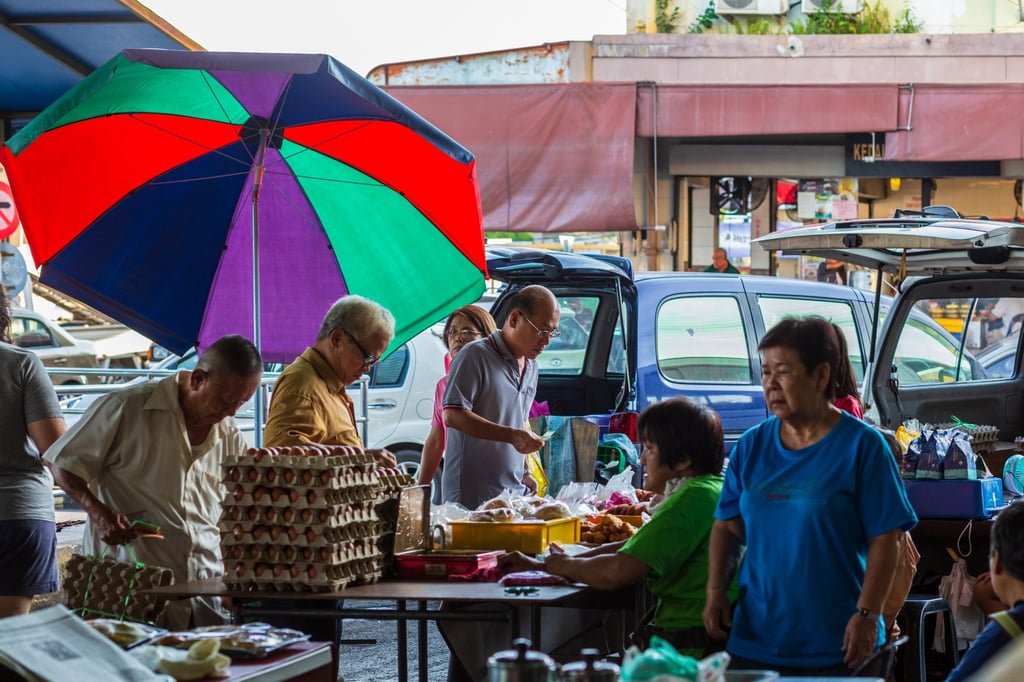
People gather at a market in Kota Kinabalu, Sabah. The outcome of the Malaysian state’s election on Saturday shows that Sabahans that they “don’t believe” Prime Minister Anwar Ibrahim, political analyst James Chin says. Photo: Shutterstock
“If you include oil and gas, Sabah gets back very little. People feel they have been taken for granted for years,” said Chin, who is a professor at the University of Tasmania.
The election came shortly after the Kota Kinabalu High Court ruled that the federal government had unlawfully failed to deliver Sabah’s constitutional right to 40 per cent of federal revenue collected from the state. Anwar’s administration opted not to appeal, a move widely interpreted as an attempt to address a decades-long grievance before polling day.
But Anwar’s decision not to appeal did little to shift voter sentiment, as Sabah voters resoundingly rejected his coalition.
The results have complicated efforts by Anwar’s administration to help Sabah, one of Malaysia’s poorest states, with a poverty rate of 17.7 per cent in 2024.
The prime minister, who formed the national government in 2022 by bringing together former rivals, depends on Sabah MPs to maintain his two-thirds parliamentary majority.
His coalition has survived challenges from a Malay-nationalist opposition bloc and defended controversial financial measures, including subsidy cuts.
As Anwar plans for the general election, he faces an uphill task to convince voters to return him to power, according to analysts.
“People want more than stability. [They] want tangible changes and benefits,” said Syaza Farhana Mohamad Shukri, head of the political science department at the International Islamic University Malaysia.
Several more state elections – including in Melaka, Negeri Sembilan, Kelantan and Terengganu – are scheduled over the next two years.
If results go against the government, the tide may turn inexorably against Anwar and limit his plan for further reforms, especially on subsidies that drain state budgets but are popular in the poorest parts of the country, analysts say.
A corruption scandal has also hit Anwar’s coalition amid an ongoing probe against one of his former aides in the run-up to the state election.
Shamsul Iskandar Mohd Akin, Anwar’s senior political secretary, resigned last week, hours after allegations surfaced that he had received more than 600,000 ringgit (US$145,300) in gifts and bribes from a businessman linked to the alleged Sabah mining scandal.
Shamsul is being held by the Malaysian Anti-Corruption Commission to assist investigators. He said he stepped down to “defend myself” against claims that could “harm the image of the government”.
Charles Santiago, a former DAP MP for Klang in Selangor from 2008 to 2022, said the election loss was “a full-blown backlash” from the party’s former supporters.
“Especially among ethnic Chinese voters who once formed the party’s core support. When your most loyal base turns away, it’s not a warning sign any more – it’s a verdict,” he wrote in an opinion piece on Monday. “The same resentment is simmering in the peninsula.”

Iman Muttaqin Yusof
Iman Muttaqin Yusof is a Kuala Lumpur-based journalist covering Malaysia and Southeast Asia, whose work has previously appeared in international news outlets.
“If you include oil and gas, Sabah gets back very little. People feel they have been taken for granted for years,” said Chin, who is a professor at the University of Tasmania.
The election came shortly after the Kota Kinabalu High Court ruled that the federal government had unlawfully failed to deliver Sabah’s constitutional right to 40 per cent of federal revenue collected from the state. Anwar’s administration opted not to appeal, a move widely interpreted as an attempt to address a decades-long grievance before polling day.
But Anwar’s decision not to appeal did little to shift voter sentiment, as Sabah voters resoundingly rejected his coalition.
The results have complicated efforts by Anwar’s administration to help Sabah, one of Malaysia’s poorest states, with a poverty rate of 17.7 per cent in 2024.
The prime minister, who formed the national government in 2022 by bringing together former rivals, depends on Sabah MPs to maintain his two-thirds parliamentary majority.
His coalition has survived challenges from a Malay-nationalist opposition bloc and defended controversial financial measures, including subsidy cuts.
As Anwar plans for the general election, he faces an uphill task to convince voters to return him to power, according to analysts.
“People want more than stability. [They] want tangible changes and benefits,” said Syaza Farhana Mohamad Shukri, head of the political science department at the International Islamic University Malaysia.
Several more state elections – including in Melaka, Negeri Sembilan, Kelantan and Terengganu – are scheduled over the next two years.
If results go against the government, the tide may turn inexorably against Anwar and limit his plan for further reforms, especially on subsidies that drain state budgets but are popular in the poorest parts of the country, analysts say.
A corruption scandal has also hit Anwar’s coalition amid an ongoing probe against one of his former aides in the run-up to the state election.
Shamsul Iskandar Mohd Akin, Anwar’s senior political secretary, resigned last week, hours after allegations surfaced that he had received more than 600,000 ringgit (US$145,300) in gifts and bribes from a businessman linked to the alleged Sabah mining scandal.
Shamsul is being held by the Malaysian Anti-Corruption Commission to assist investigators. He said he stepped down to “defend myself” against claims that could “harm the image of the government”.
Charles Santiago, a former DAP MP for Klang in Selangor from 2008 to 2022, said the election loss was “a full-blown backlash” from the party’s former supporters.
“Especially among ethnic Chinese voters who once formed the party’s core support. When your most loyal base turns away, it’s not a warning sign any more – it’s a verdict,” he wrote in an opinion piece on Monday. “The same resentment is simmering in the peninsula.”
Iman Muttaqin Yusof
Iman Muttaqin Yusof is a Kuala Lumpur-based journalist covering Malaysia and Southeast Asia, whose work has previously appeared in international news outlets.


No comments:
Post a Comment