


Andrew Sia
Published: May 16, 2025 3:00 PM
Updated: 5:00 PM
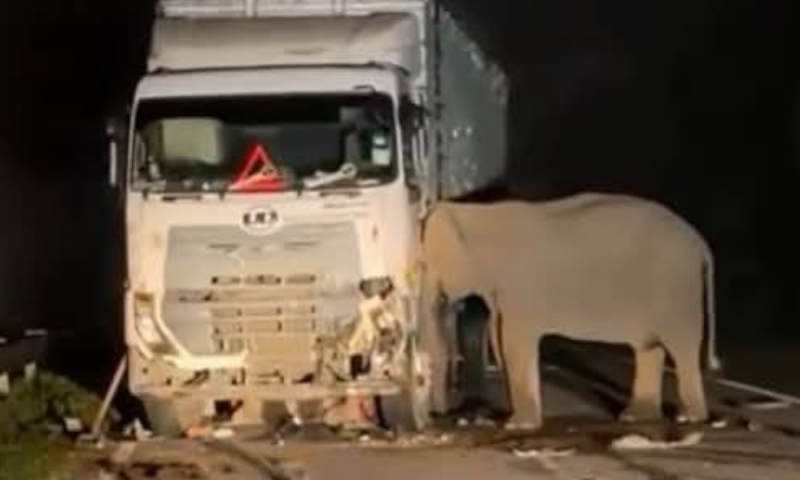
COMMENT | After the tragic accident that killed a baby elephant along the East-West highway, many people suggested ways to prevent a repeat of this debacle.
But some felt, “Do we really need to spend millions to build wildlife bridges? Isn't it more important to feed political cronies?”
OK, jokes aside, isn't it better to help “the poor”?
However, when we help our wildlife, we are helping ourselves too.
Here are six ways this can happen.
1) Rumble bumps on highways
The cheapest, fastest solution is to install small speed bumps or “rumble strips” on roads where wildlife is known to cross often.
The jarring sound and sensations from those bumps will stimulate drivers’ selfish instincts to protect their precious vehicles.
Slowing down traffic saves not only wildlife but also drivers. While a lorry is hardly affected after knocking an elephant, a car may lose control and plunge into a ravine.
WWF-Malaysia suggested mini speed bumps after the tragedy because 17 “perlahan” (slow down) wildlife signs along that highway are often ignored by drivers.
Published: May 16, 2025 3:00 PM
Updated: 5:00 PM
COMMENT | After the tragic accident that killed a baby elephant along the East-West highway, many people suggested ways to prevent a repeat of this debacle.
But some felt, “Do we really need to spend millions to build wildlife bridges? Isn't it more important to feed political cronies?”
OK, jokes aside, isn't it better to help “the poor”?
However, when we help our wildlife, we are helping ourselves too.
Here are six ways this can happen.
1) Rumble bumps on highways
The cheapest, fastest solution is to install small speed bumps or “rumble strips” on roads where wildlife is known to cross often.
The jarring sound and sensations from those bumps will stimulate drivers’ selfish instincts to protect their precious vehicles.
Slowing down traffic saves not only wildlife but also drivers. While a lorry is hardly affected after knocking an elephant, a car may lose control and plunge into a ravine.
WWF-Malaysia suggested mini speed bumps after the tragedy because 17 “perlahan” (slow down) wildlife signs along that highway are often ignored by drivers.
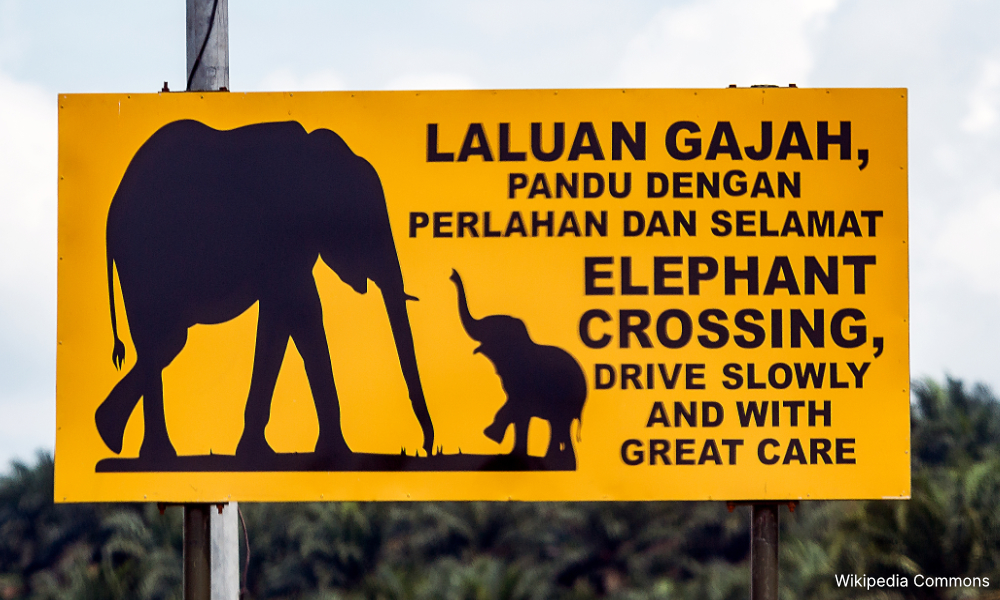
The rumble strips are cheap and can be installed quickly in many places, compared to expensive wildlife bridges.
2) Better lighting
Even then, some four-wheel-drive drivers may speed over the small bumps. Therefore, animal motion detectors that trigger flashing LED signs can give extra warnings.
Works Minister Alexander Nanta Linggi proposed these in November last year to prevent tiger roadkills.
Another option is to have more street lighting on top of the existing lights at 16 high-risk locations along the East-West highway. Solar-powered LED lights are cheap nowadays.
This can be combined with speed trap cameras to enforce the lower speed limits that Natural Resources and Environmental Sustainability Minister Nik Nazmi Nik Ahmad had proposed last year to reduce roadkill.
Elephants eat vegetation along the East-West highway, explained academic Lim Teck Wyn from Nottingham University Malaysia.
Thus, the single wildlife viaduct at KM157 of the highway is not enough, as there is nothing “funnelling” the animals to cross here. Many more animal crossings (or warnings) are needed.
Lim added that the highway has many long downhill slopes that encourage drivers to speed.
Obviously, extra lights plus speed trap cameras will help save motorists’ lives on the highway.
Some who are jaded about road deaths should remember that wildlife accidents often cause hours-long traffic jams. That may be a more powerful reason to drive carefully!
3) Make us wake up?
Ninety-one elephants were killed on our roads between 2015 and 2023. Did we care?
Last year, two sun bears were killed while crossing the East Coast Highway, one in July and another in November.
Nik Nazmi revealed that 2,361 wild animals have become roadkill since 2020. Did we care?

Natural Resources and Environmental Sustainability Minister Nik Nazmi Nik Ahmad
Over 6,000 people die on our roads every year, or about one every two hours.
We also didn't seem to care because we seem to have become numb to road deaths.
But the national reaction to the mother elephant's grief has stirred our hearts. Maybe this time, we will finally wake up and care more about accidents?
This may be a good time for the Transport Ministry to work with advertising companies to build a road safety campaign around the elephant tragedy.
4) Wildlife crossings
These are the most effective but expensive options to reduce wildlife accidents.
After the elephant tragedy, the Works Ministry has pledged dedicated wildlife crossings for new roads and highways across Malaysia.
Twenty-seven wildlife box culverts were earlier planned for the 665km East Coast Rail Link (ECRL).
It may seem extravagant, but it's far better (and cheaper) than having to deal with massive train derailments. As the idiom goes, "an ounce of prevention is worth a pound of cure”.
Major roads passing through forested areas – East Coast Highway, West Coast Expressway, Central Spine Road – have some wildlife crossings too.
In addition, Nik Nazmi stressed that long-term solutions involve preserving elephant habitats and ensuring safe movement across fragmented forests with eco-corridors.
The federal government has allocated over RM800 million to support forest conservation.
However, this requires state governments to cooperate as land matters are under their control.
Palm oil plantations must also do their part to set up eco-corridors.
5) Lorry drivers
We have lorry drivers who drive recklessly, probably because they feel like kings of the road. They know they won't suffer injury from any crash.
On May 3, a tanker lorry driver crashed into two vehicles near Batang Kali, Selangor. He tested positive for drugs and had a record of five drug offences and 32 traffic violations.
After two horrific lorry accidents in Seremban in September 2024, Transport Minister Anthony Loke said the Road Transport Department had found that many long-distance bus drivers tested positive for drugs.
On May 13, nine FRU men near Teluk Intan were killed by a lorry driver with six past criminal cases for drugs, rape and theft. Police remanded him for four days for investigations.
Over 6,000 people die on our roads every year, or about one every two hours.
We also didn't seem to care because we seem to have become numb to road deaths.
But the national reaction to the mother elephant's grief has stirred our hearts. Maybe this time, we will finally wake up and care more about accidents?
This may be a good time for the Transport Ministry to work with advertising companies to build a road safety campaign around the elephant tragedy.
4) Wildlife crossings
These are the most effective but expensive options to reduce wildlife accidents.
After the elephant tragedy, the Works Ministry has pledged dedicated wildlife crossings for new roads and highways across Malaysia.
Twenty-seven wildlife box culverts were earlier planned for the 665km East Coast Rail Link (ECRL).
It may seem extravagant, but it's far better (and cheaper) than having to deal with massive train derailments. As the idiom goes, "an ounce of prevention is worth a pound of cure”.
Major roads passing through forested areas – East Coast Highway, West Coast Expressway, Central Spine Road – have some wildlife crossings too.
In addition, Nik Nazmi stressed that long-term solutions involve preserving elephant habitats and ensuring safe movement across fragmented forests with eco-corridors.
The federal government has allocated over RM800 million to support forest conservation.
However, this requires state governments to cooperate as land matters are under their control.
Palm oil plantations must also do their part to set up eco-corridors.
5) Lorry drivers
We have lorry drivers who drive recklessly, probably because they feel like kings of the road. They know they won't suffer injury from any crash.
On May 3, a tanker lorry driver crashed into two vehicles near Batang Kali, Selangor. He tested positive for drugs and had a record of five drug offences and 32 traffic violations.
After two horrific lorry accidents in Seremban in September 2024, Transport Minister Anthony Loke said the Road Transport Department had found that many long-distance bus drivers tested positive for drugs.
On May 13, nine FRU men near Teluk Intan were killed by a lorry driver with six past criminal cases for drugs, rape and theft. Police remanded him for four days for investigations.
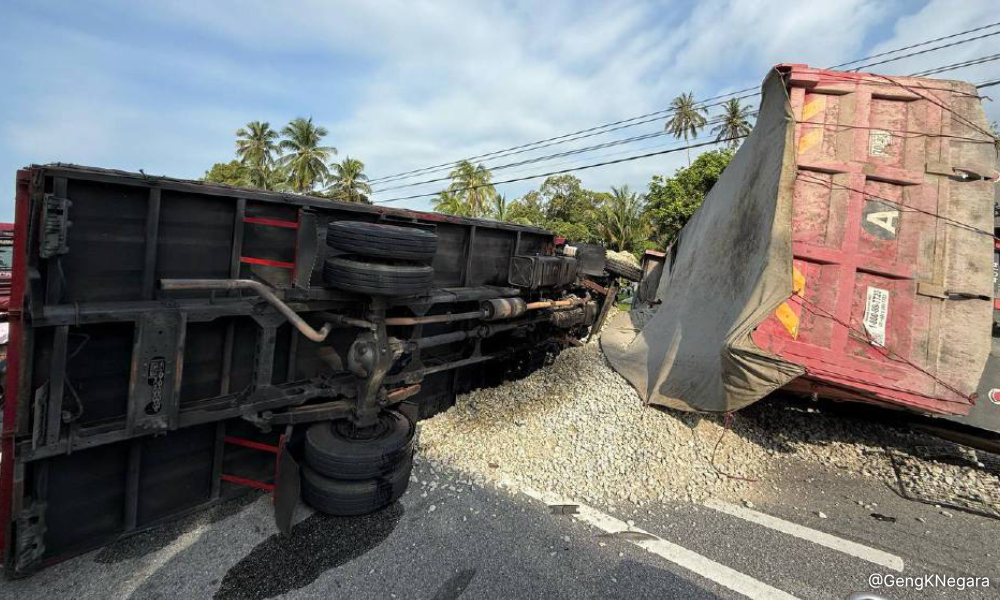
Nine FRU men near Teluk Intan were killed in a crash on May 13
In contrast, the driver who killed the baby elephant was not detained. He claimed he was unable to avoid the calf as it “suddenly tried to cross the road”.
Wow, the police believed him so easily. There wasn't even any news of a urine drug test.
Police declared there was “no negligence” as the area was foggy and dark. When I posted this news on my social media, many people couldn't believe it.
They said if the area was really dark and foggy as claimed, the driver should have been going very slowly. Yet, he must have been speeding to hit and go over the calf.
If the area was indeed foggy, my friend asked, “Why are dashcam videos from other cars clear?”
6) GPS trackers and black boxes
Actually, we already have technology to check if lorries are speeding.
All lorries are supposed to have a GPS monitor under rules set by the Land Public Transport Agency.
Did the police check the GPS records before letting the elephant killer go? There are troubling questions in this case.
Previously, Malaysian lorries had to be fitted with black boxes that would flash warning lights when the speed limit was exceeded.
Veteran motoring journalist Yamin Vong wrote that “the policy was successfully sabotaged”.
Then, one company was awarded monopoly rights to install speed limiters on lorries. But transport operators successfully blocked this.
In the morally pure Madani era, can our transport minister put his foot down and insist on speed-limiting devices?
Surely we've had too much carnage involving buses and lorries?
The authorities' safety campaigns have had little impact. For example, the Ops Selamat 23 during the Chinese New Year reduced accidents by only 10 percent nationwide.
Do we have to wait for a serious VVIP accident before we get super strict about road safety?
Our roads have become "rivers of death”. Can the mama elephant and her baby be the new national VVIP (Very Valued Important Pachyderm) that sparks a new era of road safety in Malaysia?
In contrast, the driver who killed the baby elephant was not detained. He claimed he was unable to avoid the calf as it “suddenly tried to cross the road”.
Wow, the police believed him so easily. There wasn't even any news of a urine drug test.
Police declared there was “no negligence” as the area was foggy and dark. When I posted this news on my social media, many people couldn't believe it.
They said if the area was really dark and foggy as claimed, the driver should have been going very slowly. Yet, he must have been speeding to hit and go over the calf.
If the area was indeed foggy, my friend asked, “Why are dashcam videos from other cars clear?”
6) GPS trackers and black boxes
Actually, we already have technology to check if lorries are speeding.
All lorries are supposed to have a GPS monitor under rules set by the Land Public Transport Agency.
Did the police check the GPS records before letting the elephant killer go? There are troubling questions in this case.
Previously, Malaysian lorries had to be fitted with black boxes that would flash warning lights when the speed limit was exceeded.
Veteran motoring journalist Yamin Vong wrote that “the policy was successfully sabotaged”.
Then, one company was awarded monopoly rights to install speed limiters on lorries. But transport operators successfully blocked this.
In the morally pure Madani era, can our transport minister put his foot down and insist on speed-limiting devices?
Surely we've had too much carnage involving buses and lorries?
The authorities' safety campaigns have had little impact. For example, the Ops Selamat 23 during the Chinese New Year reduced accidents by only 10 percent nationwide.
Do we have to wait for a serious VVIP accident before we get super strict about road safety?
Our roads have become "rivers of death”. Can the mama elephant and her baby be the new national VVIP (Very Valued Important Pachyderm) that sparks a new era of road safety in Malaysia?
ANDREW SIA is a veteran journalist who likes teh tarik khau kurang manis. You are welcome to give him ideas to brew at tehtarik@gmail.com
***
kt comments:
Many truck drivers both in Malaysia and Oz (and I bet in WankeeLand too) take drugs, not so much for recreation and indulgence, but to sustain them in their long hours of back-breaking drives (and so they think). Without the drugs they think they can't take the strain, stress and fatigue, of course not realizing those drugs would make their physical-mental health worse off.
Long distance truck drivers should be like aeroplane airline pilots, defined, guided and limited by 'legislated' "hours on duty".


No comments:
Post a Comment