Financetwitter:
How China’s Outdated J-10 Jets & Unknown PL-15 Missiles Destroyed India’s Premium French-Made Rafales
May 16th, 2025 by financetwitter
On May 7, 2025, India launched “Operation Sindoor” in retaliation for a terrorist attack in Indian-administered Kashmir on April 22 that killed 26 people, mostly tourists. Sindoor – vermilion red powder – is a traditional marker applied on the foreheads of married Hindu women. The code-name was a deliberate invocation of not only grief but also memory and resolve.
Sindoor, also associated with Goddess Parvati, was to avenge the widowed women who lost their husbands – targeted because they were Hindu – in the April Pahalgam attack. Women and children were spared because the terrorists had told them so they could tell their government about what had happened. New Delhi said Islamabad was involved, but Pakistan has denied any links to the terrorist attack.
While Islamabad called the Indian operation an “unprovoked act of aggression”, Pakistan is infamous for breeding terrorism. After all, U.S. Navy SEALs found and killed Osama bin Laden in his hideout in the Pakistani city of Abbottabad in May 2011. Operation Sindoor struck nine Jaish-e-Mohammed and Lashkar-e-Taiba terror camps in Pakistan and Pakistan-occupied Kashmir.
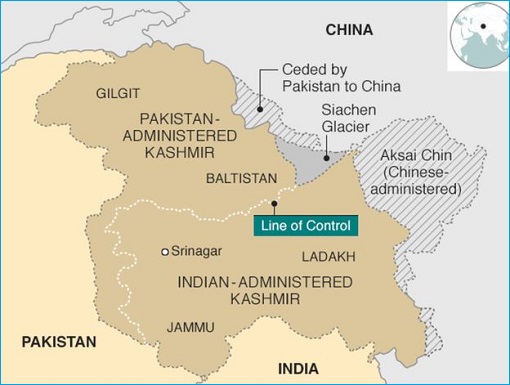
India claimed over 100 terrorists were killed during the 25-minute operation. Local news media celebrated the success and India’s military firepower – French Rafale 4.5-generation fighter jets and HAMMER missiles, British SCALP missiles, Israelis HAROP drones, Russian S-400 anti-missile defence system, BrahMos missiles, U.S. AH-64 Apache attack helicopters and AGM-114 Hellfire missiles.
Prime Minister Narendra Modi was praised as the hero who took the risk of going against critics with the purchase of Rafale fighter jets – supposedly the crown jewel of Indian Air Force. He was also complemented for ignoring U.S. President Donald Trump’s threat to cancel the order to buy S-400. But just hours after New Delhi launched the operation, something else happened.
At 4am on the same Wednesday, May 7, a delegation of Chinese embassy officials, awaken from their sleep, arrived at the Pakistani foreign ministry headquarters in Islamabad for a military update, according to Pakistan’s top diplomat. It was about the Chinese weapon systems acquired by Pakistan in recent years – and Islamabad was apparently very happy with it.
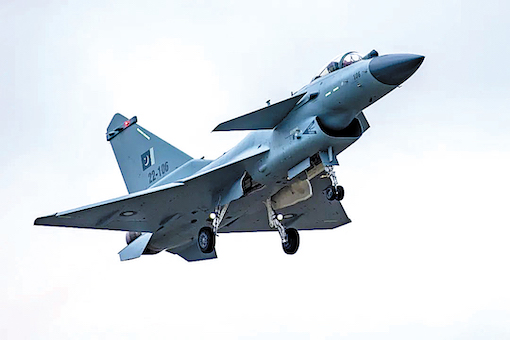
Pakistani Foreign Minister Ishaq Dar told parliament later that day – “Our jet fighters … shot down three Indian Rafales, three Rafales [that] are French. Ours were J-10Cs”. He was referring to the Chengdu J-10 Vigorous Dragon (known as Firebird by NATO), a Chinese multipurpose fighter jet that was untested in an active combat zone until the latest India-Pakistan conflict.
The first J-10 was assembled in June 1997, but became operational only in 2006. As usual, it has been accused of another copy of U.S. F-16, largely due to allegations that Israel had sold to China an “abandoned Lavi” fighter jet project – a joint development between the U.S. and Israel in the 1980s – thus had allowed China to advance significantly over the 1960s era fighters.
If the Chinese J-10 was stolen from American design, perhaps Swedish JAS 39 and French Rafale too had ripped off from F-16 due to their similarities. But the J-10’s most distinct departure from the F-16’s design is the Vigorous Dragon’s delta wing,not to mentiona pair of high-mounted canards just below the cockpit – a configuration which enables high agility, especially at low speeds.
It takes more than an Israeli Lavi blueprint to produce a fighter jet. The Chinese Air Force still needed an engine for the J-10, which was initially sourced from Russia – Saturn AL-31 engine – before developed its own WS-10Bpower plant, which took China at least 10 years to develop. The WS-10B soon improved to WS-10C, which powered the J-20 fifth-generation fighter.
By the end of the J-10’s life cycle, the WS-10B could be uninstalled and replaced by the engine currently under development, the WS-15. So, when Pakistan received its first batch of the 6 Chinese jets – upgraded versions of the original J-10 – in 2022, they were already quite “outdated”. So far, 20 out of 36 J-10 ordered has been delivered to the Pakistan Air Force.
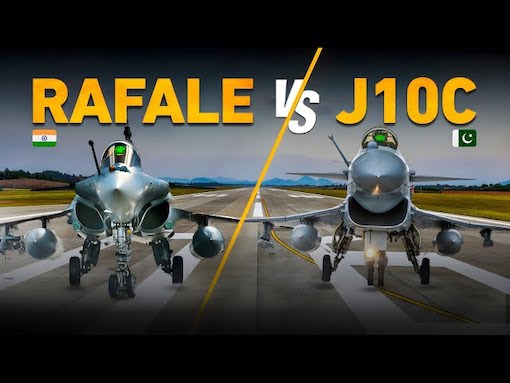
But the latest military conflict with Pakistan long-time rival India has raised eyebrows because not only the Chinese 4.5-generation J-10 had shot down three French 4.5-generation Rafale, but also one Su-30MKI and one MIG-29 made by Russian belonging to the Indian Air Force. It was a humiliation to India, whose military was perceived as more powerful and advanced than Pakistan.
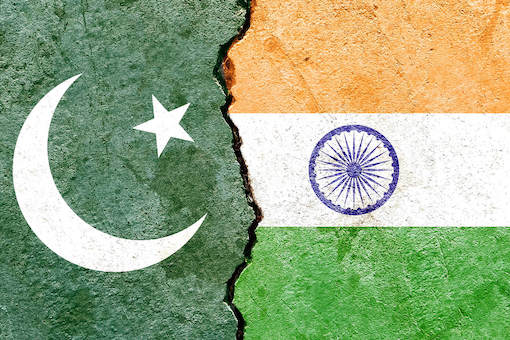
Pro-India news media immediately rubbished the claims that its prized Rafale had been shot down, accusing it as merely propaganda by both China and its ally Pakistan. Nonetheless, Beijing had refused to take sides as India is a member of BRICS, therefore, it condemned “the terrorist attacks in Pahalgam area and opposes all forms of terrorism” whilst at the same time urged peace and stability.
Interestingly, New Delhi has neither denied nor acknowledged that its Rafale fighter jets had been shot down – till several leading U.S.-based media like Reuters, CNN and New York Times published those claims. As a result, the stocks of Avic Chengdu Aircraft Co. Ltd., the manufacturer of J-10C and JF-17 in use by Pakistan, rockets by over 36% in two sessions.
U.S. officials confirmed that a Chinese-made J-10 aircraft fired air-to-air missiles at Indian fighter jets. One of the Indian jets shot down was a French-built Rafale fighter, while Pakistan’s U.S.-made F-16s, produced by Lockheed Martin, were not involved in the incident, reported Reuters. Unable to lose face, the Indian Air Force could only admit that “losses are a part of combat”, but added that all its pilots were back home.
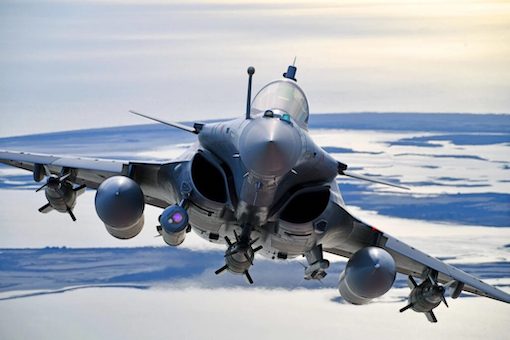
The burning question is why India can’t give a direct and decisive answer whether its Rafale, costing a staggering US$120 million a pop compared to Chinese J-10’s US$40 million, had been brought down? Because the political backlash would be unimaginable to Prime Minister Modi, whose government bought 36 Rafale fighter jets in 2016.
Pakistan’s Foreign Minister, Mohammad Ishaq Dar, said that the J-10C fighter jets were deployed based on intelligence received beforehand. He told lawmakers on May 7 – “There were instructions to only target Indian jets that released payloads. This is why only five jets were taken down. Had the directive been different, nearly 10-12 jets would have been struck.”
Chinese-made J-10C fighter’s capability, among others, included an actively electronically scanned array (AESA) radar, a modern infrared search and track (IRST) system, electronic support measures (ESM), radar warning receiver (RWR), missile approach warning suite (MAWS) and datalinks, giving it a better chance of competing with modern opponents in terms of situational awareness.
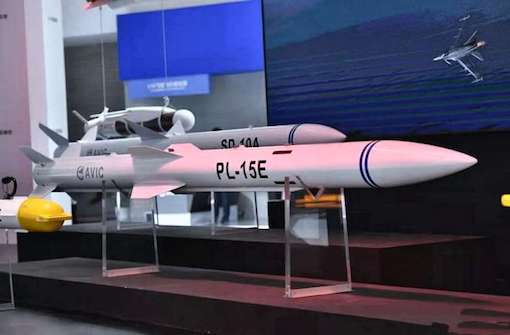
However, on May 12, India acknowledged China’s role for the first time since Operation Sindoor began. During a press briefing, Air Marshal A K Bharti, Director General Air Operations, presented visual evidence of a piece of the Chinese-made PL-15 long-range missile that India’s air defences had shot down. But that PL-15 was also the same missile that had shot down Rafale.
Apparently, a Pakistan Air Force (PAF) J-10C reportedly downed an Indian Air Force (IAF) Rafale from a jaw-dropping 182 kilometres away using the Chinese-manufactured PL-15 Beyond Visual Range (BVR) air-to-air missile. Previously, reports said a Russian Su-35S fighter jet had successfully shot down a Ukrainian MiG-29 at a distance of 213 kilometers using the long-range hypersonic R-37M air-to-air missile.
So, if indeed the PL-15 had hit the Rafale at such distance, it would set a new global record for the longest air-to-air missile kill in aerospace history. Nevertheless, the use of J-10Cs by Pakistan would mark the first time the Chinese planes – and the PL-15 missiles they were carrying – have been used in combat anywhere in the world, giving military analysts a rare glimpse of their capabilities.
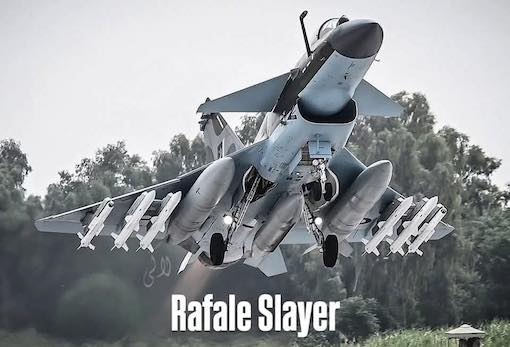
In the reported engagement, the Pakistani J-10C is said to have remained entirely within Pakistan’s sovereign airspace while launching the PL-15 missile that successfully engaged the IAF Rafale across the Line of Control during the opening salvos of the India-Pakistan aerial conflict. Capable of reaching Mach 5 and has a range of up to 300km, Pakistan is the only other country to use the Chinese-made PL-15.
Developed by China Airborne Missile Academy (CAMA), the PL-15 entered the People’s Liberation Army Air Force (PLAAF) military service around 2015. While Pakistani J-10C is equipped with export variant PL-15E, which has shorter range than PL-15, it still uses ”active radar-guided” long-range ”beyond-visual-range” air-to-air missile.
India might not admit that it had just burnt hundreds of millions of dollars after losing some Rafales, but Washington is closely analyzing the Chinese jet’s performance, seeing it as a potential indicator of how Beijing might fare in a conflict over Taiwan or across the broader Indo-Pacific. For a very long time, the West has been mocking and laughing at China’s military hardware.
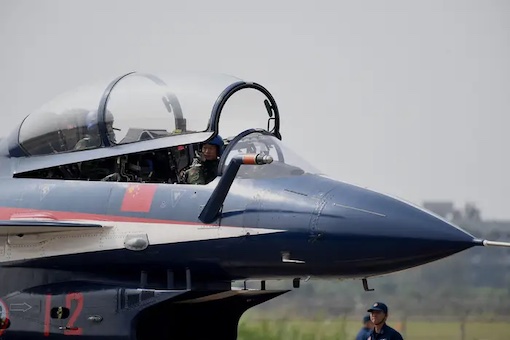
More importantly, the apparent success of the J-10C against the Rafales also boosts China’s reputation as a manufacturer and seller of weapons. The India-Pakistan conflict may be over after they agreed to a ceasefire. But the biggest winner is clearly China. Pakistan has become its playground to test its weapons. Countries such as Egypt, Iran, and Saudi Arabis could be potential buyers.


No comments:
Post a Comment