
Murray Hunter
The DAP’s crisis of identity: Institutional reforms or political irrelevance?
P Ramasamy
Apr 19, 2025
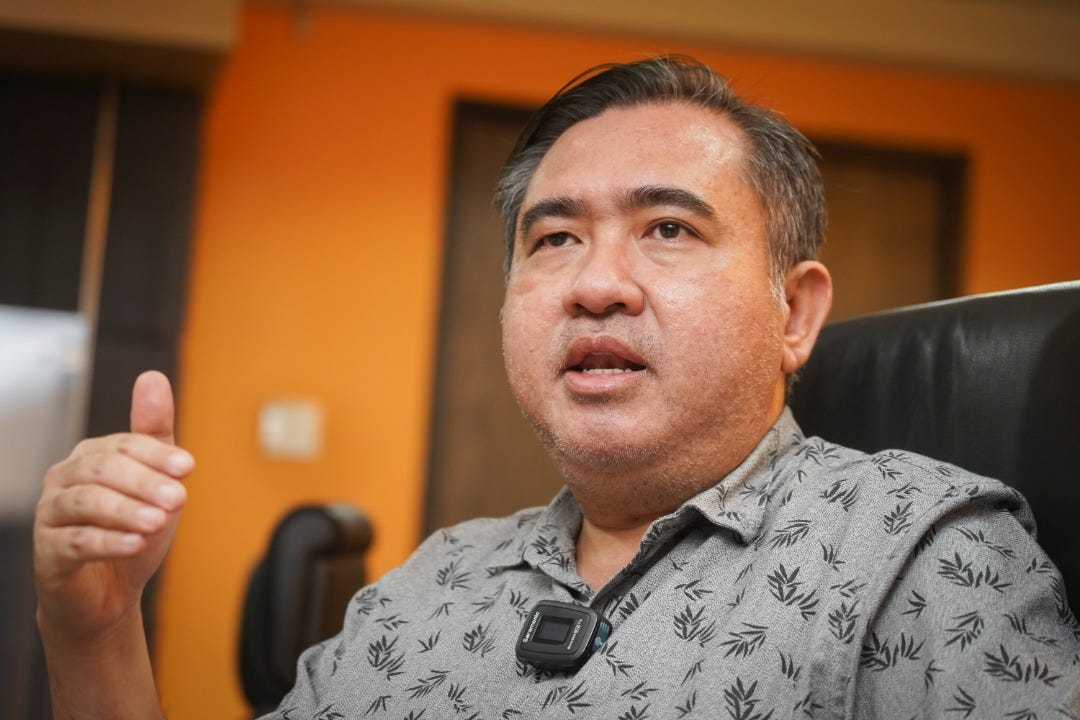
Anthony Loke
The Secretary-General of the Democratic Action Party (DAP) and current Minister of Transport, Anthony Loke, has hinted that he may stay on for another term — or perhaps beyond.
In a recent interview, he expressed his intention to pursue institutional reforms within the party, aggressively, in what he suggested could be his final term.
His goal, ostensibly, is to ensure that the youth take on a larger and more meaningful role in the party’s future.
In doing so, he implicitly acknowledged that party veterans should not overstay their welcome.
While Loke’s intentions may be well-meaning and sincere, it’s unclear what concrete institutional reforms he plans to undertake.
The party’s structural weaknesses, especially factionalism and the influence of family or dynastic politics, have long plagued its internal health.
Though such politics may be waning, they remain a potent force within the DAP. The critical question remains: how will Loke address these entrenched dynamics?
Beyond internal party mechanisms, the DAP faces a deeper, more existential crisis — its fading multi-racial image.
The party’s overwhelming Chinese membership, exceeding 80%, coupled with token representation from Malay and Indian members, undermines its claim of being a truly multi-racial party.
Its longstanding rivalry with the MCA only reinforces the perception of the DAP as a predominantly Chinese party.
Internal reforms, no matter how genuine, may not address this larger issue. Since the 2023 state elections, the party has seen a notable erosion in Indian support, and Malay support remains negligible. The DAP’s biggest challenge is not just internal dysfunction, but its subservient role in the Pakatan Harapan (PH)-led coalition government.
Despite holding the largest number of parliamentary seats among component parties and a few ministerial positions, the DAP appears largely powerless in influencing key policy decisions.
Its position in the coalition is more symbolic than substantial. Meanwhile, UMNO — with far fewer parliamentary seats — remains more effective in steering national discourse and decisions.
There’s also the looming possibility that efforts to broaden the coalition’s Malay base could lead to the inclusion of opposition parties.
Should this happen, the DAP could easily be sacrificed to make way for a more Malay-centric alliance — a very real risk in the unpredictable realm of Malay politics.
The party, once revered for championing non-Malay rights and civil liberties, now seems muted and compliant. Under Loke’s leadership, this quiet acquiescence has only deepened. While he may be the party’s top leader, he lacks the intellectual gravitas and political courage of earlier reformers who dared to speak truth to power.
In focusing on internal reforms, Loke may be seeking a safer route, avoiding the difficult but necessary confrontation with the erosion of non-Malay rights in Malaysia. Institutional reform, in this context, becomes a convenient distraction — a way to sidestep the party’s declining relevance and compromised principles.
Ultimately, the DAP — once a symbol of hope and change — has become one of the biggest disappointments in Malaysian politics. It now risks becoming an albatross around the neck of Malaysians still yearning for meaningful reform.
Perhaps a time has arrived for the party to replace its symbol of a surging Rocket to with slanting one.
P. Ramasamy
Chairman Urimai


No comments:
Post a Comment