May 17, 2026
The Malaysian Government Spent More to Capture Murray Hunter than look for Jho Low
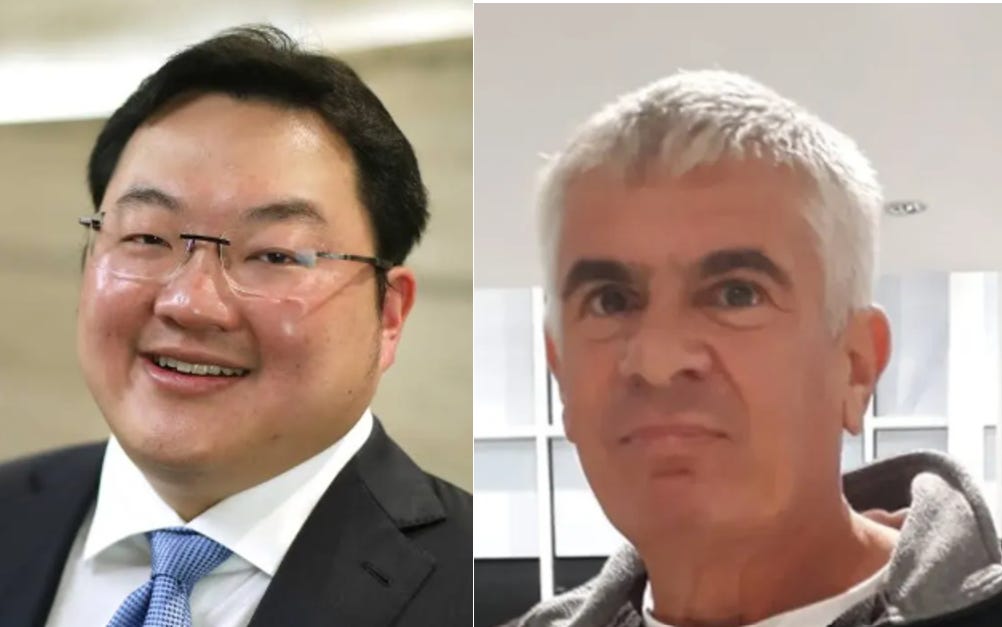
In a striking contrast that has raised eyebrows among observers of Malaysian governance and justice, the resources deployed to pursue Australian writer and commentator Murray Hunter appear to have exceeded the visible efforts to apprehend Jho Low, the fugitive financier at the heart of the multi-billion-dollar 1MDB scandal.
Hunter, a long-time resident of southern Thailand known for his critical Substack articles on Malaysian affairs, was arrested at Bangkok’s Suvarnabhumi Airport in September 2025 while attempting to board a flight to Hong Kong. The arrest stemmed from a complaint by Malaysia’s Communications and Multimedia Commission (MCMC) alleging criminal defamation over four articles published in April 2024. These pieces criticized the MCMC’s operations, website blocking practices, and alleged conflicts of interest involving its leadership.
According to lawyers familiar with the case, the Malaysian government is estimated to have spent around RM5,000,000 on efforts to secure Hunter’s arrest in Thailand, pursue charges there, and handle related legal actions. Even after the criminal defamation charges in Thailand were eventually dropped following mediation and an apology from Hunter in early 2026, Thai authorities continued to restrict his movement, with his passport confiscated for a period.
Adding to the procedural concerns, the MCMC also initiated a civil defamation suit against Hunter in Malaysia’s High Court without properly serving documents on him, a move that drew criticism for lacking due process. Hunter reportedly only learned of the Malaysian civil ruling after his arrest in Thailand.
Human rights groups and press freedom organizations, including the Foreign Correspondents’ Club of Thailand and Human Rights Watch, highlighted the case as an example of transnational repression. They questioned the use of Thai criminal courts and laws to address alleged offenses against a Malaysian government body, especially when Malaysian authorities themselves had not pursued criminal charges domestically.
This level of cross-border coordination and expenditure stands in notable contrast to the pursuit of Jho Low (Low Taek Jho). Low remains a fugitive despite being the alleged central figure in the 1MDB scandal, which saw an estimated US$4.5 billion (over RM20 billion at the time) misappropriated from Malaysia’s sovereign wealth fund between 2009 and 2015. Funds were allegedly laundered through global networks for luxury purchases, Hollywood films, and personal enrichment.
While Malaysia, the US, and other countries have recovered substantial assets—billions in total through settlements and forfeitures—Low himself has evaded capture for years. Reports place him potentially in China or elsewhere, with Interpol red notices and Malaysian warrants issued, but public updates on intensive, sustained manhunt operations or equivalent high spending specifically for his extradition have been limited compared to the Hunter operation.
Critics point out that a single blogger living modestly across the border warranted significant diplomatic and legal investment, including engagement with Thai authorities, while the alleged mastermind of one of the largest financial heists in history has proven far more elusive. Media coverage of active, expensive operations targeting Low has been sparse in recent years relative to the scale of the alleged crime.
The Hunter case has sparked broader debate about priorities in Malaysian law enforcement and the use of resources. Supporters of the MCMC action argue it was necessary to protect institutional reputation and deter defamation. Detractors see it as an overreach that diverts attention and funds from larger issues of corruption and accountability.
As of early 2026, Hunter’s ordeal concluded with the withdrawal of charges, but the episode leaves lingering questions about proportionality, sovereignty in legal matters, and how the Malaysian government allocates efforts between high-profile financial fugitives and vocal critics. In an era of tight public budgets, such comparisons fuel public skepticism about whether justice is applied equally or influenced by political sensitivities.
The Malaysian public deserves transparency on these expenditures and priorities. True accountability starts with consistent application of the law—whether pursuing billion-ringgit scandals or handling disputes with individual commentators.
Meanwhile, Hunter is fighting the system for his right to leave Thailand, after a representative from the MCMC convinced the police, prosecutors and court to prosecute this case. A senate committee is currently investigating allegations of torture against Hunter in the police lock-up.


No comments:
Post a Comment