
Malaysia's #1 Content Aggregator
ANALYSIS | The Malay Putsch - How the move to topple Zahid Hamidi will culminate
14 May 2026 • 2:00 PM MYT

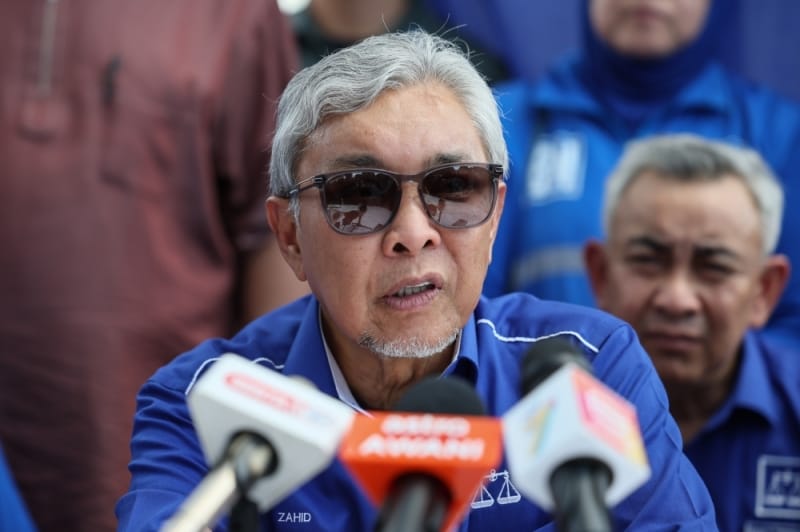
Image credit: Focus Malaysia
Now, this might sound a little racist, but the more that I suspect that the political crisis in Negeri Sembilan is actually a sign that Umno might be orchestrating a move to topple Zahid Hamidi, the more that I can’t help but notice that the different races in Semenanjung do seem to have distinct ways of removing leaders who refuse to go.
Of the three major races in the peninsula, my race — the Indians — are probably the ones with the most destructive and spectacular manner of leadership removal.
I suspect this might be the case because Indians tend to tolerate a leader who refuses to go for far longer than any other race. So when we finally move to remove them, decades of anger and frustration erupt so violently that by the time we are done, not only will the stubborn leader who refused to go will be swept away, but his entire party — and perhaps even the entire leadership structure of our community — will be shattered into so many pieces that we might not be able to rebuild it even after decades have passed.
Our eruption might even be so explosive that even other races’ political parties may suffer collateral damage.
The last time we removed a top leader who refused to step down was in 2007, when the massive Hindraf rally we organised not only ended Samy Vellu’s reign, but also so critically injured MIC, the de facto Indian party at the time, that MIC has still not been able to rejuvenate itself to this day.
Not only did our eruption decimate our own political representation and structure, it also laid the groundwork for the fall of the BN government, which had ruled the nation since independence.
Of all the races, I feel that the Chinese are the most organised, systematic and quiet in how they remove their top leaders. When the Chinese remove a leader, they don't just remove the leader -they remove the leader's entire team. Look at how Lim Guan Eng was removed from DAP, for example. He was taken out little by little, piece by piece, in such a way that when the full effect came together, Lim Guan Eng and his entire camp were removed from DAP’s corridors of power with nary a fuss.
Through mechanisms like chai lists and Team A–Team B strategies, Chinese party leadership — whether in MCA or DAP — tends to move in an incremental and organized fashion. When the Chinese take down their leader, the take down is so complete, that their leader usually fades away into oblivion without a fuss.
Amongst the Malays, I reckon their preferred way of removing the number one is through what I call the “Silent Number Two” putsch — it is a move that has toppled many Malay leaders who refused to step down, from Tunku Abdul Rahman of UMNO to Muhyiddin in Bersatu, and is now probably the method that is being most likely being applied to orchestrate the removal of Zahid Hamidi.
When the Malays remove their number one, it’s usually orchestrated by the number two — but it’s often someone lower in the ranks who actually pulls the trigger.
When Tunku was toppled, for example, although it was widely believed that it was his number two, Tun Razak, that silently orchestrated it, but it was people like Mahathir, who were further down the line, who actively and visibly attacked Tunku in order to bring Tunku down.
The mechanics of removing a top Malay leader goes like this. First, the second-in-command must first tacitly consent to the move, although the number 2 will not directly participate in the coup. Instead, junior leaders like Mahathir during Tunku’s time, or Wan Fayhsal and Wan Saiful in today’s Bersatu, and perhaps Jalaluddin Alias in Umno today, that will the ones that will be seen to be visibly leading the rebellion against the top leader and his camp.
When the top leader and his men retaliate against the junior leaders, we have to see whether the rebellion is quelled or grows. If it is successfully quelled, then the leader will survive. If it grows however, then it is only a matter of time before the leader is toppled.
If the rebellion spreads, the top leader and his men will start to lose control of their party, to the point that the top leader will be effectively rendered a lame duck. At this stage, the top leader will be pressured to give up his position, and hand over control to the second in command.
Once the number two assumes power, the junior leaders who initiated the rebellion will then be rewarded with promotions within the party.
Today, we are seeing this exact process unfold in Umno. Junior leaders in Umno like Jalaluddin Alias and the 14 Umno Negeri Sembilan Aduns have begun a rebellion against Zahid Hamidi. Zahid Hamidi has retaliated, but it is still not yet certain as to whether he has managed to stamp out the rebellion. If he doesn't succeed and the rebellion keeps growing, it’s only a matter of time before Zahid becomes a lame duck president and is forced to hand over power to his number two — who, in all likelihood, has been the silent architect of his downfall all along.
Of course, it is hard to say as to whether Zahid will follow the Tunku Route or the Muhyiddin Route if it comes to pass that the internal rebellion in Umno succeeds in toppling him.
If he follows the Tunku route, he will resign himself to his loss after a while, and hand over his power and position to his Number 2 like a gentleman.
But if he follows the Muhyiddin route, then he will probably capsize Umno just to remain as its captain.
So there you have it, ladies and gentlemen — the three ways the three major races in the peninsula remove their leaders who overstay their welcome.
I hope this helps you understand how politics actually works in our country, with race as its frame of reference.
Now, this might sound a little racist, but the more that I suspect that the political crisis in Negeri Sembilan is actually a sign that Umno might be orchestrating a move to topple Zahid Hamidi, the more that I can’t help but notice that the different races in Semenanjung do seem to have distinct ways of removing leaders who refuse to go.
Of the three major races in the peninsula, my race — the Indians — are probably the ones with the most destructive and spectacular manner of leadership removal.
I suspect this might be the case because Indians tend to tolerate a leader who refuses to go for far longer than any other race. So when we finally move to remove them, decades of anger and frustration erupt so violently that by the time we are done, not only will the stubborn leader who refused to go will be swept away, but his entire party — and perhaps even the entire leadership structure of our community — will be shattered into so many pieces that we might not be able to rebuild it even after decades have passed.
Our eruption might even be so explosive that even other races’ political parties may suffer collateral damage.
The last time we removed a top leader who refused to step down was in 2007, when the massive Hindraf rally we organised not only ended Samy Vellu’s reign, but also so critically injured MIC, the de facto Indian party at the time, that MIC has still not been able to rejuvenate itself to this day.
Not only did our eruption decimate our own political representation and structure, it also laid the groundwork for the fall of the BN government, which had ruled the nation since independence.
Of all the races, I feel that the Chinese are the most organised, systematic and quiet in how they remove their top leaders. When the Chinese remove a leader, they don't just remove the leader -they remove the leader's entire team. Look at how Lim Guan Eng was removed from DAP, for example. He was taken out little by little, piece by piece, in such a way that when the full effect came together, Lim Guan Eng and his entire camp were removed from DAP’s corridors of power with nary a fuss.
Through mechanisms like chai lists and Team A–Team B strategies, Chinese party leadership — whether in MCA or DAP — tends to move in an incremental and organized fashion. When the Chinese take down their leader, the take down is so complete, that their leader usually fades away into oblivion without a fuss.
Amongst the Malays, I reckon their preferred way of removing the number one is through what I call the “Silent Number Two” putsch — it is a move that has toppled many Malay leaders who refused to step down, from Tunku Abdul Rahman of UMNO to Muhyiddin in Bersatu, and is now probably the method that is being most likely being applied to orchestrate the removal of Zahid Hamidi.
When the Malays remove their number one, it’s usually orchestrated by the number two — but it’s often someone lower in the ranks who actually pulls the trigger.
When Tunku was toppled, for example, although it was widely believed that it was his number two, Tun Razak, that silently orchestrated it, but it was people like Mahathir, who were further down the line, who actively and visibly attacked Tunku in order to bring Tunku down.
The mechanics of removing a top Malay leader goes like this. First, the second-in-command must first tacitly consent to the move, although the number 2 will not directly participate in the coup. Instead, junior leaders like Mahathir during Tunku’s time, or Wan Fayhsal and Wan Saiful in today’s Bersatu, and perhaps Jalaluddin Alias in Umno today, that will the ones that will be seen to be visibly leading the rebellion against the top leader and his camp.
When the top leader and his men retaliate against the junior leaders, we have to see whether the rebellion is quelled or grows. If it is successfully quelled, then the leader will survive. If it grows however, then it is only a matter of time before the leader is toppled.
If the rebellion spreads, the top leader and his men will start to lose control of their party, to the point that the top leader will be effectively rendered a lame duck. At this stage, the top leader will be pressured to give up his position, and hand over control to the second in command.
Once the number two assumes power, the junior leaders who initiated the rebellion will then be rewarded with promotions within the party.
Today, we are seeing this exact process unfold in Umno. Junior leaders in Umno like Jalaluddin Alias and the 14 Umno Negeri Sembilan Aduns have begun a rebellion against Zahid Hamidi. Zahid Hamidi has retaliated, but it is still not yet certain as to whether he has managed to stamp out the rebellion. If he doesn't succeed and the rebellion keeps growing, it’s only a matter of time before Zahid becomes a lame duck president and is forced to hand over power to his number two — who, in all likelihood, has been the silent architect of his downfall all along.
Of course, it is hard to say as to whether Zahid will follow the Tunku Route or the Muhyiddin Route if it comes to pass that the internal rebellion in Umno succeeds in toppling him.
If he follows the Tunku route, he will resign himself to his loss after a while, and hand over his power and position to his Number 2 like a gentleman.
But if he follows the Muhyiddin route, then he will probably capsize Umno just to remain as its captain.
So there you have it, ladies and gentlemen — the three ways the three major races in the peninsula remove their leaders who overstay their welcome.
I hope this helps you understand how politics actually works in our country, with race as its frame of reference.


No comments:
Post a Comment